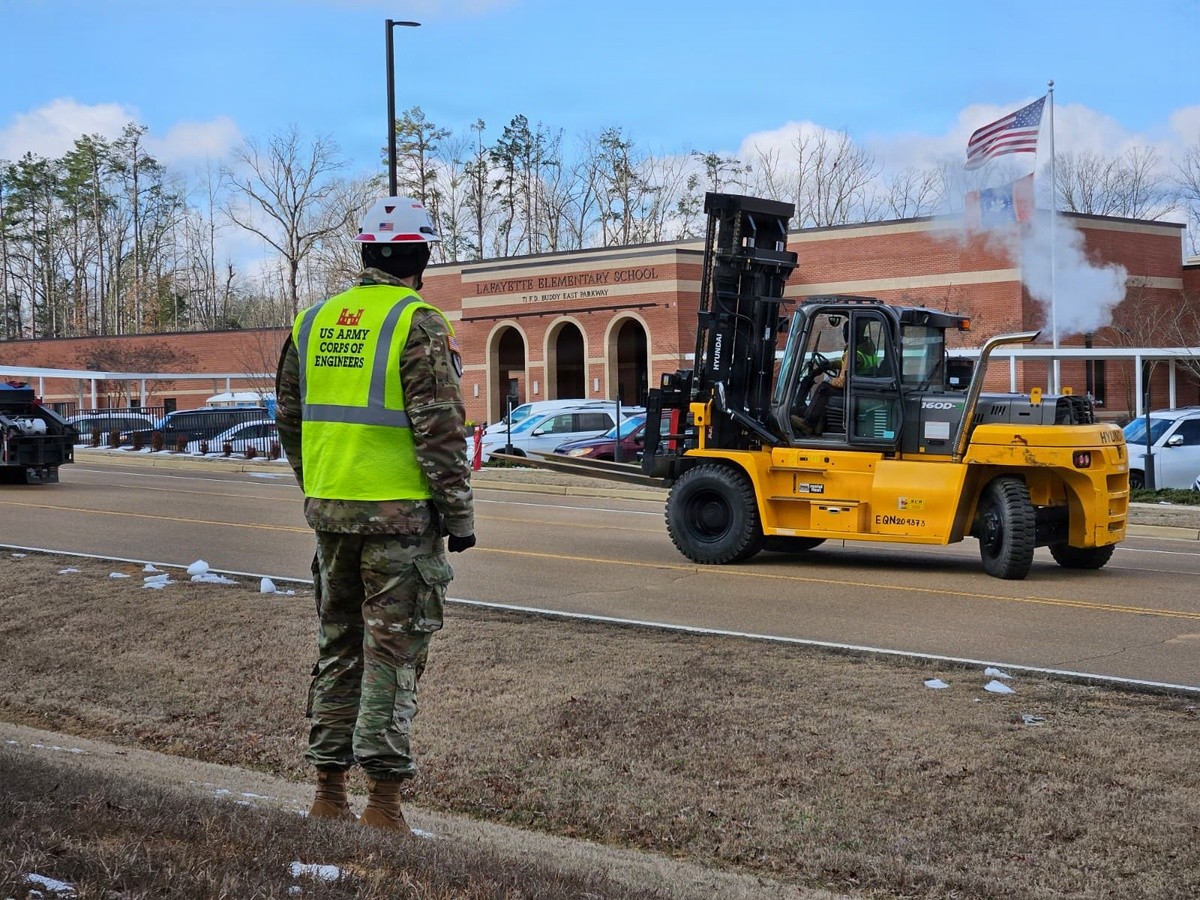
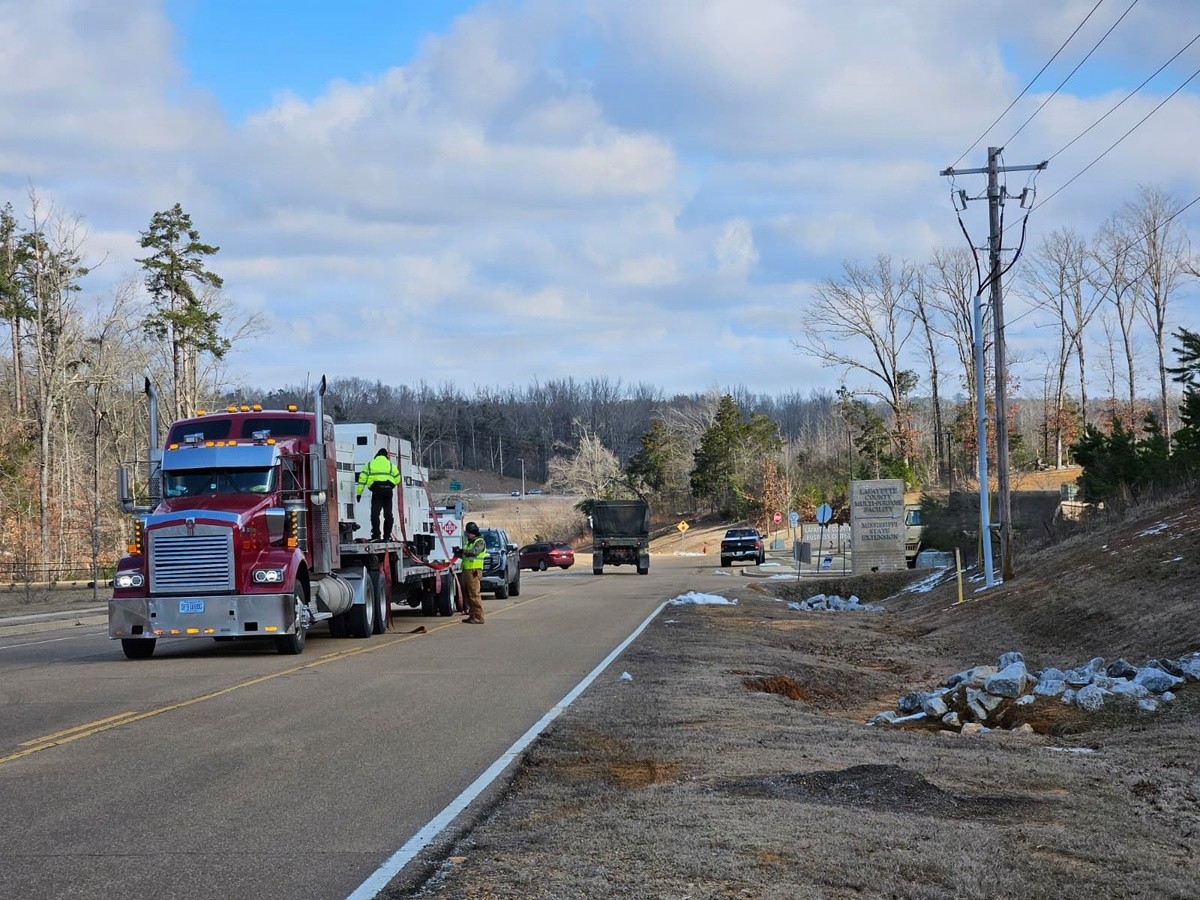
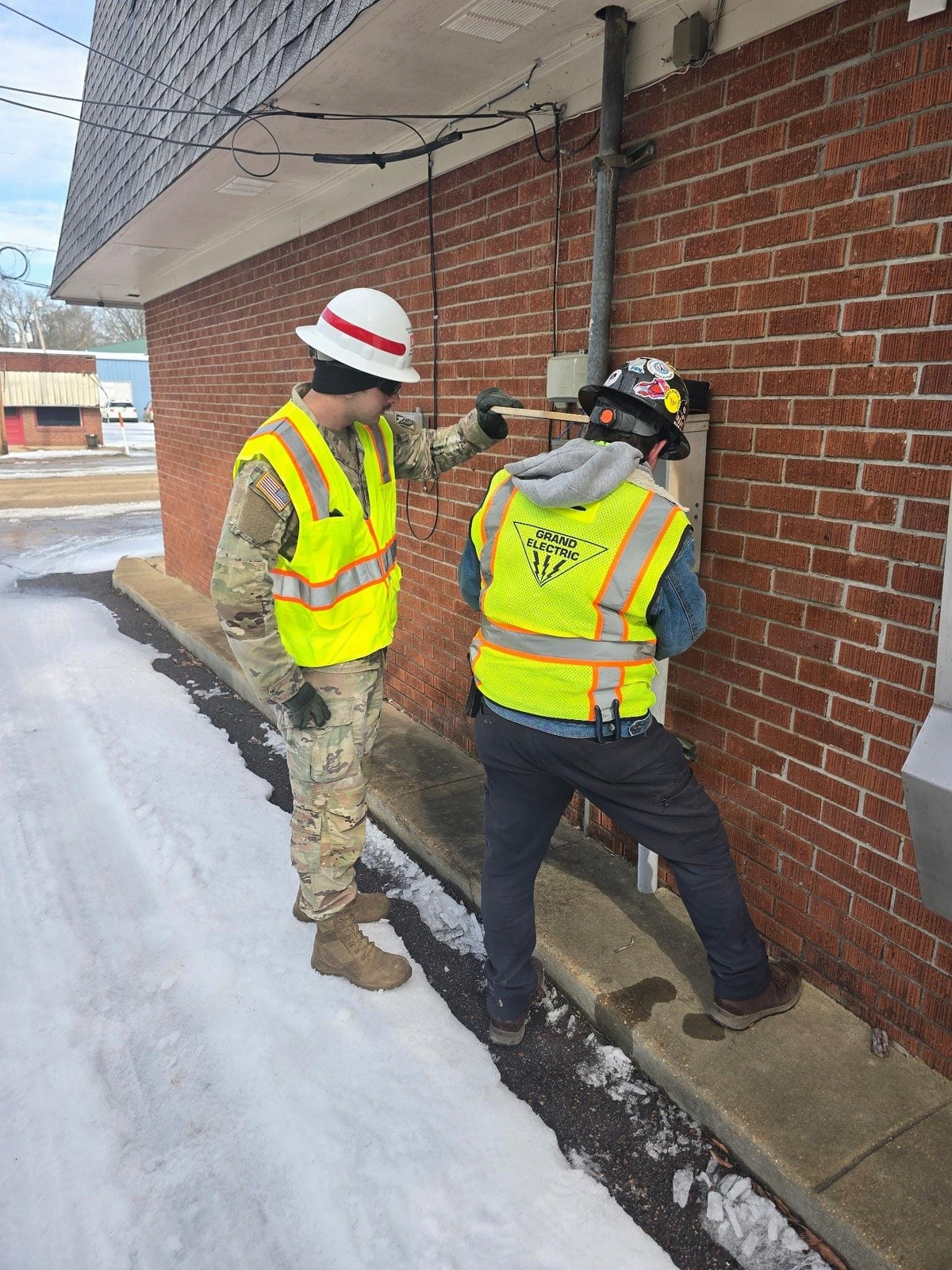
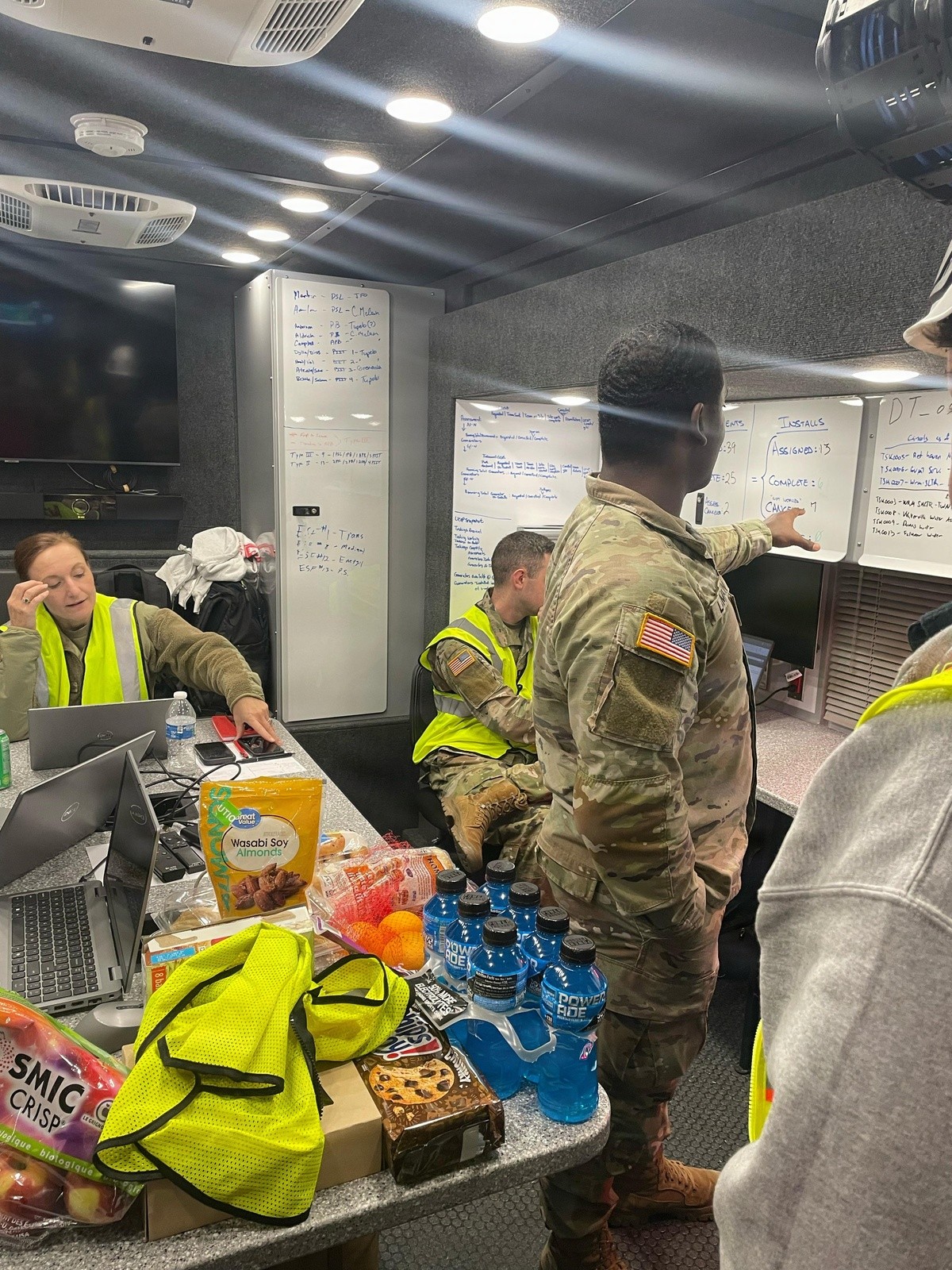
GRENADA, MS –Following a challenging deployment in response to the January 2026 winter storm, the U.S. Army Corps of Engineers (USACE) Savannah District Temporary Emergency Power Planning and Response Team (SAS PRT) has concluded its successful mission in Mississippi. The team installed 29 generators to restore power to critical public facilities, including water systems, across 11 counties impacted by the storm.
The mission, which began on January 22, highlighted the team's adaptability and perseverance. Initially tasked to support FEMA Region 4 in Georgia, the team was quickly re-assigned to assist Louisiana before being redirected to Mississippi.
On January 26, the team, alongside contractor WSP, established a Generator Staging Base (GSB) at Camp McCain.
“Despite challenging road conditions, the first generator was installed at a critical facility just eight hours after the equipment was signed over from FEMA, which was a significant accomplishment,” said Lt. Col. Vanessa Bowman, Savannah District deputy commander and PRT mission commander.
One of the many critical infrastructures to benefit was the pumps operated by the Tri-Lake Rural Water Association. The association had about 650 residents loose water service when the storm knocked out power to their pump stations on January 25.
"Every day since last Sunday had been a mess," said Kevin Morris, the operator for the Tri-Lake Rural Water Association, recalling the stressful week. "There has been a lot of stress, but this was a big relief. I just about teared up seeing the Corps (of Engineers) walk up."
To meet the widespread need, the Savannah District team established a second GSB near Tupelo, Miss. on January 31. The work at the Tri-Lake station was just one part of a much larger mission.
John Dibiase, a quality assurance specialist with the task force, spent his days checking on generators installed at various sites, including the Tri-Lake pump stations, a school, and a church.
“Deploying is one of the best times to do this job,” said Dibiase, who also supported responses to Hurricanes Helene and Maria. “You are with other Corps employees who left their homes to help people. It is what we are here for.”
Over the course of the deployment, the team received 84 taskings and assessed 75 facilities. They managed 47 generator installation requests, which included navigating 14 cancellations due to utility power restoration. By the time the mission concluded, 29 generators had been successfully installed and later de-installed as local power was restored.
“This response is a true testament to the U.S. Army Corps of Engineers ability to respond to our nation when it is need,” said Adam Telle, Assistant Secretary of the Army for Civil Works. “Through every declared disaster they are called to respond to USACE continues to be the first in, and the some of the last to leave to ensure impacted communities are well on their way to full recovery.”
The mission officially concluded on February 12, after the team had systematically drawn down its presence, consolidated operations, and de-installed the final generators, leaving no remaining need for temporary power in the region.
Social Sharing