
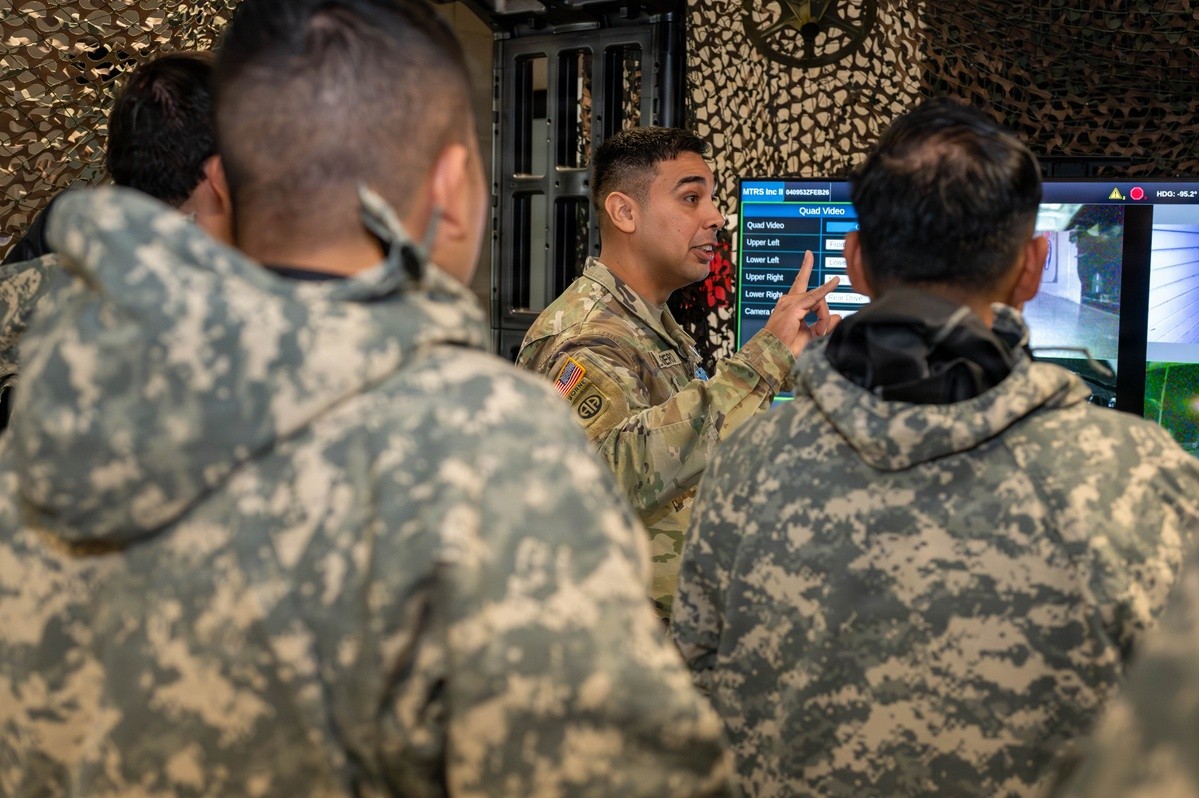
FORT LEONARD WOOD, Mo. — While man transportable robotic systems, MTRS, aren’t new to the U.S. Army, the way instructors at the Maneuver Support Center of Excellence’s Chemical Defense Training Facility, CDTF, are incorporating the robots into training is transforming the way chemical Soldiers perform site exploration.
According to Master Sgt. Rolando Silguero, CDTF noncommissioned officer in charge, the facility began a three-phase integration process of the man transportable robotic system in the summer of 2025 to professional military education curriculum, specifically the CBRN Senior Leader and Captains Career Courses.
“The primary focus is to include operating procedures as well as tactics, techniques and procedures during actual exploitation operations,” Silguero said.
Soldiers are learning to use the MTRS by remotely deploying it on a fixed site target to detect, identify and in some applications neutralize, weapons of mass destruction materials from a safe distance.
“The MTRS offers stand-off protection to minimize risk to personnel and can carry multiple payloads for detection, including systems for live video and still photography,” Silguero said, and these skills will “increase Soldiers’ lethality and speed in complex, multi-domain operational environments.”
During training on Feb. 4, senior leader course students gathered around a monitor to watch the MTRS make its way through another part of the building. The Soldiers pointed out items as they identified them and noted key information they were gathering via the robot’s camera.
Sgt. 1st Class Dean Barney, CBRN SLC senior small group leader, said his students used the information to create a site sketch to visually organize and consolidate information reported by the MTRS.
“The sketch translates raw observations, such as hazard location, potential contamination and contamination spread, into a clear operation picture that leaders can quickly understand and act on,” Barney said. “This will support faster decision making, accurate reporting and effective follow-on actions, such as isolation, decontamination, maneuver and medical response in a CRBN environment where time and clarity directly impact mission success and troop survival.”
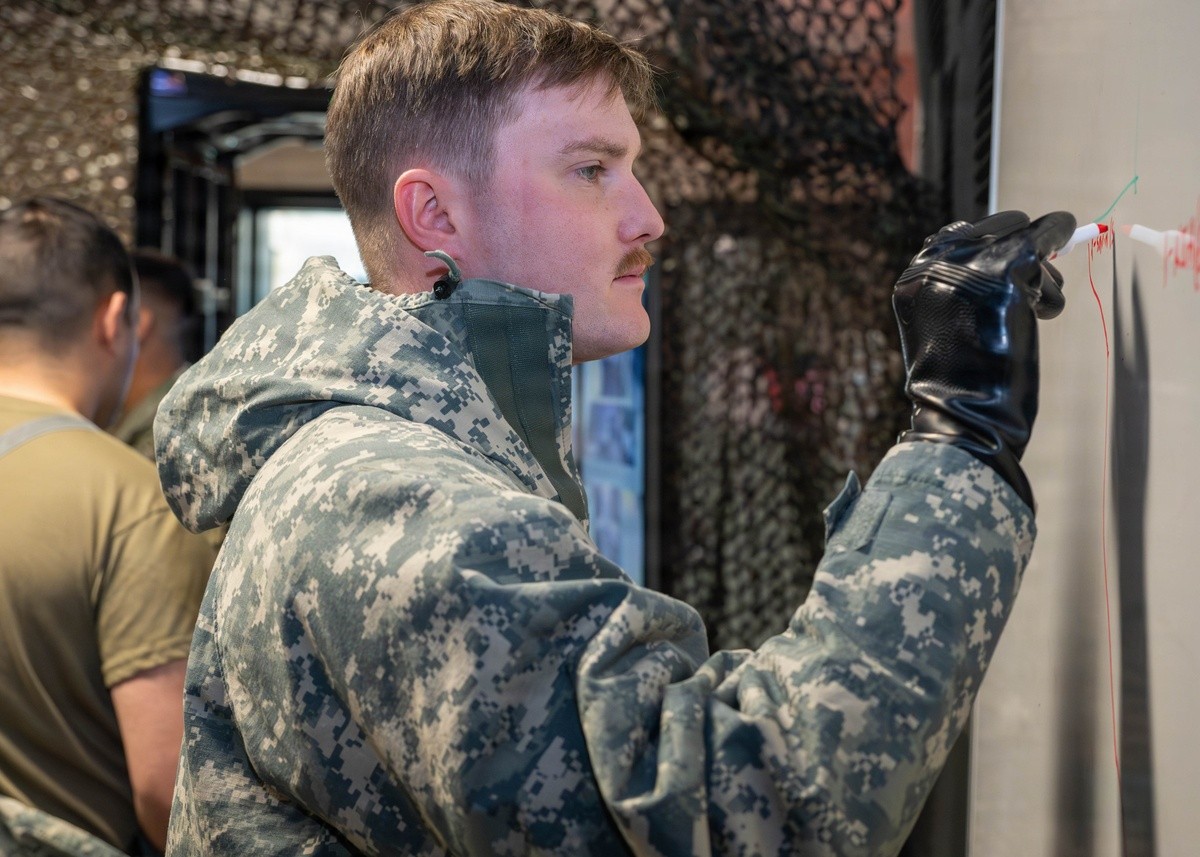
Barney said he was impressed with how his students seamlessly integrated the MTRS into their training.
“It’s a testament to their ingenuity, critical thinking skills and resilience as noncommissioned officers,” Barney said. “Their willingness to learn, problem-solve and push beyond their comfort zones reflects the kind of leadership today’s Army needs.”
According to Silguero, the CDTF has plans to make MTRS training available to other U.S. operational units training at the facility.
“As the global leader in live chemical agent warfare training, the CDTF is committed to the cutting edge of training realism by providing the highest quality, most immersive and exceptionally challenging training capability replicated nowhere else in the world,” Silguero said.
Social Sharing