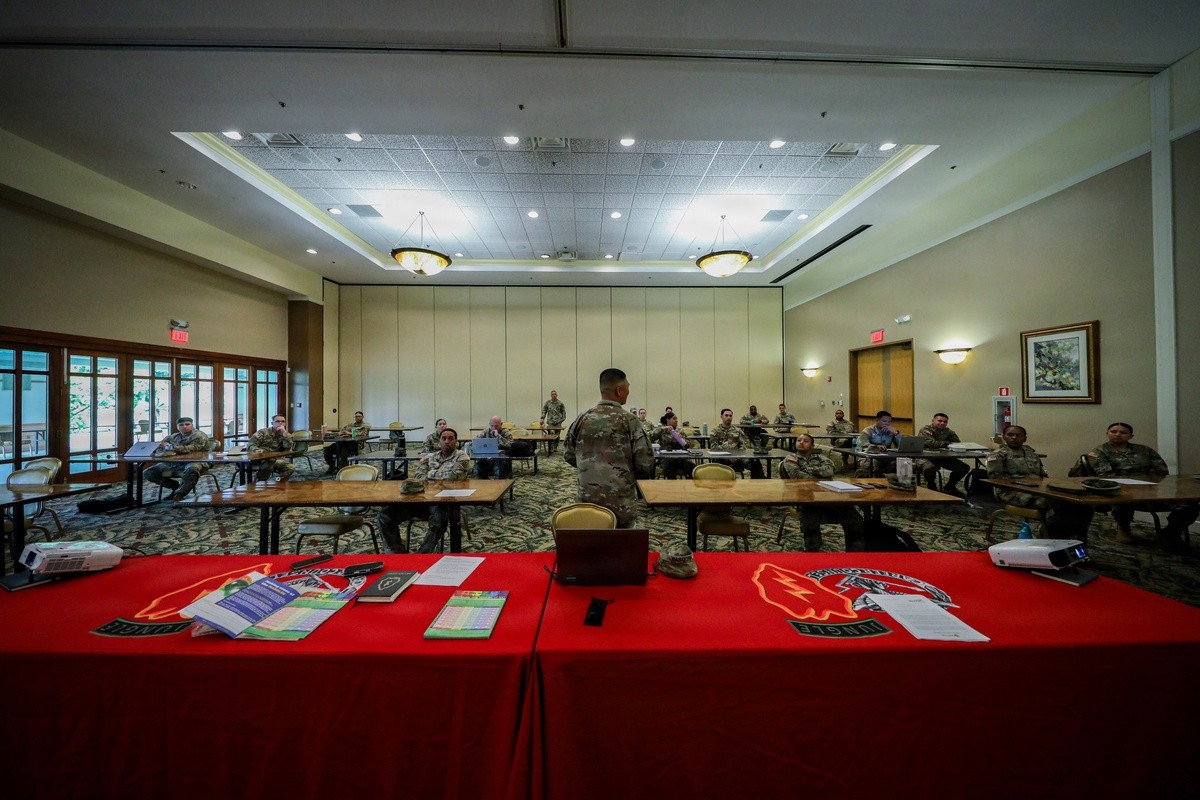
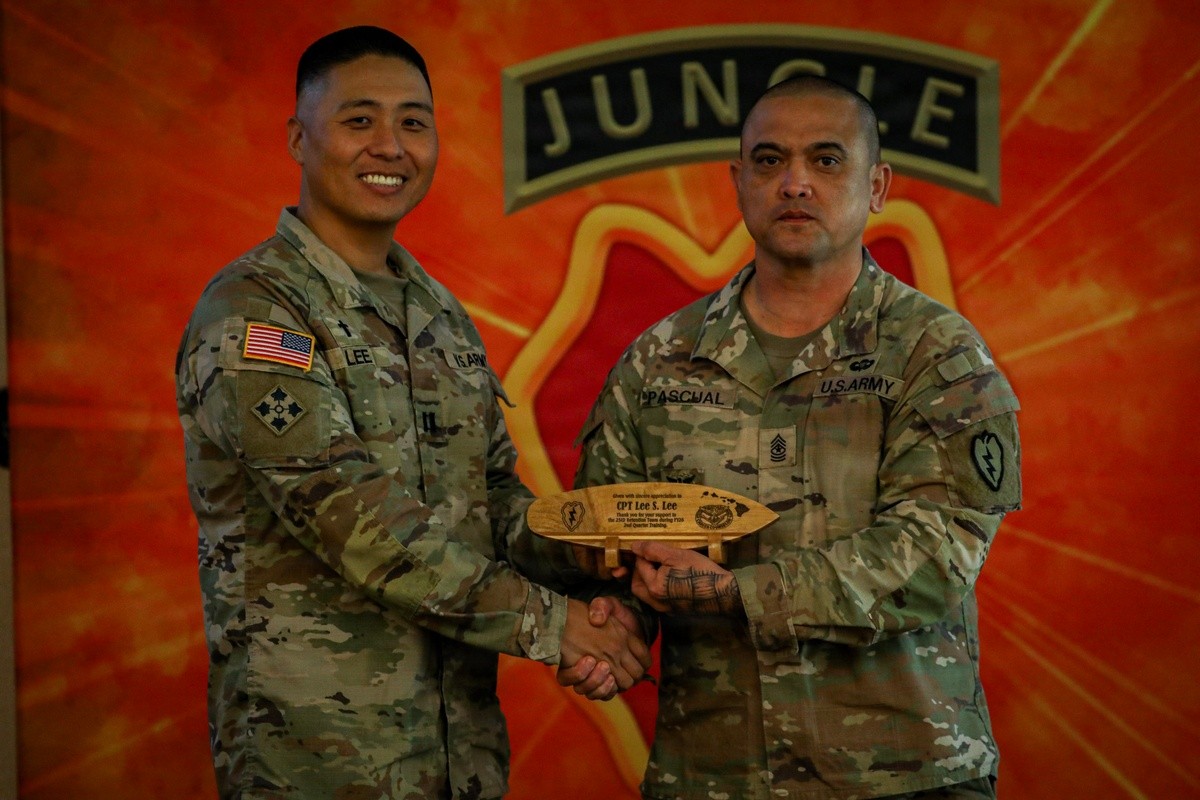

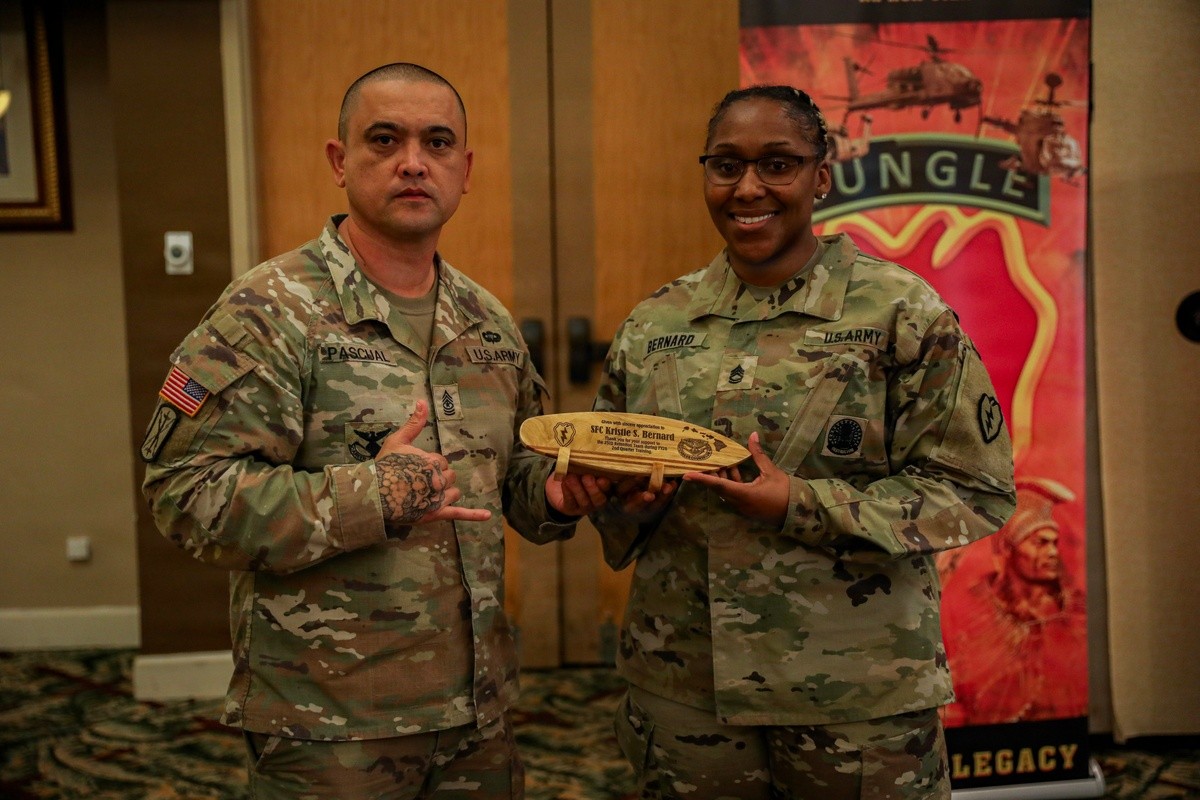
SCHOFIELD BARRACKS, Hawaii —Career counselors from across the 25th Infantry Division participated in a professional development training Jan. 28, 2026, focused on leadership communication, equal opportunity policy updates, quality control practices, and resource management tools designed to improve Soldier support and retention.
The multi-session training brought together subject matter experts who addressed both the human and administrative aspects of career counseling, emphasizing how effective communication, fair treatment, accuracy, and time management directly affect Soldiers’ career decisions.
The training was part of the division’s Career Counselor, Senior Career Counselor and Retention NCO of the Year competition.
Capt. Isaac S. Lee, chaplain assigned to Headquarters and Headquarters Battalion, 25th Infantry Division, opened the session by highlighting the long-term impact leaders and counselors can have through intentional listening and mentorship. Drawing from his personal Army experience, Lee encouraged attendees to reflect on their own non-negotiable leadership principles and recognize how everyday interactions can shape a Soldier’s future.
“That one interaction changed my path,” Lee said. “He took the time to listen, and because of that, everything about my future shifted.”
Lee also discussed the importance of understanding different personality styles, noting that self-awareness and empathy help counselors build trust and communicate more effectively with Soldiers navigating stressful career decisions.
Following the leadership discussion, Sgt. 1st Class Kristie S. Bernard, a human resources specialist serving as the equal opportunity adviser assigned to the 25th Infantry Division, provided an overview of current equal opportunity program guidance and recent policy updates. Bernard explained how miscommunication and lack of clarity surrounding opportunities often lead Soldiers to assume discrimination when decisions are actually based on merit, performance, and potential.

“When Soldiers don’t get a reason, they make up a reason,” Bernard said.
Bernard outlined commander and leader responsibilities within the EO program, the differences between informal, formal, and anonymous complaints, and the role command climate assessments play in identifying organizational trends. She emphasized addressing concerns at the lowest appropriate level and maintaining consistent follow-up to preserve trust and positively influence retention.
Quality assurance and accountability were the focus of a session led by Staff Sgt. Jason P. Rosario, a career counselor assigned to the 25th Combat Aviation Brigade, 25th Infantry Division. Rosario walked counselors through common enlistment and reenlistment documentation errors, stressing the importance of reviewing contracts line by line to prevent mistakes that could delay assignments, affect bonuses, or negatively impact Soldiers’ careers.
“Five minutes don’t hurt, and it prevents bigger problems later,” Rosario said.
Rosario reminded attendees that attention to detail protects both the Soldier and the counselor, adding that credibility is lost when avoidable errors occur.
“If we become complacent and miss errors, it costs us credibility,” he said. “And once that trust is gone, Soldiers won’t come back to us.”
The training concluded with a resource management session led by Sgt. 1st Class Tiana M. Babb, a career counselor assigned to the 25th Combat Aviation Brigade, 25th Infantry Division, who introduced digital tools aimed at improving scheduling efficiency and continuity of operations. Babb demonstrated how Microsoft Forms, a digital survey tool that can be used to gather baseline information prior to counseling sessions and how Microsoft Bookings can reduce unscheduled walk-ins, create predictable appointment blocks, and provide Soldiers proof of scheduled counseling.
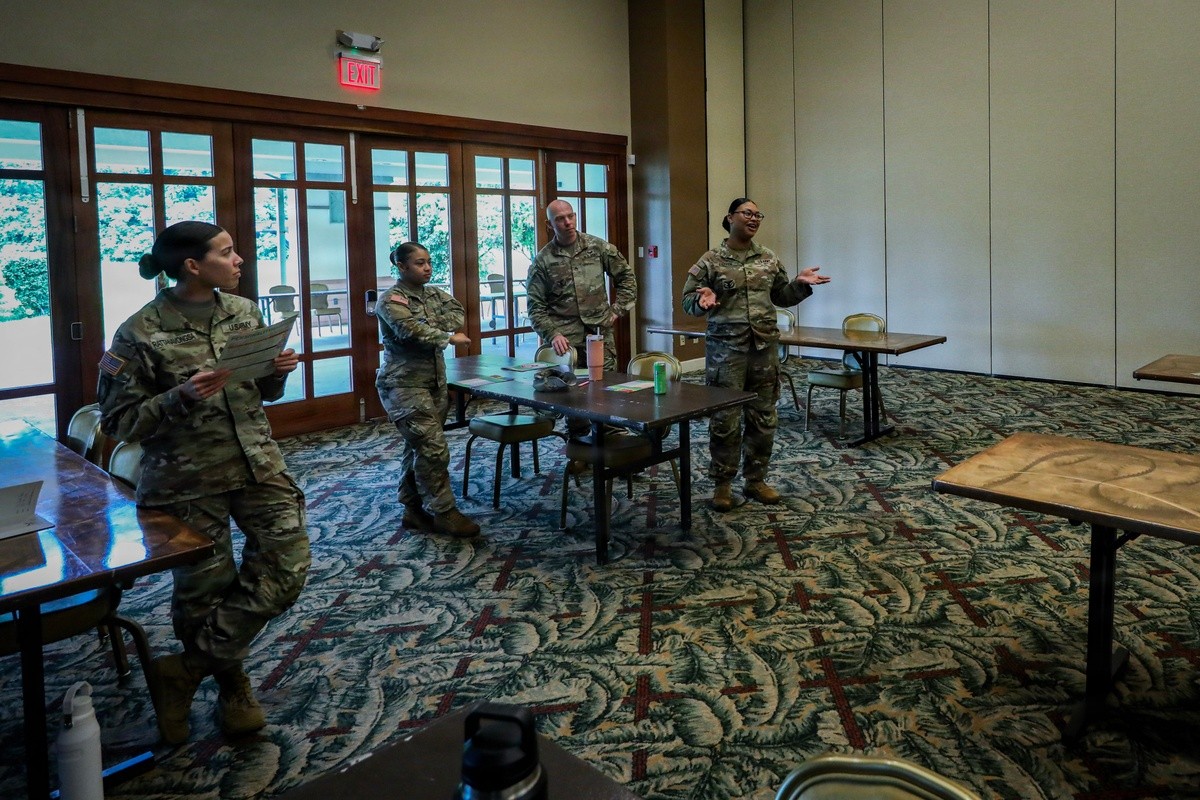
“You already have a baseline of information, and now you can skip past some of those steps,” Babb said.
Babb also discussed using shared booking pages to provide coverage during temporary duty assignments and highlighted the Army Virtual Desktop as an option for maintaining access to work resources when government equipment is limited.
The training reinforced the connection between communication, accuracy, and trust, reminding counselors that the guidance they provide — whether through a conversation, a form, or a contract — can influence Soldiers’ decisions and readiness across the formation.
Social Sharing