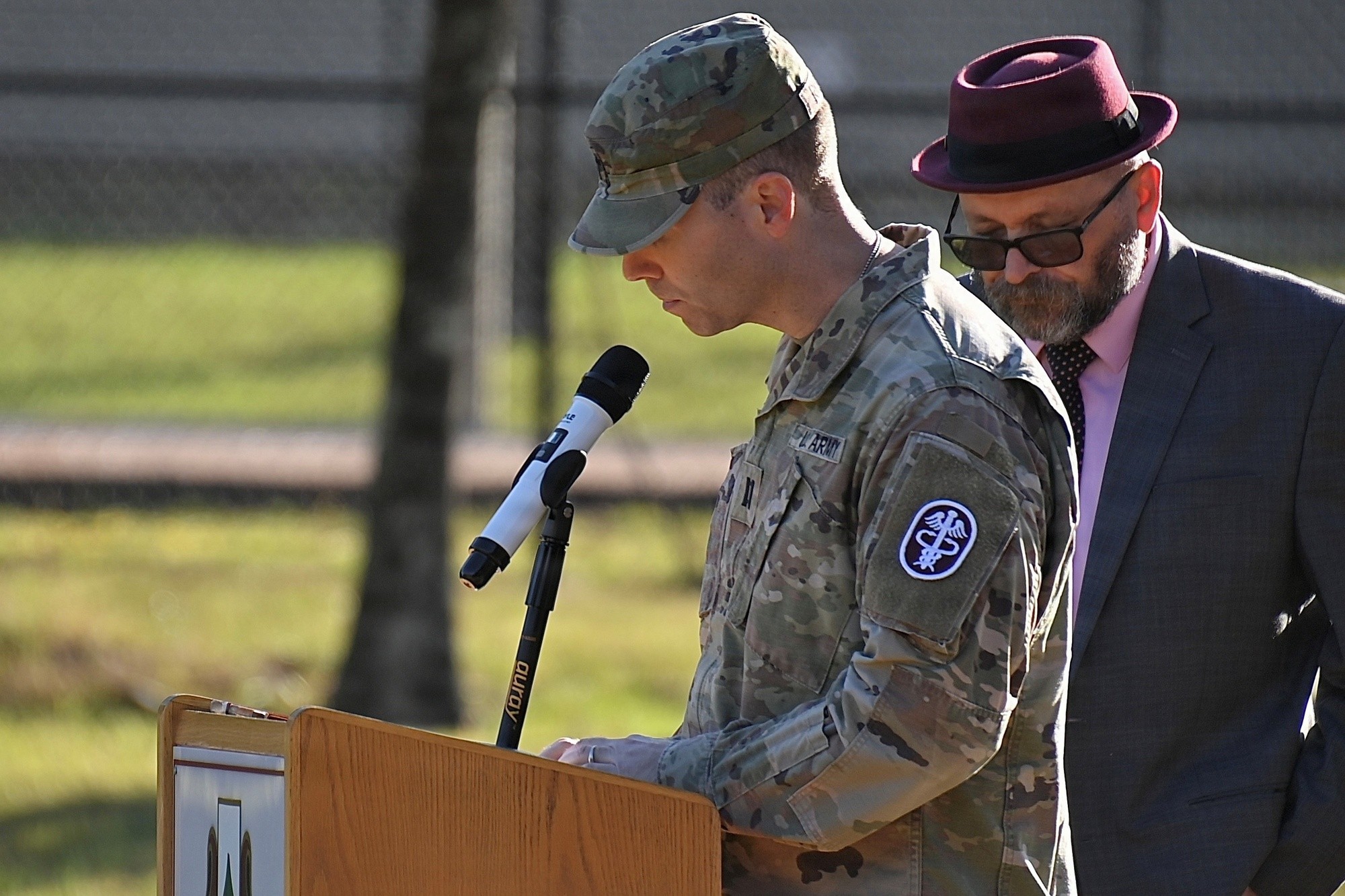
FORT POLK, La. — When Soldiers, patients, Families, and staff walk the halls of Bayne-Jones Army Community Hospital, many may not realize that care extends beyond medicine and treatment plans. Capt. David Rutkin, hospital chaplain, is dedicated to supporting the spiritual, emotional and mental well-being of the BJACH community.
Rutkin’s path to the Army Chaplain Corps did not follow a traditional trajectory. Raised in Tampa, Florida, he earned a bachelor’s degree in economics from the University of South Florida and spent more than a decade working in supply chain and business development before seeking a new professional challenge. At age 33, Rutkin enlisted in the Florida Army National Guard. During basic combat training, a spiritual calling tracing back to his Christian upbringing led him to pursue ministry and ultimately commission as an active-duty Army chaplain.
“I felt called to serve in a different way,” Rutkin said. “Army chaplaincy allows me to walk alongside people during some of the most vulnerable moments of their lives.”
Rutkin holds a Master of Divinity from Liberty University and is currently completing a Doctor of Ministry at Wesley Theological Seminary, with graduation anticipated in 2027. He is also a board-certified chaplain through the National Association of Veterans Affairs Chaplains.
Serving as a chaplain in a hospital setting brings both reward and challenge, Rutkin said. In Army Medicine, chaplains care not only for patients and Families, but also for the Soldiers, civilians and staff who deliver care every day.
“Rigorous training and extensive life experience prepare chaplains for the diverse and complex situations a hospital brings,” Rutkin said. “We often meet needs that are overlooked or difficult to address within time constraints, especially emotional and spiritual needs.”
Chaplain Services are a critical part of holistic care at BJACH. While medical and mental health professionals focus on physical and psychological treatment, chaplains address what Rutkin describes as the intangible needs of individuals—those tied to meaning, values, grief, stress and resilience.
“Human beings are made up of body, soul and spirit,” Rutkin said. “Optimal well-being requires care in all of those areas.”
Patients and Families receiving care at BJACH can access chaplain services including confidential counseling, emotional and spiritual support, religious services and resources for navigating life challenges. The BJACH chapel, located on the fifth floor, is open 24 hours a day for prayer and reflection.
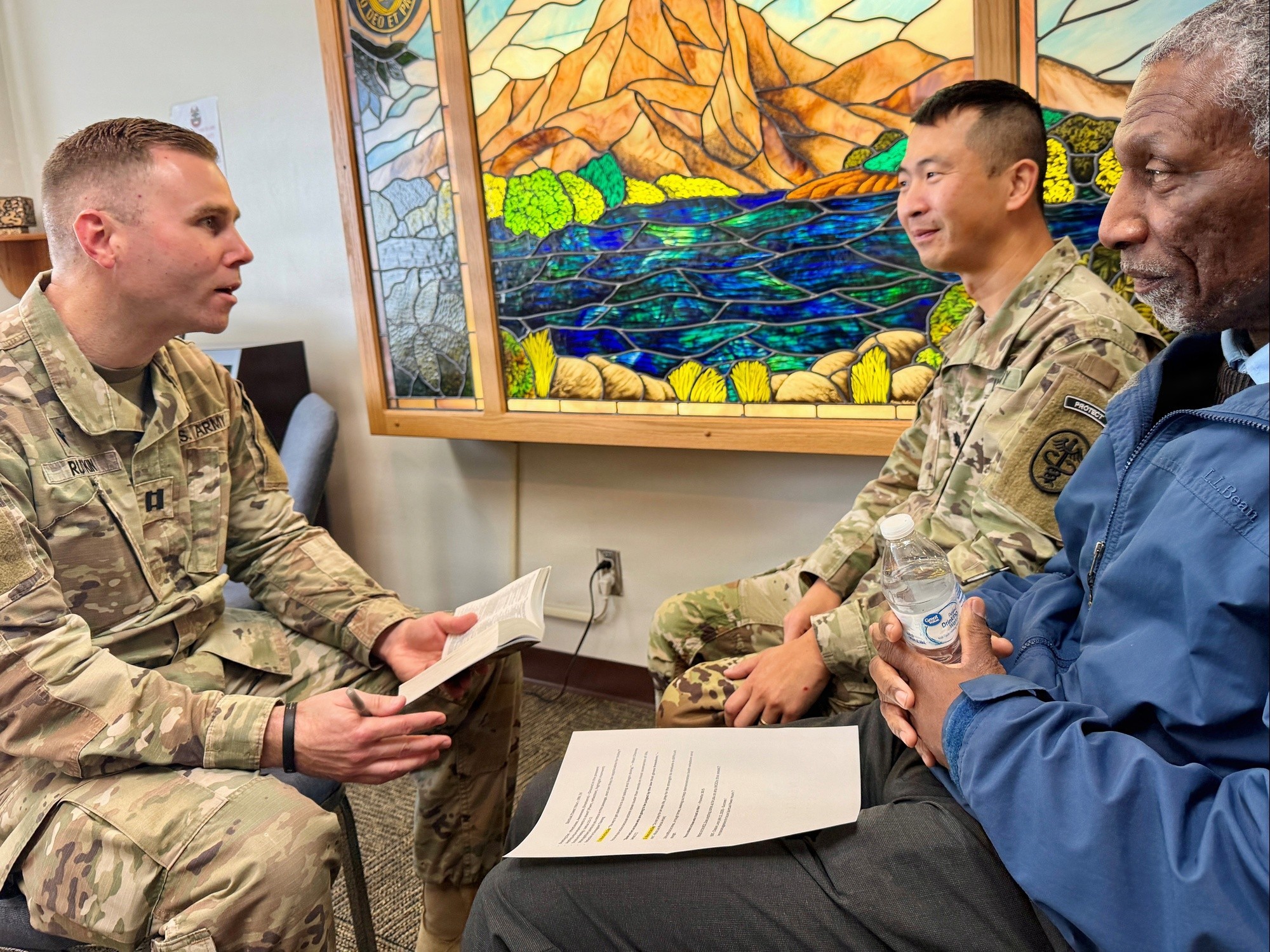
For staff members, Rutkin emphasizes presence and approachability. He regularly walks the hospital, checking in with departments and engaging in informal conversations that often lead to deeper dialogue. He also provides confidential counseling sessions for Soldiers, civilians and staff seeking support with personal, professional or life concerns.
Each morning, Rutkin sends a “Word of the Day” email to the BJACH workforce, sharing a brief quote and reflection intended to encourage motivation, perspective and self-awareness. The daily message is designed to offer a moment of pause at the start of the workday.
In addition to daily outreach, Rutkin hosts a weekly “Spiritual Power Hour,” creating space for staff to step away from routine and engage in dialogue centered on mental, emotional or spiritual reflection. He also leads Building Strong and Ready Teams events that bring staff together outside the hospital environment for training and connection.
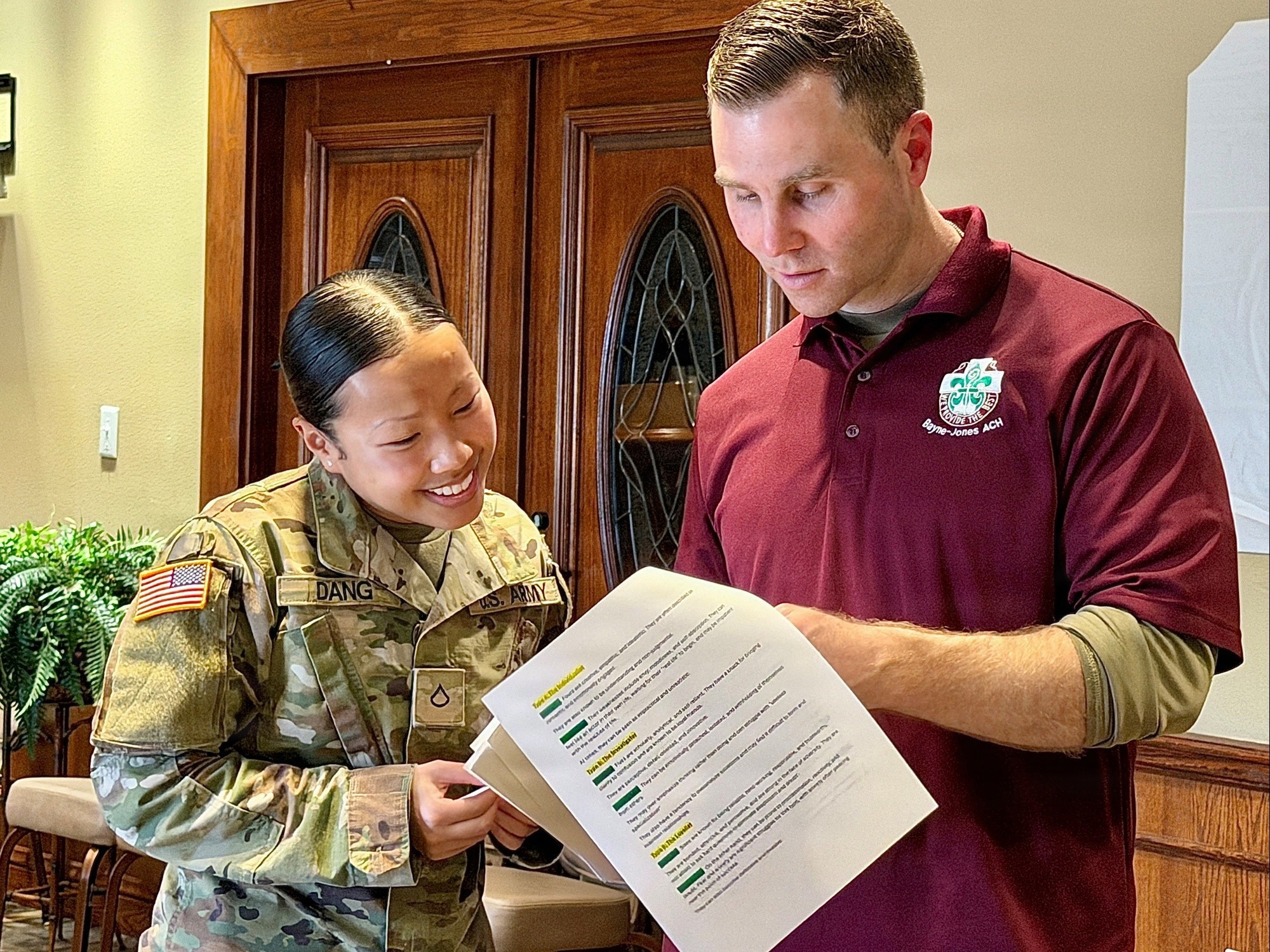
One such event took place Jan. 23, when Rutkin hosted a Building Strong and Ready Teams luncheon at the Warrior Center. During the session, participants explored the Enneagram, a self-awareness tool focused on understanding motivations behind behavior to improve communication and relationships.
“The goal was to strengthen relationships within the BJACH staff community,” Rutkin said. “The feedback showed that people found value in learning more about themselves and how they interact with others.”
Rutkin said informal gatherings like luncheons are especially important in a hospital environment, where staff members often remain focused on daily tasks within their own sections.
“Taking time away from routine helps promote creativity, self-care and community bonds,” he said. “It gives people an opportunity to connect across departments and apply what they learn within their own teams.”
Chaplain services contribute directly to readiness and resilience by recognizing the dignity and humanity of every individual, Rutkin said.
“We approach people as individuals with unique experiences and needs,” Rutkin said. “Our role is to listen, empathize and support mental, emotional and spiritual well-being.”
Rutkin emphasized that chaplain services are available to everyone, regardless of religious affiliation, and that confidentiality remains a cornerstone of the profession.
“Chaplains exist for you,” Rutkin said. “We are here to protect your freedom to practice religion or spirituality and to walk alongside you through any circumstance.”
What motivates Rutkin most is the sense of community he found at BJACH and Fort Polk.
“This is a place built on relationships,” Rutkin said. “The BJACH community is welcoming, supportive and deeply connected. Serving alongside this team motivates me every day.”
For more information about Chaplain Services at Bayne-Jones Army Community Hospital, visit the BJACH website:
https://bayne-jones.tricare.mil/Health-Services/Other/Ministry-Pastoral
Social Sharing