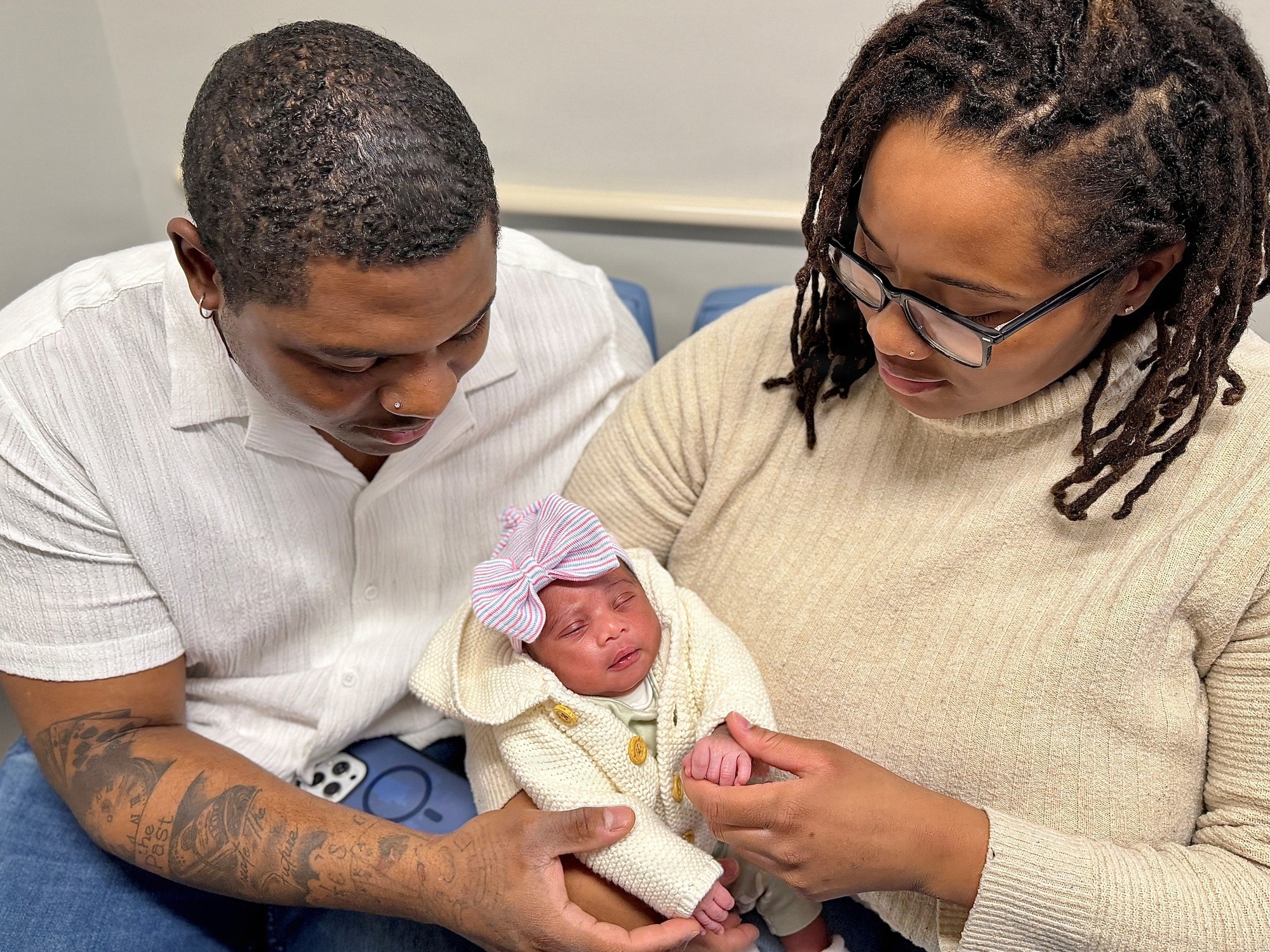
FORT POLK, La. — When My’Kia Starks brought her newborn daughter home for the first time, the joy of becoming a mother was paired with the weight of a new and unfamiliar responsibility.
“I was running on only one or two hours of sleep,” Starks said. “But I also felt incredibly grateful knowing my baby girl had arrived safely. Becoming a mom was the biggest change of my life.”
Starks, 21, and her husband, Spc. LaMichael Starks, assigned to the 84th Combat Engineer Company - Infantry, 710th Light Support Battalion, 3rd Brigade Combat Team, 10th Mountain Division, welcomed their daughter, Me’Lani, on Jan. 6 at Beauregard Health System in DeRidder, Louisiana, after Starks was referred off post due to maternal health concerns. While the delivery went well, the days that followed brought fatigue and the realization that caring for a newborn came with challenges they had not fully anticipated.
A Critical Transition for New Military Families
For young military Families, the transition home after childbirth can be just as important as the delivery itself. Unlike many civilian Families, military parents often return home without nearby relatives or long-term support systems, navigating recovery and newborn care largely on their own.
Post-delivery education, reassurance and hands-on support play an important role in helping new parents build confidence, strengthening Families and supporting Soldier readiness.
Once home, Starks said feeding and nighttime routines quickly became challenging. Despite preparing to breastfeed, she found that learning in real time brought new questions and concerns.
“The first night was especially hard,” she said. “I struggled to tell whether my baby was eating enough or if she was even getting milk at all.”
As breastfeeding became increasingly painful, Starks said she began to worry. Like many new parents, the transition home brought questions and moments of self-doubt as she learned to care for her newborn.
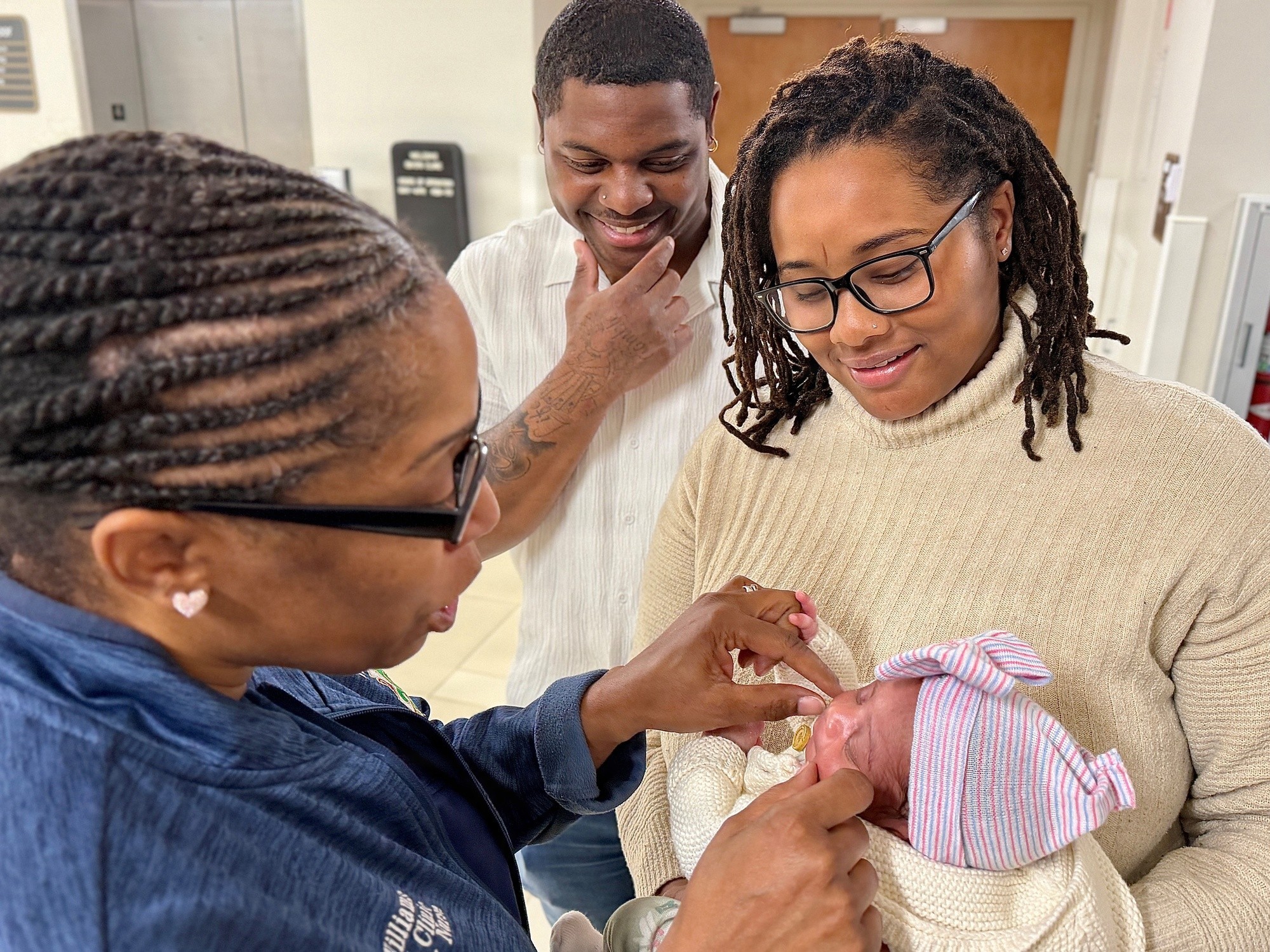
Looking for guidance, Starks spoke with her mother — a BJACH employee — who connected the young Family with April K. Williams, a supervisory clinical nurse in the BJACH OB/GYN Clinic.
That connection, Starks said, made a lasting difference.
“She took the time to go over postpartum care from head to toe and answered questions that helped us feel more confident as new parents,” Starks said.
Williams said supporting Families during the transition home is a critical part of care, particularly for first-time parents.
“My role is to make sure Soldiers and Family members have the education and support they need as they adjust to life with a new baby,” Williams said. “The period after discharge can be overwhelming, especially for Families without relatives nearby.”
She explained that when she meets with new Families, education often focuses on breastfeeding support, newborn care and recognizing postpartum warning signs.
“Many military Families are navigating this phase on their own,” Williams said. “Consistent guidance helps them feel supported and confident during those early weeks.”
The most significant support, Starks said, came through breastfeeding education.
“She showed me different feeding positions, helped with proper latching, and taught me how to fix a bad latch,” she said. “She explained how to tell if my baby was swallowing and reassured me about her breathing. After that, my pain was gone, and I finally felt confident.”
Support at Home Strengthens Readiness
For Spc. Starks, the reassurance extended beyond learning how to care for a newborn — it directly affected his ability to balance Family life with military service.
“Bringing our baby home felt unreal at first,” he said. “I was in shock realizing I was now responsible for a new life.”
He said hands-on guidance helped address concerns he did not know how to navigate on his own.
“I was worried about her breathing and her skin,” he said. “April explained what was normal and made sure we understood.”
From a Soldier’s perspective, that support was critical.
“When your Family is taken care of, it allows you to focus on your duties without constant worry,” he said. “That peace of mind is critical for readiness.”
Both parents emphasized how meaningful the support they received was during a vulnerable transition.
“It meant everything to have someone walk us through things step by step,” My’Kia Starks said. “Her patience, kindness and genuine care showed how supportive the people at Fort Polk truly are.”
Spc. Starks echoed that sentiment.
“It showed that the military community supports its Soldiers and their Families beyond professional responsibilities,” he said.
Care That Extends Beyond the Delivery Room
Support for new parents at BJACH is complemented by education and resources provided through Fort Polk installation partners.
Yadira Roman, a registered nurse with the New Parent Support Program, said the free and voluntary program provides education, support and resources to expectant parents and Families with children from birth to age 3.
“NPSP focuses on healthy child development, safety and strengthening Family resilience,” Roman said.
The program serves active-duty service members, spouses, Families and veterans, offering evidence-based education, personalized support and access to resources that promote safe sleep, infant care, bonding and parental well-being.
A Message for Other New Parents
Looking back, Starks described the experience as “life changing.”
“April took the time to answer our questions and help us feel more confident as new parents,” she said. “She genuinely cares about mothers and Families.”
Her advice to others navigating early parenthood is simple.
“Never hesitate to ask for help,” Starks said. “There is always more to learn and having someone with experience can make a huge difference.”
Social Sharing