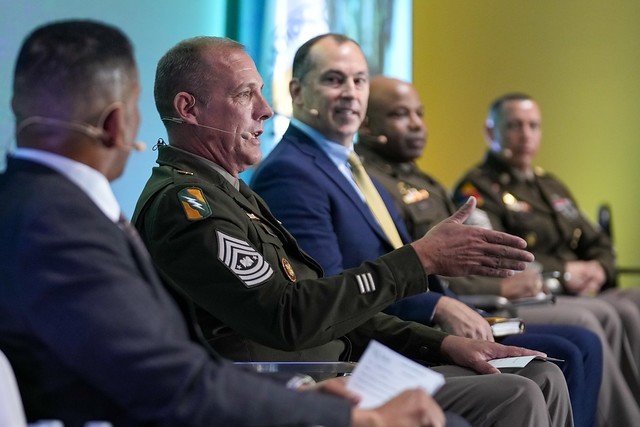
More than 44,000 attendees from 92 countries, along with 750 exhibitors, convened Oct. 13–15 at the 2025 Association of the United States Army Annual Meeting and Exposition in Washington, D.C. Embracing the theme “Agile, Adaptive, Lethal: Moving at the Pace of Change,” the three-day event featured professional development workshops and sessions on a variety of topics.
A robust panel discussion ensued during the general session “Warfighter and Family Forum 1: Relocation Readiness—A PCS Integration Forum.” Panelists shared tips and best practices for relocation readiness and integrating Soldiers and Families into new communities. The discussion touched upon ALARACT 097/2025, which details the new Onboarding and Integration program, formerly the Total Army Sponsorship Program. Senior Commanders now have flexibility in determining requirements for onboarding and integrating Soldiers at their installations.
“Knowledge is power, and that is how we effect change, and that is how we affect the readiness of our Soldiers,” said Dr. Patti Brown, AUSA’s Senior Advisor of Family Readiness.
Other helpful resources shared included the Housing Support Office, which can help Soldiers take a more in-depth look at leases when they choose to live off post, and Army Housing Online User Services, which provides links to floor plans of Army housing and privatized housing, along with housing staff contacts at the new PCS location.
The second general session, “Building a Healthy Home Front,” explored how supporting Families, fostering resilience and taking a holistic approach to health strengthens both Soldiers and their communities.
Speakers explained the connection between physical, mental, spiritual and financial health in building readiness. Recognizing this relationship, Lt. Gen. Mary K. Izaguirre noted that addressing challenges early—whether it’s a leaky roof, educational stress or financial strain—ensures that Families and Soldiers can focus on what matters most: being resilient, connected and ready for the mission.
The discussion concluded with Army Emergency Relief sharing examples of its daily support of holistic health and fitness through critical assistance to Soldiers and Families worldwide. AER’s Chief Executive Officer, retired Sgt. Maj. of the Army Michael A. Grinston, said an example of AER’s direct effect on readiness was when $25 million in requests from 15,000 Soldiers was processed during the first few days of the recent government shutdown.
During the third general session, “Army Senior Leader Fireside Chat: The Soldier and Family Experience,” Soldiers and leaders alike were empowered to voice concerns and push for change. Army Chief of Staff Gen. Randy A. George stressed that one size doesn’t fit all when onboarding Families across different installations, stating that each base has unique needs and challenges. He mentioned the My Army Post App, built by Soldiers and designed to provide localized information for each installation. Having faced bureaucratic obstacles during development, the app demonstrates how innovation in the Army can overcome inefficiency.
Sgt. Maj. of the Army Michael R. Weimer doubled down on the technology piece, discussing the impact of technology vs. leadership and sharing that while tech tools are important, they do not replace real connection through human-led welcoming efforts. “We now have QR codes on your orders so that you can expedite the PCS process . . . we’re in this space right now where we are going to change and become more efficient,” said Weimer.
The panel unanimously agreed that child care remains one of the Army’s toughest challenges. Army Child Development Centers rank among the nation’s best, yet they face staff shortages the Army is actively addressing. The panelists discussed the efforts underway to incentivize child care workers with higher pay, hiring flexibility and commissary privileges. The Army is testing partnerships with local YMCAs to potentially expand child care for off-installation Families, noting that between 60% and 70% of Families live off installation. The panelists also discussed a push to standardize spouse employment credentials so that, once approved for work in child care or other base positions, spouses wouldn’t need to restart the approval process at every new installation.
They also shared that the Army is forming a task force with other services to fix systemic issues in barracks management. The panel discussed proposed solutions, including exploring privatization models, citing a figure of $250,000 per Soldier as the average cost per barracks room.
The Warfighter and Family forums demonstrated how strong, supported Families directly contribute to a strong, lethal Army. By providing integrated resources, innovative programs and responsive support, the Army continues to invest in Families as a critical component of mission readiness and national defense.
Social Sharing