Aberdeen Proving Ground, MD – Researchers at the U.S. Army Combat Capabilities Development Command Chemical Biological Center (DEVCOM CBC) have successfully transitioned a heat-based decontamination project to a Program of Record, marking the next step in getting contaminated sensitive equipment back into warfighter hands faster.
The Chemical Hot Air Decontamination (CHAD) project, funded by the Defense Threat Reduction Agency’s Joint Science and Technology Office (DTRA JSTO), has transitioned to a Program of Record with the Joint Project Manager for Chemical, Biological, Radiological and Nuclear (CBRN) Protection within the Capability Program Executive Chemical, Biological, Radiological, and Nuclear Defense (CPE CBRND), who will move it through the acquisition process.
Decontamination is an essential capability if Soldiers and their equipment are exposed to a chemical agent in the field. Traditionally, soap and water, bleach, or sodium hydroxide would be used for equipment decontamination. While this process works, it is not suitable for sensitive equipment, like computers and sensors. The other issue traditional decontamination methods pose is that they can alter the materials being decontaminated. CHAD presents an alternative method for decontamination that is suitable for sensitive equipment materials and can quickly decontaminate items, getting equipment back into warfighter’s hands faster.
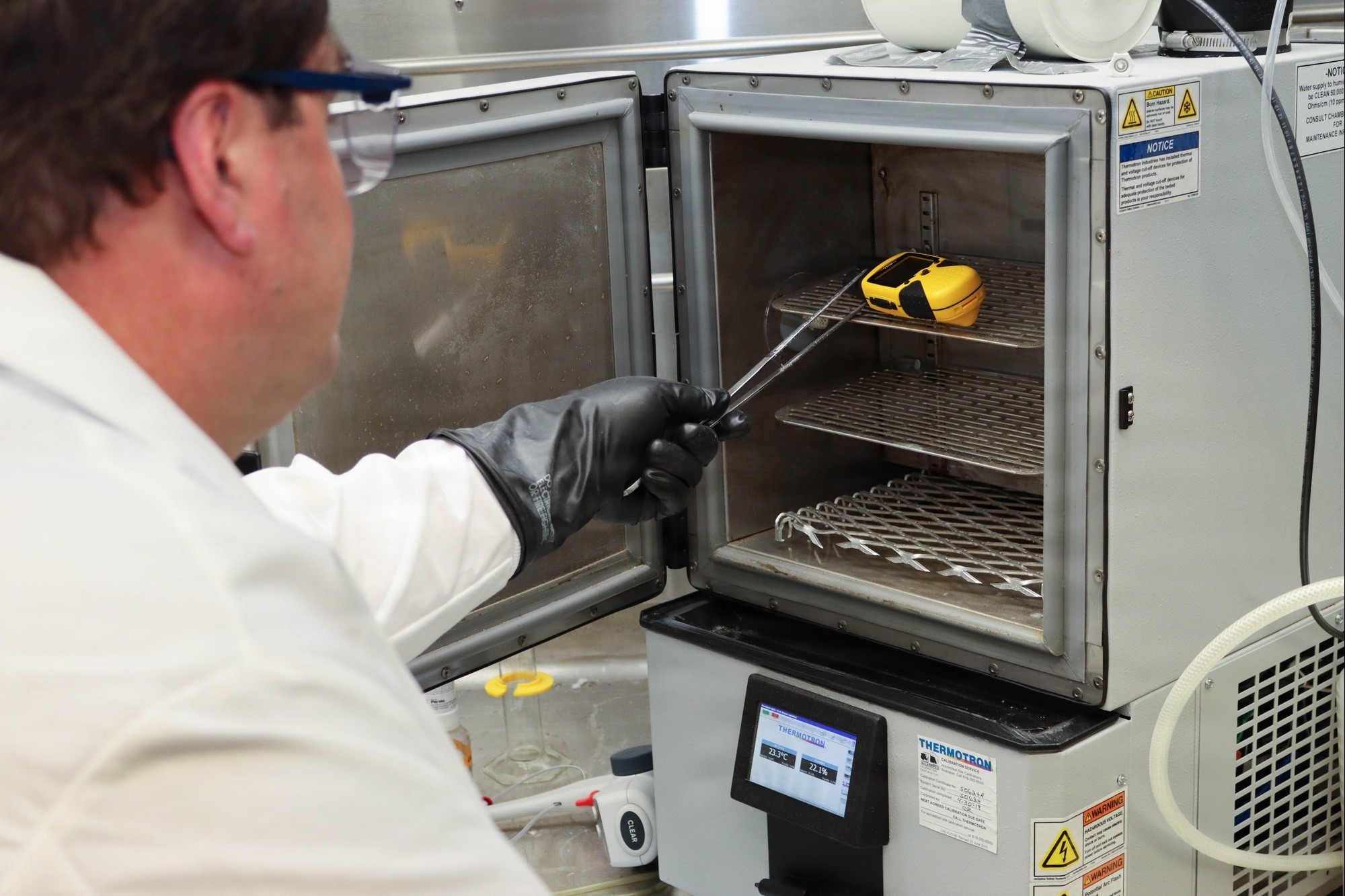
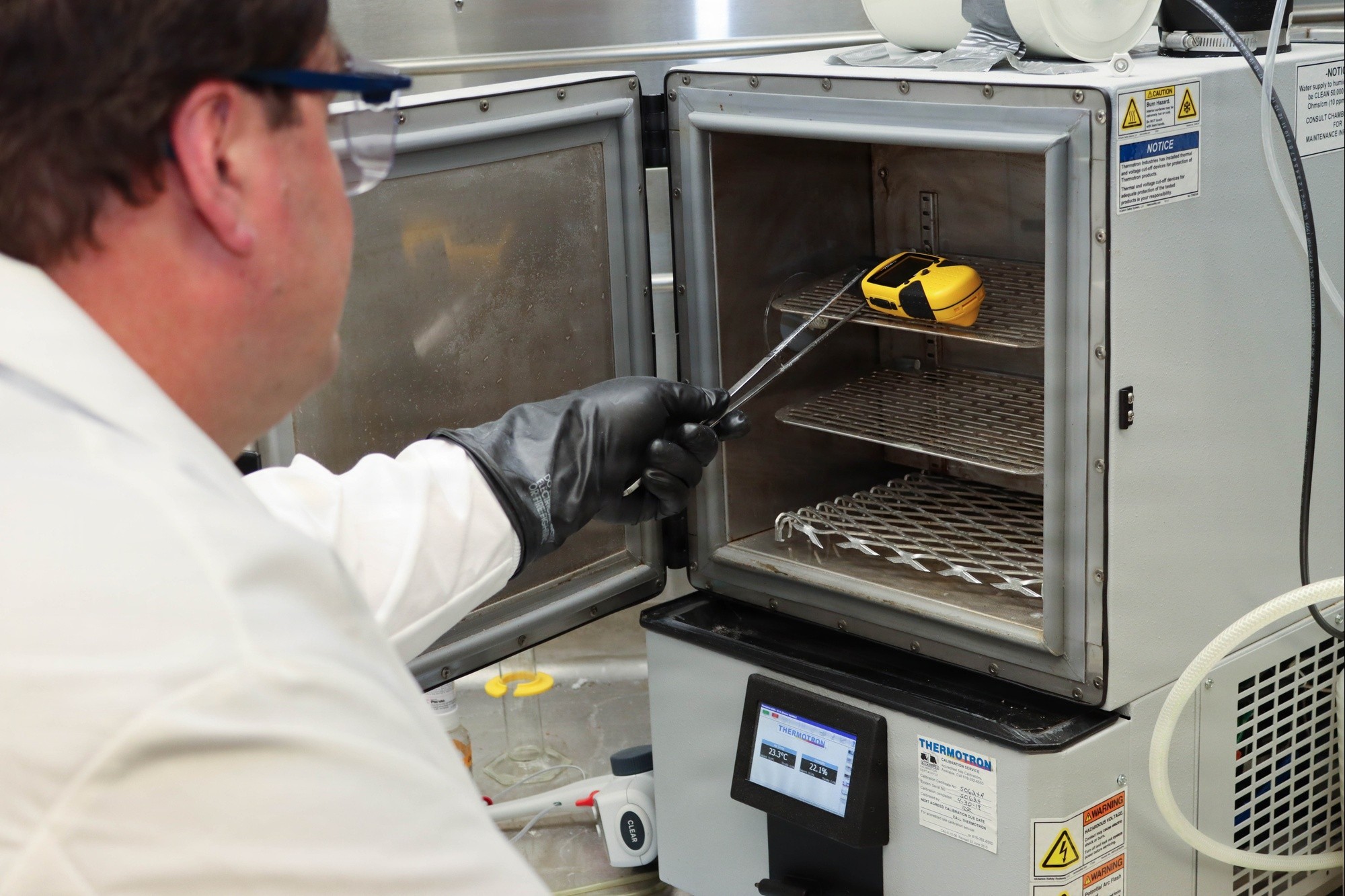
“The idea is to use heat, airflow, and high levels of relative humidity as a treatment process. By elevating the temperature and humidity, we can remove the agent without performing too harsh of a treatment. This is what makes CHAD suitable for sensitive equipment,” explained Joe Myers, a supervisory chemist and acting branch chief for decontamination sciences at DEVCOM CBC. “Basically, is an enclosure that equipment can be placed into, you push a button, and the decontamination process runs.”
Two of the biggest benefits to CHAD are that multiple pieces of equipment can be decontaminated at once and equipment can be returned to the warfighter, which does not usually happen. For example, items like gas masks and rifles can be placed on a rack with CHAD and reach non-detection with a treatment time as short as two hours. The process used by CHAD has the potential to save the Army from replacing equipment after being exposed to a chemical agent.
The CHAD project has evolved over the years as Myers and team adjusted the parameters of the treatment process and broadened the application for the warfighter. “Ultimately what started as a way to decontaminate personal effects and return them to the warfighter or their family, has really grown into a low-burden, scalable decontamination capability that can decontaminate objects that have historically presented a challenge.”
Now that CHAD has transitioned to a Program of Record, the JPM CBRN Protection team will take over the project. Before CHAD is fielded, it will go through a series of tests and demonstrations as part of the acquisition cycle. The DEVCOM CBC team will continue to provide technical expertise to transition partners as the technology continues to mature.
Social Sharing