REDSTONE ARSENAL, Ala. (Dec. 31, 2025) – It was a year defined by its unpredictability.
Amidst the announcement of historic Army acquisition reform, a reduction in civilian personnel, the deactivation of the Center’s higher headquarters, a record-breaking 43-day government shutdown and the Center’s new dual role under the Portfolio Acquisition Executive, or PAE, the U.S. Army Combat Capabilities Development Command Aviation & Missile Center still accomplished several pivotal achievements.
2025 was punctuated by change, as the government workforce was furloughed on October 1 under Army Futures Command, and returned to work November 13 under a new leadership structure.
“We now work for the Transformation and Training Command, an organization that grew by a factor of ten from about 30,000 people to 200,000 people overnight and is the only remaining four-star command in the Army,” Director Dr. James Kirsch said.
The Center also now falls under an additional requirements structure. The PAEs stood up in fall 2025 to streamline the process of requirements, programming and acquisition for related groups of weapon systems and technologies. Under this new structure, the Center will serve as the Fires Systems Center with Kirsch as director, and the Air Systems Center led by Dr. Stephanie Reitmeier, current director of DEVCOM AvMC’s Software, Simulation, Systems Engineering and Integration Directorate, or S3I.
“The Systems Center concept is that as direct support to Lt. Gen. Frank Lozano for Fires and Maj. Gen. Clair Gill for Aviation, our job is to synchronize the engineering, science and technology, research and development efforts across all the labs and centers. This is an ability for the PAEs to look at priorities holistically -- and cut what we do not need,” Kirsch said.
As of January 2026, there are no plans to formally divide DEVCOM AvMC into two centers, but personnel changes will continue into 2026, as 2025 ended with a reduction of 788 civil servants from 3338 to 2550.
The Center will also shrink from six to four locations in the new year. The Design, Simulation & Experimentation division, located at NASA Ames Research Center on Moffett Field, California, will move to Redstone Arsenal and Joint Base Langley-Eustis, Virginia by June. Additionally, the Center’s Honolulu, Hawaii operations will be transferred to a sister DEVCOM organization.
But even while undertaking this historic transformation in Army acquisition, the mission did not stop.
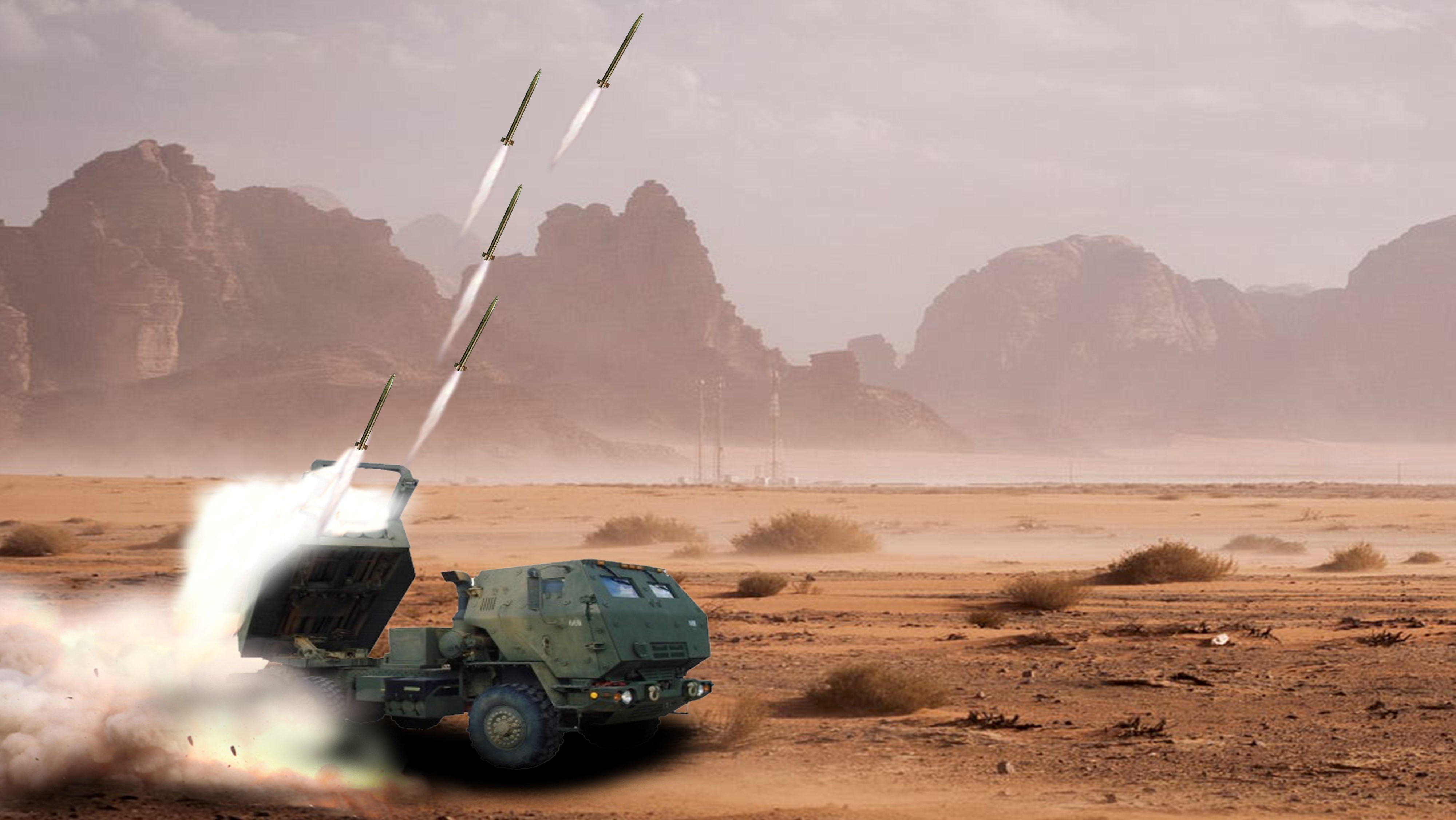
The Center transitioned the Autonomous Multi-Domain Launcher, developed in its Technology Development Directorate, to the Rapid Capabilities and Critical Technologies Office, now PAE Fires, marking the next step in its journey towards fielding. The now-Common Autonomous Multi-Domain Launcher, or CAML-H, will integrate a launcher on a 15-ton class chassis that will fire the Tomahawk Land Attack Missile or the Patriot Advanced Capabilities Three Missile Segment Enhancement interceptor. Its smaller CAML-M counterpart will utilize a Family of Medium Tactical Vehicles to launch Multiple Launch Rocket System, or MLRS, munitions or the new Indirect Fire Protection Capability with AIM-9X interceptors.
The Systems Readiness Directorate stood up the Future Long-Range Assault Aircraft XR lab for FLRAA headquarters, which allows repairers and aircrew members to step inside an MV-75 virtually with the use of wearable Mixed Reality and Augmented Reality glasses. The lab brings XR capabilities to the FLRAA workforce, enabling immediate access to walk through the live design of the aircraft.
S3I stood up the System Integration & Verification, or SIV, effort as part of the Integrated Air and Missile Defense Battle Command System, a “plug-and-fight” system that leverages any integrated sensor to support engagements with the best weapon. The SIV fulfills the Integrated Fires Mission Command project office’s request to update software and test hardware on IBCS Major End Items, or MEIs, prior to fielding to the user. Field support experts were also deployed to OCONUS locations supporting accelerated fielding priorities.
In August, the Center met with 35 potential industry partners during their industry day for its Direct Support Fires Technology science and technology project, that will develop and demonstrate low-cost rocket technology and a reloadable MLRS Family of Munitions compatible pod. Utilizing Cooperative Research and Development Agreements, DSFT is fostering a collaborative environment that encourages diverse industry input and competition, crucial for the dual requirements of innovation -- and cost reduction.
DSFT is a novel approach that will become the standard, as 2026 will not be business as usual, Kirsch said.
“We are blowing up the way the Army runs – with one goal: go faster. We talk about cost – schedule – performance a lot and now: schedule is key. Getting something to the Soldier next month or next year that is a 70% solution is better than 90% capability three to four years down the road. That doesn’t mean we will stop at the 70%, it means we will continue to iterate and enhance the lethality of our Soldiers.
“It is all about speed. The good news is we are really good at speed when we need to be.”
Social Sharing