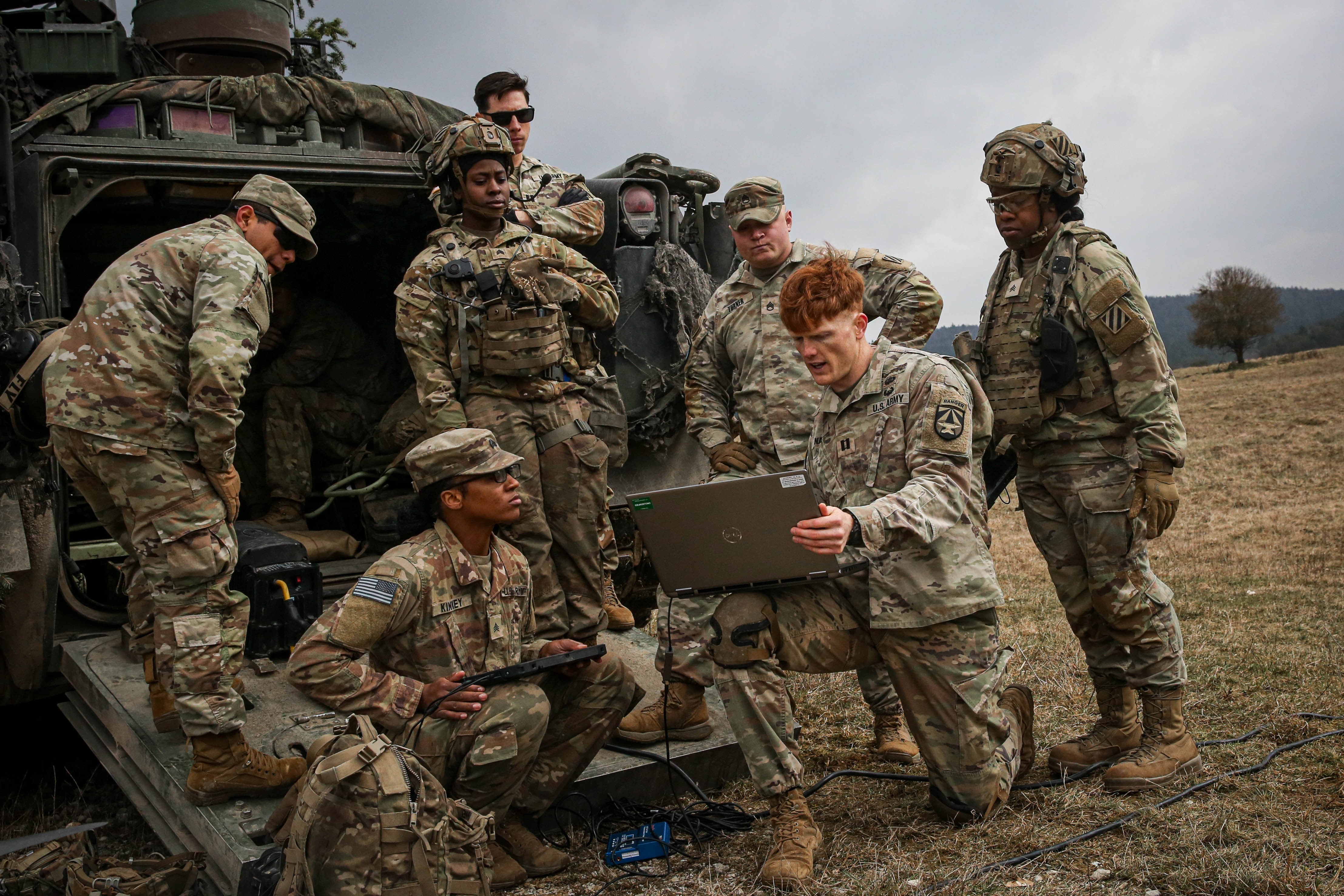
Allied Spirit 24 is a U.S. Army exercise for its NATO Allies and partners at the Joint Multinational Readiness Center near Hohenfels, Germany. The exercise develops and enhances NATO and key partners interoperability and readiness across specified warfighting functions. (U.S. Army photo by Micah Wilson) View original
WASHINGTON – The U.S. Army has established a new career pathway for officers to specialize in artificial intelligence and machine learning (AI/ML), formally designating the 49B AI/ML Officer as an official area of concentration. It advances the Army's ongoing transformation into a data-centric and AI-enabled force.
Full implementation of the new career field will be phased. The first selection of officers will occur through the Army's Volunteer Transfer Incentive Program (VTIP) beginning January 2026. The officers will be reclassified by the end of fiscal year 2026.
“This is a deliberate and crucial step in keeping pace with present and future operational requirements,” said Lt. Col. Orlandon Howard, U.S. Army spokesperson. “We’re building a dedicated cadre of in-house experts who will be at the forefront of integrating AI and machine learning across our warfighting functions.”
Initially, the 49B AOC will be open to all officers eligible for the VTIP. Those with advanced academic and technical backgrounds in fields related to AI/ML will be particularly competitive candidates. The Army is also exploring expanding this specialized field to include warrant officers in the future.
Officers selected for the 49B AOC will undergo rigorous graduate-level training and gain hands-on experience in building, deploying, and maintaining the Army's cutting-edge AI-enabled systems. Their primary role will be to operationalize these advanced capabilities across the range of military operations.
The strategic purpose of this new MOS is to provide the Army with a core group of uniformed experts who can accelerate the integration of AI and machine learning. These specialists will apply their talents to a wide range of applications, including:
- Accelerating battlefield decision-making: Enabling commanders to make faster, more informed decisions in complex environments.
- Streamlining logistics: Optimizing supply chain and maintenance operations.
- Supporting robotics and autonomous systems: Fielding and managing the next generation of battlefield robotics.
"Establishing the 49B AI/ML career path is another key investment to maintain our decisive edge as an Army," said Howard. "Ultimately, it’s about building a force that can outthink, outpace, and outmaneuver any adversary."
Social Sharing