NORTHERN LANDING ZONE, Syria – Far from the comforts of an established garrison, Soldiers from 6th Squadron, 17th Cavalry Regiment (6-17 ACS), Task Force Nighthawk, successfully turned a desolate and remote desert bed into a fully operational outstation, equipped with self-sustaining life support to facilitate aviation operations in Syria.
Within the Combined Joint Task Force-Operation Inherent Resolve (CJTF-OIR) area of responsibility, Northern Landing Zone (NLZ) lies in the Syrian desert, secluded from many resources and surrounded by miles of dirt.
Task Force Nighthawk was tasked to construct and maintain mission-ready facilities to support ongoing Apache helicopter and medical evacuation (MEDEVAC) operations. Major components of these facilities include Forward Arming and Refuel Points (FARPs), Large Area Maintenance Shelters – Aviation (LAMS-A), and Containerized Housing Units (CHUs) for office and living spaces. With limited tools and resources, Soldiers relied solely on their own expertise, manpower, and teamwork to accomplish this task.

U.S. Army Capt. Connor Fischer, the battle captain and operations representative for the squadron, oversaw these construction efforts. From his perspective, he stated that the mission demanded every trooper on ground to find their role to assist in this mission.
“Everyone here has their job that they have in the Army, but they also have their own unofficial jobs that they have within the community,” said Fischer. “You’ll have your operations noncommissioned officer (NCO), who is also the forward operating base (FOB) plumber. Everyone finds the role they can pick up the slack with, because you’re not just doing the job the Army assigns you.”
U.S. Army 1st Sgt. Devon Nier, the first sergeant for Alpha Troop, 6-17 ACS, runs the mayor cell for the base. He manages logistics, maintenance and personnel tasks while coordinating critical life support assets from power generation to food and water distribution. He concurred with Fischer and said that finding those unofficial roles was a combination of talent management and learning every trooper’s background.
“Everyone has a background they grew up in, and we brought everything to the table here,” said Nier. “We have excellent flight operations personnel. We have excellent fuelers. And then we have those who drove a forklift for their family’s farm and those who are good at troubleshooting electronic appliances. We collaborated to figure out the best talent management we have for each individual problem set that arises."

Problem-solving is another vital aspect to surviving in the remote base. Nier spoke briefly about a time when one of their generators failed and nearly shutdown power for the entire FOB. With no electrician present, Soldiers immediately began troubleshooting wires, testing circuits, and swapping parts until they identified a failed circuit breaker. The circuit breaker was replaced to restore power and continue operations.
Even more interesting is the task organization for every problem. Both leaders attributed their success to trusting those within their ranks, from the top to the lowest level. Tasks are assigned based on skill, not rank. A private first class with a background in electrical engineering may lead a project to enhance lighting in the FOB while a senior NCO follows their guidance.
“The Army doesn’t teach you how to troubleshoot a power grid, but we have 15Y Army folks who know how to troubleshoot electronics on a helicopter, and they take that skill set that they’ve learned both from their civilian and their Army experience, and apply it to different problem sets,” said Fischer.
One of the Soldiers assigned to Alpha Troop, Spc. Christopher Allen is a 15Y – AH-64 Armament/Electrical/Avionics Systems repairer. As a critical maintainer to the aircraft fleet, he spoke about how he used his expertise to troubleshoot power generation to the base.
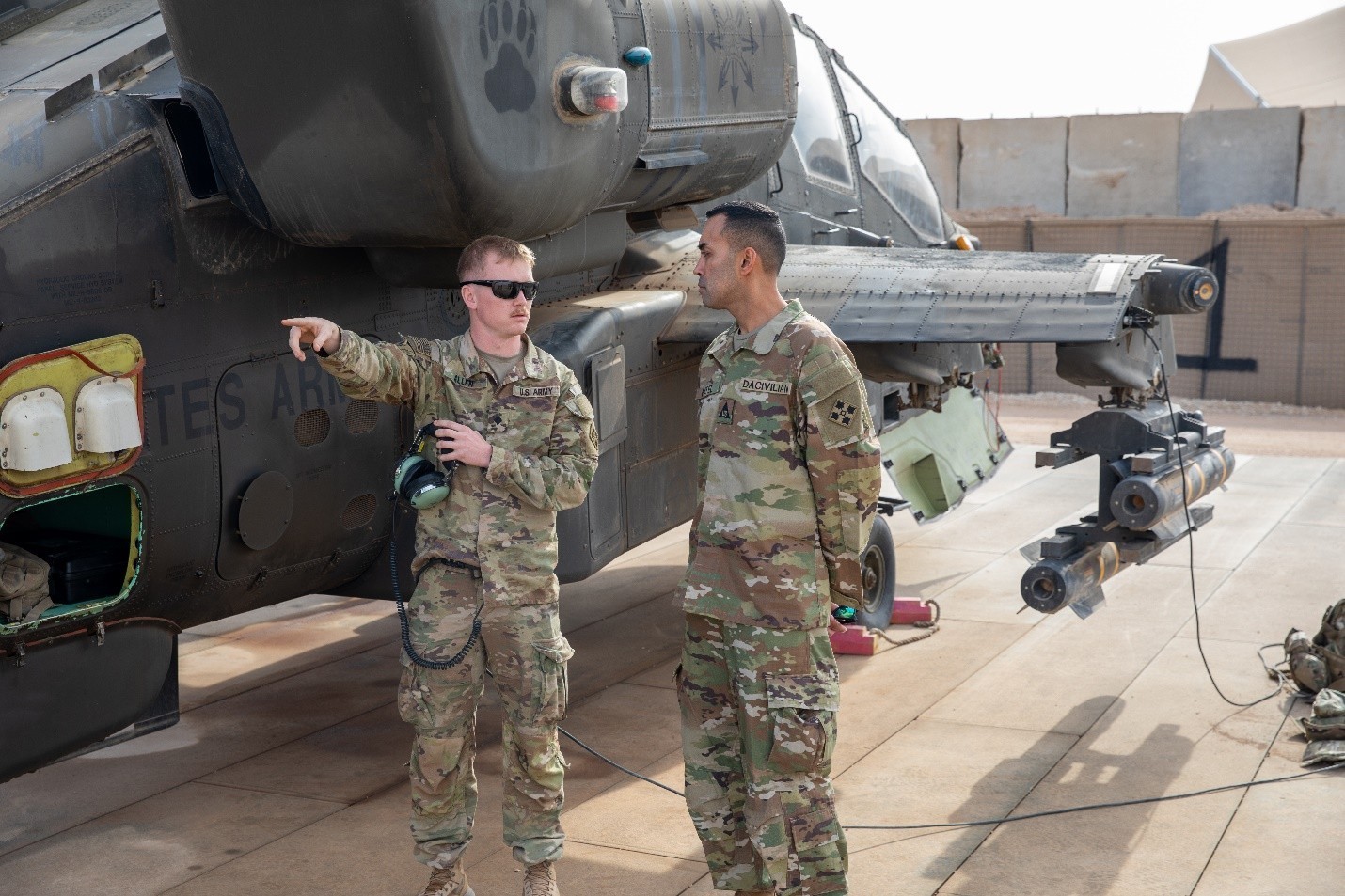
“We’ve helped out with troubleshooting wires on certain pieces of equipment, like generators,” said Allen. “We make sure they are getting power but when they’re broken, we try to figure out why.”
Teamwork goes further than just troubleshooting and solving immediate problems. Task Force Nighthawk troops also erected CHUs, established running water and showers, and even sundecks. Each improvement has a noticeable impact on morale.
“When we first got here, we were living in 10-man tents with just cots,” said Nier. “So, the priority was working with the actual engineers here. They had a special team of electricians that came out to assist with wiring and power for RLBs (Relocatable Billets). We moved individuals in, because a small win here is a huge victory for the Soldiers morale. When living in an austere environment, like this one, it is the small wins that mean the world.”
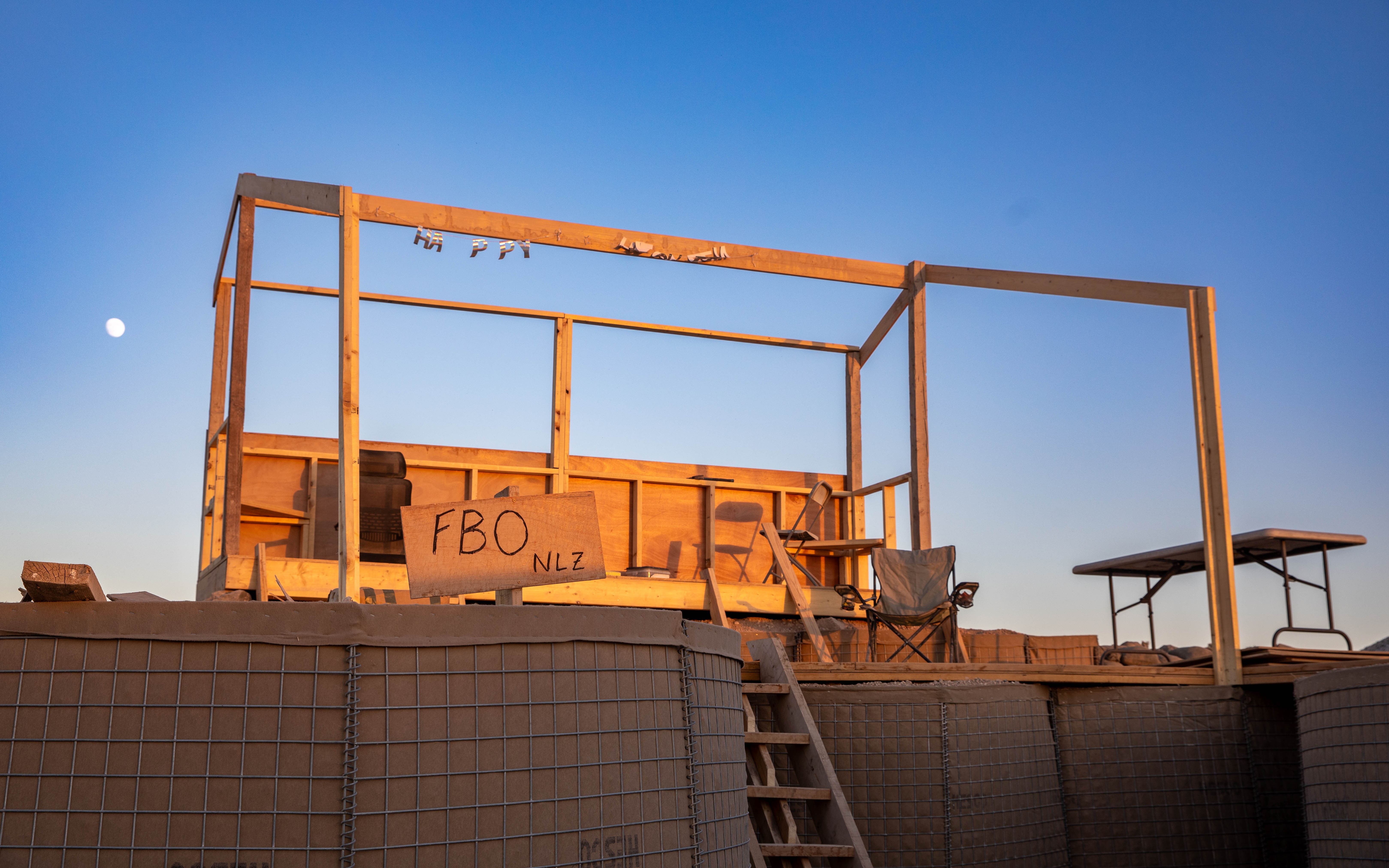
A platoon from Charlie Medical Company, 2nd General Support Aviation Battalion, 4th Aviation Regiment, also assigned under Task Force Nighthawk at NLZ, constructed a sun deck on top of a bunker with a few tools and loose wood.
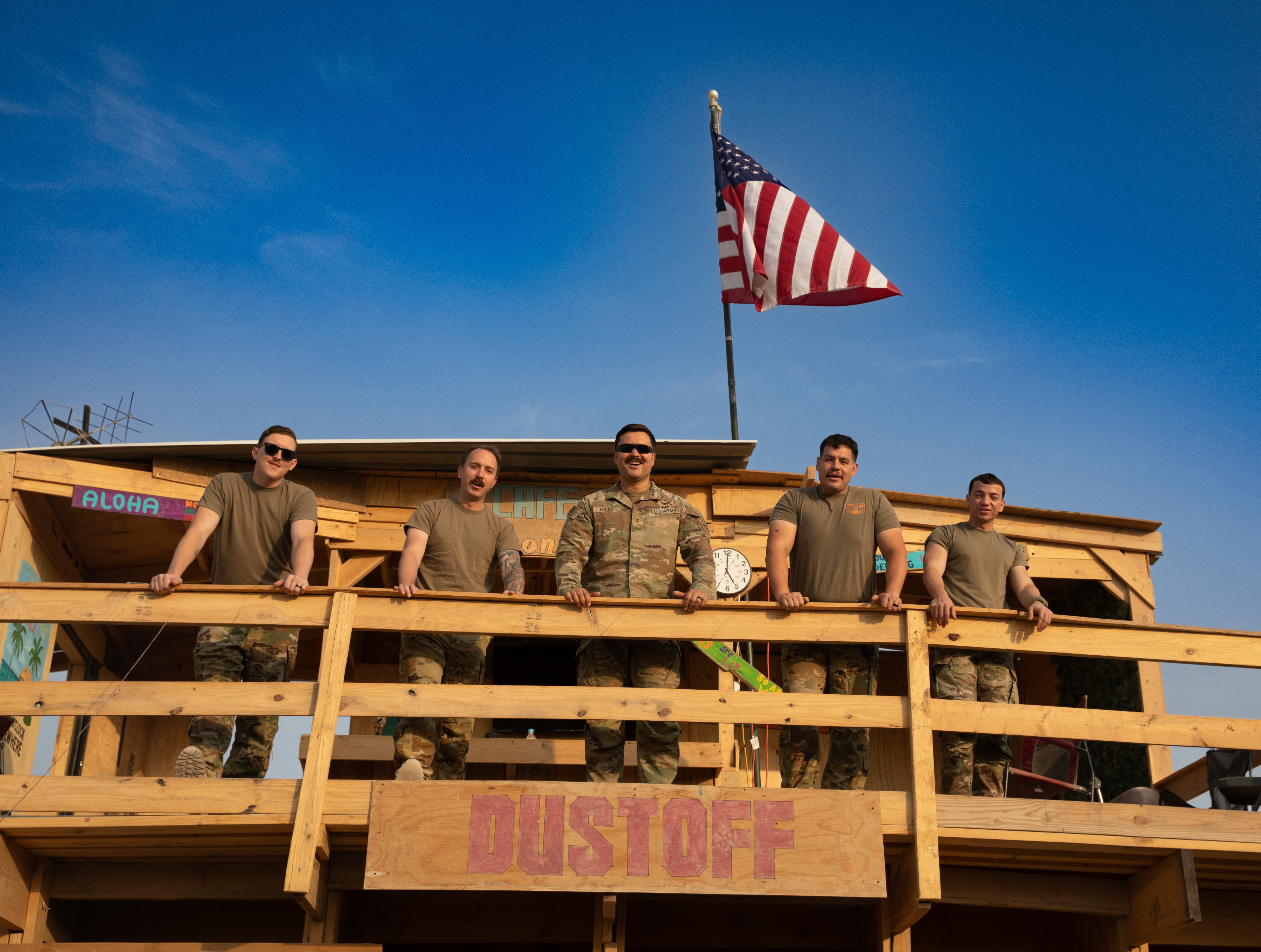
“We needed something, a hangout spot, for a boost of morale,” said Chief Warrant Officer 2 Drew Krieg, the instructor pilot for the platoon. “We enjoyed the view on top of the bunker we’re standing on now. The entire platoon helped in some way, shape, or form, filling sandbags, sourcing wood.”
Once the project gained momentum, more Soldiers contributed their expertise to finish the deck.
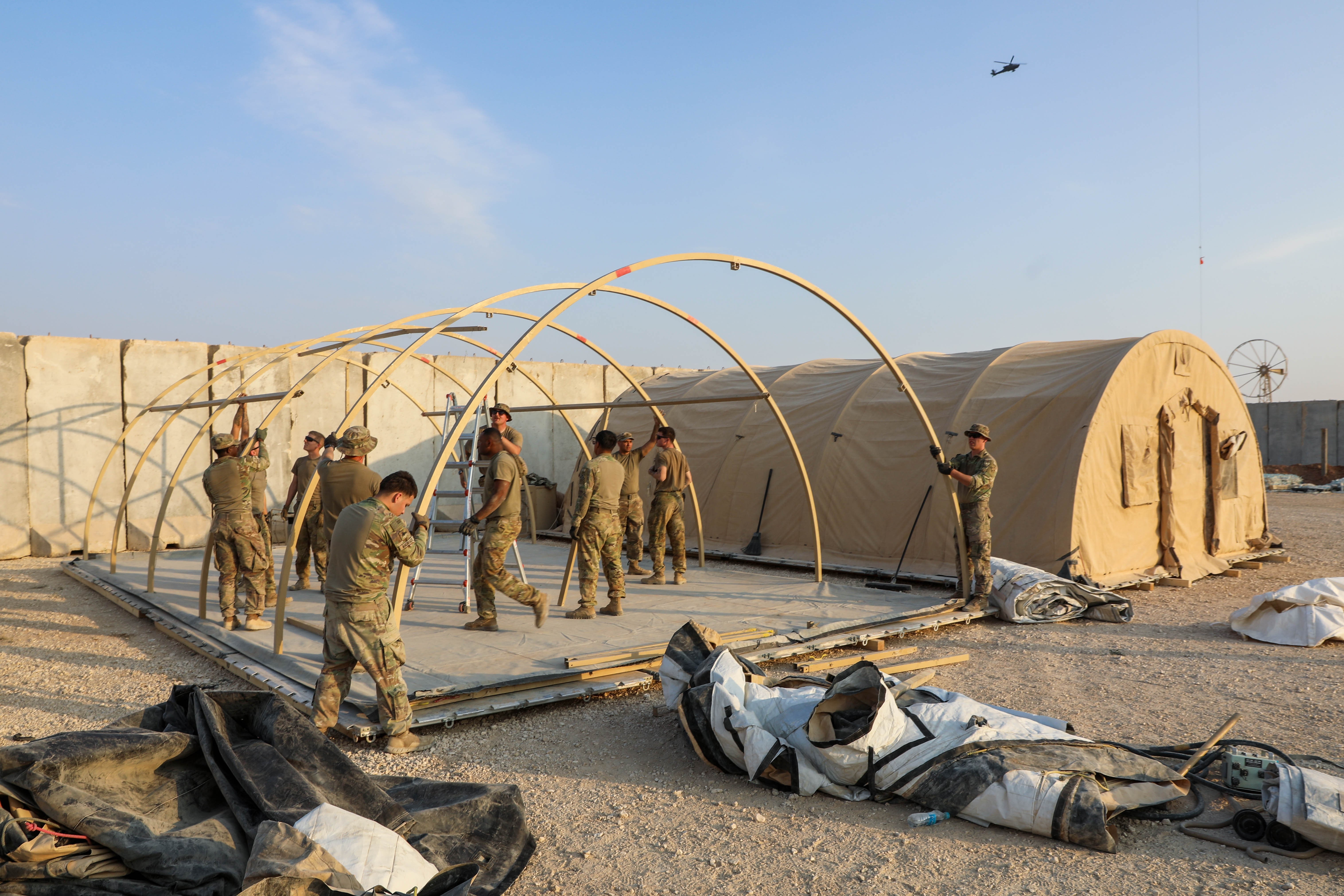
More recently, Soldiers from Delta Troop and Headquarters and Headquarters Troop, 6-17 ACS, recently completed the monumental task of erecting Alaskan tents and installing AM-2 matting for the ALAMS. In total, 17 Soldiers moved and assembled over 135,000 lbs. of construction material in the span of three days. This level of effort underscores Task Force Nighthawk’s commitment to providing and sustaining world-class aviation capabilities for ground forces operating within CJTF-OIR area of responsibility.
1st Sgt. Nier concluded, “The more efficient we are, the more our Soldiers are willing to buy into the mission-set, the better the service we will have to provide to our ground forces.”
Capt. Fischer followed up by adding that Soldiers are always finding ways to improve their foxhole because “they want to leave this FOB better than they found it,” and continue reinforcing the maintenance effort to build and sustain combat power in the region.

As they erect new structures and enhance their facilities to provide rotary wing capabilities in Syria, the Soldiers of Task Force Nighthawk are proving that the Army’s greatest resource is the creativity, intelligence, and grit of its people that ultimately make the mission successful.
“There are going to be a list of problems that you always have,” said Fischer. “And most of the time, the solution to that problem is going to come from inside your own ranks.”

U.S. Army Soldiers assigned to Charlie Medical Company “DUSTOFF”, 2nd General Support Aviation Battalion, 4th Aviation Regiment, Task Force Nighthawk pose for a photo at Northern Landing Zone, Syria on Nov. 7, 2025. Charlie Medical Company is responsible for providing medical coverage and evacuation for ground troops throughout the U.S. Central Command Area of Responsibility. (U.S. Army Photo by Spc. Doniel Kennedy)
VIEW ORIGINAL

Social Sharing