
PICATINNY ARSENAL, N.J. - Engineers here at the U.S. Army Combat Capabilities Development Command (DEVCOM) Armaments Center are working to develop an enhanced 81mm mortar (E81) high-explosive mortar cartridge intended to significantly increase the maximum range and lethality of 81mm mortars while retaining their hallmark portability.
The overarching objective of the E81 effort is to provide 120mm mortar-like range and lethality in an 81mm cartridge.
E81 is the first initiative under the Enhanced Range and Lethality Mortar Systems (ERLMS) program, an Armaments Center initiative to modernize mortars. The ERLMS fits into a larger effort, the Infantry Battalion Mortar System (IBMS), which is led by Project Manager Combat Ammunition Systems to develop and field a new enhanced 81mm system that leverages mature fire control and mobility systems to significantly increase the survivability and lethality of 81mm mortars on the modern battlefield.
IBMS will address several necessary capability improvements and significantly increase the performance of 81mm mortars. Robert Lucas, Infantry Brigade Combat Team Capability Developer at the Maneuver Center of Excellence at Fort. Benning, Ga. is looking for E81 to “mitigate the counter-battery threat by increasing battlefield mobility, providing a more survivable battalion mortar system.”
“This system will give commanders more flexibility to maneuver with more timely, lethal, and accurate indirect fires,” Lucas said.
While the objectives for the E81 cartridge are ambitious, Armaments Center engineers plan to meet them by leveraging as many mature components as possible and to avoid, where beneficial, the higher risks that are associated with new technology development.
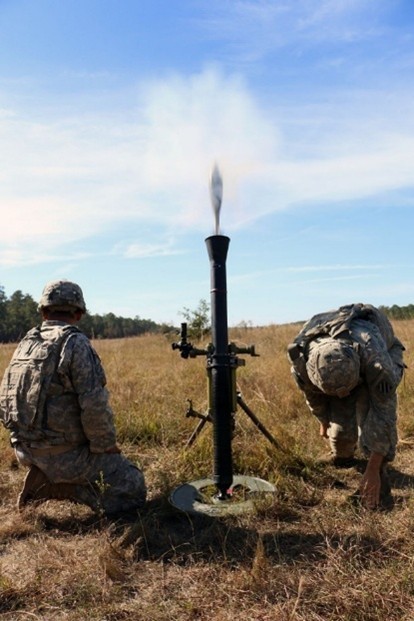
For example, E81 cartridge plans include the use of the M734A1 Multi-Option for Mortars fuzes, currently fielded energetics for the main fill and an increased-lethality warhead liner technology that had been developed for the M824A1 cartridge program. The strategy of leveraging previously developed components allows the team to rapidly burn down risk and focus investment on critical but less mature technologies as well as cartridge integration.
“Leveraging the in-house modeling, simulation, and laboratory capabilities at the Armaments Center, the ERLMS team is able to rapidly evaluate and refine multiple designs, reducing the development time. This allows us to reduce iterations of fabrication and testing, expediting the transition to a program of record,” said Matt Manzione, Armaments Center project officer said, providing more examples of how the project reduces developmental risks.
The E81 team proactively coordinated with industry partners to involve them in the design process early. Leveraging Cooperative Research and Development Agreements and Other Transactional Authorities, the team is planning to award a number of contracts to have industry experts complement the government team. Having industry involvement from the onset gives the DEVCOM team confidence that the E81 design is not only effective and producible, but able to be integrated into a robust industrial base that is able to produce cartridges in large quantities.
(Ryan P. Gorman is the Armaments Center's Senior Scientific Technical Manager, Indirect Fire Munitions)
Social Sharing