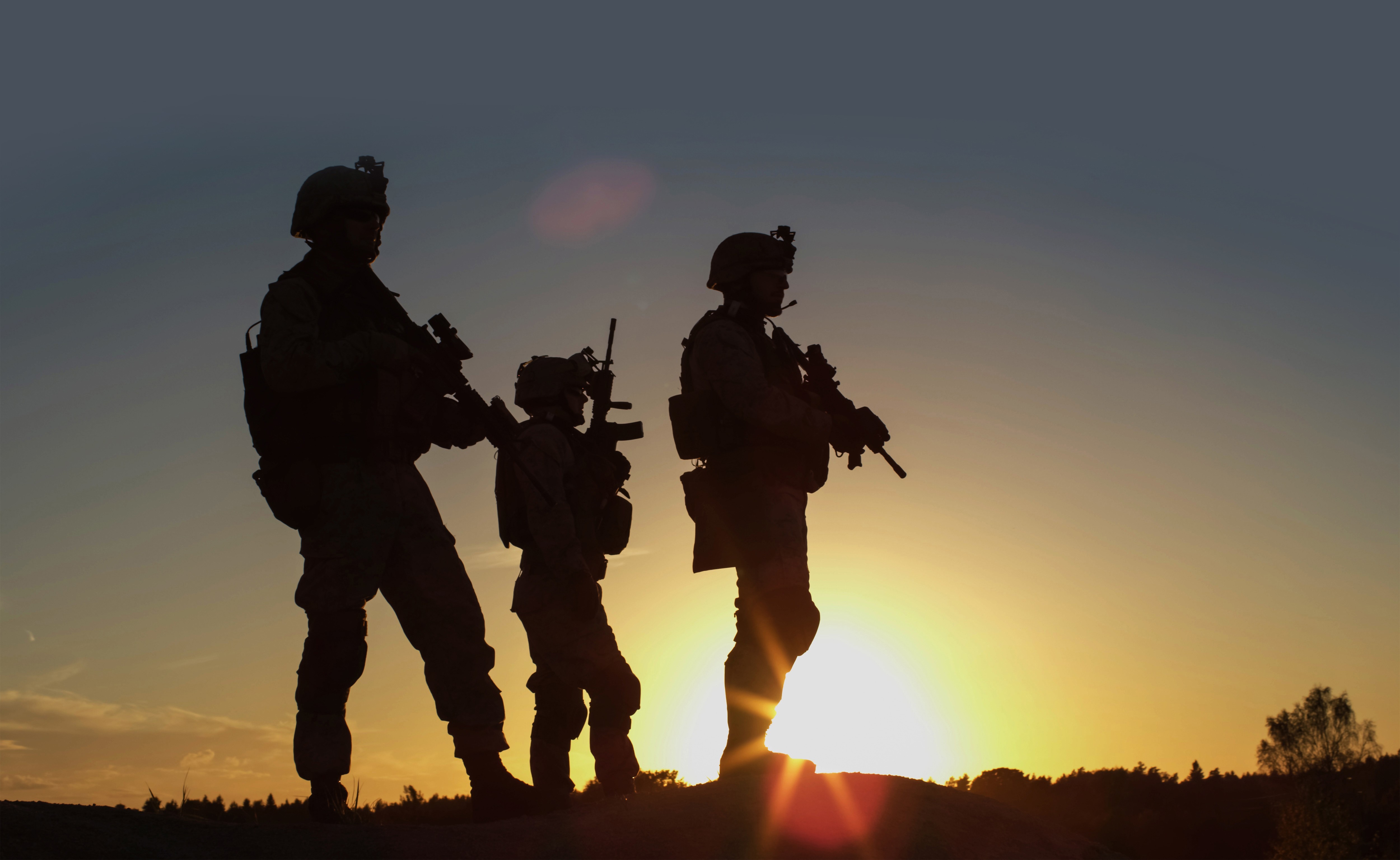
In 2009, struggling with the significant behavioral health injuries of Soldiers and families as a result of the “Long War,” the Army integrated research from the University of Pennsylvania to develop the U.S. Army Master Resilience Course. While this program may have served as an immediate stopgap to reduce suicide and improve the general mental health within the force, it may be time to reconsider the Army’s approach to resiliency. Adapting a method that provides explicit instruction on Stoic philosophy, which serves as the foundation to a number of effective psychological methods such as Rational Emotive Behavior Therapy and Cognitive Behavioral Therapy, could not only address the resiliency needs of the Army but do so in a fashion that could strengthen the overall understanding of the Profession of Arms. With the updated Army Regulation 350-1, Army Training and Leader Development, removing the resiliency program as an annual training requirement and placing a greater burden on commanders to assess and provide tailored instruction in resiliency as needed to their units, now may be an optimal time to integrate Stoic philosophy to shape the holistic culture of the Army instead of continuing to treat resiliency as addendum training.
In this article, we will explain the deep connection between Stoic ethics and the American military tradition (including critical topics such as military history, the Laws of War, the establishment of the American Republic, and physical fitness). We will also explore the rise and possible cause of pseudo-stoicism and describe how resiliency programs that explicitly use Stoic philosophy have produced statistically significant results reducing “symptoms of PTSD, [improving] quality of life, [decreasing] stigma, and [enhancing] perceived social support.”(1) Finally, we will explain how providing explicit use of Stoicism can be used to improve the integrated understanding of the Profession of Arms, increase learner motivation, and further support military self-development.
Ancient Stoicism
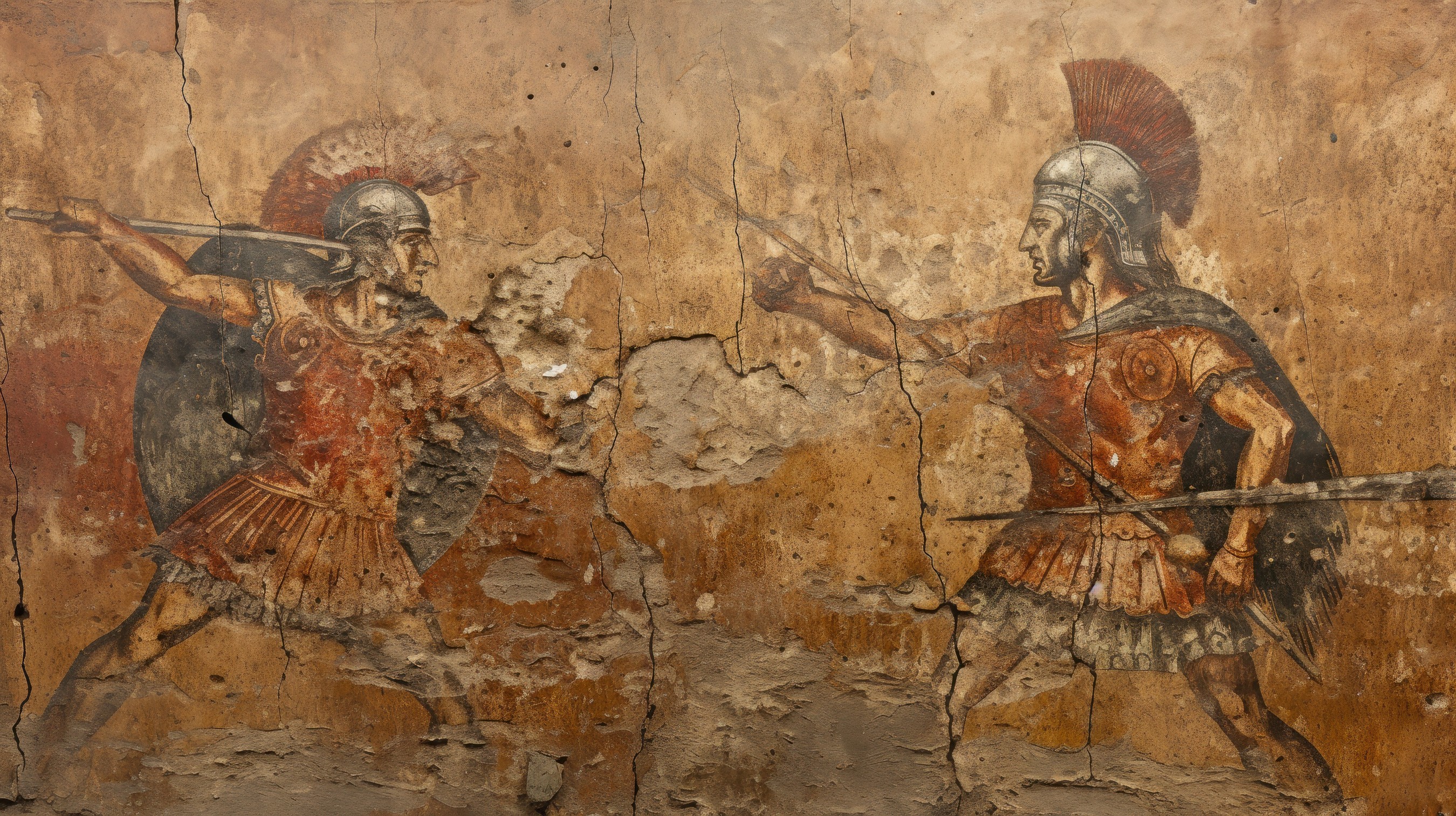
Ancient Stoicism was a philosophy born of the battlefield; the ancient Stoics collected battlefield-proven approaches to hardening the body and mind from Spartan culture and Greek military veterans. Ancient Stoicism was founded by Zeno of Citium around 300 BCE after encountering the works of great Greek philosopher, and former Athenian Hoplite (heavy infantryman), Socrates. Ancient Stoicism held virtue as the paramount good. It was the goal in life to live according to reason, seen as a connection to the divine, in harmony with nature.
Ancient Stoicism produced several great military commanders and leaders. The great Stoic General Publius Cornelius Scipio Africanus who conquered Carthage is said to be one of the greatest military strategists of all time, with skills exceeding that of Napoleon Bonaparte.(2) The Roman Emperor Marcus Aurelius Antonius, the last emperor of the Pax Romana (“Roman Peace”), wrote Meditations while commanding troops during the Marcomannic Wars.(3) Antonius not only successfully won a war against barbarians but saw his country through a civil war with minimal bloodshed. Ancient Stoicism thrived into the 4th century CE before being superseded by Christian theology.

Key Features
The Stoics believed that good was found only through the execution of virtue. Borrowing from the Platonic tradition, the Stoic cardinal virtues were wisdom (prudence), justice, fortitude (manly gallantry), and temperance. Stoic philosophy aimed an individual towards eudaimonia, a concept that might best be translated into human flourishing. Achievement of eudaimonia calls for the exercise of excellence in all activities and the fulfillment of duty to oneself, one’s community, and humankind. Sometimes translated as happiness, this call towards eudaimonia was enshrined by Thomas Jefferson in the Declaration of Independence: “We hold these truths to be self-evident, that all men are created equal, that they are endowed by their Creator with certain unalienable Rights, that among these are Life, Liberty and the pursuit of Happiness.”(4) The Stoic mindset is uniquely suited for the military community as it reframes all hardships as opportunities for improvement and reinforces service towards others. As recorded by the influential French philosopher Montesquieu:
While the Stoics regarded wealth, human grandeurs, pain, worries, and pleasures as something vain, they spent their time doing nothing but work toward the happiness of men and fulfill the duties of society; they seemed to regard that sacred spirit which they believed to be in themselves as a sort of favorable providence that kept watch over the human race. […] Born for society, they all believed that their destiny was to work for it, which was all the less burdensome that their rewards were all internal, and that, happy through their philosophy alone, it seemed that only the happiness of others could increase their own.(5)
Four of the major elements of Stoic philosophy are further explored below:
Dichotomy of Control — The Stoic philosophy called upon individuals to find the things in life that were within their control and reflect on their opinions to determine if appropriate views were held. The Stoics acknowledged that immediate opinions of events were likely incorrect. Immediate emotional responses to outside stimuli, like fear or anger, were accepted as natural human responses; however, upon careful reflections on a situation, a clarified judgment would likely carry different meaning and emotional responses. The goal of Stoicism was ultimately determining the correct opinion of situations to avoid the emotional suffering of misinterpretations. Stoics focused on controlling their judgments, thoughts, actions, etc., while learning to disregard outside factors (wealth, social position, birth conditions, events, etc.). For example, Stoics learned not to worry about the opinion others held of them (because it was not within their control) to gain a greater focus on their words and deeds within the community (that which they can control).
Amori Fati — Stoicism instructed its followers to “love their fate.” It was a worldview that could interpret even bad events and hardships in a positive light; burdens in life, such as loss or suffering, were ultimately needed and a means of practicing personal excellence. This concept in a military context could help drive Soldiers towards optimism and self-reliance. Additionally, this outlook can avoid the temptation of comparing one’s fate to the situation of others. The Stoics accepted that the world was fundamentally unjust, and no expectation existed that individuals should all find themselves with equal social status, wealth, etc.
Avoidance of Luxuries — The Stoics were indifferent towards material possessions, instructing individuals to keep their desires small to live well. According to Seneca, “It is not the man who has too little, but the man who craves more, that is poor.”(6) This desire to live simply can offer great benefits to the military community to include reducing logistical demands and preserving available energy reserves (calories) during military operations. The lighter Soldiers can learn to live, the quicker they can maneuver on the battlefield while maintaining a greater ability to think and engage in moral judgment – a topic heavily discussed in S.L.A. Marshall’s The Soldier’s Load and the Mobility of a Nation.(7)
Voluntary Exposure to Hardship — The Stoics famously voluntarily engaged in hardships to build their resilience. Modern Stoic William Irvine uses the term “Stoic toughening training” to describe engaging in activities to purposely cause discomfort.(8) Epictetus, in Discourse 1.2.32, referred to his concept as hard winter training: “We must undergo a hard winter training and not rush into things for which we haven’t prepared.” This alludes to the fact ancient warfare paused in the winter months due to the increased logistical demands and weather extremes. The soldier who continued to train in this temporary peace would be more prepared for the spring offensive than soldiers who were idle. Likewise, we cannot expect to have resilience on the battlefield if we never practice and develop our resiliency in times of peace.
CPT Alden Partridge, the third superintendent of the U.S. Military Academy (who was also founder of Norwich University and “father of the Reserve Officer Training Corps”), was known for taking his cadets on long pedestrian adventures to build their “constitutions.” Early Norwich cadets trained to “walk with facility [ease] 40 miles per day.”(9) Partridge also had his cadets haul 4,000-pound cannons down to the river and then up the steep hillsides of New England. It was clear from the records of Partridge’s cadets that the intent of these tasks exceeded that of simple fitness training.(10) His cadets learned to be comfortable with being uncomfortable. The U.S. military may improve the psychological resilience of its force if it explicitly emphasizes that physical training is also intended to drive psychological development.

NeoStoicism
The Stoic philosophy saw a resurgence in the 16th century when Flemish Humanist Justus Lipsius integrated Stoic philosophy with Christian theology to produce NeoStoicism. NeoStoicism sought to harmonize Stoic philosophy with the Christian tradition, adding the three Christian virtues of faith, hope, and charity (love) to the four traditional Stoic virtues of wisdom, justice, courage, and moderation. It abandoned the materialism and determinism of Ancient Stoicism to prevent conflicts with Christian teachings. While Justus Lipsius drew primarily from the works of Ancient Stoic Seneca of Younger and Roman historian Publius Cornelius Tacitus, other NeoStoics scoured the libraries of Europe looking for other Ancient Stoic texts to adapt. Lipsius’ NeoStoic approach of governing through prudence and propriety offered a powerful virtue-based response to Machiavellianism: “Dignity, self-restraint and discipline were the recipes for the foreign policy of the prince, while the individual was subordinated to the purposes of the state, and taught to control his own life by mastering his emotions.”(11) Ultimately, NeoStoicism laid the philosophical foundation for the Enlightenment, modern democracies, and Industrialism.
NeoStoicism deeply impacted the “Western way of war.” Hugo Grotius used a NeoStoic framework to establish the basis of international law.(12) Swedish King Gustavus Adolphus, hailed as the “Father of Modern Warfare,” carried Grotius’ works on campaign as he developed combined arms warfare techniques that are still in use today: “If Gustavus Adolphus rose up from the dead… and was magically transported to the Western Front [of World War One] in 1914, he would have understood the underlying concepts governing Warfare with little difficulty.”(13) Count Raimondo Montecuccoli built upon Lipsius’ military philosophy and impacted Prussian military reformer Gerhard von Scharnhorst. Scharnhorst’s mentee, Carl von Clausewitz, captured many NeoStoic elements in his work, On War:
“We therefore say once more a strong mind is not one that is merely susceptible of strong excitement, but one which can maintain its serenity under the most powerful excitement, so that, in spite of the storm in the breast, the perception and judgment can act with perfect freedom, like the needle of the compass in the storm-tossed ship.”(14)
Clausewitz became one of the most influential military philosophers with significant impacts on warfare in the 20th and 21st centuries. While his work is debated in military schoolhouses around the globe, the understanding of his connection to Stoicism and NeoStoicism has sadly been lost. An interesting echo of NeoStoicism appeared at the tail end of the 20th century in U.S. Marines Corps (USMC) Gen Charles Krulak’s “Strategic Corporal” concept. While Krulak doesn’t directly reference Stoicism nor NeoStoicism, his vision of an empowered Marine (volunteer) — capable of rational and moral action embodying the virtues of his Corps and well-prepared by hard realistic training — is in keeping with the tradition of NeoStoic military philosophy.(15) Krulak’s vision prepared the USMC well for the wars in Iraq and Afghanistan.
NeoStoic Citizen-Soldiers
With the rise of firearms in the 16th century, larger armies were required to maintain the peace. Militias and professional militaries drawn from a country’s own citizenry were viewed as able to operate with superior virtue as foreign missionaries. It was theorized that citizen-soldiers from within the nation/community would be far less likely to damage or injure the communities in which they were housed. This concept impacted many countries including Prussia, which attempted at one time to convert to a purely militia-based military, and the United States, which originally intended to have no standing army.
NeoStoicism and the American Republic
Stoics/NeoStoic philosophy deeply influenced Enlightenment philosopher John Locke.(16) The Stoic-influenced concept of Natural Rights espoused by Locke made its way into America’s foundational documents and had a lasting impact on the American Republic.
America’s Founding Fathers witnessed a great revival of Greek and Roman philosophy (to include Stoicism). While Thomas Jefferson claimed to be an Epicurean, the majority of his personal philosophy was derived from Stoicism. In May 1778, the play “Cato, a Tragedy” by Joseph Addison was put on for George Washington’s officers at Valley Forge, despite a ban on plays in the colonies. This play, recalling the last stand and eventual suicide of the Stoic Cato the Younger in defense of Julius Caesar’s overthrow of the Roman Republic, inspired the American officers to fight to the death if required for republican principles.(17) Paraphrasing of this play can be found throughout the writings and speeches of American founders, including the quote attributed to Nathan Hale: “I regret I have one life to give my country.”(18) In the newspapers of the era, Washington and Samuel Adams were commonly referred to as “America’s Catos” with George the III being referenced as “Caesar.” Adams “once thought, that [Boston] would be the Christian Sparta,” echoing the desires of NeoStoicism to combine the military attributes and focus on virtue of Stoicism with Christian theology.(19)
Emersonian Idealism
In the 19th century, the Unitarian Church and American Transcendentalist movements began searching for theological truths outside Christian tradition. Great American philosopher Ralph Waldo Emerson influenced the presentation of an American version of NeoStoicism that was widely compatible with various religions and even those that were areligious. Quoting Marcus Aurelius often within his works, Emerson spread the Stoic influence to other key philosophers within the abolition movement including Henry David Thoreau and Thomas Wentworth Higginson.
COL Thomas Wentworth Higginson went on to command the first regiment formed from freed slaves during the Civil War. Higginson recorded his approach to integration within his book Army Life in a Black Regiment.(20) This method called for clearly defining Soldier requirements and judging individuals only on their ability to meet those requirements, an approach to equal opportunity that could still be effectively employed today. Higginson went on to publish an improved translation of Stoic Roman slave Epictetus’ The Enchiridion immediately after the war.(21) Higginson, along with the rest of Transcendentalists, participated in the first wave feminism movement, carrying on the Ancient Stoic assertion that women were just as capable as men to act through virtue and desiring to expand women’s rights.

Loss of Direct Connection with Stoicism
There are a number of reasons why Western militaries may no longer recognize their relation to Stoic traditions. The rise of Secular Humanism within 20th century education removed the vast majority of Stoic-related texts from educational curriculums. While previous generations of military leaders learned Greek and Latin by reading Xenophon, Cicero, Virgil, and Plutarch and enjoyed Daniel Defoe’s NeoStoic adventure of Robinson Crusoe, contemporary military leaders were likely to graduate from college without encountering a single Stoic text.(22) The rise of industrial warfare and the increased range of combat may have also contributed to this ignorance among the general soldiery. The Roman Legions engaged in warfare at a range of under 30 meters. The psychological impact of warfare increases as the distance to the enemy closes.(23) As a result, ancient militaries were highly dependent on various philosophies and theologies to ensure their Soldiers could close with the enemy and endure the aftermath of battle. With the extended ranges of modern weapons, the added support Soldiers who do not directly engage in combat, and the increased technical nature of warfare causing the need for extended time and resources to be spent on training, the focus on military philosophy was largely lost.
Rise of Pseudo-stoicism
Pseudo-stoicism is the polar opposite of the Stoic philosophy. Unfortunately, due to drifts in language, it is common for individuals to be labeled as “stoic” for displaying traits opposed to the genuine philosophy. First appearing in the Victorian era, this false form of stoicism led individuals to actively suppress their emotions. Pseudo-stoicism asserts, “crying and other expressions of emotion or empathy are widely regarded as ‘inappropriate’ signifiers of weakness, fragility, or even incompetence.”(24) The rise of pseudo-stoicism within the military likely occurred with shifts in education. New recruits not instructed in Stoicism’s foundational philosophic principles may have looked up to seasoned veterans and tried to mimic their ability to remain calm without understanding how it was being achieved. This attempted rejection of natural emotions led to psychological injury and toxic leadership traits.
Commanders who are not well versed in resiliency may unfortunately drive pseudo-stoicism, falsely hoping to preserve combat power. For example, during the beginning of global war on terrorism, emotional responses were commonly seen as a fracture in a Soldier’s character. Needing to sustain combat power, commanders may have inappropriately directed or implied that Soldiers needed to suppress their emotions while conducting missions that frequently resulted in destruction and death. While this approach may have had short-term advantages, it failed to address lingering and compounding psychological, psycho-spiritual, and psychophysiological effects on Soldiers. This led researchers to postulate that the adoption of pseudo-stoicism was likely the source of the majority of military operational stress injuries.(25) Explicit instruction in Stoic philosophy may be key in making further advances in improving resiliency in the U.S. Army by ensuring dysfunctional pop-culture stereotypes are replaced with a functional practical philosophy that fully supports mental and physical health.
Advantages to Shifting to a Stoic-Based Resiliency Program
One of the major advantages of shifting to an explicitly Stoic-based program would be increased motivation for learning. Anyone who was in the Army in 2006 may be able attest to the motivational impact of the release of the movie 300, a fictional account of the Battle of Thermopylae.(26) Soldiers long for a connection to historical warrior cultures that can be used to fuel learning useful to the modern battlefield. Additionally, the Stoic canon of literature is significant and includes many literary masterpieces.(27) Unlike the limited materials available within Master Resiliency Training, it would take years to read through primary and secondary Stoic source material. This variety and richness in texts would allow Soldiers to continually explore new works without becoming bored with previously experienced materials.
As discovered by LTC Thomas Jarrett within his Warrior Resilience and Thriving Program, which was developed and tested in the early 2000s, Soldiers do not view Stoic-based mental health treatment in the same light as conventional therapy; “Grecko Roman Stoicism, ‘allows soldiers to view [Rational Emotive Behavior Therapy] as training versus therapy, which allows them to directly versus passively solve problems.’”(28) As a result, Stoic-based resiliency programs may be viewed more as integrated cultural training to deal with combat realities than a disconnected behavioral health program. A similar effect was recently noted with decreased stigma among Canadian public safety personnel who attended the Stoic-based Before Operational Stress Program.(29)
Finally, and most importantly, a Stoic-based approach to resiliency could be used to unify and reinforce the Profession of Arms. As Alexis de Tocqueville warned within his work Democracy in America, industrialization has led to the over-specification of workers who lose the knowledge of a profession as a whole.(30) Today, many Soldiers may not see how various courses, training, and theories presented to them are fully related. For example, the successes or failures of mission command are directly related to Soldiers’ ability to act out of virtue and build the trust required for such a command approach. The Laws of War become more than just a legal standard when the underlying Stoic philosophy is made apparent, and Soldiers can directly comprehend how these laws are made to maintain virtuous actions among Soldiers and protect against psychological injuries. The use of Stoic-based resiliency could also deeply reinforce the value of the study of military history. For example, the enhanced leadership abilities of Joshua Chamberlain, the hero of Gettysburg, may be easier to understand when it is recognized that as a professor of languages and rhetoric, he would have been an expert on Ancient Stoic materials.(31) And perhaps most dearly to any Soldier would be the gift of the better understanding of the U.S. Constitution and the Natural Rights it defends.
Conclusion
While the Master Resiliency Program may have served as a useful stopgap, it is past time to reflect if a more holistic approach might be best to support individuals Soldiers, families, and the Profession of Arms. Reclaiming the explicit use of Stoic philosophy would better support the psychological resilience of Soldiers while connecting them to a core philosophy that shaped the Western military tradition. The use of this formal philosophy would be useful in dismantling and eliminating harmful pop-culture stereotypes in behaviors. By linking this philosophy through the various elements of the military tradition from the Laws of War to fitness training, Soldiers can come to view resiliency as an integrated aspect of the American warrior tradition, not a separate component. In the end, our proposal is simple but ambitious: We seek to reintegrate the Stoic principles so deeply into all levels of the Army training that we no longer need to call it a “resiliency program.” It just becomes part of what it means to be an Army Soldier. Resiliency is not a module — it is a mindset, a culture, and a shared commitment.
Notes
1 Andrea M. Stelnicki, Laleh Jamshidi, Amber J. Fletcher, and R. Nicholas Carleton, “Evaluation of Before Operational Stress: A Program to Support Mental Health and Proactive Psychological Protection in Public Safety Personnel,” Frontiers in Psychology (17 August 2021), https://pmc.ncbi.nlm.nih.gov/articles/PMC8416101/.
2 B.H. Liddell Hart, A Greater Than Napoleon: Scipio Africanus (London: William Blackwood and Sons, Ltd., 1926), https://archive.org/details/bwb_O8-CZE-922/page/n7/mode/2up.
3 Marcus Aurelius, Meditations, https://archive.org/details/marcus-aurelius_meditations_george-long/mode/2up.
4 Franklin C. Annis, Controversial History & Educational Theories of Captain Alden Partridge (self-published, 2025); U.S. Continental Congress, Declaration of Independence, 4 July 1776, National Archives, https://www.archives.gov/founding-docs/declaration.
5 Montesquieu, The Spirit of Law, https://montesquieu.ens-lyon.fr/spip.php?article3008.
6 Seneca, Epistulae Morales ad Lucilium, https://www.loebclassics.com/view/seneca_younger-epistles/1917/pb_LCL075.9.xml?readMode=recto.
7 COL S.L.A. Marshall, Combat Load and the Mobility of a Nation (Association of the U.S. Army, 1950), https://mcoecbamcoepwprd01.blob.core.usgovcloudapi.net/library/ebooks/Soldier’s%20Load_dated%201980.pdf.
8 William B. Irvine, The Stoic Challenge: A Philosopher’s Guide to Becoming Tougher, Calmer, and More Resilient (New York: W.W. Norton & Company, 2019).
9 “Prospectus and Internal Regulations of the American Literary, Scientifick, and Military Academy,” August 1825, https://archives.norwich.edu/digital/collection/p16663coll2/id/13921/rec/1.
10 Annis, Controversial History & Educational Theories.
11 Halvard Leira, “Justus Lipsius, Political Humanism and the Disciplining of 17th Century Statecraft,” Review of International Studies 34/4 (October 2008): 669-692, https://www.cambridge.org/core/journals/review-of-international-studies/article/abs/justus-lipsius-political-humanism-and-the-disciplining-of-17th-century-statecraft/83FE2C21E1F985362F40F2E56EC1755D.
12 Christopher A. Ford, “Preaching Propriety to Princes: Grotius, Lipsius, and Neo-Stoic International Law,” Case Western Review Journal of International Law 28/2 (1996), https://scholarlycommons.law.case.edu/cgi/viewcontent.cgi?httpsredir=1&article=1561&context=jil.
13 Georg Schwarzenberger, “The Grotius Factor in International Law and Relations: A Functional Approach,” in Hedley Bull, Benedict Kingsbury, and Adam Roberts (eds), Hugo Grotius and International Relations (Oxford, 1992; online edition, Oxford Academic, 2003), https://doi.org/10.1093/0198277717.003.0012; “Is ‘The Military Revolution’ Dead Yet?” YouTube clip from keynote address by Prof. Geoffrey Parker at the 86th Annual Meeting of the Society for Military History: “Soldiers and Civilians in the Cauldron of War,” May 2019, https://www.youtube.com/watch?v=P8JonajoenM.
14 Carl von Clausewitz, On War, 1874, https://www.gutenberg.org/files/1946/1946-h/1946-h.htm.
15 Franklin Annis, “Krulak Revisited: The Three-Block War, Strategic Corporals, and the Future Battlefield,” Modern War Institute, 3 February 2020, https://mwi.westpoint.edu/krulak-revisited-three-block-war-strategic-corporals-future-battlefield/.
16 Lisa Hill and Prasanna Nidumolu, “The Influence of Classical Stoicism on John Locke’s Theory of Self-Ownership,” History of the Human Sciences 34/3-4 (2020), https://doi.org/10.1177/0952695120910641.
17 Rob Hardy, “Joseph Addison’s Cato (1713),” Mount Vernon website, n.d., https://www.mountvernon.org/library/digitalhistory/digital-encyclopedia/article/cato.
18 The Cato Institute, “Rome’s Last Citizen: The Life and Legacy of Cato, Mortal Enemy of Caesar,” YouTube video, https://www.youtube.com/watch?v=7GxmfvpmYVA.
19 Harry Alonzo Cushing (ed), The Writings of Samuel Adams (New York: G.P. Putnam’s Sons, 1904), https://press-pubs.uchicago.edu/founders/documents/v1ch18s14.html.
20 Thomas Wentworth Higginson, Army Life in a Black Regiment (Boston: Fields, Osgood & Co.,1870), https://librivox.org/army-life-in-a-black-regiment-by-thomas-wentworth-higginson/.
21 Thomas W. Higginson (Trans), The Enchiridion by Epictetus (New York: The Liberal Arts Press, 1948), https://www.gutenberg.org/files/45109/45109-h/45109-h.htm.
22 “Catalogue of the Officers and Cadets of the American Literary, Scientific and Military Academy,” Norwich, VT, November 1821, https://archives.norwich.edu/digital/collection/p16663coll2/id/13867/rec/1.
23 Lt. Col. Dave Grossman, On Killing: The Psychological Cost of Learning to Kill in War and Society (Boston: Back Bay Books, 2009).
24 Jamaljé R. Bassue, “Overcoming Pseudo-stoicism in Medicine,” AMA Journal of Ethics 25/5 (2023), https://journalofethics.ama-assn.org/article/overcoming-pseudo-stoicism-medicine/2023-05.
25 Megan McElheran, Franklin C. Annis, Hanna A. Duffy, and Tessa Chomistek, “Strengthening the Military Stoic Tradition: Enhancing Resilience in Military Service Members and Public Safety Personnel through Functional Disconnection and Reconnection,” Frontiers in Psychology 15 (2024), https://www.frontiersin.org/journals/psychology/articles/10.3389/fpsyg.2024.1379244/full.
26 Zack Snyder, dir., 300, Legendary Pictures, 2006.
27 “Stoic Reading,” Before Operational Stress website, n.d., https://www.beforeoperationalstress.com/stoic-reading.
28 Thomas A. Jarrett, “Warrior Resilience and Thriving (WRT): Rational Emotive Behavior Therapy (REBT) as a Resiliency and Thriving Foundation to Prepare Warriors and Their Families for Combat Deployment and Posttraumatic Growth in Operation Iraqi Freedom, 2005–2009,” Journal of Rational-Emotive Cognitive-Behavior Therapy 31 (2013), https://link.springer.com/article/10.1007/s10942-013-0163-2.
29 Gabriela Ioachim, Nicole Bolt, Michelle Redekop, Andrew Wakefield, Andrii Shulhin, Jilani Dabhoya, Juliana Khoury, Kathy Bélanger, Sarah Williams, Tessa Chomistek, Taylor Teckchandani, Jill Price, Kirby Maguire, and Nicholas Carleton, “Evaluating the Before Operational Stress Program: Comparing In-Person and Virtual Delivery," Frontiers in Psychology (2024), https://www.frontiersin.org/journals/psychology/articles/10.3389/fpsyg.2024.1382614/full.
30 Alexis De Tocqueville, Democracy in America (London: Saunders and Otley, 1835), https://www.gutenberg.org/ebooks/815.
31 “Biographies: Joshua L. Chamberlain,” National Museum of the United States Army website, n.d., https://www.thenmusa.org/biographies/joshua-l-chamberlain/.
LTC Franklin C. Annis is a military philosopher, historian, educational theorist, and veteran of Operation Iraqi Freedom. He holds a doctor of education degree from Northcentral University and a master of military history from the University of Birmingham (UK). He is the author of Marching with Spartans: The Life and Works of Alden Partridge.
MSG Andrew D. Baker is an Army combat medic, behavioral science researcher, instructor, and veteran of Operation Iraqi Freedom. He holds both a master’s degree in counseling education with a focus on military resilience and a doctorate in counseling education with a focus on traumatology from Liberty University.
This article appears in the Winter 2025-2026 issue of Infantry. Read more articles from the professional bulletin of the U.S. Army Infantry at https://www.benning.army.mil/Infantry/Magazine/ or https://www.lineofdeparture.army.mil/Journals/Infantry/.
As with all Infantry articles, the views herein are those of the authors and not necessarily those of the Department of War or any element of it.
Social Sharing