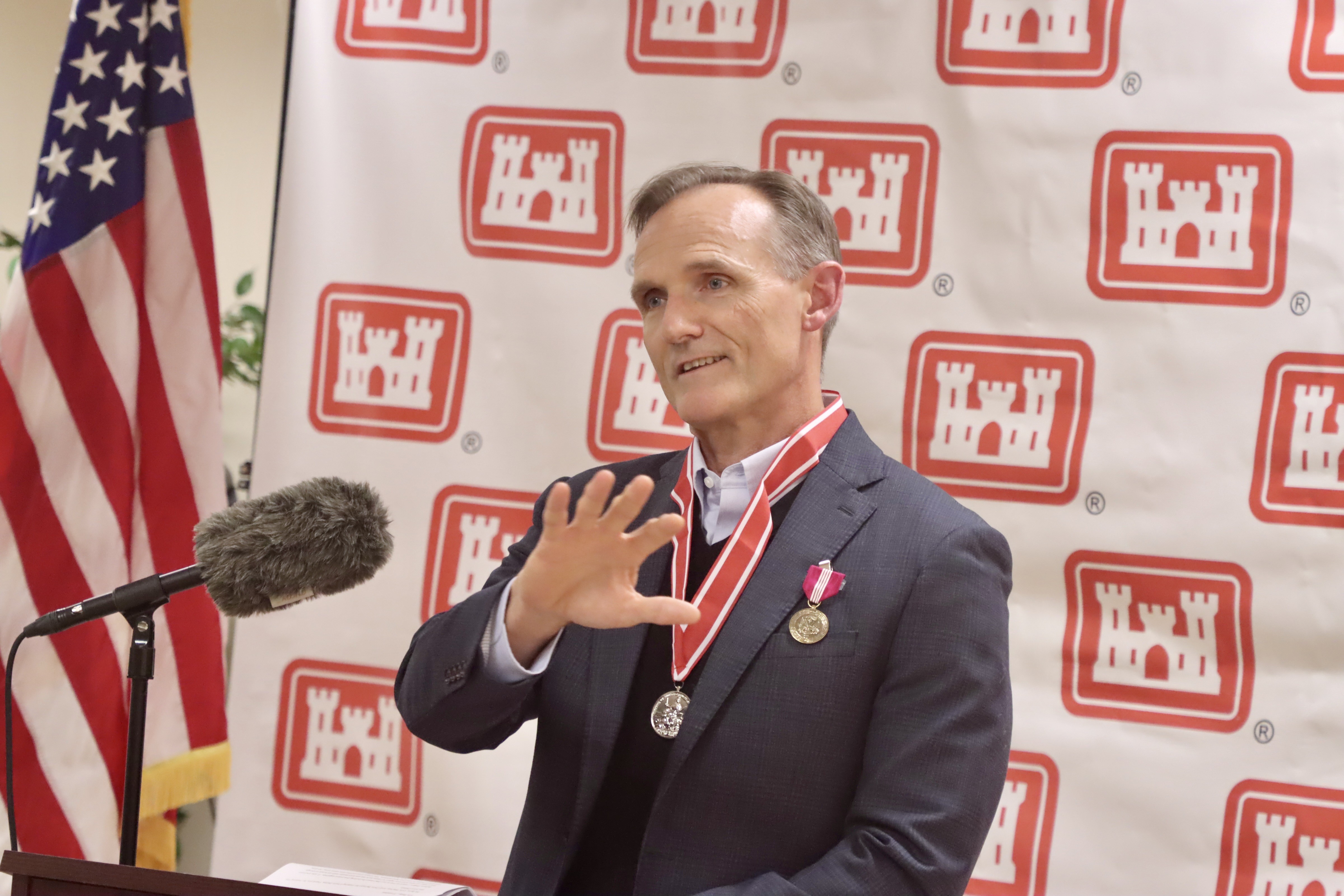
There's a moment that professionals across the U.S. Army Corps of Engineers Little Rock District have come to recognize over the years. It usually happens in meetings, especially the complex ones where enthusiasm starts outpacing reality. Someone's presentation is gaining momentum, the ideas are flowing, and then it happens, Craig Pierce's eyebrows go up.
"Wait—what now?"
Or sometimes, "Hold on..."
And if things are really off the rails, "Let's think about this a minute."
The exact words might change from meeting to meeting, but they're always delivered with characteristic politeness, and they've become something of a signpost—the signal that someone has gotten a bit too far ahead of their skis. For dozens of commanders, project managers, and engineers over the past two decades, that gentle interjection has been the moment they realized they needed to pump the brakes and think things through again.
As Craig Pierce prepares to retire from USACE in January 2026 after more than 35 years of combined federal service, that combination of patient listening and timely intervention has defined his leadership style and made him indispensable to the Little Rock District and USACE as a whole.

Aim High: Air Force Goes Army
Pierce's journey to USACE leadership started in the military – but not the Army. After a decade as an Air Force Biomedical Science Corps officer, he separated from active duty at Little Rock Air Force Base. His father had passed away, and staying near his mother became the priority. He transitioned to the private sector, working on environmental contracts at Little Rock AFB. Those contracts were managed by the Tulsa District, giving Pierce his first real exposure to USACE operations, an experience that would shape his future.
"I enjoyed my time in the private sector, but I also recognized some of the benefits for a veteran as a federal civilian," Pierce recalls. "USACE was in many ways the best of both worlds, private and government. I still think that's true."
When a Study Manager position opened in 2004, Pierce applied despite having no planning experience. The selection board, which included Trish Anslow, a USACE colleague who would later retire from the Army National Guard as a major general, saw something special in the former Air Force officer.
"We were trying to woo him to come to the public sector," Anslow recalls. Pierce was making more money as a contractor, but the board's confidence in him was immediate and profound. "When we hired him in Planning, I remember telling him that it won't be long before he was running this entire District. He was special and we knew it when we hired him."
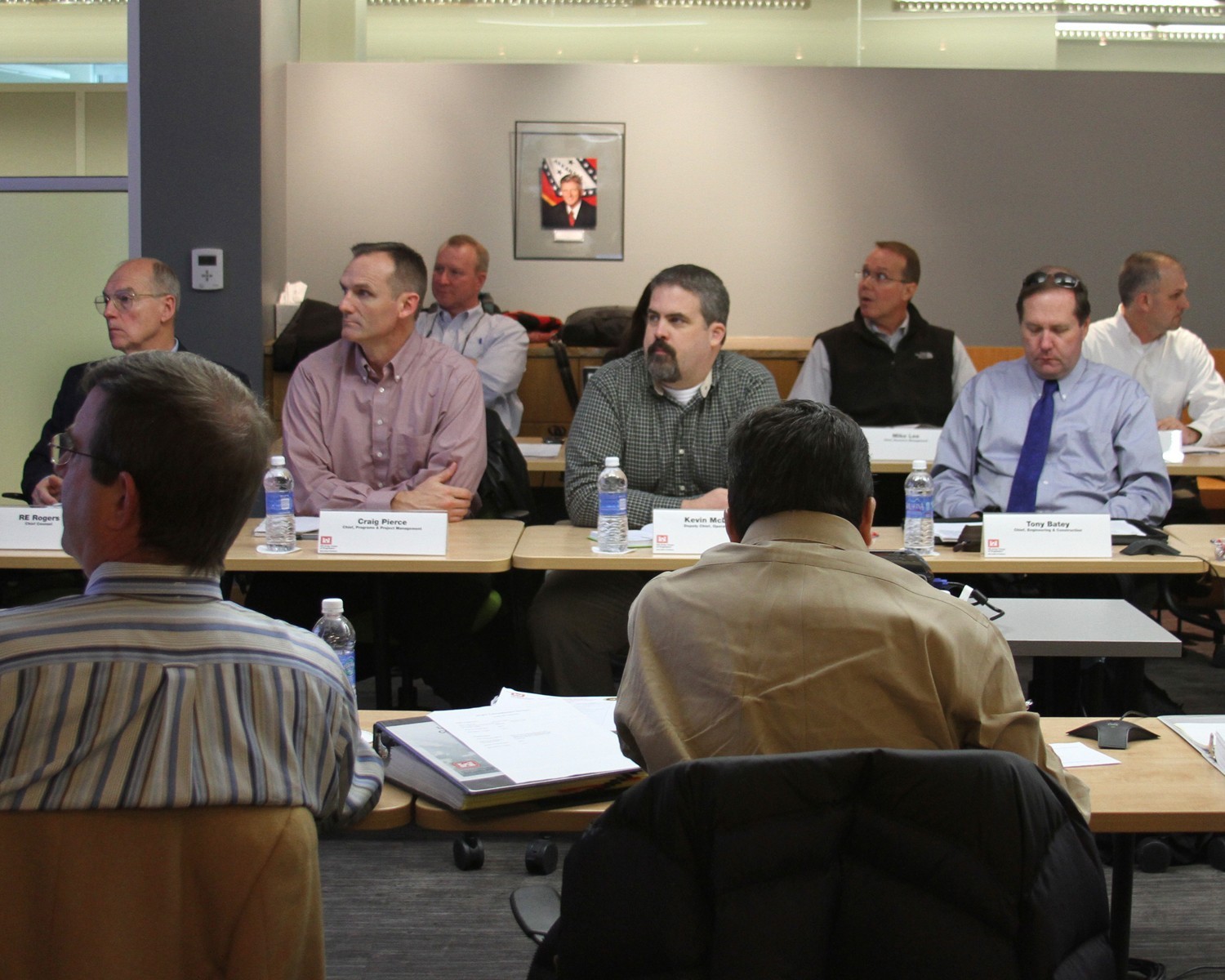
Pierce's baptism by fire came early. The mayor of Oil Trough in Independence County, Arkansas, wanted to discuss recent flooding and levee concerns. Pierce and hydraulics specialist John Kielczewski headed to the meeting with minimal preparation. "I was so green that I barely understood all of our authorities to help address any issues," Pierce recalls.
They arrived at the mayor's office to find the door locked. A sign pointed next door. "Public meeting."
"We walked into the room which was full of members of the public as well as news cameras in the back of the room," Pierce says. They were directed to a table at the front, facing the crowd, expected to field questions on the spot. "Thankfully, John had great expertise and handled the situation well."
Looking back, Pierce recognizes the wisdom in where he started. "Planning was probably the best place for me to learn the most about Little Rock District missions and how we do business across the functional areas," he reflects. "Our Planning function was robust back then, and I was able to learn from some of the best."
Wearing Two Uniforms
For nearly 13 years after joining USACE, Pierce managed a balancing act that would challenge anyone. He served as a civilian USACE employee while commanding the 189th Medical Group in the Air National Guard. He eventually retired as a Colonel in 2017 with over 26 years of military service.
"That was definitely a challenge, and even more when I became the commander of my unit," Pierce acknowledges. "I tried to make sure I was focused on USACE when at USACE and my unit when at my unit. One way I did this was by using a lot of my annual leave to keep up with things in my unit rather than to take time off and relax." He adds with typical understatement, "As much as I loved my unit and our mission, it was a good day when I only had one career to manage."
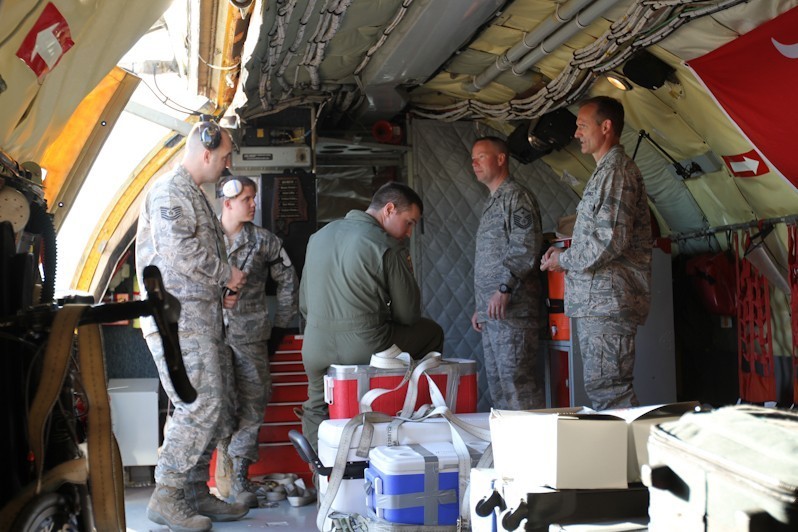
That dual perspective proved invaluable. His experience dealing with higher-ranking officers and serving as their advisor translated directly into his ability to counsel District Commanders. "I think this, and seeing things from a Commander's perspective, helped me become a trusted advisor to our District Commanders and even to SWD leaders," Pierce notes.
Building Expertise Through Curiosity
While many USACE professionals move districts to advance their careers, Pierce found opportunity by staying put and staying curious. After 10 years in the Air Force moving around, he wanted stability for his family. Yet in his first 14 years with Little Rock District, he held seven different positions, from Study Manager to Project Manager, from Military Programs Branch Chief to Chief of Engineering and Construction. He seized opportunities that took him far beyond Arkansas, working on projects at Fort Bliss, serving as a PROSPECT instructor since 2010, and traveling to locations including Afghanistan, Japan, Germany, South Korea, and Hawaii. Each experience was something new and that energized him.
"First, I love to learn, and I was in full-on learning mode the entire time," he says.
Looking back, for Pierce, one assignment stood out. The Fort Bliss Expansion Program came early in his USACE career. He started with zero military construction experience but eventually became Program Manager for an entire Combat Aviation Brigade. Mentors Steve Wright and Lee Conley, along with coworkers Norma Edwards and Kevin Weber, guided him through what was to be a long and steep learning curve. "They supported me as I learned, and they trusted me to deliver. I am forever grateful to each of them," Pierce says.
Forged in Afghanistan
If there's a crucible experience that tested everything Pierce had learned, it was his year as Deputy District Engineer for the Transatlantic Afghanistan District from May 2015 to May 2016.
"More than anything, the 12-month physical grind was challenging," Pierce recalls. "We had long, long days every day except for our designated 'weekend,' which was a few hours on Friday afternoons. I was visibly worn down when I came back."
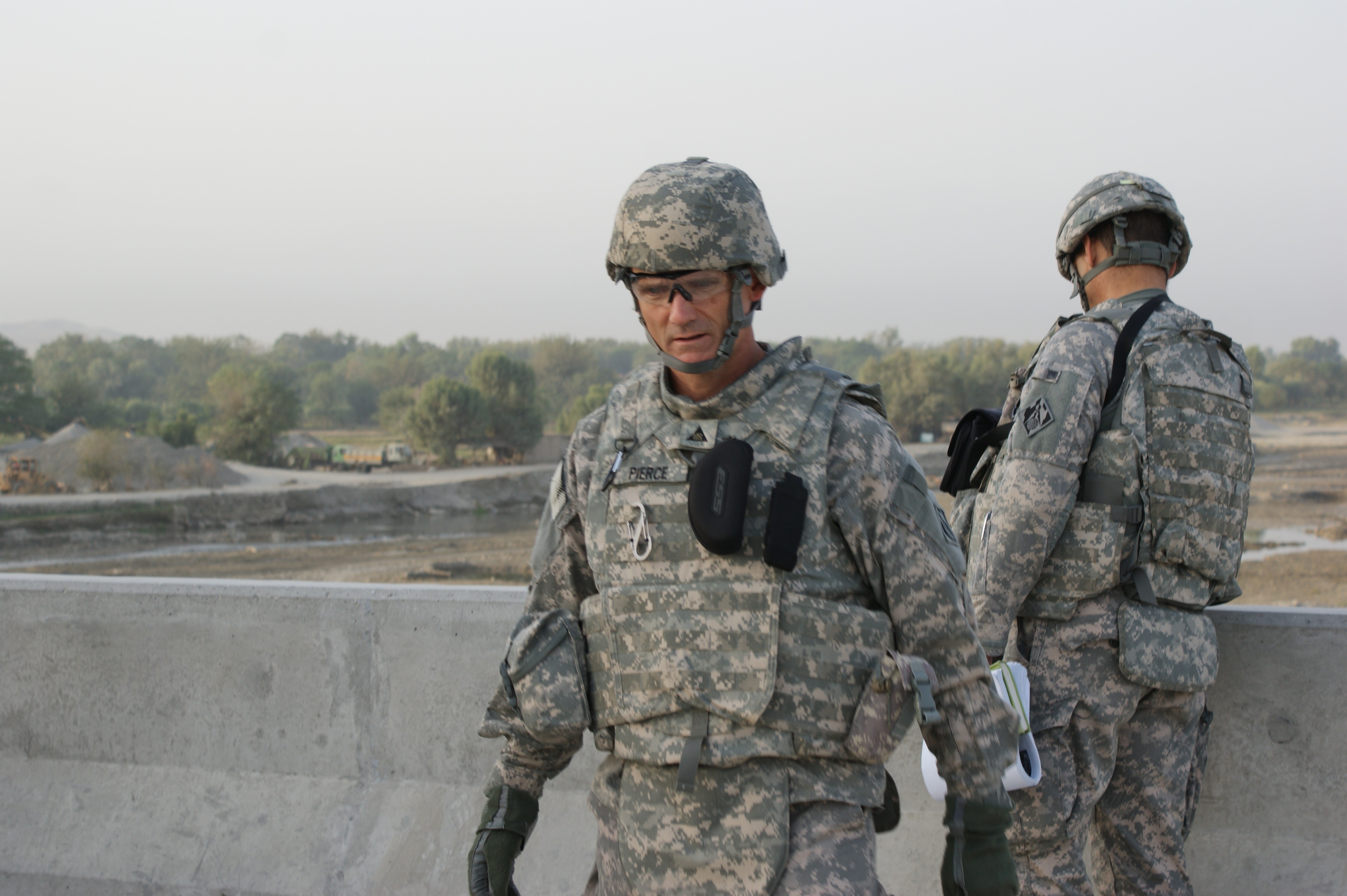
The experience taught him a lesson he carries to this day. "The value and necessity of leaders taking care of themselves so they can take care of others." Beyond the physical demands, administering design-build contracts to inexperienced Afghan companies while staff rotated every six to nine months presented unique challenges. "It's amazing how successful we were in delivering our projects," Pierce reflects.
Despite the hardships, the relationships forged under those conditions, including with District Commander Brig. Gen. (Ret.) Paul Owen, became bonds that transcended the assignment. "I wouldn't trade that experience for anything," he says.
The Steady Hand for New Commanders
Since May 2018, Pierce has served as Deputy for Programs and Project Management and Chief of the Programs and Project Management Division, overseeing Civil Works, Military, and Interagency and International Support programs. But perhaps his most valuable function has been serving as institutional memory and trusted advisor for incoming District Commanders.
While commanders typically rotate every three years, Pierce has provided the continuity that allows new leaders to be successful - faster. His deep well of experience, both military and civilian, has made him uniquely qualified to help commanders navigate the complexities of their new duties and the challenges of working in a USACE district.
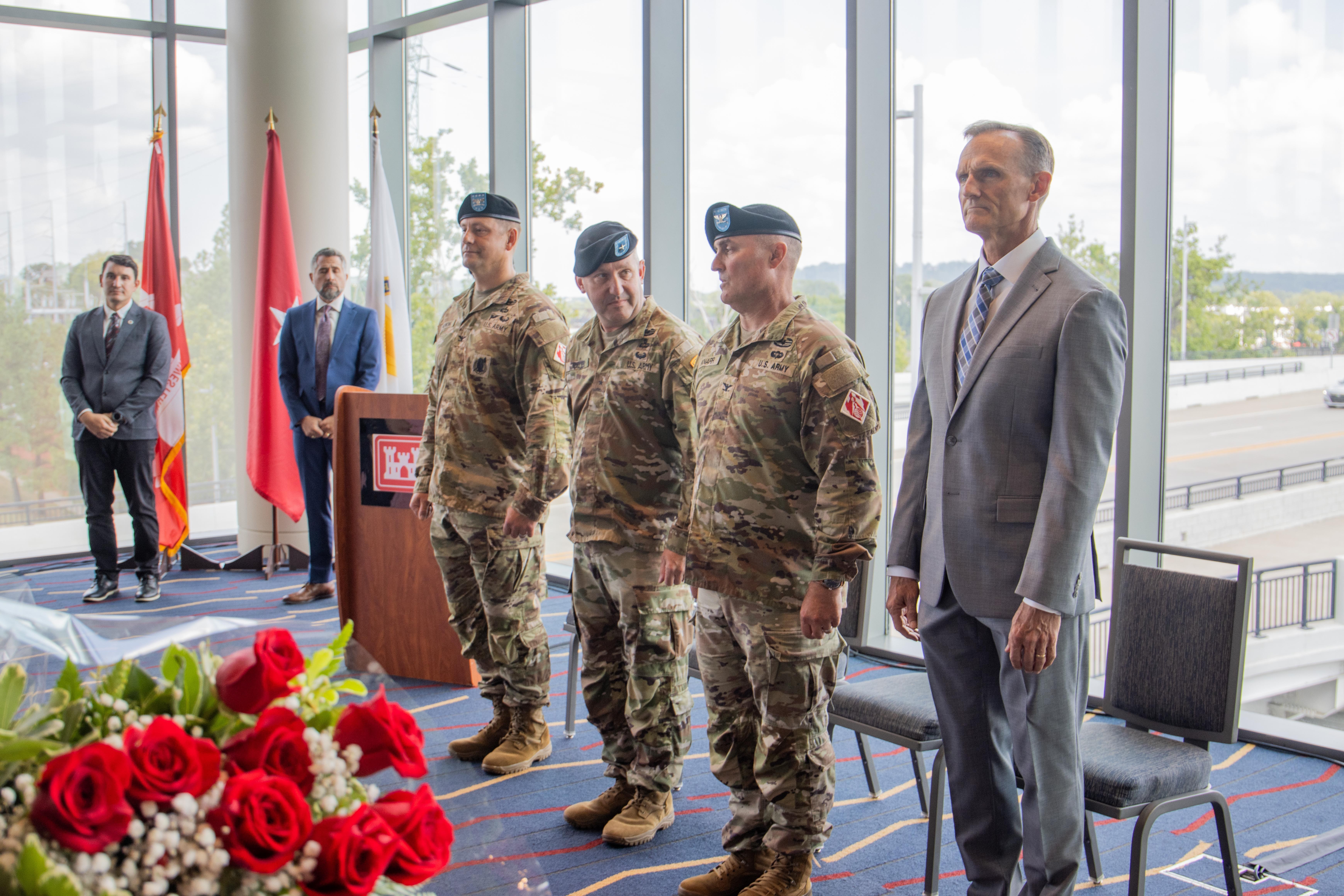
Col. (Ret.) Eric Noe, who commanded the Little Rock District and worked closely with Pierce in the aftermath of the massive 2019 Arkansas River floods, describes Pierce as "the most dedicated and disciplined Civil Servant I have ever served with in my career." As the district worked to restore navigation on the McClellan-Kerr Arkansas River Navigation System and rebuild recreation areas up and down the river, Pierce's combination of competence and character made him "the consummate battle buddy" through the crisis. "His honesty, humor and friendship were invaluable through the hardest times," Noe recalls.
That combination shows up in those meetings where Pierce is known as a quiet presence, content to listen as discussions unfold. But when things start to veer off course, when someone's brilliant idea hasn't quite accounted for regulatory requirements, budget realities, or past lessons, Pierce gently intervenes.
"Wait—what now?"
Those who've worked with Pierce describe his interventions as gifts, moments that save teams from costly mistakes, delivered with enough dry humor that no one feels diminished by the correction.
A Legacy of People and Partnerships
Ask Pierce what he wants to be remembered for, and his answer is characteristically straightforward. "Simply, I want to be remembered for being committed to professionally delivering all of our important missions to our stakeholders and partners through our incredibly competent Little Rock District and often other USACE teammates."
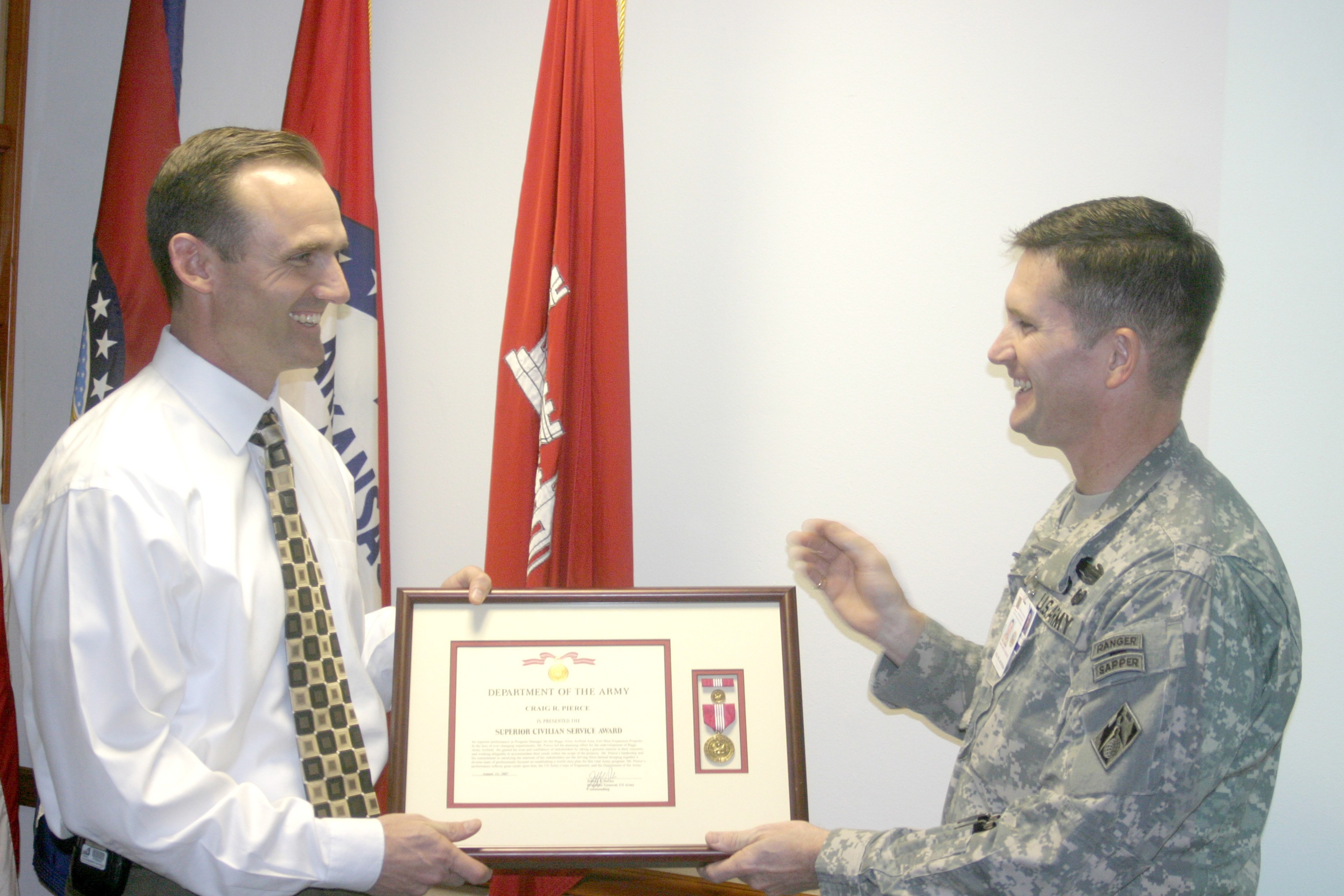
It's a deliberately humble answer from someone whose awards speak volumes. The Meritorious Civilian Service Award, Bronze De Fleury Medal, Legion of Merit, and recognition as both Little Rock District Civilian of the Year and Project Manager of the Year. But Pierce consistently redirects credit to the people around him.
"One of the best reasons to stay was all of the people of Little Rock District and our partners," he reflects. "I feel so fortunate to have had great mentors, coworkers, and friends. I have always had tremendous pride in the work that we do, but that has been magnified even more in my time as DPM as I have had the opportunity to get out and watch so many talented people doing great things across the district."
Looking Back, Moving Forward
In a world that often celebrates the loudest voice in the room, Craig Pierce built a career on something subtler but ultimately more powerful—the ability to listen deeply, think critically, and intervene decisively at exactly the right moment. He's spent more than twenty years modeling that approach for the next generation of leaders. His legacy isn't just in the projects delivered or the programs managed. It's in the countless professionals who've learned to pause, think critically, and ask themselves hard questions before charging ahead.
That journey included being thrown into situations where he had no previous experience. A Study Manager with no planning background, a Project Manager who'd never touched a military construction project, a Deputy District Engineer managing programs in a war zone. Each time, his love of learning became his lifeline. "I've made some mistakes along the way, which my supervisors and leaders have allowed me to learn from," Pierce said. "Some of those have been my most valuable experiences in many ways."
After so many years of successful program delivery, and so many challenging assignments, it's easy to wonder if Pierce would want to go back and give his younger self any advice.
"Not really. I have had plenty of mentors that have done that for me along the way," he says. "I've enjoyed the journey getting to this point."
It's a perspective that captures Pierce's entire career. Trust the process, embrace the unknown, and learn from what doesn't go according to plan. The stumbles weren't setbacks. They were lessons that made him better.
As for what's next? Pierce is characteristically pragmatic. "I still have several years of work left in me. I'm not good enough at golf, hunting, fishing, or any other hobbies to occupy my mind and my time and be content." Whatever comes next, he plans to stay connected to USACE missions and the relationships he's built over more than two decades.
Anslow's prediction from 2004 proved remarkably prescient. While Pierce may not have literally run the entire District, his influence across every line of effort and his role as the steady hand guiding new commanders comes remarkably close. "His service to the Little Rock District has been tremendous," Anslow said.
The Army may be the best organization in the world at preparing the next generation to carry the mission forward. But as the Little Rock District prepares for that transition, Craig Pierce leaves something irreplaceable behind. Not just decades of expertise, but a model of leadership that taught an entire generation how to listen more than you speak, learn more than you lecture, and guide with a raised eyebrow instead of a raised voice.
Social Sharing