
Tanks rumbled through Sadr City’s narrow alleys like unleashed lions in a crowded arena, each turret ready to strike at hidden enemies. Urban warfare, a common form of irregular warfare (IW), drags heavy forces like tanks into dense neighborhoods where insurgents and civilians are often mixed.1 In these high-risk areas, commanders face threats that change quickly and unpredictably. This article focuses on three key challenges leaders must understand when fighting in IW. First, it explains why mission command principles, specifically mission orders and the commander’s intent, are critical for success in IW. Second, it breaks down the challenge of combat stress and the importance of managing it effectively in urban warfare. Third, it explores how IW environments require leaders to adjust their leadership character to maintain moral and ethical control under pressure. This study argues that mission orders, commander’s intent, stress management strategies, and the ability to adjust leadership character provided the backbone of successful Armor operations during the Battle of Sadr City.
Battle of Sadr City: Mission Command Principles and IW
Leaders must apply mission command principles with precision and adaptability in IW. IW is defined as the involvement of conflict between state and non-state groups, where both sides compete for control and support of local populations, often in areas where traditional front lines do not exist.2 These conditions create a combat environment where traditional command-and-control methods are less effective, demanding decentralized decision-making and flexible execution. Mission command principles are designed to empower subordinates to act quickly and effectively in dynamic and uncertain environments. Two of the most important principles are mission orders and the commander’s intent. Mission orders provide clear, concise directions on what needs to be accomplished without prescribing exactly how to do it. The commander’s intent describes the purpose of the operation and the desired end state, guiding subordinates even if the situation changes or communication is lost.3
To understand the value of mission orders and the commander’s intent in Sadr City, one must first understand the environment and purpose of the mission. In the spring of 2008, Sadr City had become a sanctuary for Shi’a militias who frequently launched indirect fire attacks into Baghdad’s Green Zone. The area was densely populated, heavily fortified by insurgents, and dangerous for U.S. and Iraqi forces. To isolate militia activity and reduce enemy freedom of movement, the U.S. military launched Operation Gold Wall, which involved constructing a wall to divide the city and restrict insurgent mobility. The mission orders tasked tank and infantry elements with protecting engineers as they emplaced T-walls across key streets, while the commander’s intent emphasized stabilizing the area with minimal civilian casualties and maintaining forward momentum despite resistance.4
An example from this operation shows how tank platoons assigned to Task Force 1-6 Infantry executed their mission under challenging conditions. When they lost communication with higher headquarters, these tank crews followed their standing orders and internalized the commander’s intent to maintain operational momentum. During one engagement, insurgents fired at U.S. forces from behind civilian structures near a wall emplacement zone. The tank crews responded by using precision fire to suppress the threat while protecting the engineers and nearby infantry. Their quick response, even without updated instructions, remained aligned with the mission’s broader objective: securing terrain, protecting civilians, and degrading enemy capabilities.5

The evidence shows that mission orders allowed junior leaders to respond to threats without waiting for new instructions. In the previous example, tank crews responded directly to enemy fire while engineers worked to emplace barriers, firing their 120mm main guns to suppress the threat and protect their fellow Soldiers. Their response disrupted the attack and allowed the barrier emplacement to continue. The commander’s intent helped tank crews stay focused on the bigger mission. Their job was to protect the wall-building teams, avoid harming civilians, and keep control of key areas in Sadr City.6 In IW, where things change fast and threats can come at any time, having clear goals and trusting Soldiers to make the right decisions is of the utmost importance.7 These mission command principles helped tank crews stay in the fight and keep moving forward, even when they couldn’t communicate with their higher command. Without these principles, the mission might have fallen apart. This example shows why managing combat stress is the next important factor in keeping Soldiers ready, focused, and able to manage their stress in combat.
Combat Stress Management Challenges in IW
Combat stress management is defined as the proactive steps leaders take to recognize, reduce, and recover from the psychological and emotional strain of combat operations.8 Combat stress in IW differs significantly from stress in conventional warfare. The enemy blends in with civilians, attacks unexpectedly, and creates an environment where the line between safe and dangerous is never clear, which makes it harder for leaders to decide when and how to act without causing harm or risking the mission. These conditions produce continuous mental pressure, emotional strain, and physical fatigue for Soldiers and leaders alike. If left unaddressed, such stress can lead to impaired judgment, increased risk of misconduct, reduced mission effectiveness, and long-term psychological effects, including combat stress reactions and post-traumatic stress disorder.9
One example is the experience of tank crews operating M1 Abrams and mine resistant ambush protected (MRAP) vehicles in Sadr City. Positioned in static overwatch for hours in exposed intersections, these crews endured relentless summer heat, intermittent sniper fire, and the constant threat of improvised explosive devices. During one mission, a tank commander scanned the narrow alleyways from his open hatch as his crew rotated in and out of sleep below, alert to every creak of metal or distant pop of gunfire. The crews provided support to engineers and infantry teams placing T-wall barriers, a task made even more stressful by frequent reports of enemy spotters coordinating indirect fire. On one occasion, a roadside bomb exploded just yards from their position, followed by a brief but intense firefight. Despite exhaustion and limited rest, the crews returned suppressive fire, coordinated a medical evacuation for a wounded Soldier, and resumed overwatch without relief.10 The evidence shows that prolonged exposure to these conditions began to wear down even the most disciplined crews. Leaders implemented shift rotations, pushed hydration cycles, and conducted routine checks on mental readiness to help Soldiers manage the compounding stress.11
Analysis of these efforts reveals that stress, if not addressed, can compromise decision-making, erode trust between Soldiers, and increase the likelihood of post-deployment behavioral health challenges. Prolonged exposure to combat environments like Sadr City has been linked to post-traumatic stress disorder and difficulties reintegrating into civilian life after deployment.12 In IW, one wrong move could escalate into a civilian casualty or failed mission. Leaders must be trained to spot the signs of fatigue and intervene early. RAND research supports this, noting that mental readiness and resilience are critical for sustaining combat effectiveness in urban environments.13 A Soldier who feels supported and understood by leadership is more likely to remain focused and alert. This need for consistent leadership under stress transitions into the next major factor in IW: understanding how stress and unpredictability demand that leaders adapt their character to make sound and ethical decisions under pressure.
Adjusting Leadership Character for IW
IW environments require leaders to adjust the leadership attribute of character to meet complex ethical and operational challenges. According to doctrine, character is defined as the internal identity that guides leaders to act with discipline, respect, and moral courage. These situations test more than tactical skills; leaders need strong morals and courage to make good decisions when under pressure. Enemy combatants within IW often use civilians as shields or fight from protected buildings. This forces leaders into tough situations where quick decisions can affect both the mission and innocent lives. Adjusting character in IW means reinforcing values like discipline, respect, and integrity to ensure actions reflect the Army Ethics and mission objectives.14
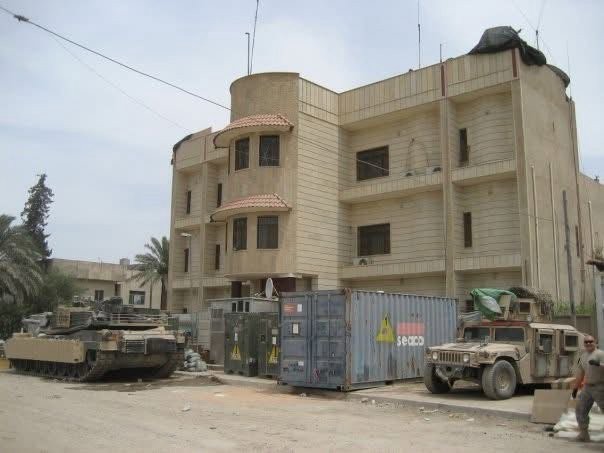
One example that demonstrates adjusted leadership character occurred during operations in Sadr City, where tank commanders were routinely placed in ethically complex combat scenarios. In one reported instance, during the emplacement of T-walls in contested neighborhoods, insurgents fired at U.S. forces from within buildings that were believed to house civilians. Commanders had to decide whether to return fire immediately, risking civilian casualties, or hold fire and pursue another method. Instead of using immediate high-explosive tank fire, the tank commanders coordinated with dismounted infantry to isolate the building, confirm the presence of a threat, and eliminate it through a controlled precision engagement.15
The evidence shows that this approach demonstrated restraint and accountability under stress. Instead of reacting with anger or rushing to fire, the commander embraced the Army Values and followed the rules of engagement. This careful decision kept civilians alive, helped the unit earn the trust of local people, and allowed for Operation Gold Wall to keep moving forward without delay.16 Analysis of this decision shows that leaders need to adjust their character to succeed in IW. Staying calm and doing the right thing, even when under immediate threat, helps leaders make better choices, earn trust from civilians, and stay focused on the mission. In the chaos of IW, the character of the leader becomes a stabilizing force that keeps the mission aligned with ethical and operational priorities.17
Conclusion
In summary, mission command principles, especially the use of mission orders and a clearly communicated commander’s intent, were critical during IW because they empowered subordinates to take initiative under uncertainty while remaining aligned with the overall mission objectives. Combat stress management was essential during operations in Sadr City. Long hours, extreme heat, and constant threats made it difficult for Soldiers and leaders to stay sharp. If not handled properly, this stress could lower performance and break down trust in the unit. Good leaders kept their Soldiers focused and mentally strong by checking on them, rotating shifts, and encouraging rest when possible. IW also required leaders to adjust how they led. Tank commanders had to show courage and discipline while making quick choices in chaotic and morally difficult situations. They had to fight the enemy while protecting civilians and staying true to Army Values. This study argues that mission orders, commander’s intent, stress management strategies, and the ability to adjust leadership character provided the backbone of successful armor operations during the Battle of Sadr City. Just as tanks rumbled through Sadr City’s narrow alleys like unleashed lions in a crowded arena, effective leaders charged forward with clarity, resilience, and ethical strength to meet the demands of irregular warfare.
Sergeant Major Steve Gonzalez currently serves as the Brigade Operations Sergeant Major for the 194th Armored Brigade, Fort Benning, Georgia, with a distinguished career including prior assignments as First Sergeant of 1st Battalion, 77th Armored Regiment and 1st Battalion, 29th Infantry Regiment, as well as roles as a Senior Operations NCO at the Pentagon and a Senior Drill Sergeant at Fort Benning. SGM Gonzalez was assigned as a M1 Abrams Tank Gunner and Section Sergeant with the 4th Infantry Division and 1st Armored Division, deploying in support of Operation Iraqi Freedom. SGM Gonzalez holds a bachelor’s of science in business administration and a master’s of science in emergency and disaster management from Trident University International. SGM Gonzalez is also a graduate of the Sergeants Major Academy (Class 75) and numerous other leadership courses. SGM Gonzalez is a highly decorated Soldier, recognized with the Bronze Star Medal, Army Commendation Medal with Valor, and numerous badges and awards, including foreign honors and recognition as the Fort Benning Volunteer Soldier of the Year in 2013 and 2021.
Notes
1 U.S. Department of Defense. (2010). Irregular warfare: Countering irregular threats joint operating concept (Version 2.0). Joint Chiefs of Staff. https://www.jcs.mil/Portals/36/Documents/Doctrine/concepts/joc_iw_v2.pdf
2 Ibid.
3 Department of the Army. (2019). ADP 6-0: Mission command: Command and control of Army forces. Headquarters, Department of the Army. https://armypubs.army.mil/epubs/DR_pubs/DR_a/ARN34403-ADP_6-0-000-WEB-3.pdf
4 Johnson, D. E., Markel, M. W., & Shannon, B. A. (2013). The 2008 Battle of Sadr City: Reimagining Urban Combat. RAND Corporation. https://www.rand.org/pubs/research_reports/RR160.html
5 Ibid.
6 Ibid.
7 Department of the Army. (2019). ADP 6-0: Mission command: Command and control of Army forces. Headquarters, Department of the Army. https://armypubs.army.mil/epubs/DR_pubs/DR_a/ARN34403-ADP_6-0-000-WEB-3.pdf
8 Department of the Army. (2023). ADP 6-22: Army Leadership and the Profession (Change 1). Headquarters, Department of the Army. https://armypubs.army.mil/epubs/DR_pubs/DR_a/ARN42975-ADP_6-22-002-WEB-8.pdf
9 Helmus, T. C., & Glenn, R. W. (2005). Steeling the Mind: Combat Stress Reactions and Their Implications for Urban Warfare. RAND Corporation. https://www.rand.org/pubs/monographs/MG191.html
10 Johnson, D. E., Markel, M. W., & Shannon, B. A. (2013). The 2008 Battle of Sadr City: Reimagining Urban Combat. RAND Corporation. https://www.rand.org/pubs/research_reports/RR160.html
11 Helmus, T. C., & Glenn, R. W. (2005). Steeling the Mind: Combat Stress Reactions and Their Implications for Urban Warfare. RAND Corporation. https://www.rand.org/pubs/monographs/MG191.html
12 Peterson, A. L., Luethcke, C. A., Borah, E. V., Borah, A. M., & Young-McCaughan, S. (2011). Assessment and Treatment of Combat-Related PTSD in Returning War Veterans. U.S. Army Medical Research and Materiel Command. https://apps.dtic.mil/sti/tr/pdf/ADA558284.pdf
13 Helmus, T. C., & Glenn, R. W. (2005). Steeling the Mind: Combat Stress Reactions and Their Implications for Urban Warfare. RAND Corporation. https://www.rand.org/pubs/monographs/MG191.html
14 Department of the Army. (2023). ADP 6-22: Army Leadership and the Profession (Change 1). Headquarters, Department of the Army. https://armypubs.army.mil/epubs/DR_pubs/DR_a/ARN42975-ADP_6-22-002-WEB-8.pdf
15 Johnson, D. E., Markel, M. W., & Shannon, B. A. (2013). The 2008 Battle of Sadr City: Reimagining Urban Combat. RAND Corporation. https://www.rand.org/pubs/research_reports/RR160.html
16 Ibid.
17 Department of the Army. (2023). ADP 6-22: Army Leadership and the Profession (Change 1). Headquarters, Department of the Army. https://armypubs.army.mil/epubs/DR_pubs/DR_a/ARN42975-ADP_6-22-002-WEB-8.pdf
Social Sharing