A Possible Future
SGT Cunningham climbed to the top of vehicle Bravo 1-2 to relieve the Tank Commander (TC), SSG Rodriguez, from his position pulling security. The crew had just finished their morning preventative maintenance checks and services (PMCS). “I’ll be back in around an hour. We’re going to run a company rehearsal,” SSG Rodriguez said. SGT Cunningham settled into the TC’s hatch and checked the M2 .50, the Common Remotely Operated Weapon Station (CROWS) system and the Commander’s Independent Thermal Viewer (CITV) auto scan settings. The tank was running in silent watch mode. The CITV was scanning for dismounted and vehicle threats to the tank’s front, while the CROWS automatically scanned high and low for targets using both thermal and day sights. The platoon was oriented east as a part of the battalion’s hasty defensive position.
PFC Williams re-checked his M240 loader’s machine gun and then continued to scan for threats while he tore open a packet from a meal-ready-to-eat (MRE). Several drones sped from the rear to the forward passage of lines (FPOL) point north of SGT Cunningham’s position. PFC Williams flinched when he saw them but recognized the FPOL point where the drones paused momentarily before continuing east skimming the ground. He watched as they popped up to a higher altitude and dispersed, continuing to hunt for the enemy to the east. All of this was easier back when the unmanned aerial vehicles (UAV) were only on our side, SGT Cunningham thought to himself.
SGT Cunningham reached for his leftover coffee. As he raised his paper cup, the CROWS screen beeped a low warning tone twice. His eyes snapped to the screen, and he saw an orange targeting reticle around several drones on the screen that were alternately moving toward the battalion’s defensive position and then loitering in midair.
On Bravo 3-1, SGT Bradshaw’s hand flew to the CROWS’s joystick. His CROWS had also beeped a warning tone while the M2 .50 machine gun snapped from its previous search pattern towards the drones that Bravo 1-2 had spotted. He could push the override button to take control in case the CROWS made a bad decision, but he wasn’t sure what to do yet. He briefly wondered if the CROWS had spotted the friendly drones heading east to scout, but as he noticed the plot on the map for the Joint Battle Command-Platform (JBC-P), he realized that these drones were in the wrong position. The CROWS beeped a higher warning tone five times in rapid succession and the targeting reticle around the drones turned red by itself as the CROWS quickly decided the drones were a threat. A heartbeat later, the CROWS started firing the M2. SGT Bradshaw keyed the net and announced, “Blue 1 golf, contact red air east, out!”
LT Brown nearly jumped out of his skin as the 12 tanks and Bradleys on the company’s line started firing their M2 .50 machine guns and Bushmasters near simultaneously. The collective shooting had started before a radio call had even come in. The company’s vehicles were so well camouflaged and interspersed with decoys that he only spotted them because of the light erupting from the weapons firing. The company’s leaders, who had been gathering for a fragmentary order (FRAGO) and a rehearsal, began sprinting towards their own vehicles. 1SG Taylor’s crew had already started breaking down the camo net around the company command post as LT Brown lowered himself into his own TC’s hatch. His driver started the tank as he connected his helmet’s intercom system to the tank and scanned the CROWS and JBC-P screens. Dozens of drones were populated on the map and his CROWS had spotted them, but his M2 wasn’t firing. The CROWS knew that his tank was behind several friendly positions, so instead of firing over the top of the company’s defensive line it continued to scan beyond the current targets in case these drones were a feint. He decided against keying the radio to alert the rest of the battalion, not wanting to add to the company’s electromagnetic signature.
Back at the battalion tactical command post, SPC Smith saw on his battlefield computer that there were scores of drones populating along the battalion’s front. So far, they hadn’t concentrated on any particular area. “Contact red air, 1 click east of the forward line of own troops (FLOT),” he told the S3. MAJ Jones toggled the other battlefield computer to see air target tracks in addition to friendly positions and the spotted enemy ground positions that the battalion’s first flight of drones had started to identify. The enemy drones’ positions on the screen started to tick from bright red to black. The CROWS systems and Bradleys’ targeting systems were automatically marking them as destroyed as they observed the explosions and debris. There were no calls over the radio, part of the battalion’s electromagnetic (EM) control plan. He decided to wait a couple minutes before triggering the deception plan: unmanned radios dispersed around unoccupied areas that would broadcast randomly, simulating radio transmissions responding to the current drone attack.
On Bravo 3-1, SGT Bradshaw watched as the M2’s tracer rounds arched towards the drones on the screen. The combined fire from the M2s and Bradley’s Bushmasters airburst in a seemingly random pattern, creating an anti-aircraft artillery effect that bracketed the drones with devastating results. The drones that had hovered trying to spot the company’s defensive positions were the first to explode in midair and then tumble towards the earth. The second wave of drones had sped toward the company’s positions trying to spot a tank to swarm before they were targeted. These drones made it a little closer but were destroyed hundreds of meters away from the company’s battle positions. Nearly as fast as the automated weapons had started firing, they stopped simultaneously. Less than 2 minutes had passed since the first CROWS spotted a drone and silently passed the target to all the other weapon systems in the company. SGT Bradshaw watched as his CROWS started scanning again in its previous pattern. “I’m coming up, start the tank!” shouted LT Thompson. SGT Bradshaw slipped into the gunner’s station while the driver pressed the ignition. LT Thompson slipped on his own crewman’s helmet and directed the driver to move to the alternate battle position. The platoon had rehearsed this reaction to drone contact, so no radio transmissions were necessary. The platoon leader moved his hatch to the open-protected position and visually confirmed that the other tanks were moving. They needed to move quickly towards the alternate battle positions to avoid any potential artillery that the destroyed enemy drones would have been able to cue before they fell.
Enabling Maneuver in a Drone Swarm Environment
To survive long enough to fight and win, U.S. Army formations – down to the platoon level and including non-maneuver units – require the ability to counter the unmanned aircraft system (UAS) threat found on the modern battlefield. This capability must be organic, leveraging weapon systems already employed and enhanced through the integration of existing technologies. Currently employed air defense systems and the headline grabbing solutions currently in development are inadequate to the requirement. Instead of pipe dream platform acquisition programs, the Army should leverage improved software and artificial intelligence (AI) to more effectively employ the sensors and weapons it has already fielded across the formation while implementing some modest upgrades to hardware and weapons systems where possible. Finally, countering the mass precision threat will require continued evolution in how leaders from divisions to squads think about security, survivability, and deception.
Observations from Nagorno-Karabakh, Ukraine, and Israel’s multi-front war show that remote-piloted UAS has evolved to AI-enabled drone capabilities. There is evidence that some drones can autonomously identify target types, prioritize high payoff targets, and pass the locations to other nearby drones that drop munitions or intentionally crash into the target to detonate a payload.1 The technology for edge computing is here.2 Any machine with a computer and a sensor can be programed to evaluate its environment and interpret it. It can also instantly communicate with nearby machines that are networked together. A common language and data storage schema enables cross-machine communication. The kill web is getting shorter and more redundant, with multiple machines capable of spotting and prioritizing targets for nearby weapons.3 The result is a threat capable of massing precision air-to-ground munitions against U.S. forces. Even if the U.S. Army hadn’t previously divested itself of integrated short range air defense (SHORAD) capabilities, the new threat is smaller, nimbler, and more precise than previous generations’ air threats were. Our previous way of thinking about air defense – that dedicated air defense batteries provide distributed protection when task organized to brigades and battalions – is obsolete. The situation is akin to a century ago when aircraft first started to menace ground forces, and we need to rapidly innovate to defeat the threat.
Units can’t rely on external assets for internal short range air defense or counter-small unmanned aerial systems (C-sUAS). Avengers aren’t a good C-sUAS platform. Carrying only eight Stinger missiles, each missile is more expensive than the sUAS that it would destroy. Even if every Avenger were replaced with a powerful and cost-effective C-sUAS laser weapon system capable of rapid fire, there wouldn’t be enough Avenger batteries to provide adequate protection to the whole maneuver force, much less other vulnerable support and service support units in the close and rear areas.

Similarly, other SHORAD systems in development are not fielded in adequate numbers to protect the entire maneuver force. There are new capabilities, such as the Maneuver-Short Range Air Defense (M-SHORAD) Stout, which are excellent ideas, but there are not enough to provide coverage to all units. Unless these systems are produced in quantities sufficient to add to all maneuver and support units, these systems will not provide adequate drone defense protection to U.S. forces. Even if they were produced in sufficient quantities, these systems would require either growth in the authorized strength of the Army to crew the system or else repurposing of existing strength which would limit these Soldiers’ use in their current roles. SHORAD units will have to focus only on larger long-range drones while each ground unit will need the capability to protect itself against small tactical drones.
Other radar-based detection systems, a form of active detection, are more of a liability than a help. Devices that add to a unit’s electromagnetic signature make it too easy for an adversary to target friendly positions. While radar can spot airborne systems much farther away than the naked eye, it also makes it very easy for a properly equipped adversary to find radar across the battlefield and target it with standoff munitions. Soldiers and leaders need to remember that radar is like a spotlight – you can see someone using a spotlight much farther away than the spotlight user can identify you. Additionally, once radar is destroyed from enemy targeting, radar-dependent air defense weapons are effectively neutralized. Strategic and operational level air defense units should continue to be part of the Army’s air defense solution, but maneuver and support units need passive detection systems instead of active detection systems so that they can minimize their electromagnetic signature on the battlefield.
Currently fielded bespoke C-sUAS systems are not practical for maneuver units. C-sUAS systems already fielded, such as the Drone Buster and Smart Shooter, aren’t useful in all situations. The Drone Buster defeats a specific type of UAS that is remotely piloted via radio link. However, with the recent proliferation of UAS with fiberoptic links to controllers, the Drone Buster will lose relevance. Drone Buster will also not work against autonomous pre-programed systems that don’t rely on radio links to ground stations. Systems such as the Smart Shooter, an optic that can be mounted to ordinary rifles that control a shot’s timing to improve round-on-target probability, are ingenious but primarily useful against solitary or small groups of mostly stationary drones. These sights are also limited by the max effective range of the small arms weapons on which they’re mounted.4
Some systems currently under development or already employed, such as the Mobile-Acquisition, Cueing and Effector system from Northrop Grumman, aren’t realistic for most units.5 These systems are designed or improvised from stationary systems that protect static bases. Even when mounted on a truck, adding these systems to maneuver units would require manpower to operate and employ – manpower that is already needed for their current combat role. Mounting these systems on existing vehicles is infeasible, as Army vehicle platforms are already laden with weapons systems and communications equipment far beyond the initial design specifications of the platforms. What units need is a versatile weapon system that alleviates a burden instead of adding to it.
Other C-sUAS laser weapon systems currently in development are likewise not suitable for rapid deployment. While these systems are intriguing, they have several limiting factors including electricity generation and difficulty in focusing beams through dust particles in austere environments. They are comparatively fragile compared to currently fielded weapon systems such as machine guns.
What maneuver and support units require, then, is a UAS and drone defense weapon system that uses existing or rapidly deployable technology paired with weapon systems and equipment already in the Army’s inventory. This solution needs to either decrease the task burden of Soldiers in combat or at least not add to it.
In line with GEN Rainey’s thoughts on Continuous Transformation, we need to make immediate integrations of emerging technology where possible, upgrade these systems over time, and develop concept-driven solutions for long-term adaptation.6 These AI-driven remote weapon stations will leverage image recognition and an intuitive user interface to enable autonomous search and destroy capabilities that are networked to all other remote weapon systems in the vicinity to mass fires against UAS and drones that threaten ground units. These passive detection systems will also feed targeting information into the air defense network’s common operating picture, enabling air defense units to successfully identify, cue, engage and destroy higher-altitude attack and surveillance UAS without relying primarily on increasingly vulnerable active detection radar systems to identify threats.
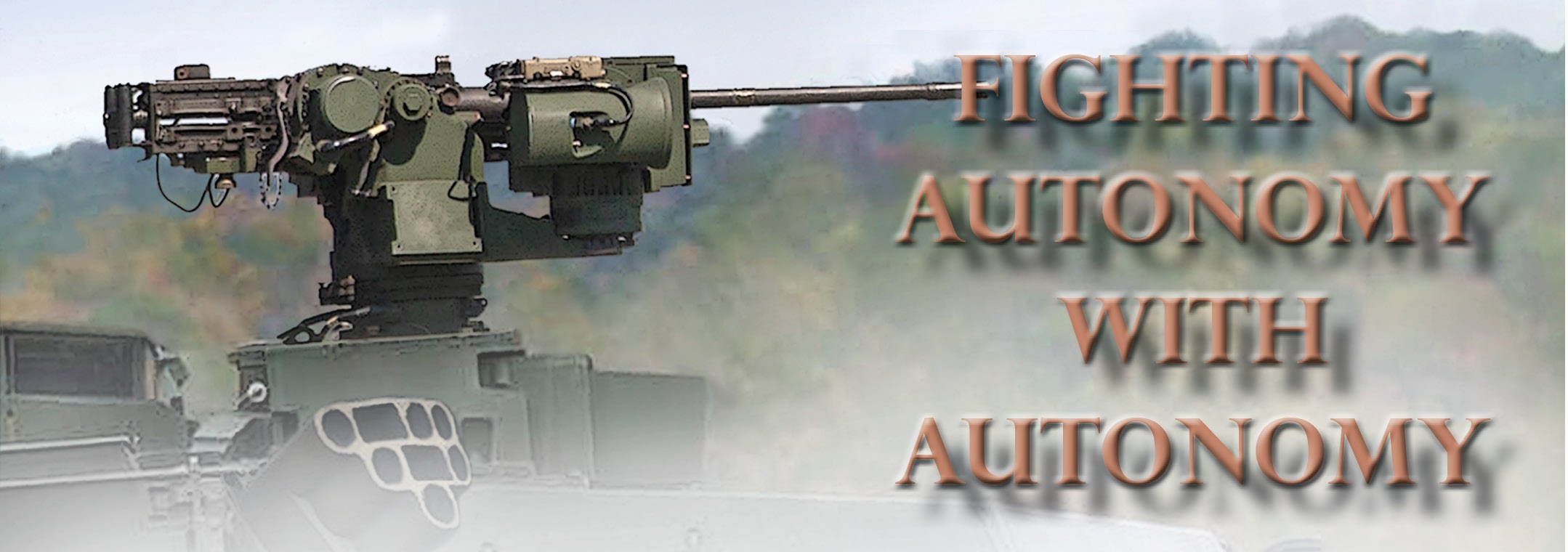
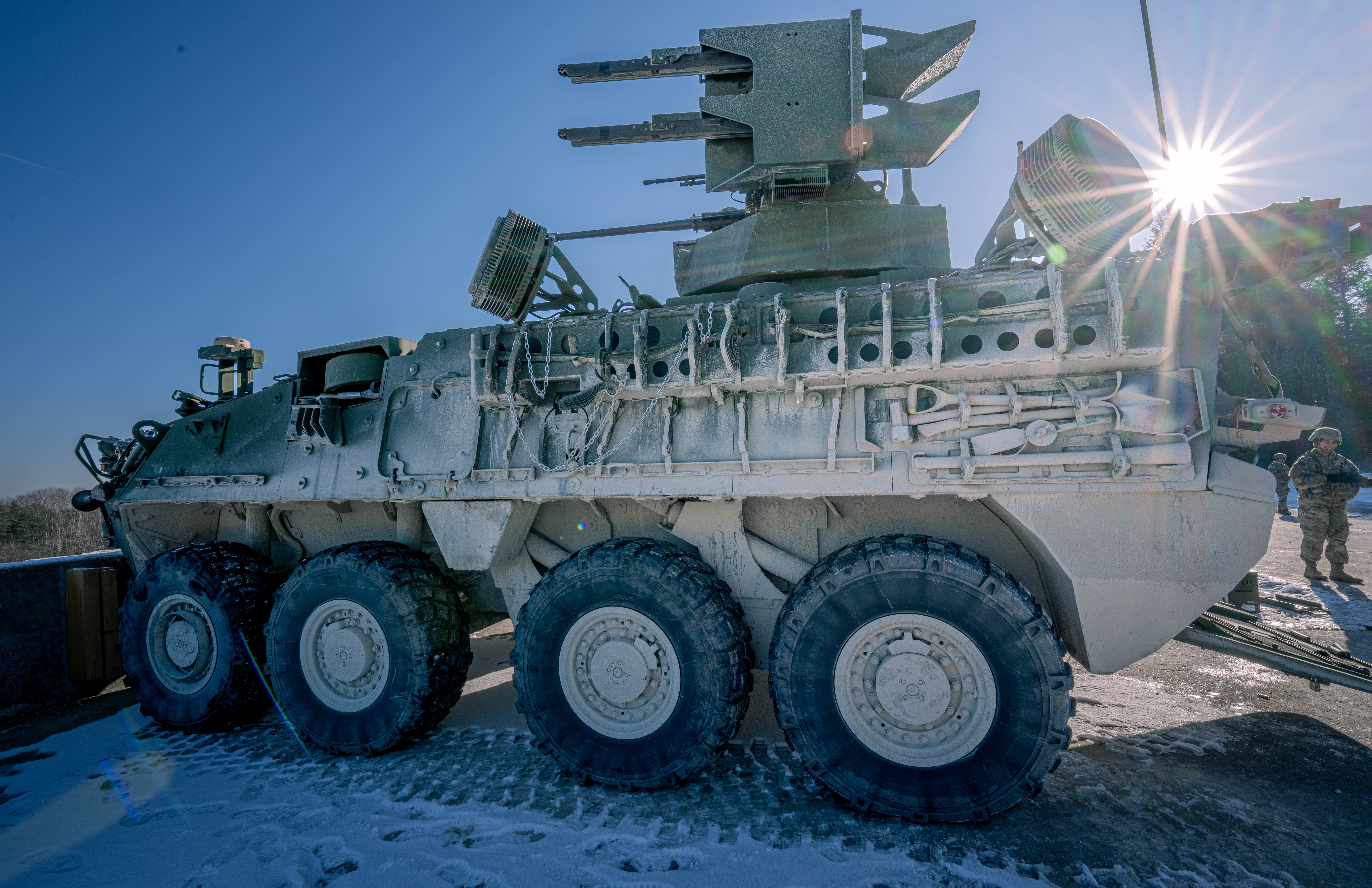
The currently deployed CROWS already have most of the raw materials necessary to counter the UAS threat. CROWS has both day and thermal imaging cameras. These cameras are passive detection devices that operate without generating electromagnetic signatures and are therefore more useful for units attempting to minimize their own detectable presence on the battlefield. CROWS are also paired with laser range finders that help a system calculate the precise relative location and ballistic solution necessary to accurately engage moving targets near the max effective range of the weapon system. Finally, CROWS are frequently mounted on vehicles that also have a battlefield computer installed, which enables rapid communication of targets to units both near and far away. If integrated properly, these battlefield computers could communicate enemy locations in real time to the common operating picture of tactical intelligence computer systems, air defense network systems, and other ground maneuver units.
The Capability Gap
These currently fielded weapon systems and battlefield computers have a capability gap that does not adequately enable units to defend themselves against drone swarms. Current CROWS require direct crewmember control. This remote-controlled weapon’s effectiveness is limited by crewmember skill. Unproficient crewmembers would have no measurable chance of defending against a drone swarm. Even highly proficient crewmembers would struggle to detect, identify, decide to act, and engage dozens of independent drones moving at a speed of over 10-50 miles per hour. Additionally, the “wall of steel” air defense method of multiple crewman-operated machine guns firing at aircraft is limited in effectiveness by the burden of coordinating among multiple shooters. It takes time and significant effort to simultaneously coordinate multiple machine guns, each with its own vantage point, to bracket a fast-moving aerial target.
Communicating spotted targets on current battlefield computers requires time-consuming manual input from operators who are already manning a weapon system and performing vehicle crew duties. The result is that the operator is forced to choose between communicating digitally or manually engaging a target. This limits the potential of rapidly coordinating massed direct fire against small fast-moving threats. In addition to coordinating massed fires against targets in the immediate vicinity, properly integrated AI can communicate targets to all networked battlefield computers using the data mesh concept.7 Current battlefield computer software requires a high burden of attention and interface with the crewman. Initiating a simple spot report takes minutes and a lengthy process in a pop-up interface with the option to input a high level of detail. Each field requires the user to click it, use either the on-screen keyboard or the nearby physical keyboard, then submit the report. A user must follow all these steps for each different target spotted, and by the time the report is received by nearby computers the information is minutes old. While this method is faster to communicate reports over the horizon than consolidating and relaying radio reports, this communication method takes more time and attention from the user than it’s worth. The user must decide if it’s worth losing situational awareness to send reports that will be stale by the time they’re received, making the current interface inadequate to the task of rapidly coordinating direct fire engagements. It’s a wonder that anyone uses digital reports at all.
Current .50 ammunition could be adequate in engaging airborne threats, but airburst ammunition would be ideal. Ball ammunition will destroy small tactical drones, but machine guns could be more effective at drone defense if it could airburst before reaching the drone, which would improve the chances of hitting and disabling a drone at greater ranges. The Army currently doesn’t have any type of .50 caliber airburst ammunition. This will limit these weapons’ effectiveness against drone swarms.
The Capability Needed
Engaging small, fast-moving drone swarms is a job for automation. The technology for computers to analyze images to identify targets already exists. Self-driving vehicles use AI to recognize image inputs and navigate situations. The more these AI systems learn, the better they have become at handling the complex task of driving on streets with other vehicles, obstacles, detours, etc. While they aren’t perfect, they highlight the capability of a computer to recognize visual inputs and react appropriately with faster reflexes and more precision than humans are capable. A human on the loop weapon system that can autonomously engage and destroy targets is what is needed to fight autonomous threats that can each move and make decisions faster than humans.8 Soldiers will still be needed to supervise engage/don’t engage decisions, but the weapon software can be more proficient at target detection, identification, and precise engagement.
Collaboration and communication are another area where software can help Soldiers by automating identification and reporting. Implementing data mesh and data fabric concepts where each sensor or data source can enable real-time updates on all networked computers would eliminate the need for operators to constantly update their machine’s common operating picture to incorporate new reports.9 A battlefield computer that already knows its own coordinates can incorporate the input from a laser range finding system to calculate the location of a moving target. It can then communicate this information nearly instantly to other networked computers which in turn can use the incoming target information to cue their own weapon systems to the correct location. This communication and engagement method cuts crucial seconds off the time it takes Soldiers to contact each other in separate battle positions to coordinate direct fires. It also eliminates the burden of subordinate echelons constantly reporting moving target locations to demanding higher headquarters who are desperately trying to make sense of their own larger battlespace.
The Army needs to procure and field airburst machine gun ammunition. The ideal ammunition type would fit 7.62mm or .50 caliber machine guns that are already fielded. These calibers’ size will likely prevent more sophisticated methods of proximity fuses which explode a set distance from a detected target. However, randomly set timed fuses would still help improve lethality against drone swarms. The Army should procure airburst machine gun ammunition so that all currently fielded crew-served machine guns – even those operated by Soldiers instead of automated remote weapon systems – can increase their lethality against drone swarms. If 7.62mm and .50 caliber airburst ammunition is technically infeasible, then procuring 30mm machine guns with dual-feed ammunition types should be prioritized during the “deliberate transformation” time horizon. These dual feed weapons could keep airburst ammunition loaded for use against drone swarms or targets behind cover while also keeping armor piercing rounds loaded for use against vehicles and hardened targets. Over the last 100 years, we went from specialized machine gun companies to fielding machine guns in every unit in the Army’s inventory so that they can provide for their own defense against enemy troops. Now the Army needs to procure effective C-sUAS machine guns and ammunition so that every unit can defend themselves from this emerging threat.
Implementing these solutions can begin immediately as a part of the Army Transformation Initiative time horizon. Some of these concepts may not even require new procurement contracts.10 In an April 2025 memo, the Secretary of War called for including “right to repair” in procurement contracts. If the Army is not dependent on contractors to integrate new capabilities into existing equipment, the Army could pull together small teams of Soldiers with the requisite skill sets from within its own ranks to begin experimenting with creating and loading image recognition and target engagement software into CROWS. Alternatively, the Army Software Factory could begin work on upgrading CROWS software. With a relatively small budget, this type of experimentation has the potential to start small, fail early, and innovate rapidly. In the age of generative AI that can write the code for computer programs on demand, we may not need defense contractors to write the code to implement this idea quickly. It may seem crazy to ask Soldiers who learn AI as a hobby to experiment with developing automated weapon systems, but this type of innovation could also set the stage for rapid adaptation in combat. In 1944, SGT Curtis G. Cullin adapted scrap iron from German roadblocks into hedgerow cutters welded to tanks, enabling maneuver forces to outflank German defensive positions in the French countryside.11 AI, software application layers, and unmanned robotic systems are this century’s welding torches and steel: the basic tools to innovate and transform in contact.
Changing How We Think
Finally, countering the mass precision threat will require continued evolution in how leaders from divisions to squads think about security, survivability, and deception. No unit is immune, regardless of how far from the front line their unit is traditionally located. All Soldiers and leaders need to incorporate drone swarm defense into their security planning and execution, because no other unit is coming to their aid to solve the problem for them. There is a tendency for non-maneuver Soldiers to expect that maneuver units will be tasked to provide their security. This thought process allows them to let themselves off the hook for thinking and training seriously for defending themselves. All leaders need to take this threat seriously and adapt their training and operations to prepare.
Survivability planning takes two forms: avoidance and withstanding.12 Most of this article has focused on overcoming capability gaps that prevent units from adequately defending themselves against drone swarms. The idea is that the Army should provide all units with the ability to withstand (defend against) drone swarm attacks without incurring significant casualties and equipment loss.

U.S. Army Contractor Matthew Medellin, Mobile Training Teams with Consolidated Analysis Center Inc., U.S. Army Combat Capabilities Development Command (DEVCOM) currently supports Mojave Falcon with drone expertise. Mojave Falcon is an Army Reserve exercise that tests the readiness and support capabilities across a coast-to-coast battlefield in a Large Scale Combat Operations (LSCO) environment. This is a multi-faceted first-of-its-kind training exercise that integrates Combat Support Training Exercise (CSTX), Global Medic, Quartermaster Liquid Logistics Exercise (QLLEX), Port Operations and Nationwide Move.
(U.S. Army Reserve photo by Sgt. Anh Tuan Nguyen) VIEW ORIGINAL
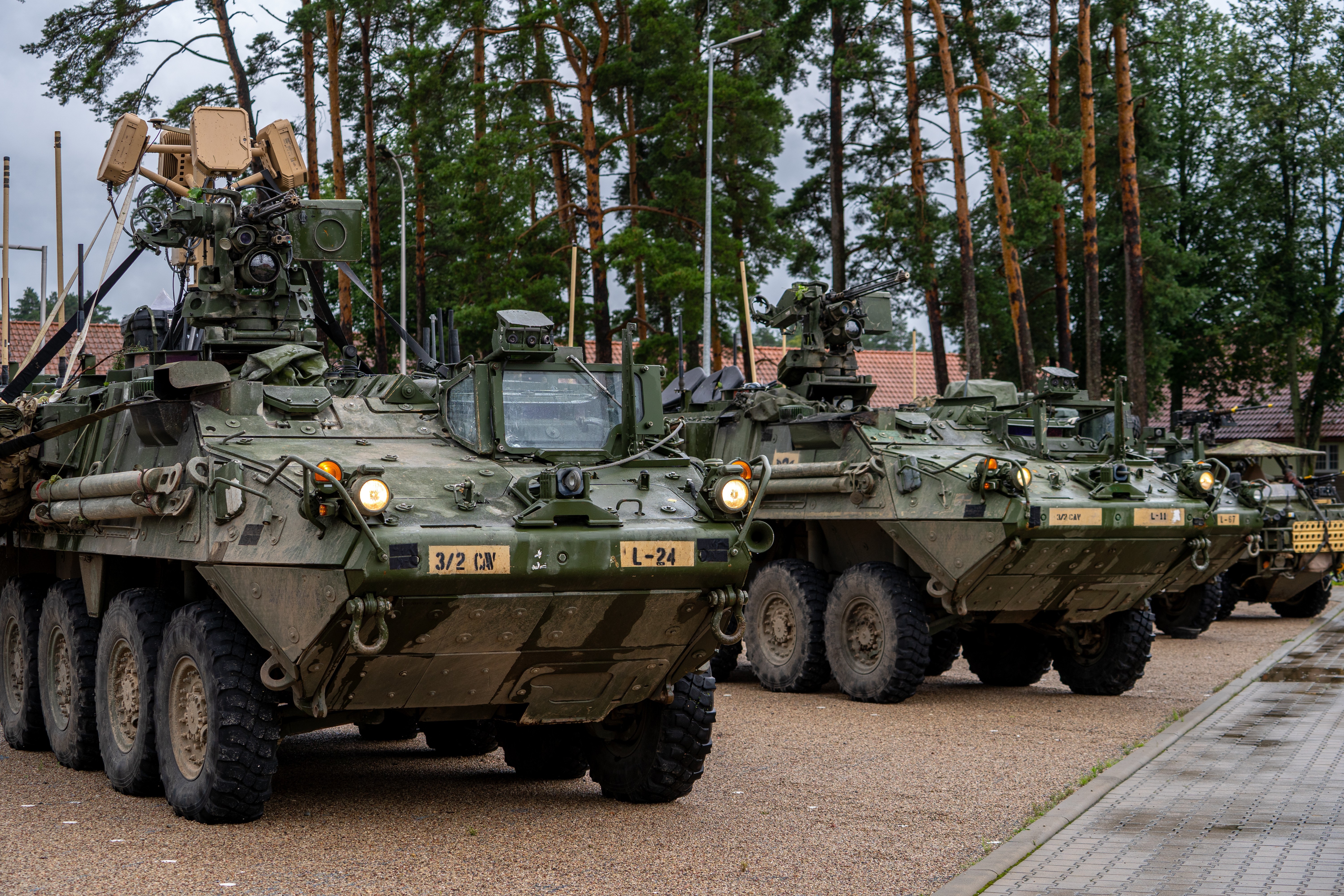
Leaders need to train avoidance survivability methods. Headquarters and command posts need to experiment with making themselves smaller and more redundant.13 Leaders shouldn’t wait for the Army to finish redesigning and modifying Tables of Organization. They should start shrinking and dispersing command posts in all tactical exercises immediately. Maneuver echelons should eliminate the practice of motor pool-style assembly areas in the field. Support and service-support units should also train dispersion, camouflage, and concealment since they are not immune to enemy targeting.
Tactical leaders also need to understand and implement aerial passage of lines into operations. As UAS becomes more prevalent on the battlefield, small unit leaders will become complacent with creating routine forward and rearward passage points through their perimeter to allow for their own UAS operations. Routines are observable. If an enemy observer discovers a UAS passage point, the unit may struggle to identify a drone’s hostile intentions as it approaches a known passage point until it’s too late to engage and destroy the threat. Every unit operating UAS should plan continuously shifting rearward passage points. Ideally, they should identify at least five passage points in their area of operations. Just as challenge and password or number combinations are distributed, the order of switching between rearward passage points should be published daily. Each time a friendly UAS conducts a rear passage of lines (RPOL), the passage point should shift so that an observing enemy cannot exploit an identified passage point in close succession. An alternative to planning continuously shifting rearward passage points for UAS is to treat all UAS as expendable, where each sortie is a one-way trip.
Conclusion
New weapon systems rarely make all previous forms of warfare obsolete; however, the introduction of expendable and highly lethal drone swarms do require the Army to adapt. The tank’s death has been widely proclaimed, but critics’ eulogies are premature. Just as the introduction of the airplane didn’t make ground warfare obsolete, UAS and drone swarms don’t make current maneuver forces obsolete. Multi-domain operations require a combined arms approach to warfare. As new threats emerge, we need to rapidly adapt to counter the threat. UAS aren’t invulnerable. To effectively enable maneuver, all units need the capability to counter UAS and drone swarms. This capability needs to be fielded in each unit without pulling Soldiers away from other required tasks to crew additional vehicles or bespoke C-sUAS weapon systems. To do this, we need to leverage AI and software applications to alleviate some of the burden from crewmen and more effectively leverage the weapon systems that are already fielded as an immediate solution while seeking modest upgrades to hardware and weapon systems in the future.
Major James T. Casey is an Armor Officer currently serving as the Officer Personnel Manager in the Kansas Army National Guard. He earned a bachelor’s of art in history from the University of Central Oklahoma and a master ‘s of business administration from Baker University. He completed over 30 National Training Center rotations while assigned to 2/11th Armored Cavalry Regiment as a Tank Platoon Leader, Executive Officer, and as the ground force commander of the Reconnaissance and Security Mechanized Infantry Battalion. He commanded B/1-635th Armored Regiment during his 33rd NTC Rotation in 2021.
Notes
1 Max Hunder, “Ukraine rushes to create AI-enabled war drones,” Reuters, July 18, 2024. https://www.reuters.com/technology/artificial-intelligence/ukraine-rushes-create-ai-enabled-war-drones-2024-07-18/
2 Christian Brose, The Kill Chain (United States: Hachette Books, 2020), p 19-20.
3 Milford Beagle, Jason C. Slider, and Matthew R. Arrol, “The Graveyard of Command Posts,” Military Review Online Exclusive (March 2023), 9.
4 Nicholas Fiorenza, “UK Procures Smash C-UAS Fire-Control System, Janes, July 15, 2024. https://www.janes.com/osint-insights/defence-news/air/uk-procures-smash-c-uas-fire-control-system
5 Northrop Grumman. 2024. “Counter-Unmanned Aerial Systems (C-UAS).” Accessed August 18, 2025. https://www.northropgrumman.com/what-we-do/land/counter-unmanned-aerial-systems-c-uas.
6 James E. Rainey, “Continuous Transformation – Transformation in Contact”, Military Review Online Exclusive (August 2024).
7 Thom Hawkins and Andrew Orechovesky, “Logistics for Data – Getting battlefield data to the right place at the right time: The mess versus the mesh,” Army AL&T (Winter 2024 Issue), 64.
8 John Antal defines human on the loop as an autonomous system that can identify and decide to engage targets where the human operator’s involvement is activating/deactivating the weapon or terminating an engagement “before unacceptable levels of damage occur.” John Antal, 7 Seconds to Die (Oxford, UK: Casemate, 2022), Glossary.
9 Beagle, Slider, and Arrol, pg 9.
10 Pete Hegseth, “Army Transformation and Acquisition Reform,” memo dated April 30, 2025.
11 Michael D. Doubler, Busting the Bocage: American Combined Operations in France, 6 June – 31 July 1944 (Combat Studies Institute, Fort Leavenworth, 1988), 34.
12 Headquarters, Department of the Army, Survivability Operations, ATP 3-37.34 (Washington, DC: Department of the Army, April 2018), Chapter 1.
13 Beagle, Slider, and Arrol, “Graveyard of Command Posts”, 6.
Social Sharing