
Imagine a battlefield shrouded not in smoke and fog but in silence. A silence not of peace but of disruption. No satellite communication connecting commanders to their troops. No early warning systems detecting incoming threats. No Global Positioning System (GPS) guiding logistics, maneuver, or precision munitions. This scenario is not science fiction - it is a real possibility in future large-scale combat operations (LSCO). For decades, the U.S. Army has enjoyed near-uncontested access to space, a critical advantage underpinning our success in global conflicts. That advantage is rapidly eroding. Potential adversaries are actively developing capabilities to disrupt, degrade, and deny our access to space based assets, transforming the “silent battlefield” into a strategic vulnerability. For future Army warfighters, understanding the space domain, not just as a technical realm but as an integral component of every maneuver, is no longer optional. Understanding how to fight against a near-peer space-enabled adversary is imperative to our success and, potentially, our survival.
At the National Training Center (NTC), we are unwilling to accept a future where our divisions and brigade combat teams (BCTs) are unprepared to face a near-peer space enabled adversary. Senior space officers continuously dedicate time and effort to develop future warfighters who are prepared for this new landscape. This paper will examine the growing threat to our space based capabilities utilized by the BCT, outline how Army leaders can adapt the training and procedures of their formations to mitigate these risks, and highlight the importance of integrating space considerations into all aspects of planning and execution. We will focus on deliberate actions by the maneuver commander, their staff, and the space subject matter experts (SMEs), ensuring their formations are prepared for the inevitable degraded space operational environment (OE).
The Evolving Threat & Why It Matters
Reliance on space is not a weakness in itself, it is a consequence of the incredible advantages it provides. GPS offers precise navigation and targeting and enables massing. Satellite communications (SATCOM) enable secure and reliable command and control across vast distances. Space based intelligence, surveillance, and reconnaissance (ISR) offers critical situational awareness, answers to commander’s priority questions, and battle damage assessment. However, this reliance creates a single point of failure. Adversaries recognize this vulnerability and have developed counter-space capabilities, including jamming, spoofing, and cyberattacks.
These are not hypothetical threats. We have seen evidence of adversaries employing electromagnetic warfare (EW) tactics to jam and spoof GPS signals during exercises and real-world events. The potential for more sophisticated attacks is growing rapidly, and our adversaries are learning and adapting to operate in a space degraded environment. Successfully disrupting the status quo during LSCO could impede our ability to maneuver, communicate, maintain situational awareness, protect, and sustain the force, effectively negating many of our current technological advantages that are critical for carrying out many of the characteristics of offense, defense, and transition.
The Army Combined Arms Center (CAC) Handbook, “Operating in a Denied, Degraded, and Disrupted Space Operational Environment (D3SOE),” published in 2018, is filled with observations from combat training centers (CTCs) that reacted to a space degraded environment.1 After years of observation, the CAC encourages commanders and staffs to be more aware of encryption shortfalls, apathetic electromagnetic interference (EMI) reporting standards, and the lack of awareness of space threats. In comparison, all nine final rotational after action reviews (AARs) from BCTs at NTC in 2024 had nearly identical recommendations. Progress towards addressing these shortfalls has come up short in the last seven years. Even units completing a NTC rotation in back-to-back years often repeated the same mistakes, demonstrating a lack of emphasis from command teams across the formation. The status quo can no longer be accepted. Deliberate changes are required to prepare for the realities of the future battlefield.

Expeditionary CEMA (Cyber and Electromagnetic Activities) Team 05 and ECT 06, B Co., 11CB, executed shaping operations during the rotation that set conditions for 1st Infantry Division and 3rd Special Forces Group (AIRBORNE) offensive and defensive operations.
“Leviathan CEMA Warriors led the way in demonstrating how to leverage Cyber and Electronic Warfare capabilities to deliver effects that enable the lethality of ground maneuver forces on the battlefield,” said Lt. Col. Louis Etienne, commander, 11th Cyber Battalion. VIEW ORIGINAL
Trying Something Different
In preparation for their rotation to NTC, the 1st Cavalry Division (1CD) wanted to break the pattern and ensure they were prepared for their rotation in the spring of 2025. The Greywolf BCT returned to the box after a ten-month turnaround. Field grade officers in the operations, intel, and signal sections were set on improving their performance. One area where they fell short the first time was their ability to fight in and through the space degraded environment. The team proactively sought resources to better prepare themselves for the next fight.
Before heading to NTC for their planning conference, Greywolf contacted the Army Space Training Division (ASTD), a Space and Missile Defense Command Center of Excellence directorate. This division (DIV) is the Army's lead for developing, coordinating, and executing space training and education. The Greywolf S3 asked specifically for additional space instruction during their planning conference. In December 2024, two space officers from NTC, senior space trainer, myself (Space Ghost), and the resident OPFOR space officer (Space Horse) joined forces with ASTD home-station and CTC specific space trainers to deliver an hour-and-a-half instruction focused on the real-world threats posed by our enemies to senior staff officers across the BCT. The conversation quickly migrated towards the OE replicated by Blackhorse, controlled by the Operations Group, and the tangible procedures maneuver units could employ to combat the enemy effects, preserve combat power, and survive in a space degraded environment created at NTC. The group left with a better understanding of integrating space into their planning process. They were excited to implement the troop procedures and protective measures they learned to defeat Blackhorse later that spring.
Motivated by their initial training and armed with a will to win, Greywolf brigade (BDE) and the 1CD Space Support Element (SSE) coordinated ASTD’s support during their January combined arms live-fire exercise (CALFEX) validation, the culminating exercise before heading to NTC. The space section invited me to visit Fort Hood and observe Greywolf’s training firsthand. My trip's goal was to better understand the evolution of home-station space training to help shape the OE at NTC, and to find the right balance of parity to appropriately challenge units prepared for NTC's complex and dynamic environment within the scenario design.
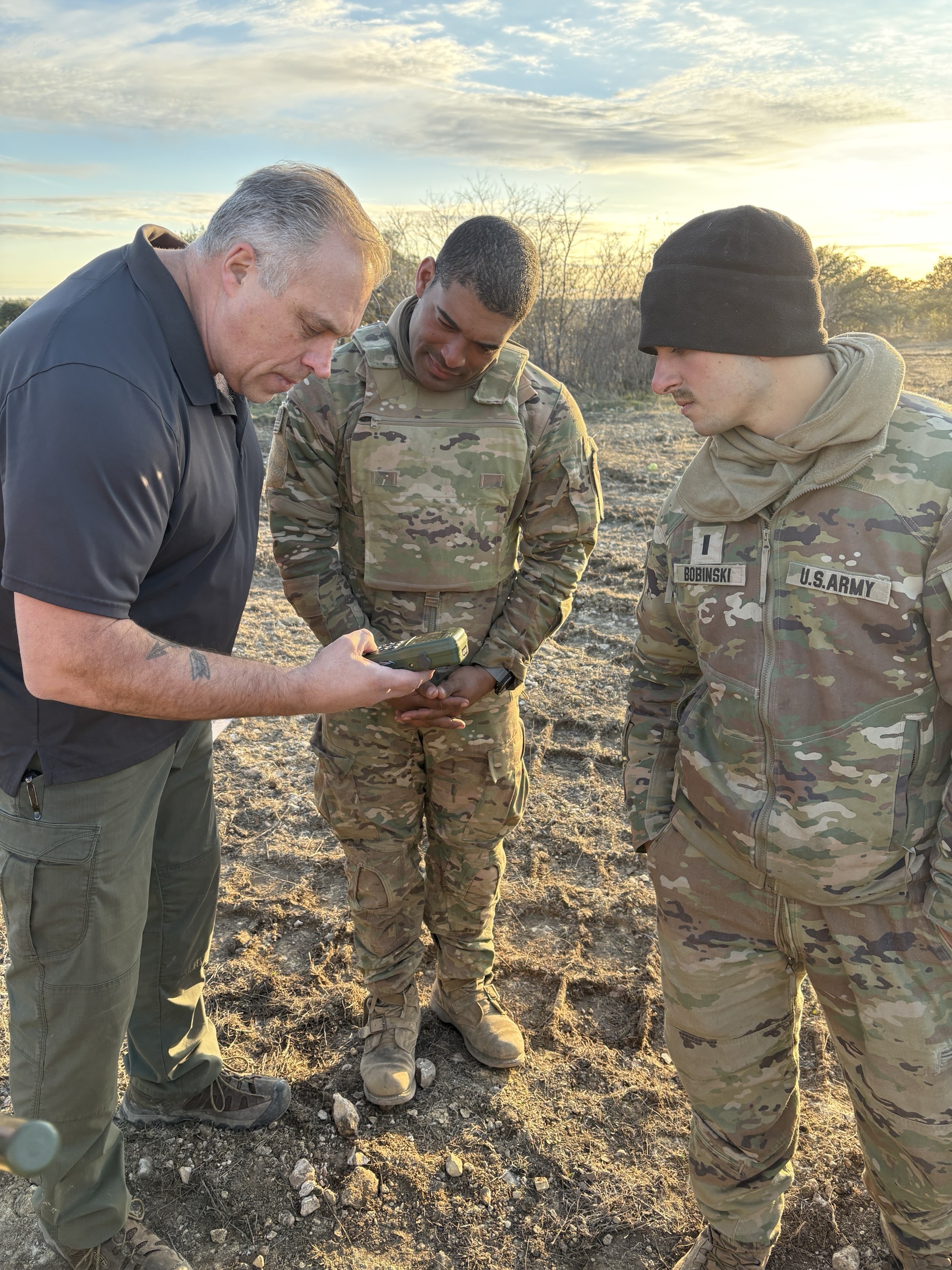
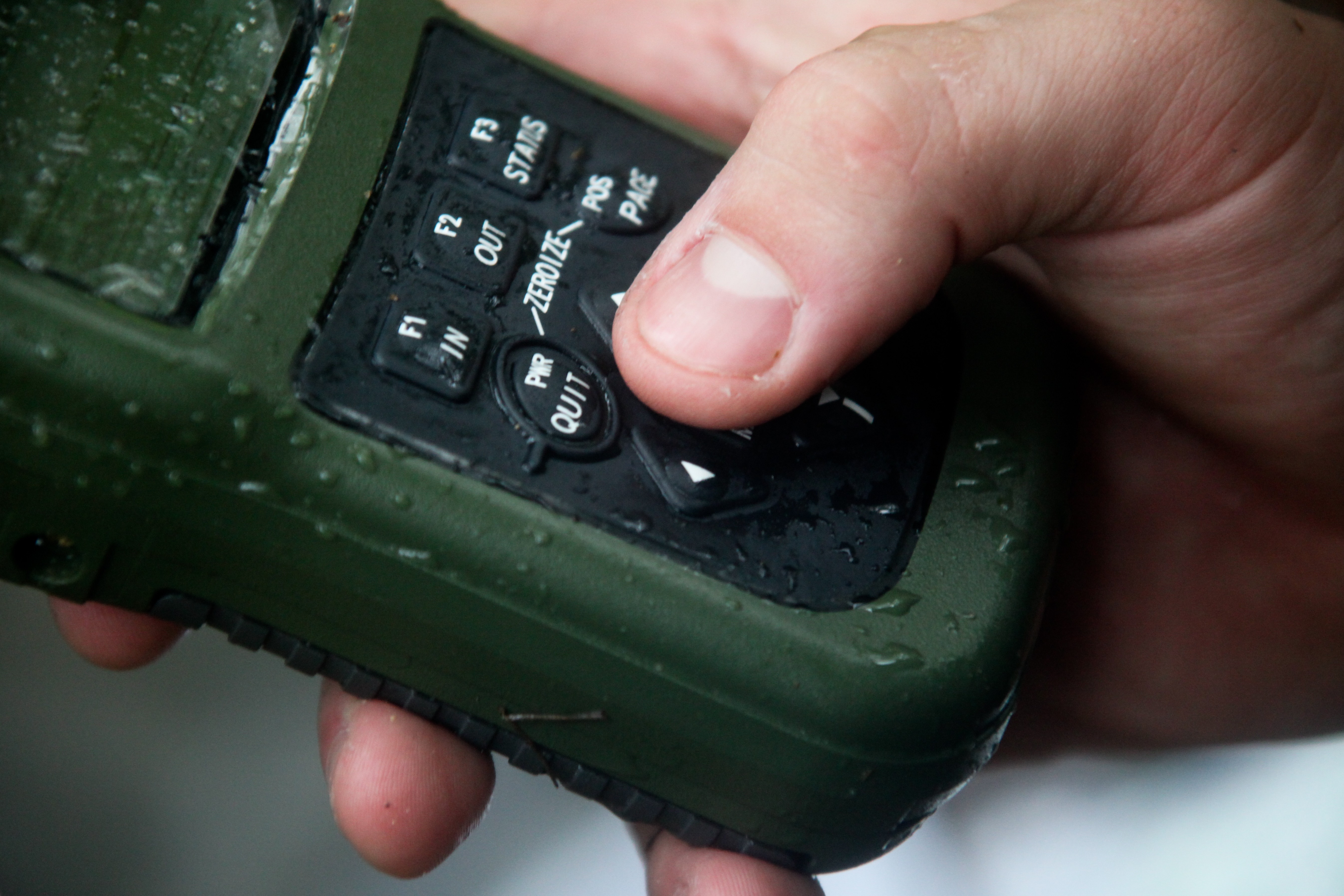
The plan was for ASTD trainers to provide GPS jamming effects during the final company situational training exercise (STX) lanes preceding the live fire. The task for companies was to conduct a breach during a period of darkness. Once I arrived in Texas, the BCT had already run a few training iterations. Initial observations made by the ASTD trainers suggested the duration of the lane was too short for the company leadership to notice the disruption of GPS on their Joint Battle Command-Platforms (JBC-Ps). After consultation, the plan evolved to have the ASTD trainers, and the division space officers conduct individual training with the team leaders and above in the assembly area before they started the lane. Before the training, the ASTD trainers turned on their jammers and demonstrated the direct effects of GPS jamming on the troop’s Defense Advanced GPS Receivers (DAGRs) and JBC-Ps. The ASTD trainers also explained the use of the jammer finder app on the DAGR and its use in finding enemy jammers. Overall, the company leadership was engaged in the training and was excited to take tangible action to defeat Blackhorse, their future adversary. With the SSE’s presence and engagement, the team provided local expertise that directly supported a better understanding of the OE expected in future conflict.
My visit to Fort Hood was short, but the value was immense. While interacting with the 1CD SSE, I witnessed firsthand the team's dedication to their subordinate units. The team meticulously crafted a training glide path for Greywolf, outlining a proper crawl, walk, run strategy to develop their awareness and procedures when encountering the threat posed by a space degraded environment. What was unique about this staff section’s approach was how well they leveraged outside resources to ensure their unit was ready for the final test on the national level. Inviting dedicated assets like ASTD to support training and finding creative solutions like inviting an NTC observer controller/trainer (OC/T) to assist with training provided both exposure and emphasis to the nature of the OE.
As an outside observer who routinely interacts with all echelons, I am often provided excuses as to why subordinate training takes the back seat to ongoing division or corps priorities. Space cadre and 3Y space trained Soldiers are frequently relied on to inform the BCTs and below on tactical space operations. When ASTD CTC trainers and OC/Ts interact with these formations at NTC, we routinely encounter Soldiers unaware of the threats of a space degraded environment and the individual and collective tasks required to survive and thrive in this environment. However, 1CD SSE subverted this narrative, and the Greywolf BDE validated the effectiveness of this training strategy by achieving excellent results at NTC a few months later.
Greywolf Excels: Lessons in Action
All that was left was for Greywolf to perform at NTC during rotation 25-06. As a result of the dedicated space training integrated into preexisting exercises, Greywolf delivered one of the best performances of the last several years in maintaining primary, alternate, contingency, and emergency (PACE) communications. During the ten days of force-on-force (FoF), Blackhorse conducted 108 hours of EMI across frequency modulation (FM), JBC-P, and GPS, affecting all main command posts across the area of operation (AO). The brigade continuously reacted and reported EMI in the form of FM, JBC-P, and GPS jamming. Halfway into the battle, during a battle assessment radio call, the Commander of Operations Group (COG) remarked that Greywolf was excelling at managing PACE and that Blackhorse needed to continue to find new creative ways to challenge the training unit with 11th ACR’s jamming plan. Generally, at this point in the rotation, the senior trainers determine if the effects of jamming are preventing the training unit from meeting their training objectives. For Greywolf, the COG sought ways to continue pushing the BCT, and the training unit continued to react and adapt to the degraded environment.
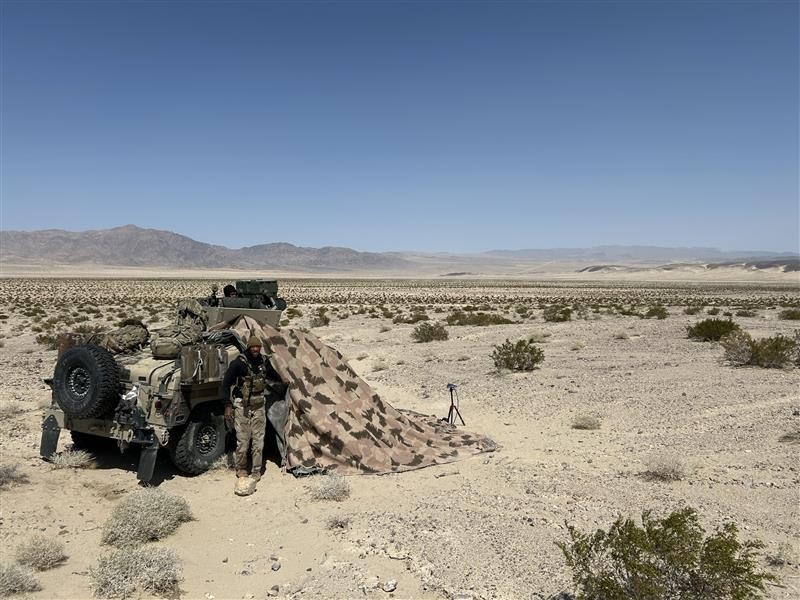
There were several ways that Greywolf excelled in this contested environment. First, they demonstrated a rapid adoption of key loading procedures. Units repeatedly reported completing this task after initial training, and spot checks confirmed successful implementation, indicating effective training delivery and a clear understanding of the critical importance of encryption in protecting communications and navigation systems. Greywolf implemented a JBC-P validation lane during reception, staging, onward movement, and integration (RSOI) requiring all vehicles to validate JBC-P and DAGR communications security (COMSEC), with a dedicated BDE S6 team. These reports were tracked in the daily commander’s update brief to ensure that subordinates met task requirements from the RSOI operations order (OPORD).
The unit also demonstrated increasing familiarity with jammer detection tools. The consistent use of the DAGR jammer finder application during FoF and the units’ ability to understand its function were significant positives. Company-grade leaders across the brigade demonstrated an understanding of using their DAGR to confirm interference and gain directional information. This suggests a growing capability within units to assess and respond to EW threats independently which resulted in further tipping and cueing at the BDE level, which resulted in jammers being located and destroyed through the targeting process several times during the rotation.
Successfully navigating a communication PACE plan is always challenging for units during training. Greywolf comfortably demonstrated the ability to recognize interference on JBC-P, the unit’s alternative communication method, and the BCT protected primary communication. The BCT even mobilized retransmission (RETRANS) to ensure FM communications were not affected when the main command post received direct jamming effects.
Lastly, the BDE consistently emphasized reporting and situational awareness. A strong positive was the repeated discussion of reporting procedures for suspected EMI. Even when initial reports were inaccurate, the emphasis on reporting itself is crucial. Battalions reported jamming effects to the BCT S6 sections. They even ensured adjacent battalions were notified of the jamming environment, demonstrating a growing awareness of the importance of collective intelligence gathering and the need to share information to counter EW threats effectively. Signals intelligence (SIGINT) Soldiers were identifying jammers using a specialized geospatial data visualization application, stimulated by the NTC foundry using integrated broadcast service (IBS) exercise layers to locate jammers on the battlefield in near real-time. By the last battle period, the EW platoons effectively targeted equipment on the high-payoff target list and removed them from the battlefield.

Throughout the rotation, 1CD SSE also created situational awareness products to support Greywolf. Space officers analyzed satellite overflight information, providing optimal times to conduct larger movements and critical events without detection. They also conducted navigation warfare analysis, examining the effects of satellite geometry on GPS-guided munitions and mapping and characterizing jammers using live data from several GPS and geospatial analysis tools. They utilized yet another GPS interference and navigation tool to model these effects on the environment and determine impacts on maneuver units and patterns of life from the Blackhorse EW teams. All of this was done from Fort Hood, TX, producing products within 24-48 hours, and showing how DIV SSEs can support their subordinate units in near real-time during national training exercises.
Overall, the BCT demonstrated a consistent willingness to engage in training on GPS and SATCOM interference and implement mitigation strategies. Troops were eager to listen, knowledgeable, and actively working to load keys and utilize tools like the DAGR jammer finder, suggesting a strong unit culture of preparedness and a recognition of the evolving EW landscape.
Continuing Success
The lessons learned from 1CD should be heard and replicated across the Army. The goal is not to add new training modules but to integrate space considerations into existing training exercises through the OE. This approach, “adapt, don’t add,” is crucial to minimizing additional time requirements and maximizing the impact of training. Units should find ways to implement recommendations faster to improve overall effectiveness in a space degraded environment. There are specific tasks that should be accomplished by commanders, staff, and space SMEs before CTC rotations and deployments to ensure tactical formations are prepared for the environment they will inevitably face.
Recommendations for Commanders
The Army’s formations require leadership and prioritization to improve understanding and proper reaction to a space degraded environment. Senior noncommissioned officers (NCOs) are also critical in executing these priorities across the formation and championing these causes to effect change. The following should be considered by command teams:
Educate unit’s roles in multi-domain operations. As part of the imperatives outlined in field manual (FM) 3-0, Operations, ensure your units are protecting against constant observation, which includes surveillance within the electromagnetic spectrum (EMS).3 Noise and light discipline are no longer enough. Units need to understand the EMS footprint they are emitting and ways that adversaries are using space to observe friendly forces. Commanders must emphasize protection as tactical formations are tasked with survivability and being ready to fight. Electromagnetic considerations such as radio silence, minimizing transmission time, and utilizing terrain masking all should be integrated into individual and collective training to better understand how degraded space affects the tenets of multi-domain operations (MDO), agility, convergence, endurance, and depth. Emphasis should also be placed on redundancy in communication, as well as the execution of mission command.
Mandate and verify encryption discipline. Issue a clear command policy requiring encryption of all navigation and communication systems during training and operations. Navigation encryption is only required once a year. Encryption is the single best way to combat the effects of terrestrial jammers, yet it is rarely prioritized or executed. Incorporate this action into yearly training and/or maintenance plans to ensure compliance. Command teams must verify encryption as part of pre-deployment communications exercise (COMMEX).
Prioritize Realistic Training Scenarios. The Army’s current training methodologies often assume unfettered access to space. This needs to change. You must actively request and support scenarios that simulate GPS and SATCOM denial to allow your formations to see it themselves and work through a dynamic and complex environment while executing their mission-specific tasks. NCOs and Soldiers need an understanding of jamming, spoofing, and the EMS. This can be done by incorporating reaction to EMI and use of the DAGR jammer finder app in individual training, Soldier of the Month boards and expert badge training events.
Emphasize Alternate Communication and Navigation methods. Ensure all units are proficient in utilizing their communication and navigation PACE plan. Conduct regular drills to practice switching between methods. Commanders must become comfortable providing clear and concise guidance, task and purpose, and utilizing mission command with subordinate commanders. Units should remain proficient with redundant digital and analog products for when disruptions do occur. NCOs and Soldiers need dedicated training and proficiency in methods independent of GPS and SATCOM. This includes map reading, land navigation (using compass and terrain association), analog graphics production, analog communication (field phones, runners, visual signals), and understanding of radio frequency (RF) propagation.
Recommendations for Staff Planning
The future of combat is guaranteed to stress the BDE staff in ways not yet seen. Nine forms of contact and continuous observations require deliberately including space in the planning processes to ensure integration across warfighting functions (WfF). Staff should consider the following:
Coordinate with DIV SSE. Proactively coordinate with the DIV SSE to understand their capabilities and limitations and ensure seamless support during rotations or deployments. Request and coordinate for training across WfF framed in terms of success in defeating opposing force (OPFOR) to get subordinate units excited for the training.
Integrate Space Effects into Deliberate Planning. Across WfF, incorporate potential space degradation scenarios into all phases of the military decision-making process (MDMP). This should include wargaming the effects of GPS denial, SATCOM loss, and ISR disruption, and all WfF should be considered. In lieu of an Annex N to Base Orders, space considerations should be included throughout the OPORD.
Update SOPs for Space Degradation. Revise standard operating procedures (SOPs) to address procedures for operating in a space degraded environment. Include guidance on alternate navigation methods, communication protocols, and reporting procedures for EMI both up to higher and laterally to adjacent units.
Demand Pre-Deployment Data Preparation and Ensure Equipment is on Hand. Require EW/SIGINT personnel to prepare for deployment or training with pre-processed data, strike warnings, and access to relevant intelligence tools. The cyber-electromagnetic activities (CEMA) cell needs to have access to a Secret Internet Protocol Router Network (SIPR) token and be comfortable with real-world SIPR tools. Ensure crosstalk between staff sections to ensure the signal section is bringing the Global Broadcasting System (GBS) for use by the intelligence section.
Schedule Regular MIST Training. Integrate Multi-INT Spatial-Temporal (MIST) tool suite training into the unit’s training calendar, ensuring all relevant personnel receive recurring updates and proficiency training. Ensure all appropriate personnel [17E, 35 series, battlefield information collection and exploitation system (BICE)] receive training on interpreting and utilizing real-time jamming data within Fusion Analysis and Development Effort (FADE)/MIST, and leaders can quickly and efficiently disseminate key findings to stakeholders. Leveraging SIGINT is a force multiplier for maneuver formation. Units that do well in this intel function often do well at CTCs.
Recommendations for SSE/Space Professionals
DIV requirements are the necessary priority for every DIV SSE. However, there remains a deliberate requirement to focus on enabling the BDE.
Advocate for Realistic Training. Advocate for more realistic GPS/SATCOM denial scenarios during CTC rotations and other training exercises. Integrate ASTD into training events early, which allows the team to provide training resources and expertise. Ensure formations are prepared for training events by encrypting positioning, navigation, and timing (PNT)-enabled devices and coordinating times for hands-on exposure before effects are integrated into collective training.
Develop Unit-Specific Space Risk Assessments. Conduct unit-specific space risk assessments to identify vulnerabilities and develop tailored mitigation plans that the BDE can action across WfF. Ensure space is integrated across staff sections and help units understand the specific risks they are taking. The CEMA section is your space liaison officer (LNO) on the ground in the BCT; leverage this section to speak on behalf of the space domain to the BDE leadership and staff.
Pre-Rotation Unit Briefings. Conduct comprehensive pre-rotation briefings for incoming units, covering potential space threats, mitigation strategies, and available support resources. Focus on actions at the individual level and include mitigation techniques to help the unit win. Leverage 3Y Space Cadre within the formation to support training efforts and proficiency.
Participate with training unit in real-time. Utilize the exercise data disseminated by asset via integrated broadcast service (IBS) to follow the fight on FADE/MIST, GPS Operational Analysis Tool (GOAT), and the National Reconnaissance Office (NRO) tool Bodhi. In coordination with the CTC SSEs, find opportunities to practice developing and disseminating space threats analysis and products to your organic units throughout the rotation. Fighting with your organic higher headquarters will always be more beneficial than reporting to a constructive high command (HICOM).
Looking Ahead: Preparing for the Future Conflict
The threat to space based assets will only grow in the coming years. As we look towards the next fight, the Army must prioritize the development of resilient systems and adaptable training methodologies. A shift in mindset is required – from assuming unfettered access to space to preparing for a contested environment.
All DIVs have a requirement to ensure their subordinates are ready to execute in a D3SOE. Space officers at NTC have worked diligently to implement both the Army Space Training Strategy and the Army Electromagnetic Warfare Strategy in our own training plan.4 We started with our own home station responsibilities, ensuring space and EW effects are taught at OC/T Academy for both permanent party and guest OC/Ts. We have started to provide visualization of EW effects on our combat training center - instrumentation system (CTC-IS) battle tracking system, so the COG and all OC/Ts are made aware of the impacts of the contested environment. This procedural change has ensured the rotational training unit (RTU) is provided world class coaching on how to properly react to live EMI. We have also strengthened partnerships with DIV and corps SSEs to ensure that staff are able to support their subordinate units at NTC and pass along lessons learned to further develop their units for future operations.
Training centers owe their training audience an environment that is increasingly complex and dynamic, forcing units to continually adjust their tactics, techniques, and procedures, ultimately improving their ability to operate effectively and survive in a space degraded environment. Continued efforts from our team have ensured that a D3SOE environment continues to be accurately replicated here at NTC. With support and emphasis from the NTC Commanding General, we have also incorporated an MDO range to help introduce BCTs to a disrupted environment and allow them to see the effects on the equipment and PACE before beginning FoF. We have also worked closely with Blackhorse EW to ensure our planned effects during the rotation are at parity with the capability of the RTU and increase in complexity over the three phases of FoF and providing a crawl, walk, run training environment. Our team is looking ahead to procure sensors and emitters to further develop our ability to replicate a degraded environment across the training area to provide a less static jamming environment and allow our training audience a better opportunity to see themselves in the EMS. A predictable jamming environment fosters complacency; a dynamic one breeds resilience and innovation.
The lessons learned from NTC rotations are invaluable. They demonstrate that the Army is progressing in raising awareness of space vulnerabilities and improving encryption practices. The silent battlefield may be a reality, but the Army can maintain its advantage and prevail with proactive preparation and a resilient commitment. There is clearly still work to be done, but our ability to operate effectively and decisively even when the skies are silent will shape our future.
Major Heidi Beemer is the Senior Space Operations Officer at the National Training Center at Fort Irwin, CA, call sign Space Ghost. She was commissioned through the Virginia Military Institute ROTC program as a Chemical Defense Officer. MAJ Beemer deployed with the 1st Calvary Divisions Sustainment Brigade to Bagram, AF in support of Operation Resolute Support. She commanded the 181st Hazard Response Company of the 48th Chemical Brigade at Fort Hood, TX from 2017-2019. She has two master’s degrees, the first from Embry Riddle Aeronautical University Worldwide in aeronautics, concentration in space studies, and the second from the Naval Postgraduate School in space systems operations. She served as an assistant professor of physics at the United States Military Academy from 2021-2023. MAJ Beemer accepted a functional area transfer to Space Operations in 2023. She is enthusiastic about promoting tactical Space and helping brigade combat teams prepare to fight in a Space degraded environment in future conflict.
Notes
1 Manning, J. R., and J. P. Nielson. Tactical Staff Considerations for Winning in a D3SOE. Fort Leavenworth, KS: U.S. Army Combined Arms Center, 2024. https://www.army.mil/e2/c/downloads/704611.pdf.
2 Department of the Army. FM 3-0, Operations. March 2025. Army Publishing Directorate.
3 United States Army. Army Space Training Strategy. U.S. Army Space and Missile Defense Command, 2024.
4 United States Army. Army Electromagnetic Warfare Strategy. Department of the Army Office of the Deputy Chief of Sat G-3/5/7, 2025.
Social Sharing