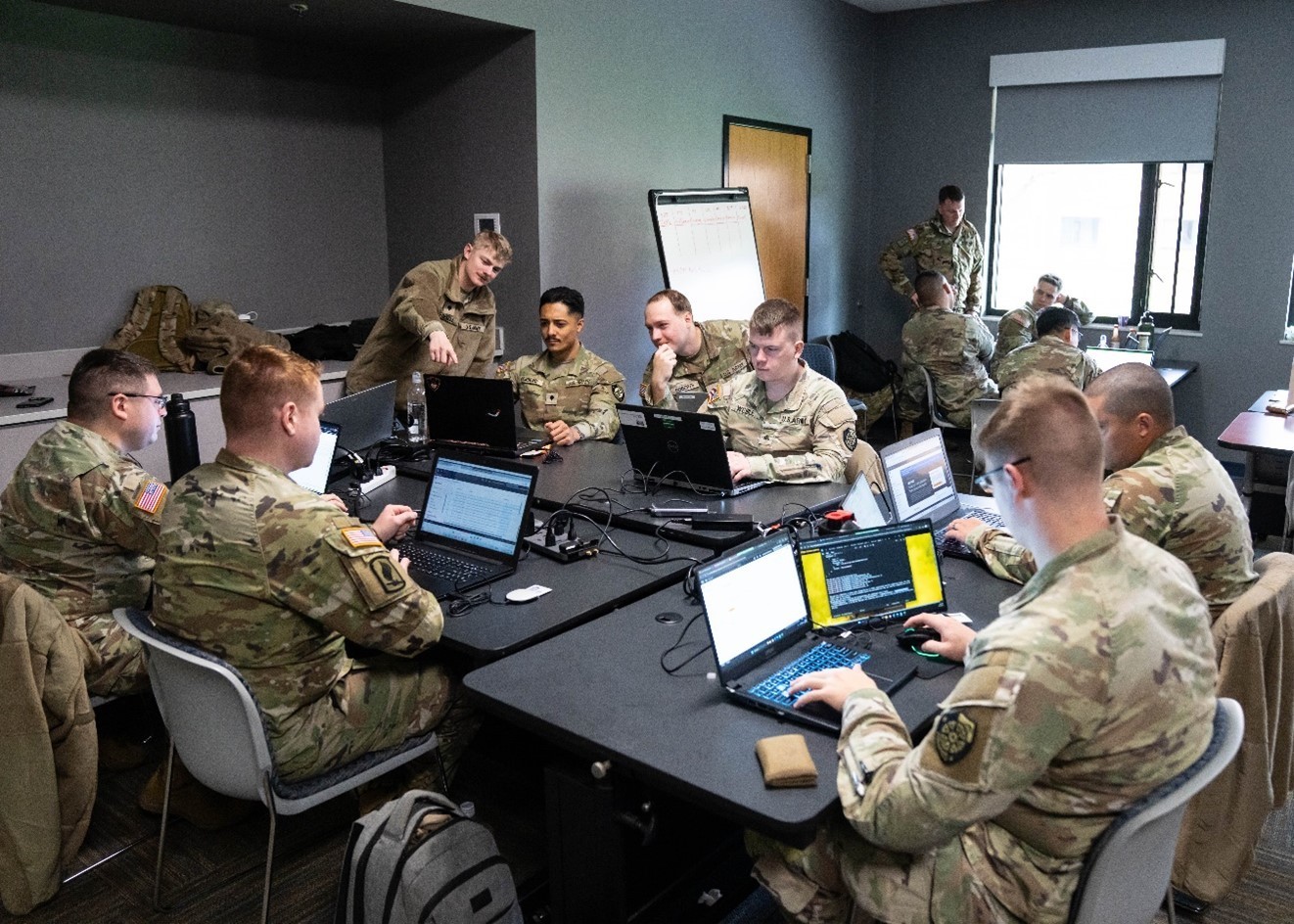
CAMP DAWSON, W. Va. — In the quiet hills of West Virginia, where morning fog settles over the ridgelines, U.S. cyber forces assembled once again for one of the Army Cyber Protection Brigade’s, CPB, most demanding annual events. From 11–21 November 2025, Exercise Grungy Zion, EGZ, brought together Soldiers, Marines, civilians and multinational partners for a validation-focused training event designed to test the brigade’s ability to conduct defensive cyber operations in a joint and combined environment.
Every year, the CPB plans, prepares, and executes EGZ as its primary venue to simulate a joint cyber task force operating across multiple echelons. In 2025, the brigade expanded participation to include French cyber forces, as well as mission elements from Multi-Domain Task Force 1, 2 and 3. While the main CPB elements trained at Camp Dawson, U.S. Marine Corps Forces Cyberspace Command integrated remotely from Fort Meade, Maryland, providing real-time virtual support.
For the CPB headquarters and its subordinate battalions, EGZ 2025 served as an opportunity to validate how information is processed, synchronized, and disseminated to Cyber Protection Teams engaged in scenario-driven defensive missions.
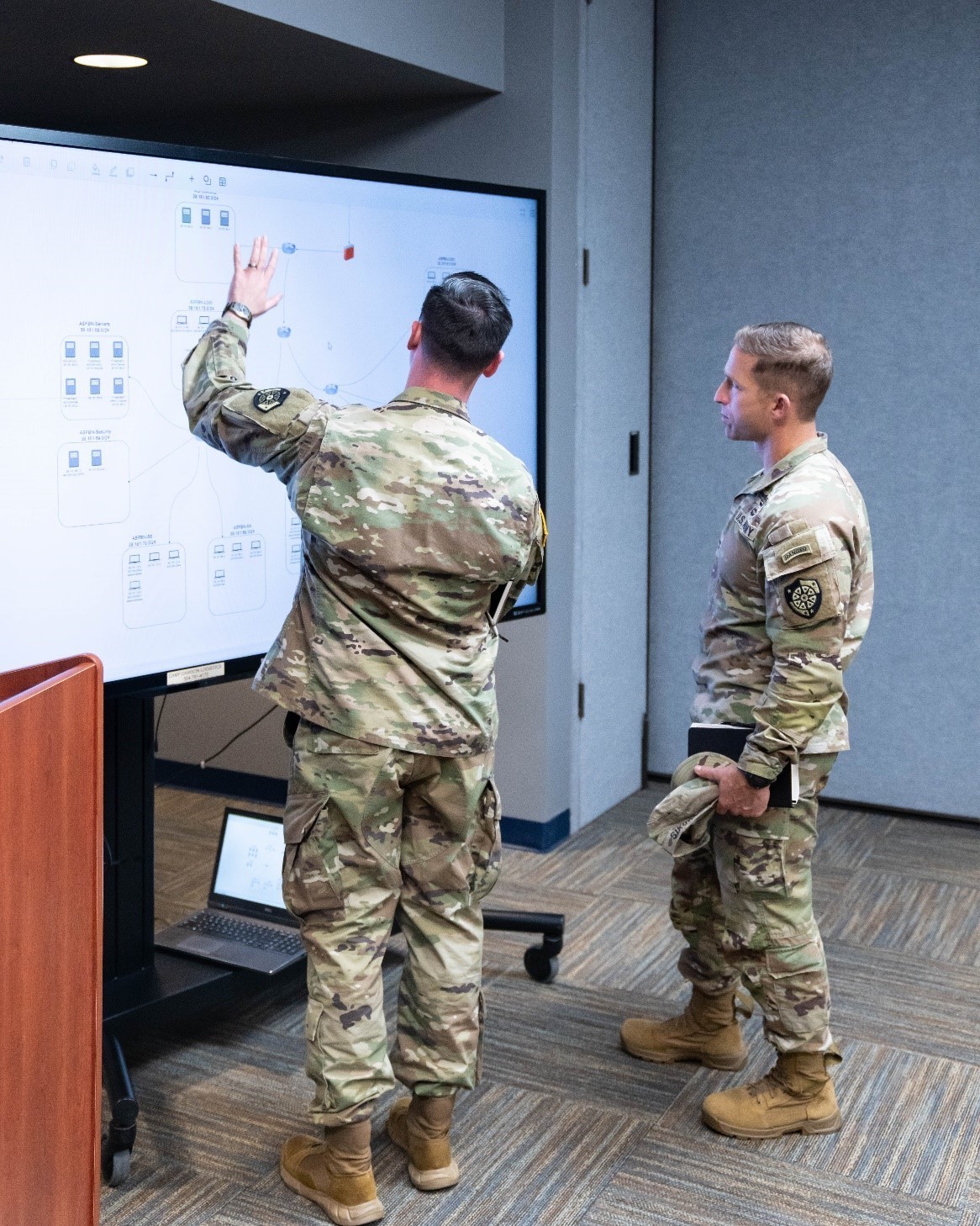
“Exercise Grungy Zion serves as the proving ground for the Army Cyber Protection Brigade. Much like combat training centers prepare brigades to dominate their respective domains, here we validate our ability to execute defensive cyber operations in a dynamic joint and multinational environment,” said Col. Timothy Sikora, CPB commander.
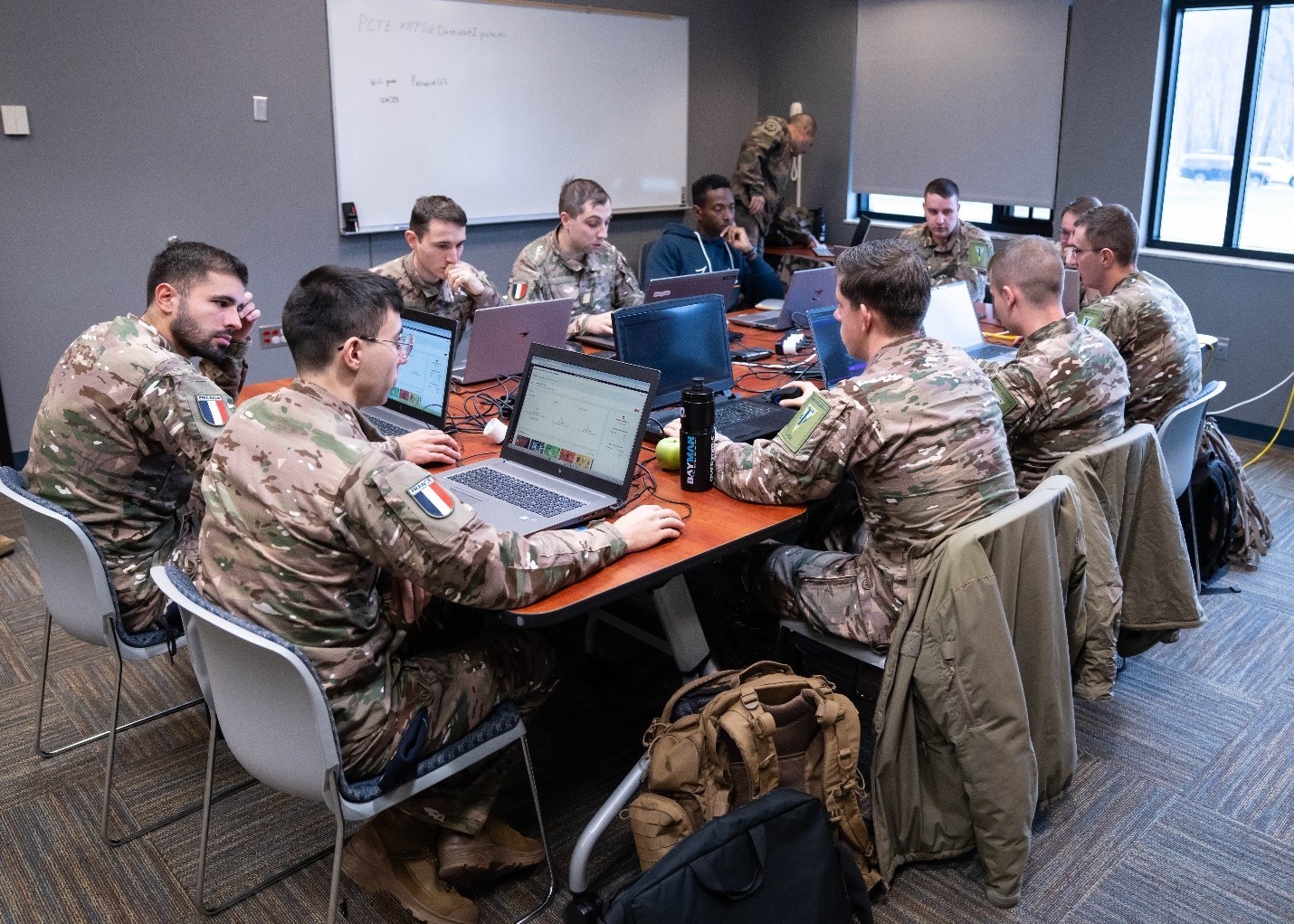
This year’s exercise also marked the first time French cyber forces worked alongside the CPB, enhancing multinational cooperation while expanding the realism of the training environment. In addition, the inclusion of MDTF mission elements allowed for deeper integration of cyber, intelligence, and fires which are key pillars of future multi-domain operations.
Working in a joint environment with the Marines presented both challenges and benefits, especially as Marine cyber operators participated virtually rather than physically deploying.

“During this exercise working with the Marines virtually, being our sister branch, was a good lesson. We have different processes and lexicons, and we were able to work through them together to get to the same end state,” said Capt. Georgel Ruga, 1st MDTF mission element lead.
The environment at Camp Dawson continued to play a major role in the development of cyber professionals from across the CPB. Being away from the home station provided cyber operators with opportunities for collaboration, focus and hands-on engagement with mission partners they don’t often interact with.
“It is important for us to deploy and do exercises out in the field because it gives us opportunities to interact with people you might not normally as well as it allows us to ignore some of the things that would distract us back on Fort Gordon,” said Spc. Isaac Montoya, 201 CPT, 2nd Cyber Battalion.
For others, EGZ 2025 marked their first experience deploying to a centralized mission site, an essential skillset for cyber teams expected to operate flexibly across varied environments.
“Me being new to the CPB, I feel it is important for those people who haven't had the chance to deploy to experience that movement piece and coming together at a central location,” said Christopher Wells, Department of the Army civilian with 201 CPT, 2nd Cyber Battalion.
Now in its fifth year, Exercise Grungy Zion has grown from a CPB-centric training event into a joint, interagency, and multinational proving ground. With expanding partner participation, evolving technology, and increasingly complex operational scenarios, EGZ continues to shape the brigade’s readiness for future cyber operations.
Social Sharing