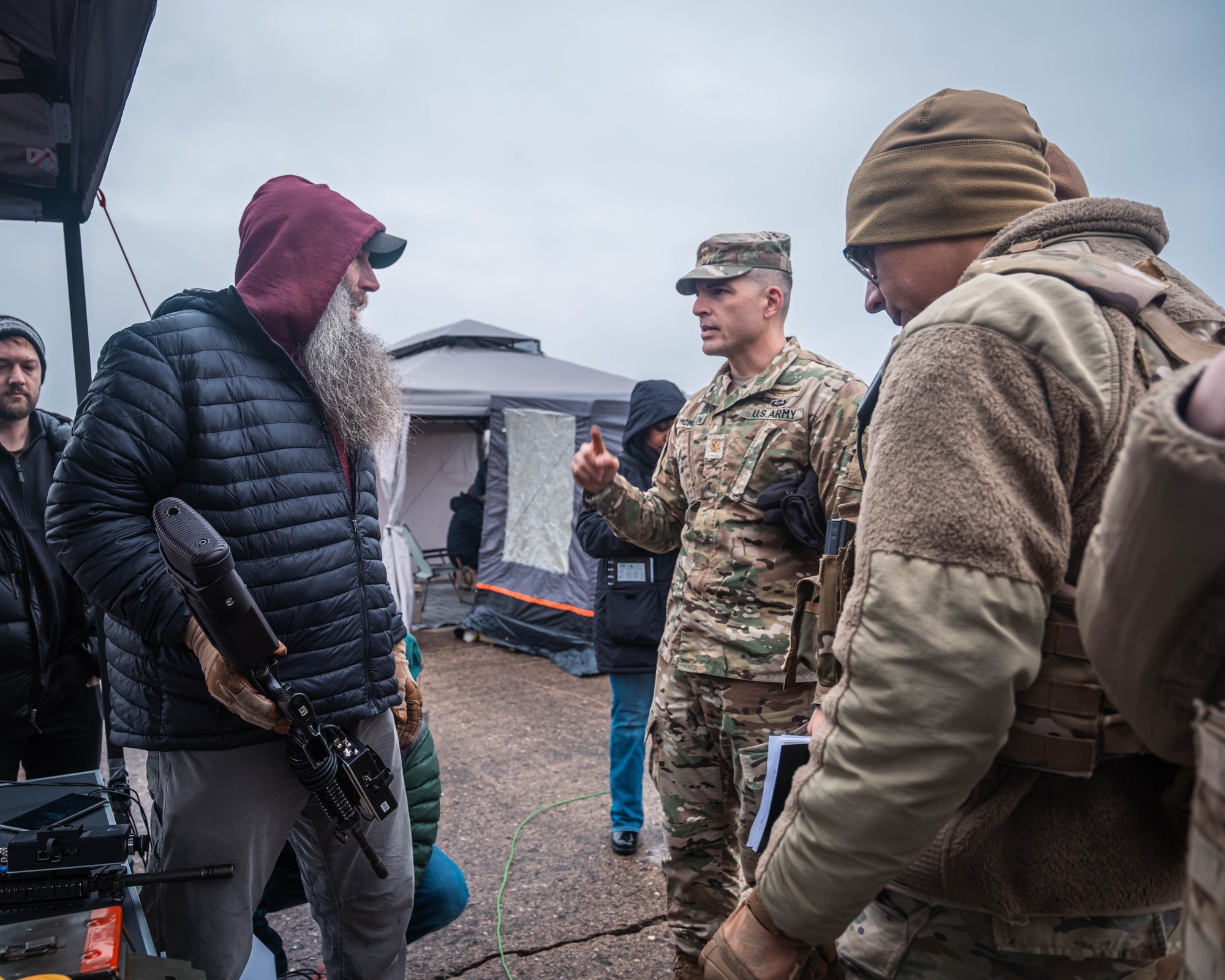
TRUPPENÜBUNGSPLATZ PUTLOS, Germany — Leaders and Soldiers from the 52nd Air Defense Artillery Brigade and the 10th Army Air and Missile Defense Command brought together air defenders, Army procurement staff and commercial vendors specializing in counter-unmanned aerial systems technology for a unique military and civilian event at Truppenübungsplatz Putlos, Nov. 10-21, 2025.
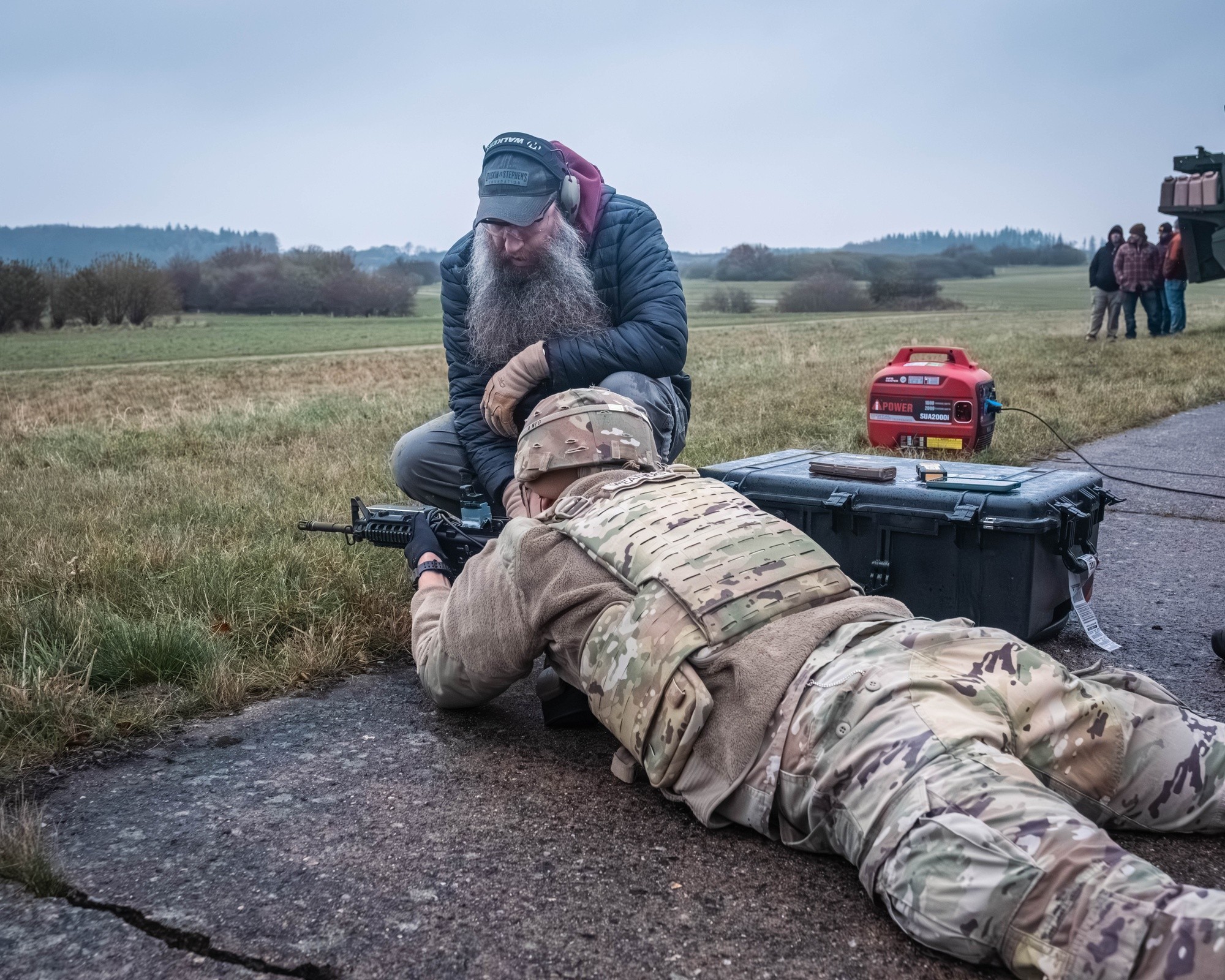
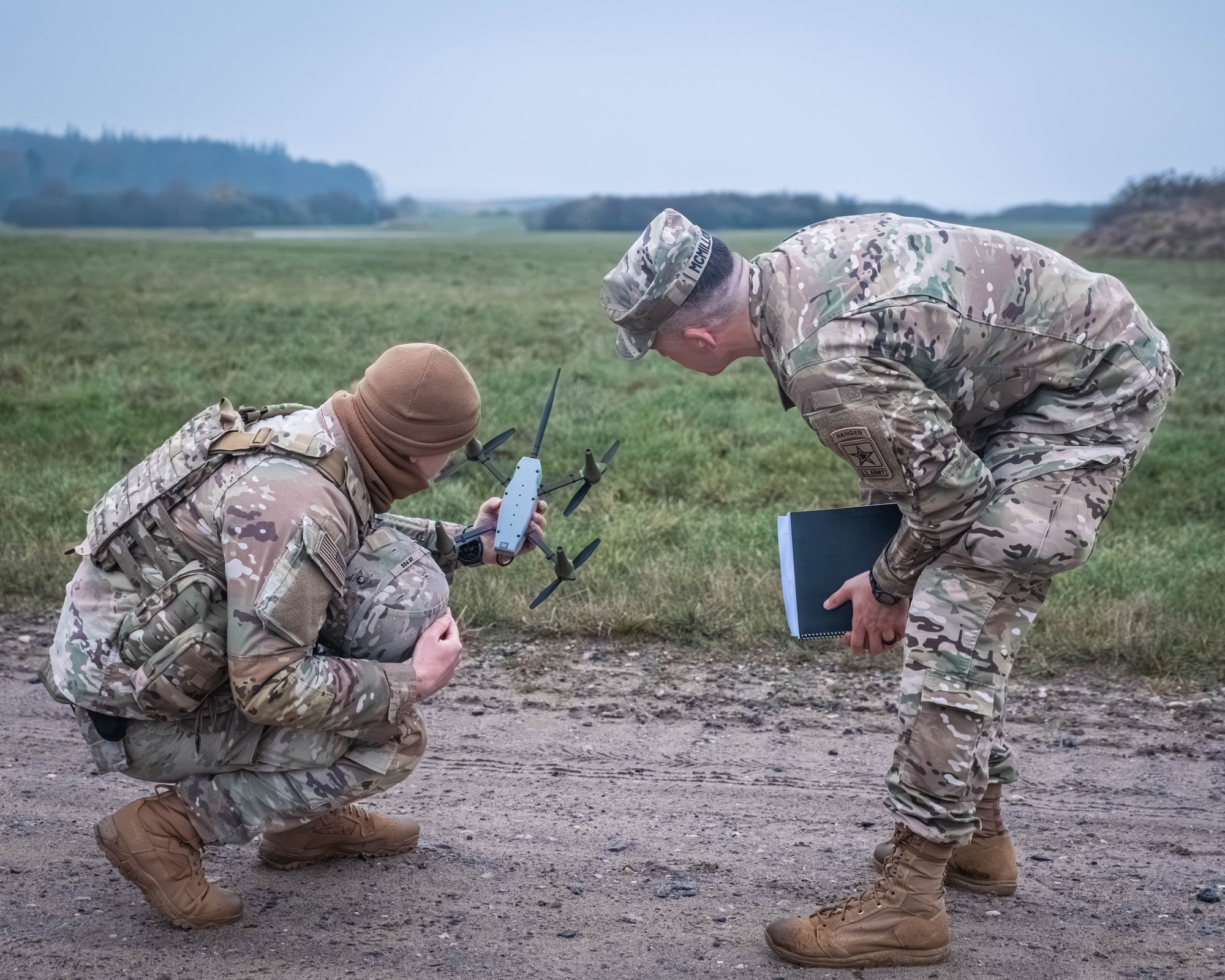
Called Project FlyTrap 4.5, this nearly two-week event gave stakeholders the opportunity to test innovative c-UAS products against simulated threats from drones operating in NATO airspace. The products involved in Project FlyTrap 4.5 were required to demonstrate their ability to either detect, discriminate or defeat the various air threats.
Additionally, for detection and discrimination purposes, vendors used either passive or active radars. The main difference between passive and active sensors is their electromagnetic signatures. Active sensors emit a strong electromagnetic signal, which provides valuable data for friendly air defense units but also makes it easier for the enemy’s firing units to locate the radar, reducing its survivability. Passive sensors do not produce such a large signature, but the data they gather is less effective for air defense units to develop accurate firing solutions against specific threats. For the defeat objectives, there were displays of kinetic defeat mechanisms as well as one that caused no collateral damage.
“We have to start thinking about the group ones, the group twos [and] the group threes [drones], the smaller and cheaper systems,” said Col. Haileyesus (Hailey) Bairu, the 52nd Air Defense Artillery Brigade commander. As the U.S. Army’s air defense brigade in Europe, Bairu’s "Defendimus" team aimed to solve the question of “how do we knock those [drones] down, so there’s not even a problem for our [maneuver forces],” Bairu continued.
During the early days of the event, all participating products were evaluated for their ability to connect to the brigade’s forward area air defense command and control system. This network allows all systems — detect, discriminate and defeat — to communicate effectively. Thanks to the efforts of the 52nd ADA BDE Soldiers, as well as Soldiers from V Corps and the 2nd Cavalry Regiment, this important milestone was achieved, increasing the value of these systems for potential procurement by NATO countries for the Eastern Flank Deterrence Line, NATO’s plan for a unified, layered air defense shield along NATO’s Eastern Flank.
Planning for this event started nearly a year ago at the request of the U.S. Army Europe and Africa and NATO Allied Land Command commander, Gen. Christopher Donahue. The 52nd ADA BDE was assigned to lead an effort to identify air defense technologies and capabilities to counter emerging airborne threats on today’s battlefield. An extensive three-month process led the 52nd ADA BDE to reach agreements with five companies to test promising c-UAS capabilities, with testing scheduled for the fall of 2025.
Under the leadership of the 10th Army Air and Missile Defense Command commander, Brig. Gen. Curtis King, the 52d ADA Brigade coordinated with V Corps, the U.S. Army’s forward command in Europe, to include this testing as part of the Project FlyTrap series. V Corps previously conducted Project FlyTrap exercises aimed at helping maneuver units accomplish their missions despite threats from drone proliferation by incorporating innovative c-UAS solutions for maneuver forces. Since a Project FlyTrap 4.0 had already occurred and Project FlyTrap 5.0 was scheduled for March-April 2026, this event was designated as Project FlyTrap 4.5.
As the preparation process for Project FlyTrap 4.5 continued, planners from the Assistant Secretary of the Army for Acquisition, Logistics and Technology partnered with USAEUR-AF, the U.S. Army’s Global Tactical Edge Acquisition Directorate, G-TEAD, and the U.S. Army’s Program Executive Office Missiles and Space to add more participants to Project Flytrap 4.5 by launching a competition called xTechCounterStrike. This competition invited innovative c-UAS systems from eligible small and large businesses worldwide to compete for a two-phase cash prize. Additionally, it also offered those vendors the opportunity to join the G-TEAD Marketplace, making them eligible for potential follow-on agreements and contracting opportunities.
“We were tasked specifically to accelerate the Eastern Flank Deterrence Line. With that, we went through some deliberate planning of what we currently had in terms of tools and resources at our disposal,” said Maj. Joshua McMillion, G-TEAD’s capability lead. “We quickly realized one of the easiest ways to accelerate that capability is to partner with existing companies and existing organizations,” McMillon continued.
During the first phase, 15 finalists from over 200 companies were chosen to showcase their abilities at Project FlyTrap 4.5, earning a $50,000 cash prize. Of those 15 finalists, 11 were able to travel to Putlos, Germany, to participate in the second phase of the competition. After that, four were selected as winners, each receiving a $350,000 cash prize.
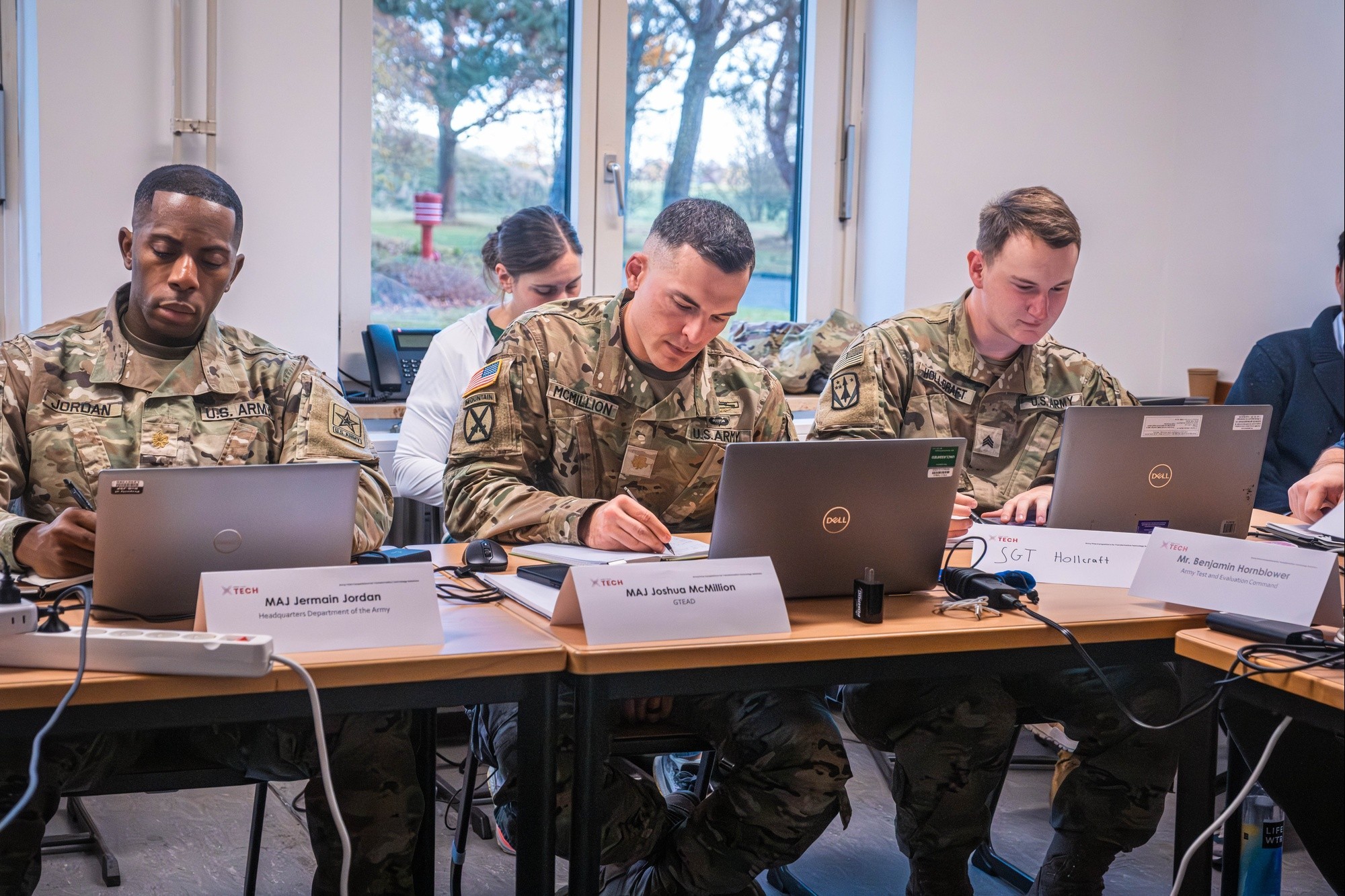
The evaluation panel that chose the winners was a diverse group of personnel with various roles and responsibilities in the Department of War, including experts from the Army’s Test and Evaluation Command, members of the GTEAD team, and service members of the 52nd ADA BDE.
“We are all here at Project FlyTrap 4.5 helping to [bring] forward the air defense artillery branch by utilizing and testing out new systems to reinforce the Eastern Flank Deterrence Line and … expanding the tools we use,” said Sgt. Lukas Hollcraft, a judge on the panel and a member of the tactics, innovation, and experimentation platoon, 5th Battalion, 4th Air Defense Artillery Regiment, 52nd ADA BDE.
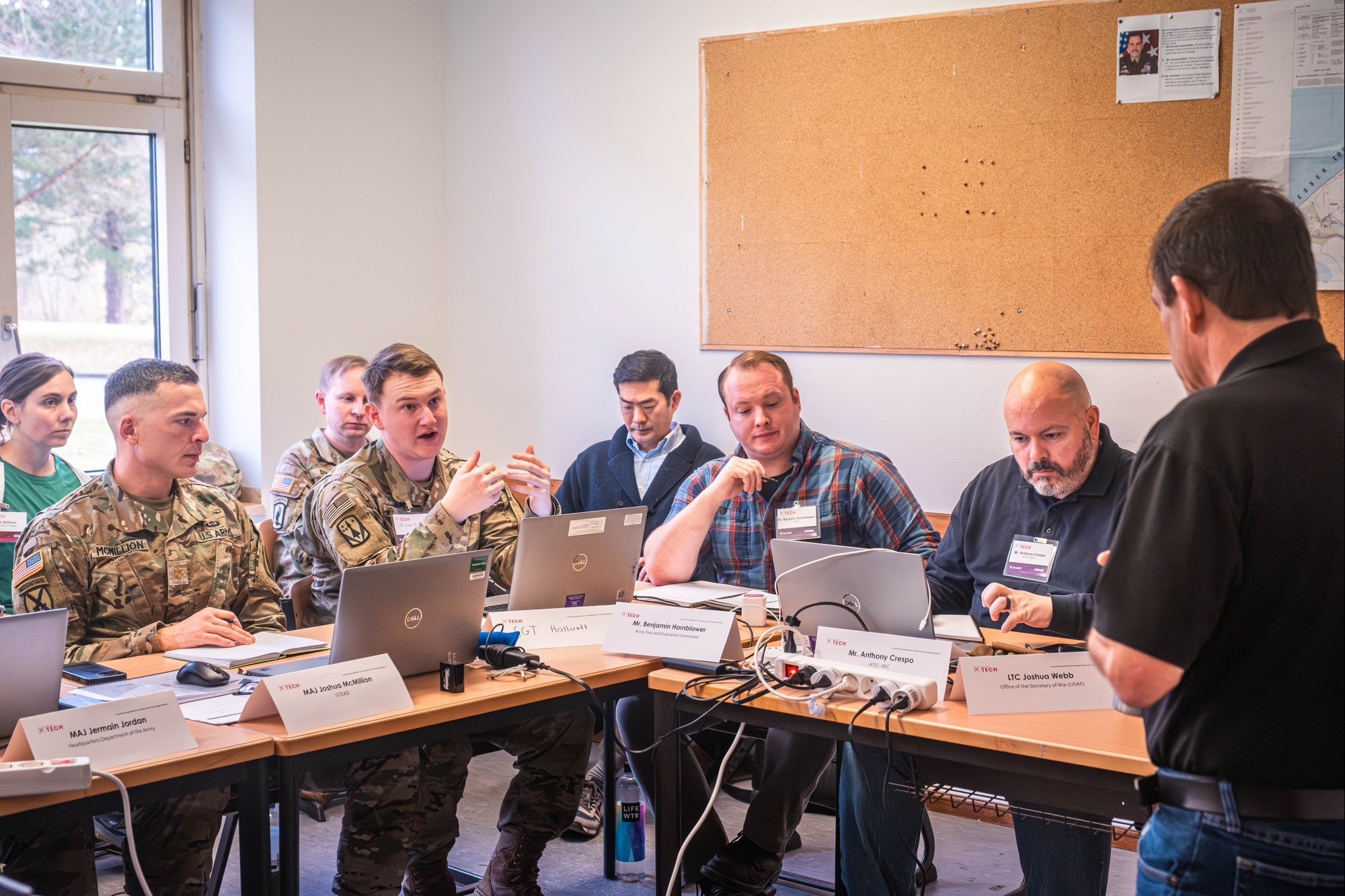
The tactics, innovation, and experimentation platoon received practical training and gained knowledge about the different products involved in the xTechCounterStrike competition, giving them a unique perspective to provide valuable input on which systems would be most beneficial for on-ground operators during the evaluation panel.
“I never expected that as a sergeant ... I’d be able to sit down with majors, captains, lieutenants and colonels and evaluate these systems,” said Hollcraft. “It’s great that as an operator, I get a say in what the future of my job looks like, especially to the future of my soldiers, who I’ll be raising to take over my shoes,” Hollcraft continued.
Social Sharing