
The U.S. Army Corps of Engineers continues working with local, state and federal partners to include FEMA, as we support survivors impacted by the Los Angeles wildfires. VIEW ORIGINAL
LOS ANGELES – On Jan. 7, 2025, two wildfires ignited in Los Angeles County that would burn for nearly three weeks and lead to the largest-ever debris mission in the U.S. Army Corps of Engineers' 250-year history.
The Palisades Fire began in the Pacific Palisades neighborhood and spread quickly along the Pacific Coast Highway into Santa Monica and Malibu, affecting 23,448 acres. Meanwhile, a brush fire in Eaton Canyon in the Altadena-Pasadena region ignited and spread, eventually growing to more than 14,000 acres. About 18,000 structures were destroyed across the two fire-impacted areas.
USACE Los Angeles District immediately activated its Emergency Operations Center in response to the fires.
The most important task for USACE Los Angeles District Commander Col. Andrew Baker was to ensure all district personnel were safe and accounted for and to provide support to USACE Los Angeles District employees, who lost their homes in the fires.
“Out of our Los Angeles District family, three of our employees and one of our retirees lost their homes,” Baker said. “This mission affected us not just as professionals, but as neighbors, friends and community members.”
As an essential part of the national emergency response framework, USACE serves as the lead agency for Emergency Support Function No. 3 – Public Works and Engineering. In this capacity, the organization provides emergency support to the nation, including debris removal, temporary power, temporary housing, critical infrastructure assessment and temporary public facilities.
The Federal Emergency Management Agency issued a regional activation mission to USACE on Jan. 10, and, just one week later, issued a mission assignment for private property debris removal for both the Eaton and Palisades fires.
USACE rapidly mobilized to support the mission. During the next seven months, more than 1,400 personnel volunteered to deploy to Los Angeles County, including 97 military service members, more than 1,300 government civilians, several USACE contractors, more than 200 employees from the Los Angeles District and nearly 1,200 employees from USACE districts around the world.
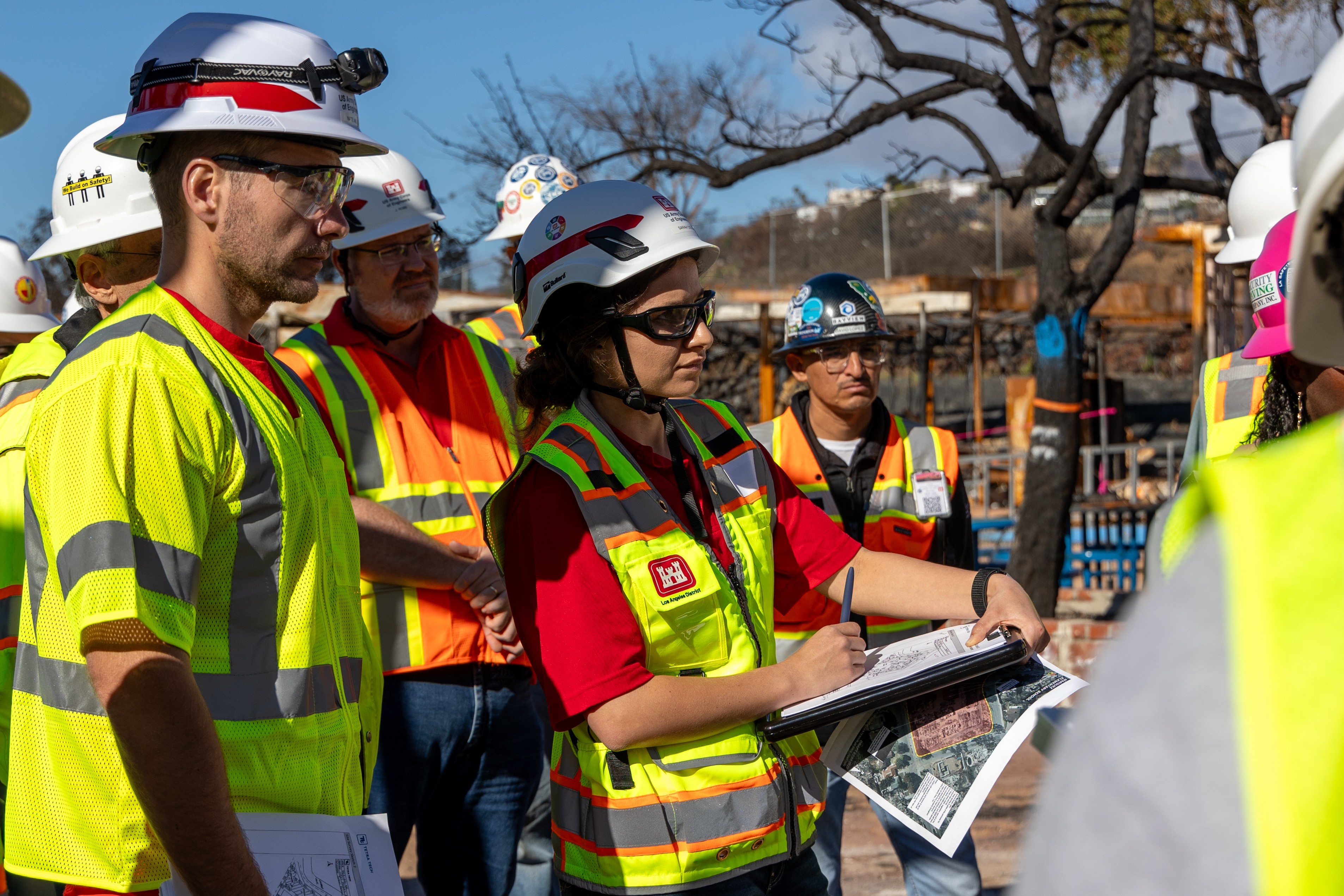
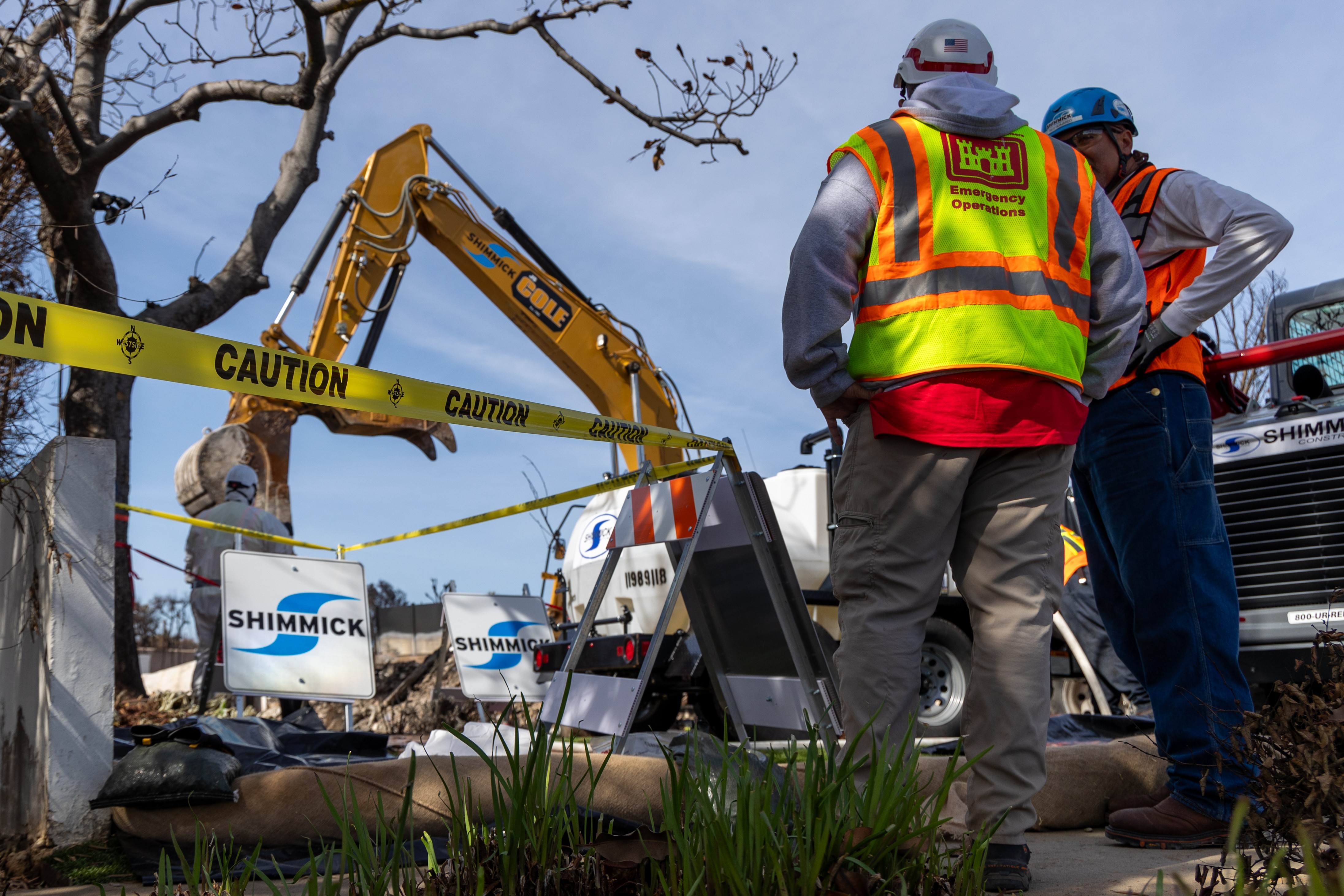
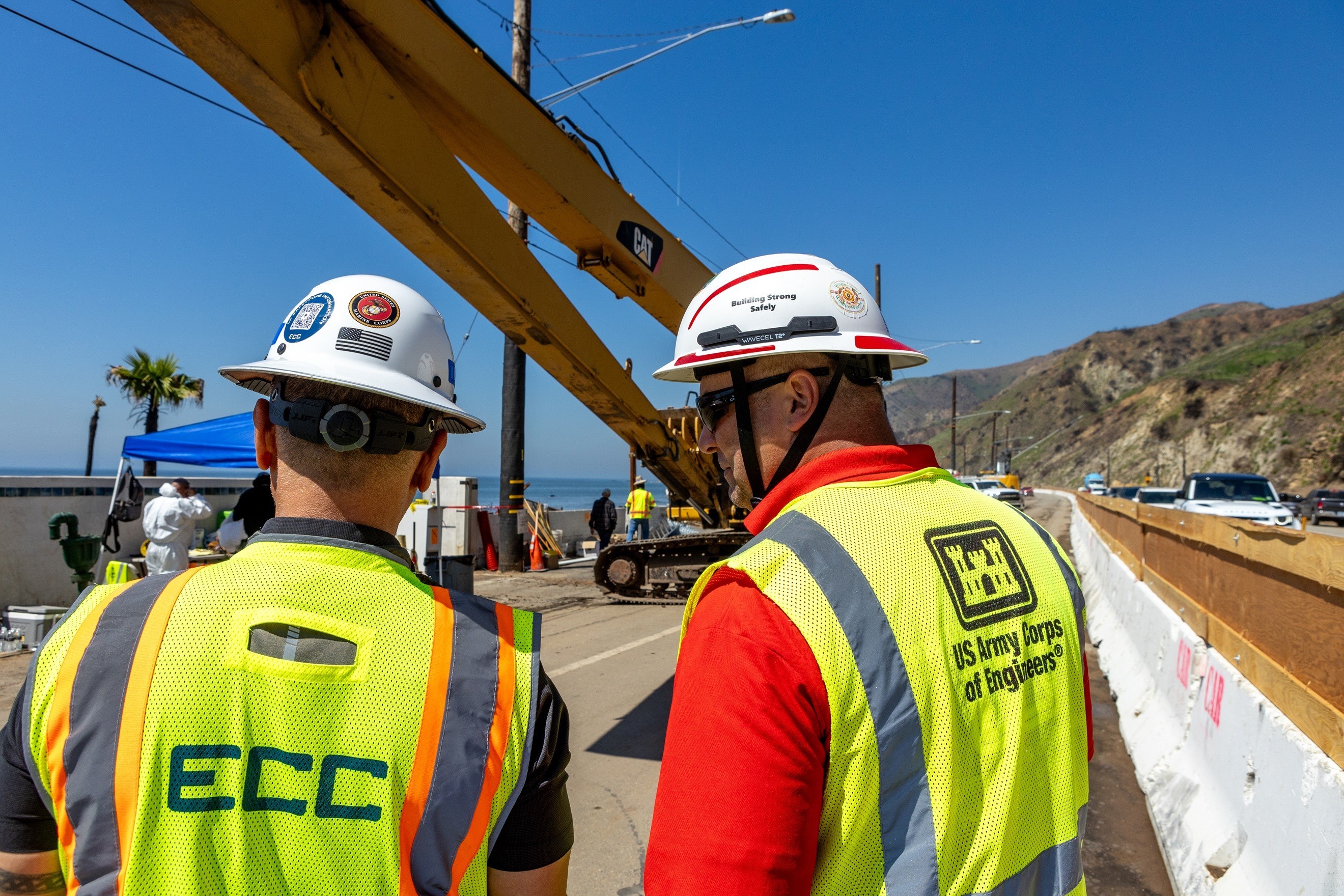
The U.S. Army Corps of Engineers continues working with local, state and federal partners to include FEMA, as we support survivors impacted by the Los Angeles wildfires. VIEW ORIGINAL
The operation was divided into two phases. The Environmental Protection Agency initially cleared out household hazardous materials. Following immediately behind, USACE commenced Phase 2 debris removal Feb. 11, clearing private residential properties in the Eaton and Palisades wildfire areas. The scope of work, established by FEMA, included the removal of structural ash and debris, six inches of soil within the ash footprint and structural foundations.
ECC of Burlingame, California, served as the primary contractor for the debris removal mission. In addition to privately-owned residential properties, USACE also received a mission to clear debris for several special inclusion properties, including public and private schools, religious institutions, parks and nonprofit organizations.
Baker emphasized that lessons learned from USACE’s work in Maui following the 2023 wildfires helped shape operations in Los Angeles County. Shared contracts, experienced leaders and tested community engagement practices allowed USACE to move quickly and sustain close coordination with local, state and federal partners.
“My goal was to reach every single person in the community, figure out what media they’re reading or how they’re getting information and to get in front of that platform, so I could explain the facts to them,” said Col. Eric Swenson, the first commander of the USACE Recovery Field Office in Pasadena, California, which was established to provide direct support to the mission. Swenson previously commanded the USACE mission supporting Maui’s recovery from wildfires in 2023.
“As ambassadors of the federal government, we were there to bring the resources of the federal government to the community, and, to do that, we had to build trust with survivors,” Swenson said. “I would say we lead with our hands and our hearts. Also, we have two ears and one mouth, so that we can listen twice as much as we talk.”
Working alongside partners at FEMA, California Governor’s Office of Emergency Services, Los Angeles County and the City of Los Angeles, a high priority was placed on community engagement, including face-to-face interactions with residents through recovery centers, community meetings and 360-degree walkthroughs of their properties.
It was crucial from the beginning to help communities understand the right-of-entry process and the overall strategy for debris removal operations, Swenson said.
Additionally, USACE provided special accommodations for residents, who were unable to be physically present, through video chats and with authorized representatives of survivors. USACE also deployed emergency command and control vehicles to Altadena and Pacific Palisades to build trust with survivors and meet them where they were, he added.
Contractor teams also prioritized the recovery of sentimental items, whenever possible.
“In one case, crews recovered a police badge that had belonged to a veteran and longtime officer — a priceless heirloom that his son feared was lost forever,” Baker said. “In another, a boy’s grandfather’s coin collection was found and returned to him. These moments reminded us that recovery is about more than debris; it’s about people.”
Additionally, quality oversight and safety were paramount to mission success. Government representatives were stationed at every parcel during debris removal to ensure compliance, and an issue resolution team addressed scope changes, as guidance evolved from local and county partners. A dedicated debris call center addressed community questions and concerns, with staff who understood the local community and challenges.
The private property debris removal mission had a robust safety program that emphasized proper personal protective equipment for every USACE and contractor teammate and a “see something, say something” culture. During the life of the mission, 3.7 million exposure hours were worked with a total recordable incident rate of .59 – far below the industry average of 4.5.
The debris mission used several temporary staging sites, including Lario Park, Altadena Golf Course, Will Rogers State Historic Park and Temescal Canyon. The sites were crucial for sorting, handling and recycling debris, with a focus on minimizing environmental impact.
Other operational challenges during the mission included moving around tight property lines in Altadena and navigating steep slopes in Pacific Palisades.
“Together, with strong partnerships and lessons learned, we helped thousands of families take the first step toward rebuilding their lives,” Baker said. “The success here sets a benchmark for how quickly and safely wildfire debris can be cleared, not just in California, but across the nation.”
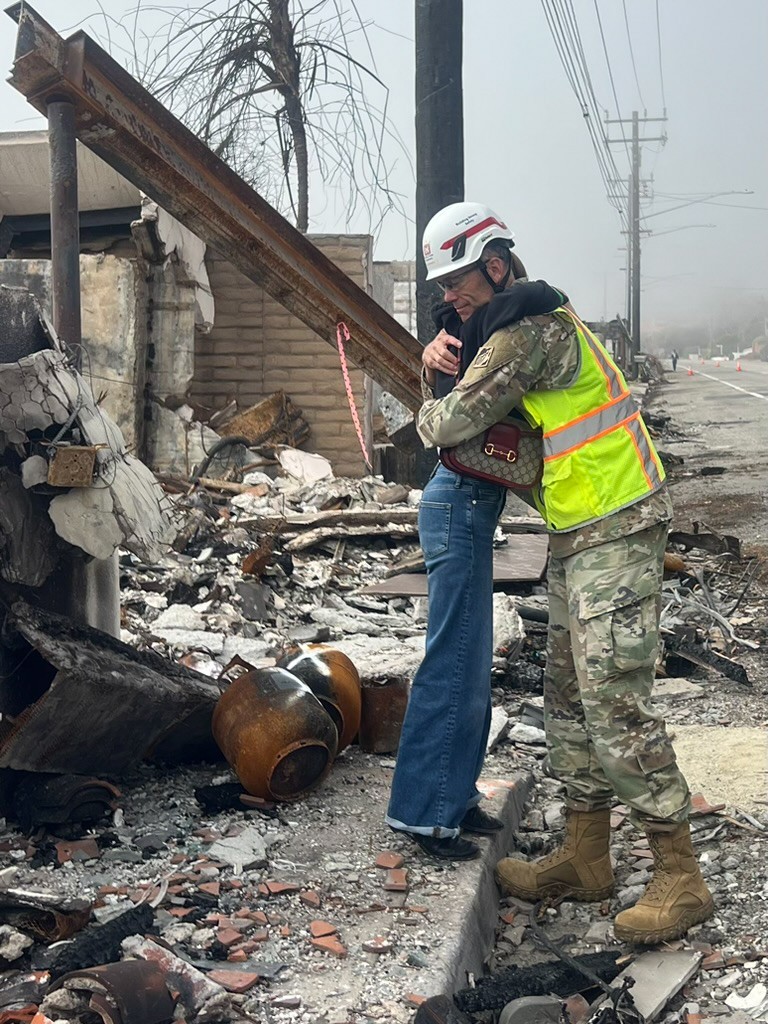
The U.S. Army Corps of Engineers continues working with local, state and federal partners to include FEMA, as we support survivors impacted by the Los Angeles wildfires. VIEW ORIGINAL

In just six months, more than 9,500 properties were cleared, removing more than 2.6 million tons of debris.
The last private property debris removal work was completed in early September, nearly four months ahead of USACE’s commitment to complete the mission by the first anniversary of the fires. USACE is now working to close out contracts and restore the debris staging sites, so they can be returned for community use.
“The nation can be proud of their U.S. Army Corps of Engineers and the work we have done in LA, as one part of the larger Army team,” said Maj. Gen. Jason Kelly, USACE deputy commanding general for civil and emergency operations. “These disaster responses have brought out the best among us. Our emergency responders are largely volunteer deployers, Army Civilian professionals, drawn from around the country for a unifying purpose – coming to the aid of our fellow citizens in their time of need.”
Social Sharing