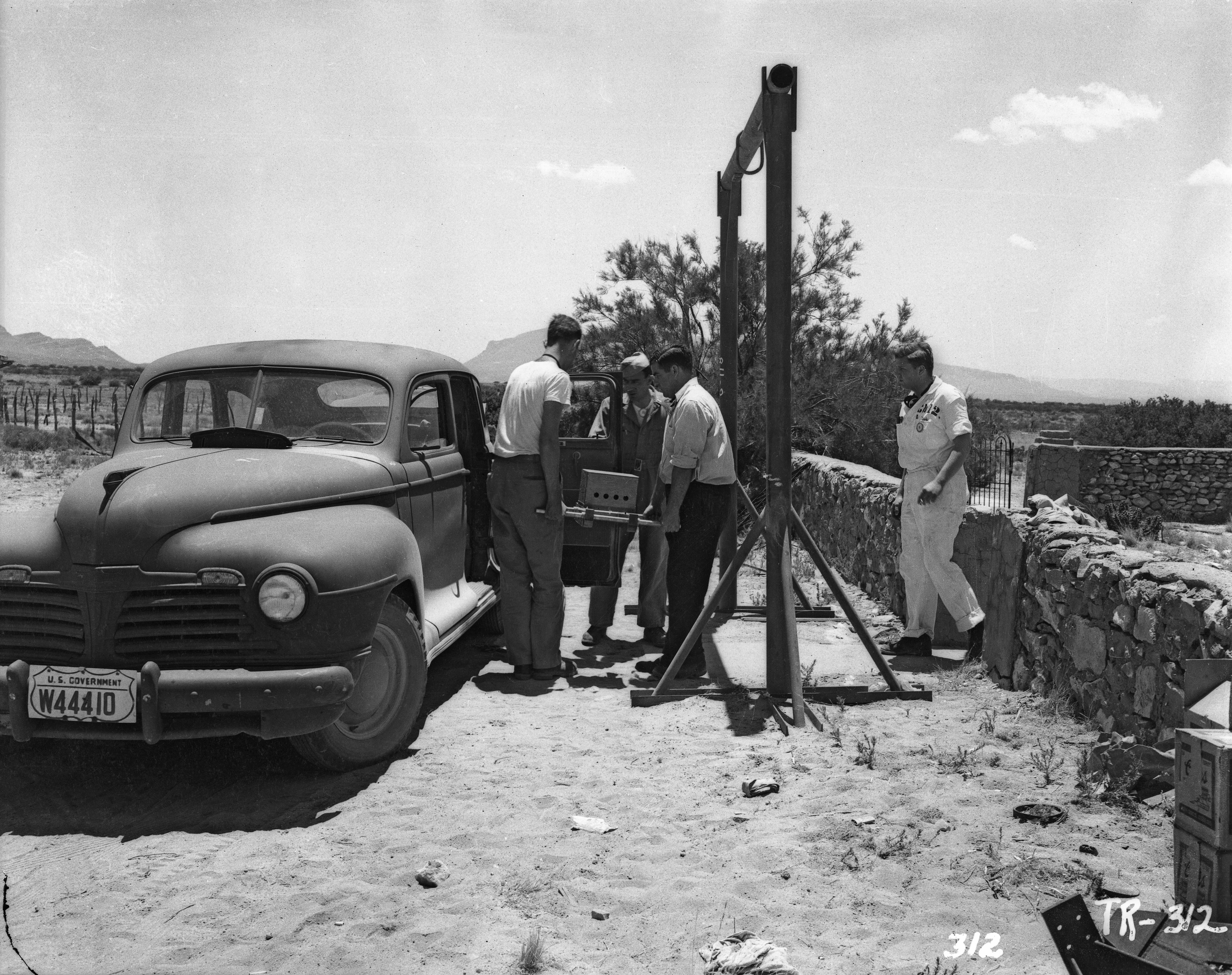
This article is part of a series that will delve into the history of the Trinity Site Test, which marked its 80th anniversary on July 16, 2025, and the commemoration of the growth and evolution of White Sands Missile Range, which marked its 80th anniversary on July 9, 2025. A commemoration of the establishment of White Sands Proving Ground, now called White Sands Missile Range, will take place on Oct. 17 at WSMR and an observance for the test at Trinity Site will take place on Oct. 18 at the Trinity Site Open House.
The McDonald Ranch House played a significant role in the preparation for the Trinity Test. Owned by George and Laura McDonald; it is where the plutonium core for the device was assembled before being transported approximately two miles to the tower at ground zero. George McDonald was the brother of Dave and Ross McDonald, whose ranch became the base camp for operations at Trinity Site.
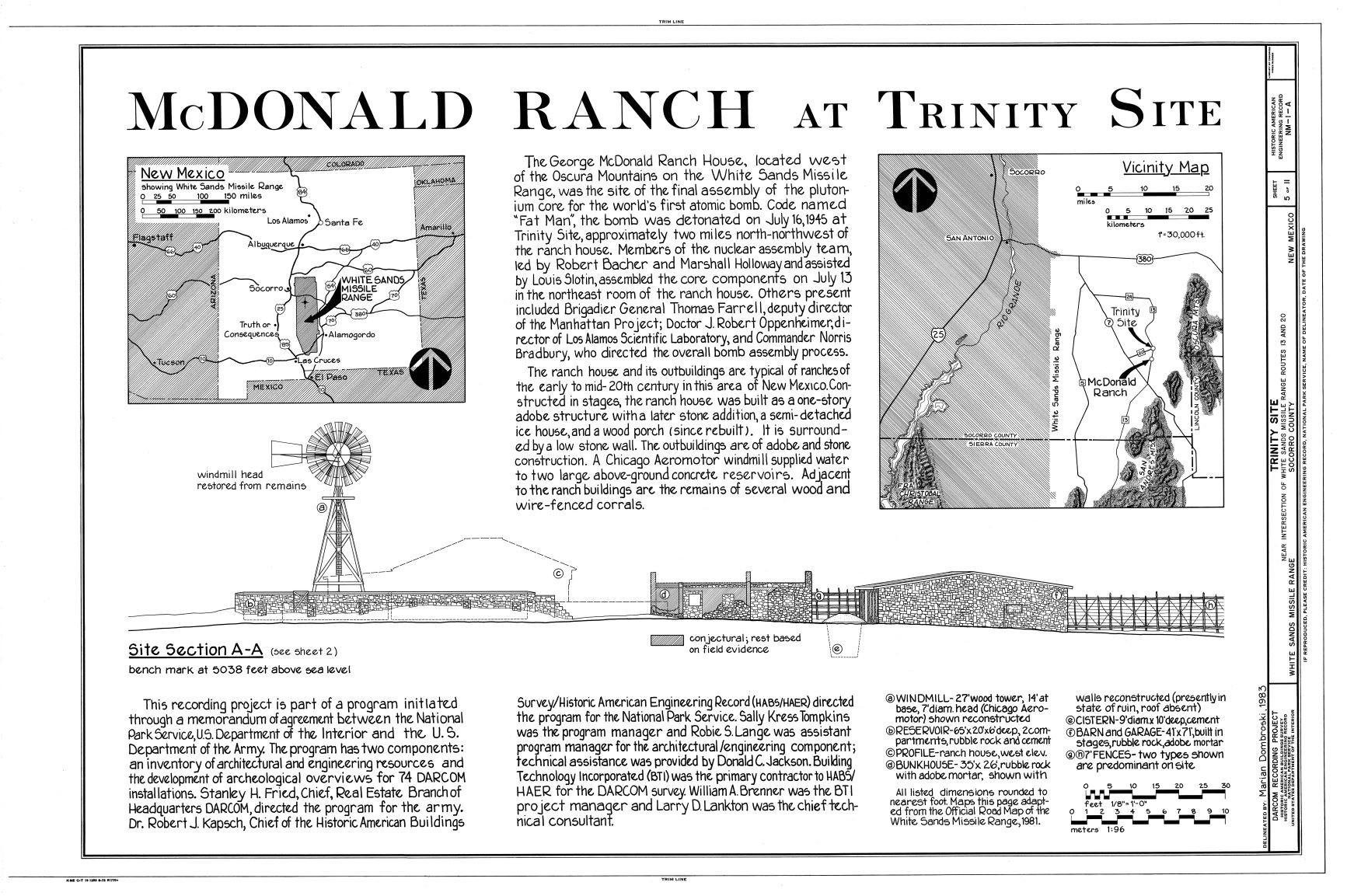
The McDonald Ranch House sits within an 85’x85’ low stone wall. The house was built in 1913 by Franz Schmidt, a German immigrant, who built a large sheep and cattle ranch. Due to health issues, Schmidt sold the ranch in 1920 and moved to Florida. The ranch house expanded over the years to include another bedroom, a bathroom and electric lighting from a system powered by a wind generator that charged storage batteries.
The ranch house is a one-story, 1,750 square-foot building. It is built of adobe with walls being plastered and painted. An icehouse is located on the west side along with an underground cistern that stored rainwater captured run-off from the roof. The ranch house has a bedroom with the top of the walls painted in a beautiful Art Nouveau design. Information provided by author Jim Eckles revealed it was painted by Mike Walsh, who moved west from Chicago seeking relief from tuberculosis, which was a common practice in the early 20th century.
There is a large, divided water storage tank with Chicago Aeromotor windmill east of the house. The scientists and support people used the north tank as a swimming pool during the long hot summer of 1945. South of the windmill are the remains of a bunkhouse and a barn which was part of a garage. Further to the east are corrals and holding pens.
The ranch house was abandoned in 1942 with the establishment of the Alamogordo Bombing and Gunnery Range used for training World War II bombing crews. The house stood empty until the Manhattan Project support personnel arrived in early 1945.
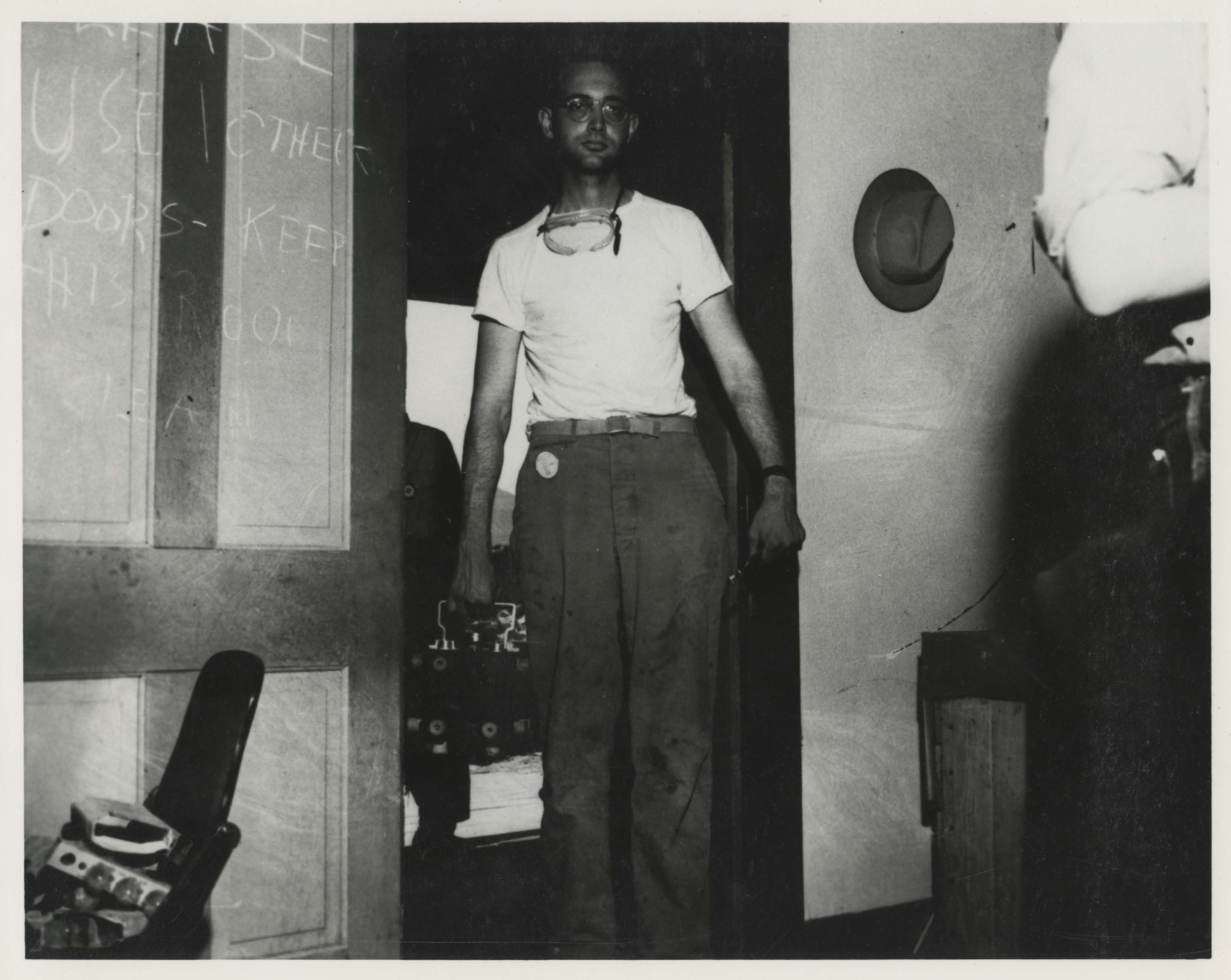
Inside the house, the northeast room (master bedroom) was designated the assembly room. Work benches and tables were installed. To keep dust and sand out of instruments and tools, the windows were covered in plastic. Tape was used to fasten the edges of the plastic and to seal doors and cracks in walls. In the assembly room, two halves of plutonium were affixed together with an enclosed initiator of polonium and beryllium in the shape of a ball. Different sources report the plutonium ball as being the size of a baseball, softball or grapefruit. According to Eckles, “the ball was then placed into a short column of uranium nine inches tall and five inches in diameter.” This package was then transported and installed in the device at ground zero.
The impact of the test, which was only two miles away, did not significantly damage the house. Most of the windows were blown out, but the main structure was intact. Years of rainwater dripping through holes in the roof did much more damage. The barn did not do as well. During the Trinity Test the roof was bowed inward and some of the roof was blown away. The roof had since collapsed.
The house stood empty and deteriorating until 1982 when the U.S. Army stabilized the house to prevent any further damage. Shortly after, the Department of Energy and U.S. Army provided the funds for the National Park Service to completely restore the house. The work was done in 1984. All efforts were directed at making the house appear as it did on July 12, 1945, when the house was used in the assembly process.
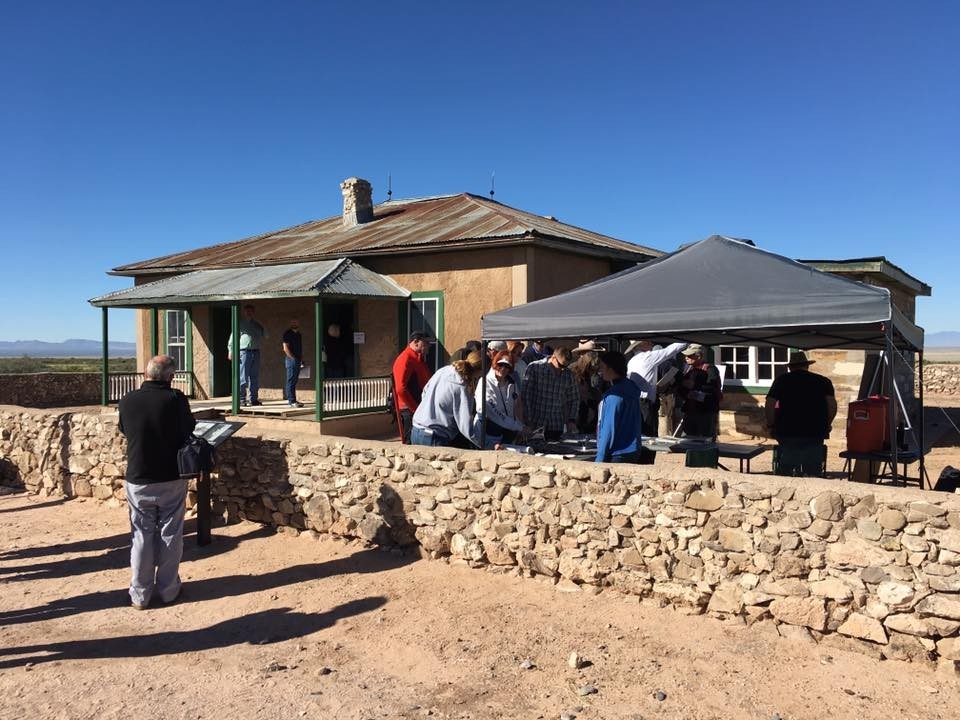
In 2016 the ranch house again began rehabilitation in phases due to the dilapidation that had occurred since 1984. The rehabilitation was conducted by Cornerstones Community Partnerships, working under the cooperative agreement with the White Sands Missile Range Cultural Resource Program, who were awarded the Secretary of Defense Top Performer Award. The program is responsible for ensuring historic properties are managed in accordance with the National Historic Preservation Act.
The McDonald Ranch House is open to visitors as part of the Trinity Site Open House on Oct.18. It is a short five-minute ride from the Trinity Site parking lot with buses running from 8 a.m. to 2:45 p.m.
Social Sharing