Temporary flood barriers prove effective during flood event in Juneau

By Cameron McLeod and John BudnikAugust 15, 2025

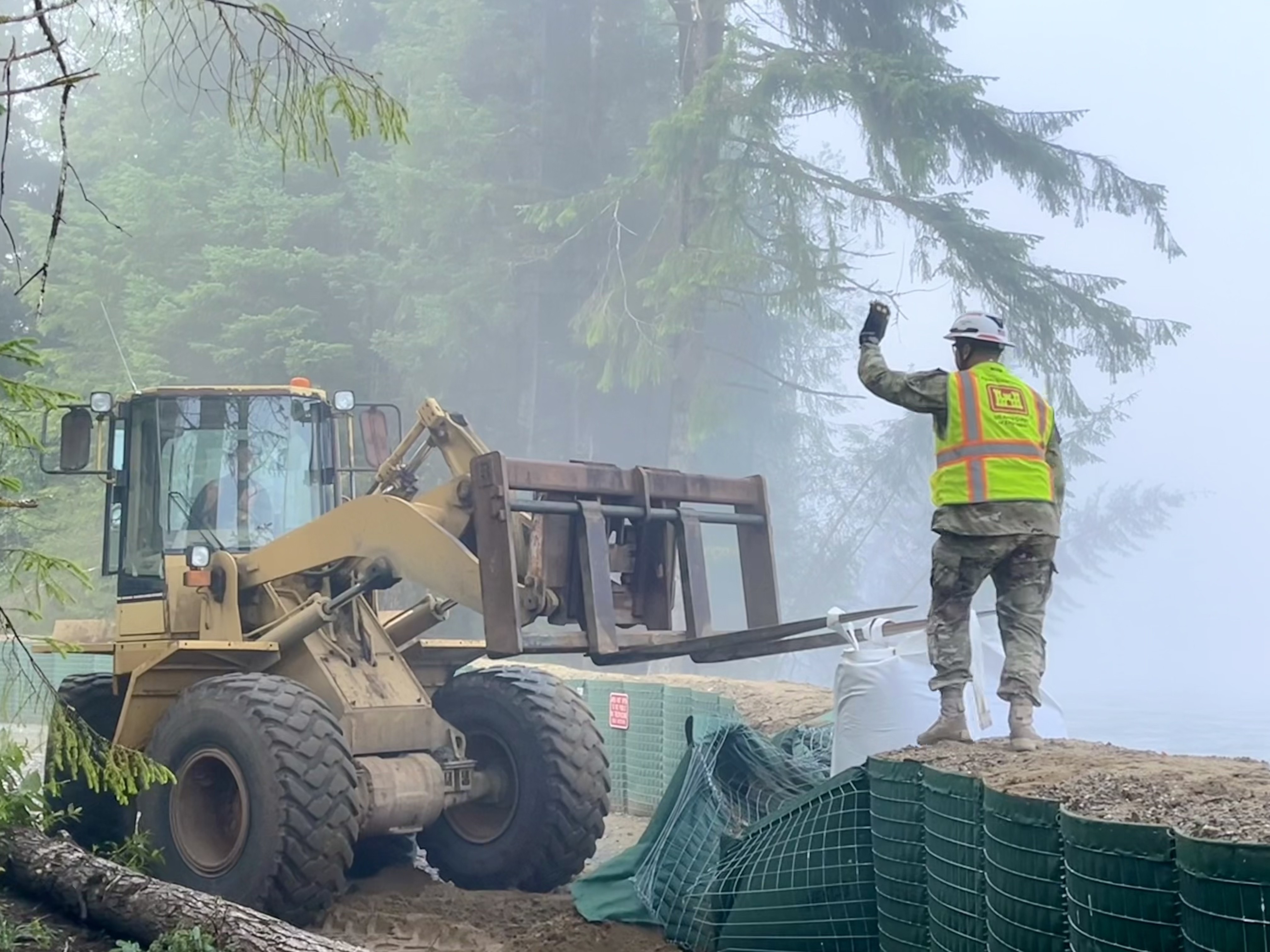
Command Sgt. Maj. Zachary Plummer of the U.S. Army Corps of Engineers – Pacific Ocean Division assists the street team of the City and Borough of Juneau to repair a temporary flood protection barrier
1 / 2 Show Caption + Hide Caption – Command Sgt. Maj. Zachary Plummer of the U.S. Army Corps of Engineers – Pacific Ocean Division assists the street team of the City and Borough of Juneau to repair a temporary flood protection barrier along the Mendenhall River after a tree strike at Diamond Park. USACE provided critical support to the community of Juneau by providing temporary barriers to protect infrastructure and human safety before the annual glacial lake outburst flood from Mendenhall Glacier. (Photo Credit: U.S. Army photo by Nahaku McFadden) VIEW ORIGINAL
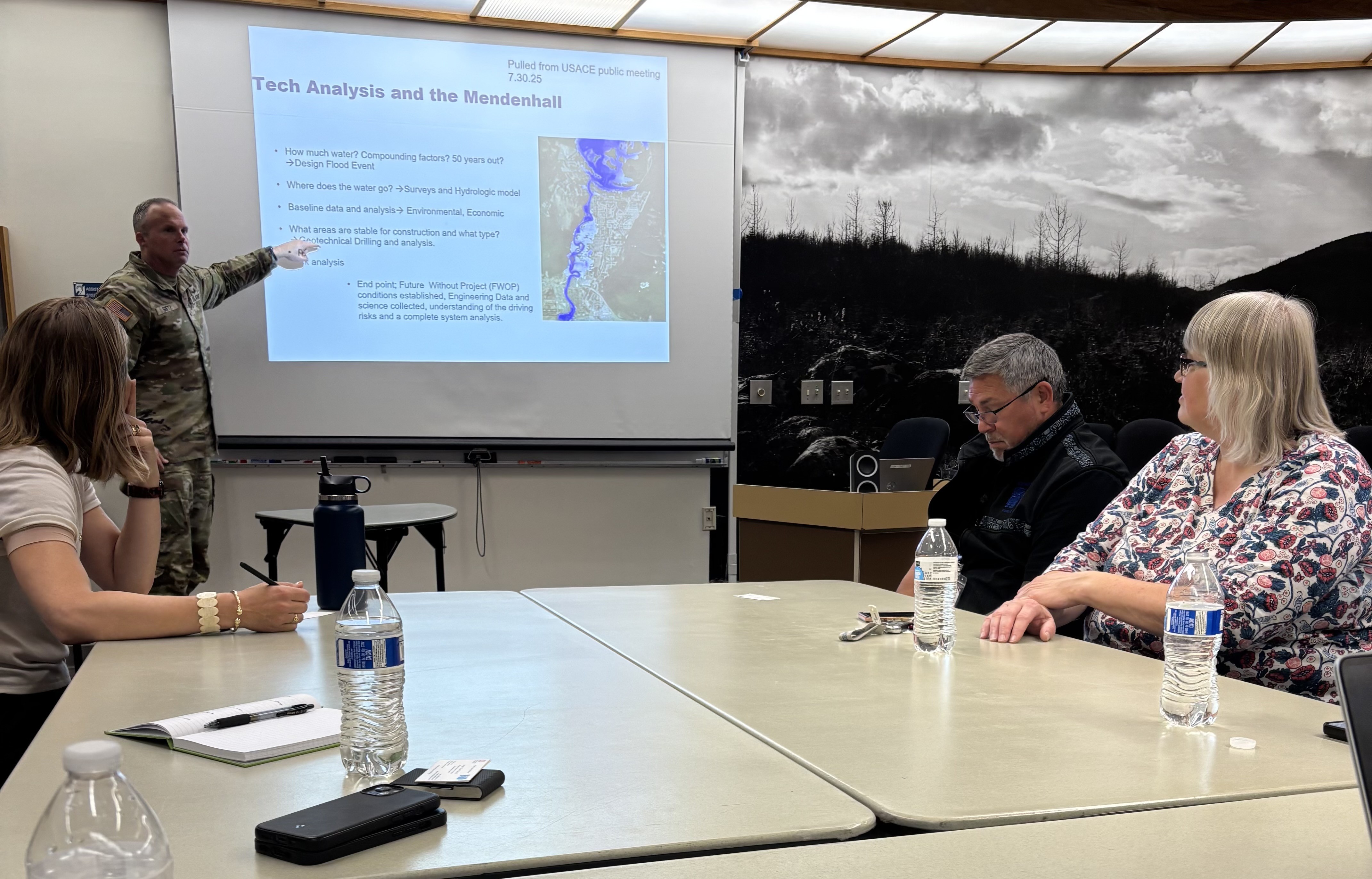
Brig. Gen. Joseph C. "Clete" Goetz and Command Sgt. Maj. Zachary Plummer met with the City and Borough of Juneau Emergency Operations Center
2 / 2 Show Caption + Hide Caption – Brig. Gen. Joseph C. "Clete" Goetz and Command Sgt. Maj. Zachary Plummer met with the City and Borough of Juneau Emergency Operations Center on the morning of Aug. 13 to review the latest information on river and barrier conditions. They also discussed each organization’s role in risk and disaster management, flooding progress over the previous 24 hours and projections on the flood peak. (Photo Credit: U.S. Army photo by Nahaku McFadden) VIEW ORIGINAL

ANCHORAGE, Alaska — During the week of Aug. 11, 2025, the Mendenhall Glacier released its yearly glacier lake outburst flood, also known as a jökulhlaup — pronounced yah-cuh-laup. In preparation for the potential threat to infrastructure and public safety, the U.S. Army Corps of Engineers provided temporary flood mitigation barriers to the City and Borough of Juneau last winter. While USACE continues to prepare a technical study that will help to define the parameters of an enduring flood risk mitigation solution, these barriers provided vital short-term protection to the community along the river this week by holding back the glacial water released from Suicide Basin and performing well during the peak of the floodwaters.

“As we continue to evaluate the performance of the barriers, I’m confident they prevented a lot of property damage compared to 2024,” said Brig. Gen. Joseph “Clete” Goetz, commanding general of the U.S. Corps of Engineers - Pacific Ocean Division.

Originating from the USACE National Flood Fight Materiel Center in Illinois, about 37,800 linear feet of barrier wall; 400 supersacks; 112,000 sandbags and 25,000 linear feet of polyethylene sheeting were shipped to Juneau during the winter and spring of 2025 and strategically installed along the Mendenhall River by the City and Borough of Juneau in two phases. Phase one was completed in spring 2025 and covered about 2.5 miles between Marion Drive and Rivercourt Way. Phase two will build upon lessons learned at this year’s event and provide coverage to the remainder of the area.
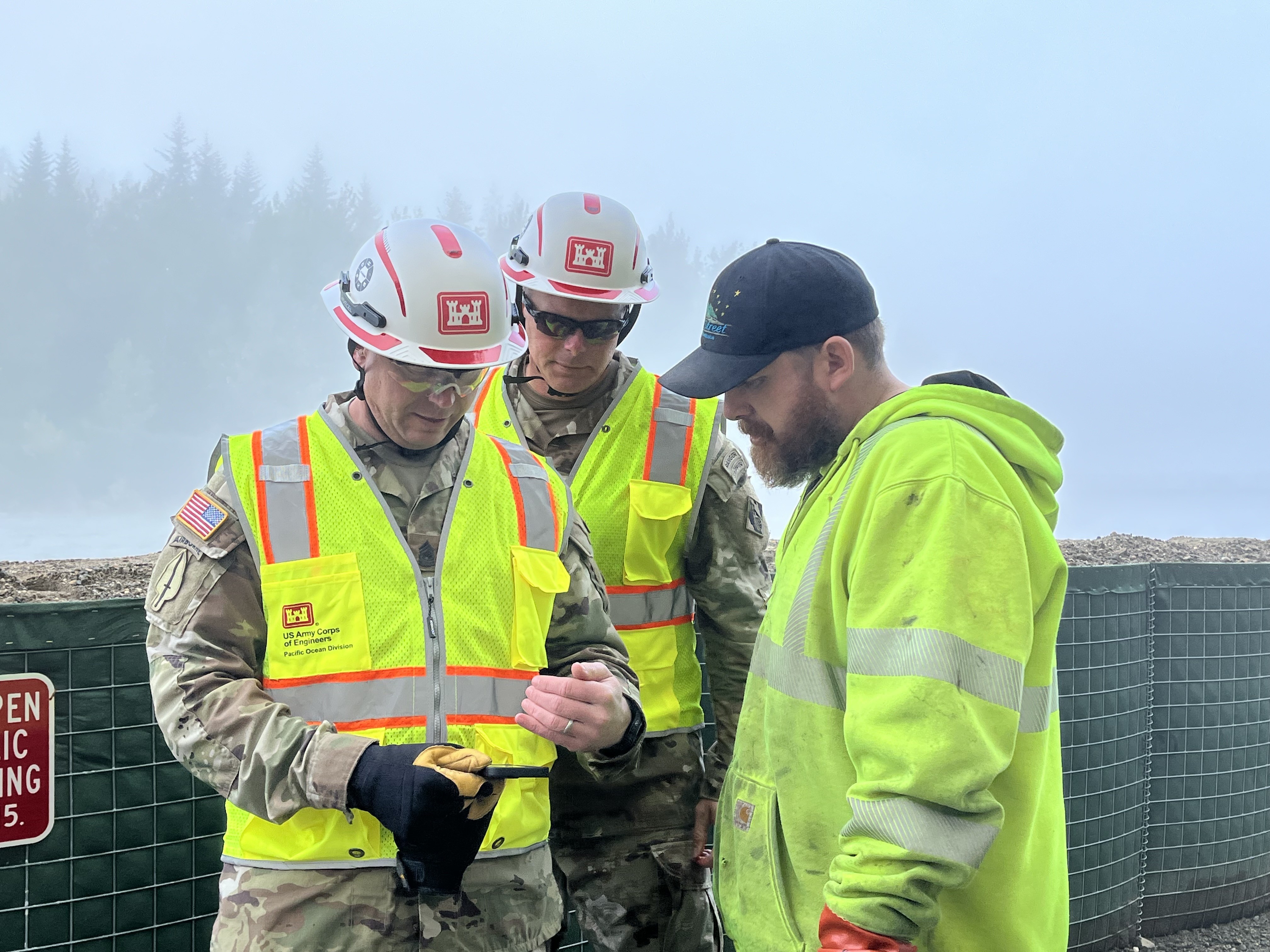
Brig. Gen. Joseph C. “Clete” Goetz and Command Sgt. Maj. Zachary Plummer discuss street flood mitigation and response efforts with City and Borough of Juneau employee
Brig. Gen. Joseph C. “Clete” Goetz, commanding general of the U.S. Army Corps of Engineers – Pacific Ocean Division, and Command Sgt. Maj. Zachary Plummer discuss street flood mitigation and response efforts with an employee of the City and Borough of Juneau. Goetz and Plummer traveled from the Pacific Ocean Division in Hawaii to Juneau to engage directly with the community and closely monitor the effectiveness of the temporary flood protection barriers. (Photo Credit: U.S. Army photo by Nahaku McFadden) VIEW ORIGINAL

As the lead federal agency for floods, USACE provided technical assistance and advisement to the community through the process. Installation of these materials is a challenging process that takes the flood event data of the previous year into consideration. This information can include high-water marks, topography and ground conditions. Depending on the high-water marks, the height of the barriers varies in each location. The decision was made to build to the high-water elevation with an additional four feet. In some cases, this resulted in a barrier two units high, or eight feet above the natural ground.

“The successful deployment of these temporary flood protection barriers is reflective of a total team effort with our stakeholder, tribal and community partners,” said Col. Jeffrey Palazzini, commander of the U.S. Army Corps of Engineers - Alaska District. “The preparation and partnership were on full display during the flood event of the past 24-48 hours.”
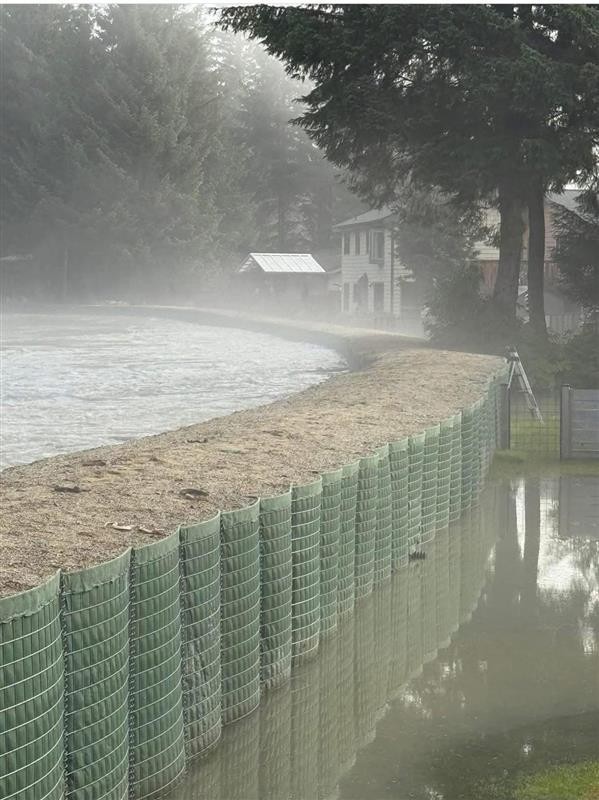
Temporary flood protection barriers prove effective during flood event in Juneau
1 / 2 Show Caption + Hide Caption – Originating from the USACE National Flood Fight Materiel Center in Illinois, about 37,800 linear feet of barrier wall; 400 supersacks; 112,000 sandbags and 25,000 linear feet of polyethylene sheeting were shipped to Juneau during the winter and spring of 2025 and strategically installed along the Mendenhall River by the City and Borough of Juneau in two phases. As the lead federal agency for floods, USACE provided technical assistance and advisement to the community through the process. (Photo Credit: Courtesy photo) VIEW ORIGINAL
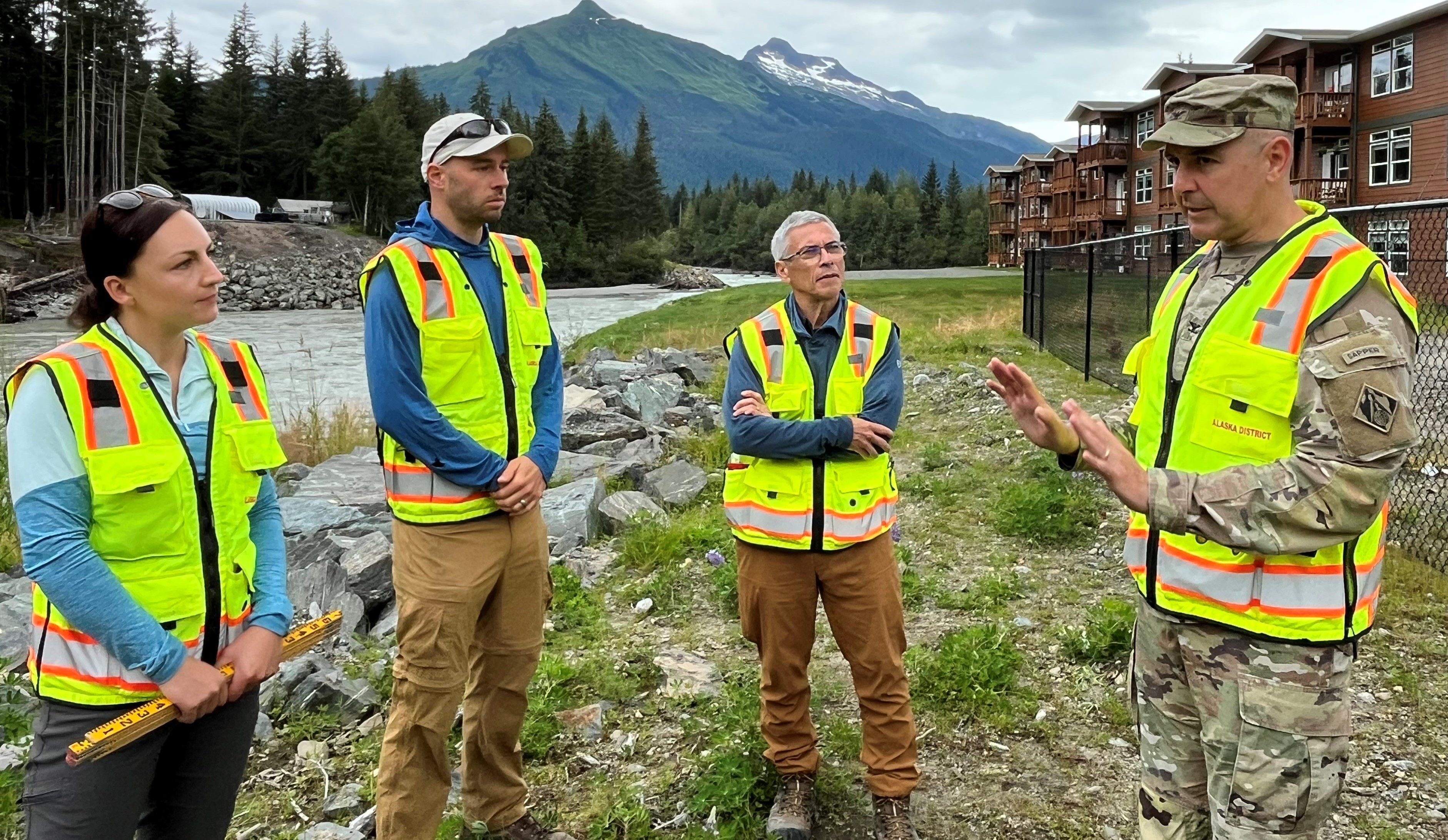
Alaska District staff discuss data gathering after Mendenhall River flood event
2 / 2 Show Caption + Hide Caption – From left to right, the Alaska District’s Olivia Jobin, hydraulic engineer and levee safety program manager, Mike Records, civil engineer, James Sauceda, chief of the Engineering Division, and Col. Jeffrey Palazzini, commander of the Alaska District, discuss the team’s data gathering work along the Mendenhall River on Aug. 14. Information taken from this year’s flood event will inform a technical study at the site for a potential long-term project. (Photo Credit: Nahaku McFadden, USACE - Pacific Ocean Division) VIEW ORIGINAL

As of Aug. 14, the barriers have performed well in response to record high floodwaters in the Mendenhall River Valley during the week. However, further assessment is still needed to determine the full extent of any damage.

The last two years of flooding have been unprecedented with water levels at the U.S. Geological Survey Mendenhall River streamgage peaking at 14.97 feet and 15.99 feet in 2023 and 2024, respectively. This week, the river reached a record high, with the largest flow measuring 16.6 feet.

Furthermore, USACE leadership has been fully engaged on site during the event, seizing the opportunity to closely monitor the capabilities of the barriers in real time and meet with stakeholders and community members. Although an enduring solution will take years to fully develop, short-term flood mitigation efforts in Juneau continue to be a high priority at all levels of the organization.