
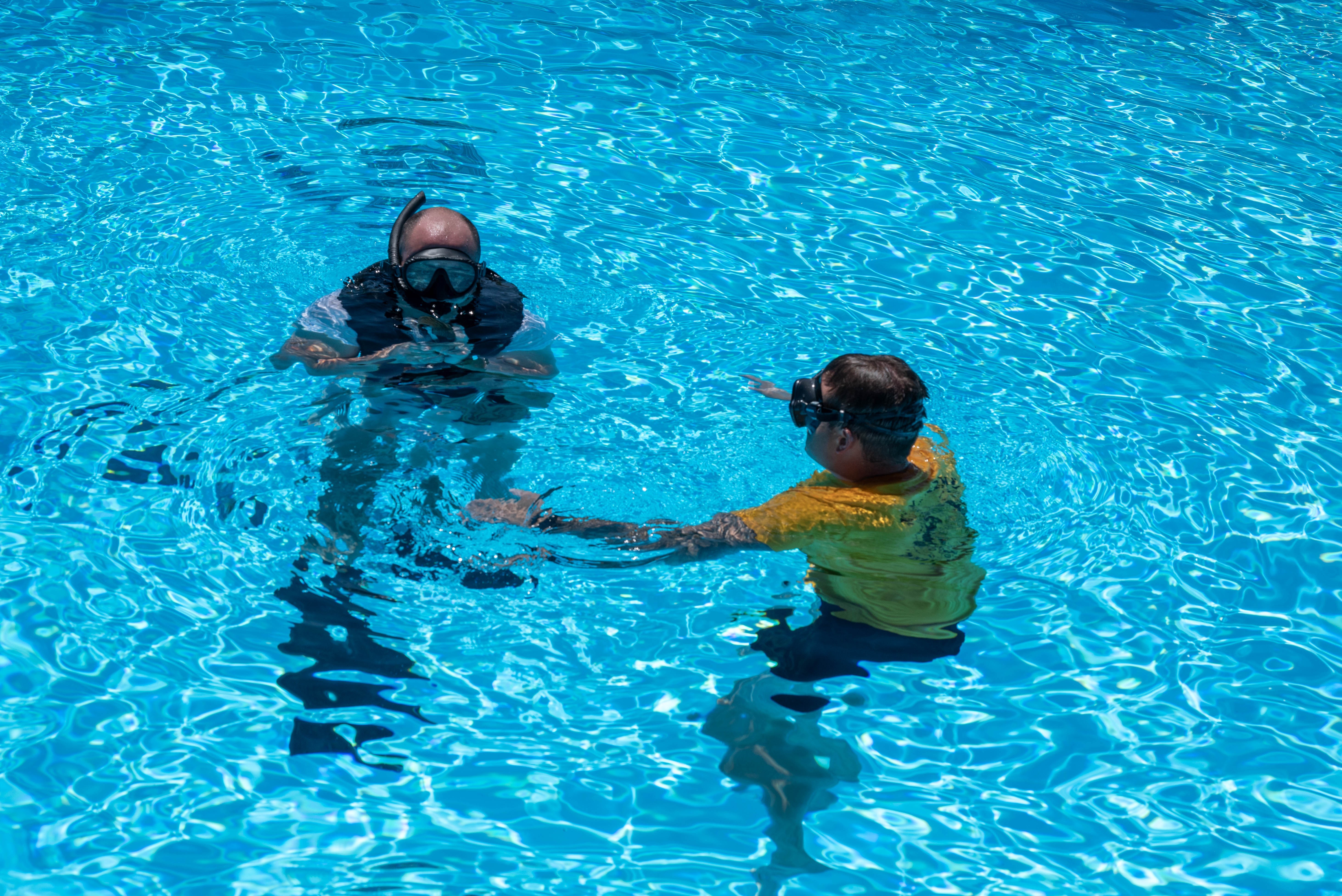

FORT LEONARD WOOD, Mo. — The U.S. Army Engineer Regiment is hosting an officer selection event for the Army’s dive program Sept. 19 and 20 at Fort Leonard Wood’s Davidson Fitness Center.
The purpose of the event is to find highly motivated and physically fit junior officers who are currently serving in the Army’s Engineer Regiment and are attending the basic officer leader course or captains career course, according to Staff Sgt. Britton Hall, manager for the Army Diver Prequalification Course, also known as phase one.
One officer who has gone through the selection process and is waiting to attend phase one is 2nd Lt. Margaret Thayer, operations executive officer for Company B, 169th Engineer Battalion. Thayer said she learned about the dive program and its officer selection process while attending Engineer BOLC.
“The selection process is conducted over two days. The first day you come in the afternoon and do a Diver Physical Fitness Test, which consists of a 500-yard swim, either breaststroke or combat side stroke, 50 pushups, 50 sit-ups, six pullups and a mile-and-a-half run,” Thayer said. “We came back the next morning for a pool portion where we ran through almost all the tasks you will have to complete in phase one before going before a selection board portion.”
2nd Lt. Michael Williams, Company B, 31st Engineer Battalion platoon leader, attended BOLC with Thayer and is also waiting to attend phase one.
“Margaret and I were in the same class, we were at the same brief where the briefers said, ‘If you are interested in becoming an Army diver, show up to the try out’,” Williams said. “They talked about the mission set of Army dive. I went home that day and got on Google and I learned more about it and decided that I really wanted to do that.”
Williams suggested that anybody interested in becoming an Army dive officer should do their homework and learn the basics of the breaststroke and side stroke. He said it was helpful watching online videos and getting tips on how to improve technique.
Thayer had her own advice for any officer considering becoming an Army diver.
“Get in the pool, work on your breath holds and learn how to relax. Learn how to calm your heart rate and relax.” Thayer said.
Hall agreed.
“People wanting to come to the course need to work on cardio and on simply being comfortable in the water,” Hall said. “They need to be dedicated and determined. They have to want it, be open minded and be a team player.”
For more information about the officer selection process, email 1st Lt. Nathanial Wilson at nathaniel.a.wilson30.mil@ army.mil.
Social Sharing