Hawkeye Platoon leads Army innovation with tactical drones, 3D-printed lethality

By Sgt. 1st Class Brittany ConleyAugust 5, 2025

NORIO, Georgia — When the Army officially ended the RQ-7B Shadow platform in March 2024, it left a void for Soldiers trained in unmanned aerial operations. But for Hawkeye Platoon, Headquarters and Headquarters Troop, 1st Squadron, 91st Cavalry Regiment, 173rd Airborne Brigade, it was also an opportunity to redefine how small units integrate drone technology in the modern fight.
3D Printed Precision: U.S. Army Leverages FPV and Delivery Drones During Agile Spirit 25
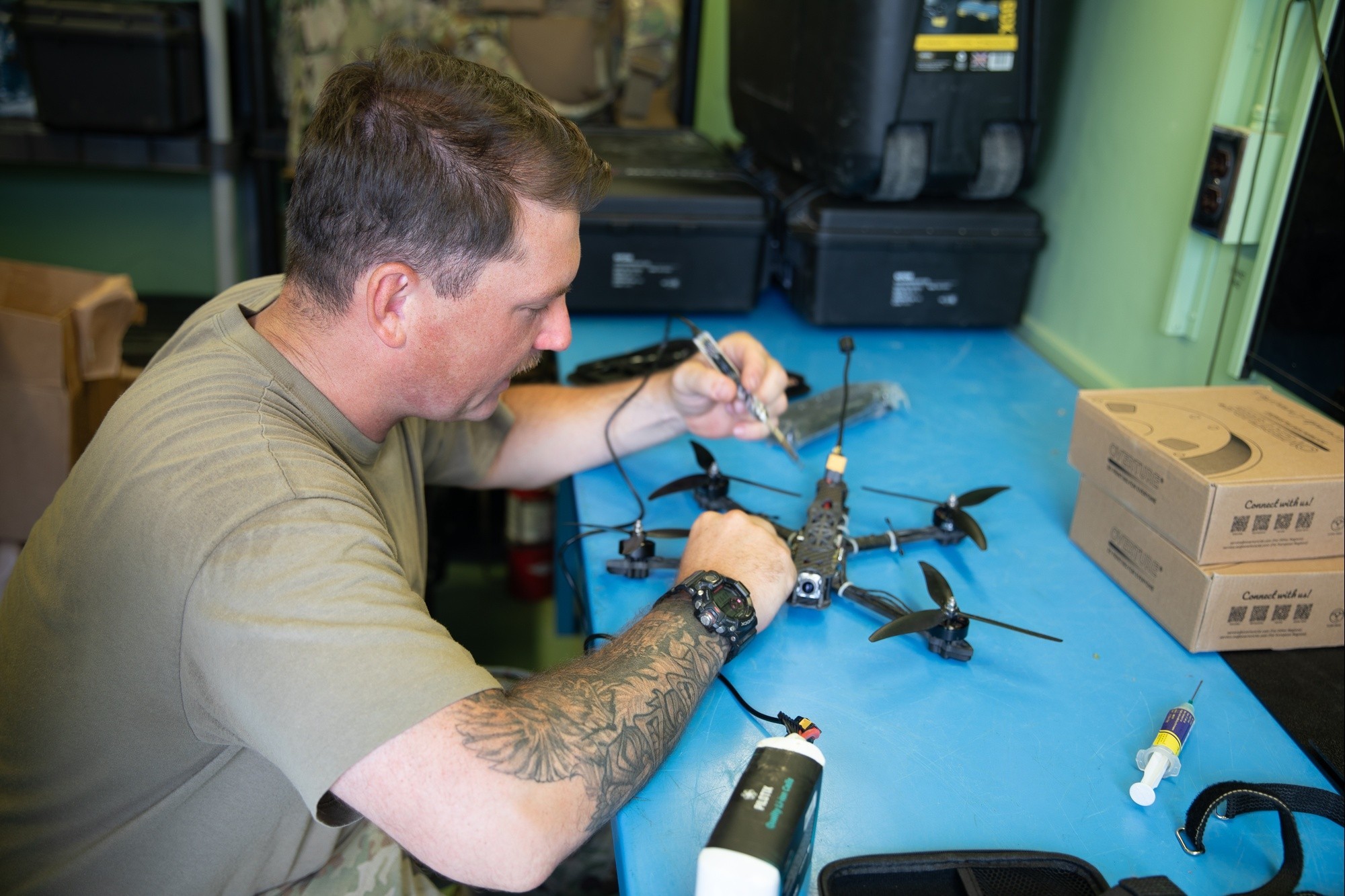
U.S. Army Sgt. Tucker Smith repairs a first-person view drone inside a mobile workstation at Norio Training Area, Georgia, Aug. 2, 2025, during Agile Spirit 25. Smith is assigned to Hawkeye Platoon, Headquarters and Headquarters Troop, 1st Squadron, 91st Cavalry Regiment, 173rd Airborne Brigade. The team maintains and modifies FPV drones in the field using commercial parts and 3D-printed components, ensuring continuous operational capability during mission sets. (U.S. Army National Guard photo by Sgt. 1st Class Brittany Conley) (Photo Credit: Sgt. 1st Class Brittany Conley) VIEW ORIGINAL

Backed by brigade-level funding, the platoon now leads the charge into a new era of Army aviation. The 173rd Airborne Brigade invested in four C100 drones as well as a fleet of custom-built first-person view drones, many of which were designed and assembled by the Soldiers themselves using commercial parts and 3D printed components.

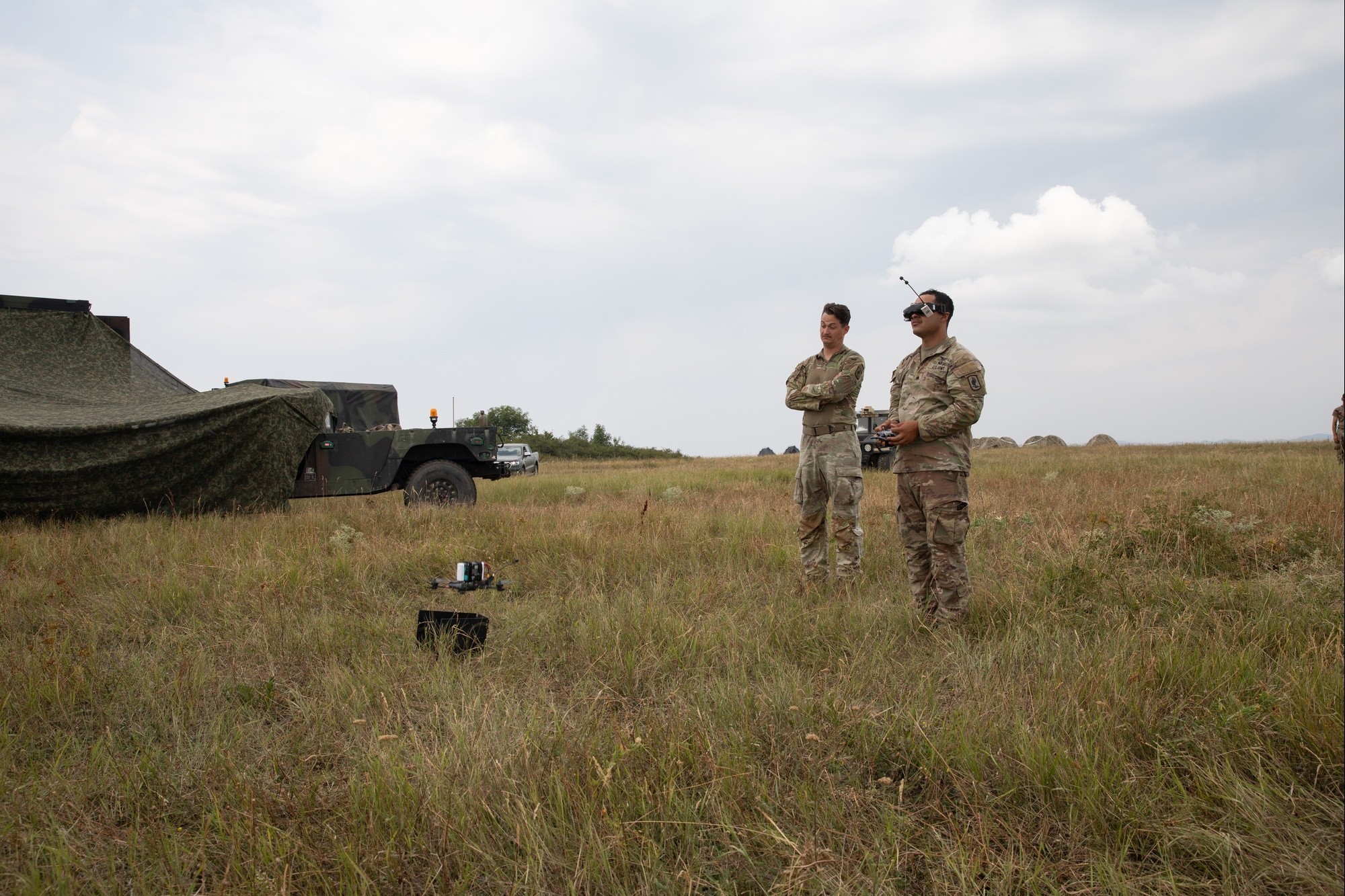
"I flew the FPV, which is a first-person view aircraft," said Army Staff Sgt. Andy Ortiz, a master trainer and drone pilot. "The reason why it could increase the lethality of the platoon or the Army in general is because it's super cheap to build, and you can 3D print what you want on the aircraft. If it breaks, we fix it in-house."
3D Printed Precision: U.S. Army Leverages FPV and Delivery Drones During Agile Spirit 25
U.S. Army Sgt. Andy Ortiz, right, operates a first-person view drone while U.S. Army Sgt. Jacob Harper observes at Norio Training Area, Georgia, Aug. 2, 2025, during Exercise Agile Spirit 25. Both Soldiers are assigned to Hawkeye Platoon, Headquarters and Headquarters Troop, 1st Squadron, 91st Cavalry Regiment, 173rd Airborne Brigade. FPV drones offer rapid deployment capability for strike, surveillance, or decoy missions and can be assembled in hours using 3D-printed and commercially sourced components. (U.S. Army National Guard photo by Sgt. 1st Class Brittany Conley) (Photo Credit: Sgt. 1st Class Brittany Conley) VIEW ORIGINAL

Ortiz explained that an entire FPV drone setup costs around $400 to $500 and can be built in just a few hours.

"Even a beginner can build it in four hours," he said. "It's hard to fly at first, but once you learn the simulator and get good, you can speed up the kill chain. Instead of calling for fire support, someone in your platoon could take out the target with a drone carrying C4."

Hawkeye Platoon doesn't just fly drones: they build them, repair them and constantly innovate with modular payloads to simulate real-world combat effects. The unit's mobile lab functions as a forward tech shop, where Soldiers can fabricate FPV parts, test explosive mock-ups and maintain drone readiness in the field.

3D Printed Precision: U.S. Army Leverages FPV and Delivery Drones During Agile Spirit 25
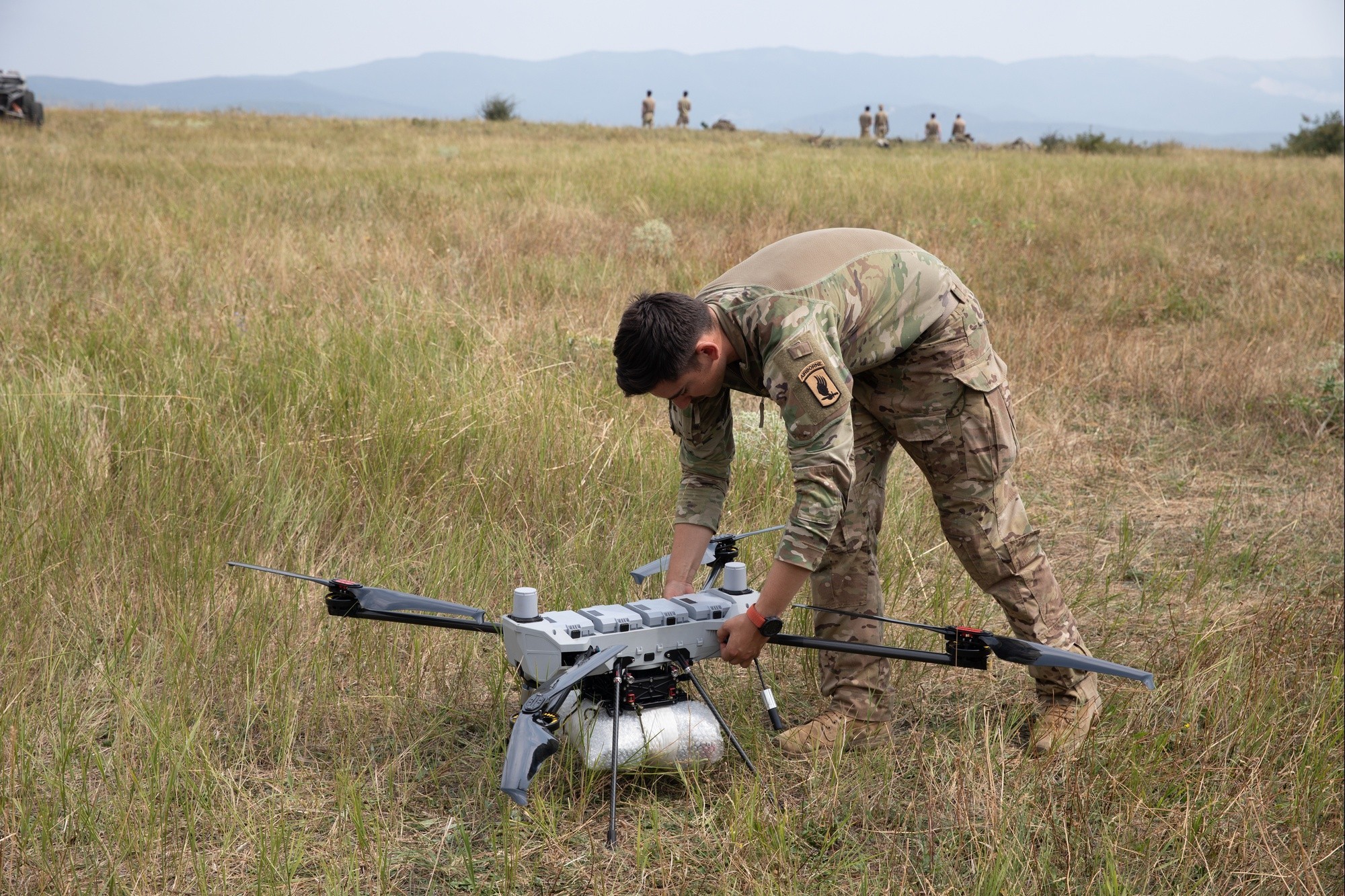
U.S. Army Spc. Tyler Dooros, left, and Staff Sgt. Nathaniel Daniels, platoon sergeant, prepare the PDW C100 drone for launch at Norio Training Area, Georgia, Aug. 2, 2025, during Agile Spirit 25. Both Soldiers are assigned to Hawkeye Platoon, Headquarters and Headquarters Troop, 1st Squadron, 91st Cavalry Regiment, 173rd Airborne Brigade. The PWC100 is a multipurpose platform capable of autonomous flight, aerial delivery of medical supplies, and deployment of grenades using modular 3D-printed attachments developed by the unit. (U.S. Army National Guard photo by Sgt. 1st Class Brittany Conley) (Photo Credit: Sgt. 1st Class Brittany Conley) VIEW ORIGINAL

According to Army Staff Sgt. Nathaniel Daniels, a 173rd platoon sergeant, the C100 expands even further in tactical use cases.

"Today, we saw the C100 mission sets, able to drop ... supplies to a main or forward aid station," Daniels said. "If the mission is beyond 2 or 3 kilometers, we can upload the mission, and the drone will complete it autonomously and return."

3D Printed Precision: U.S. Army Leverages FPV and Delivery Drones During Agile Spirit 25
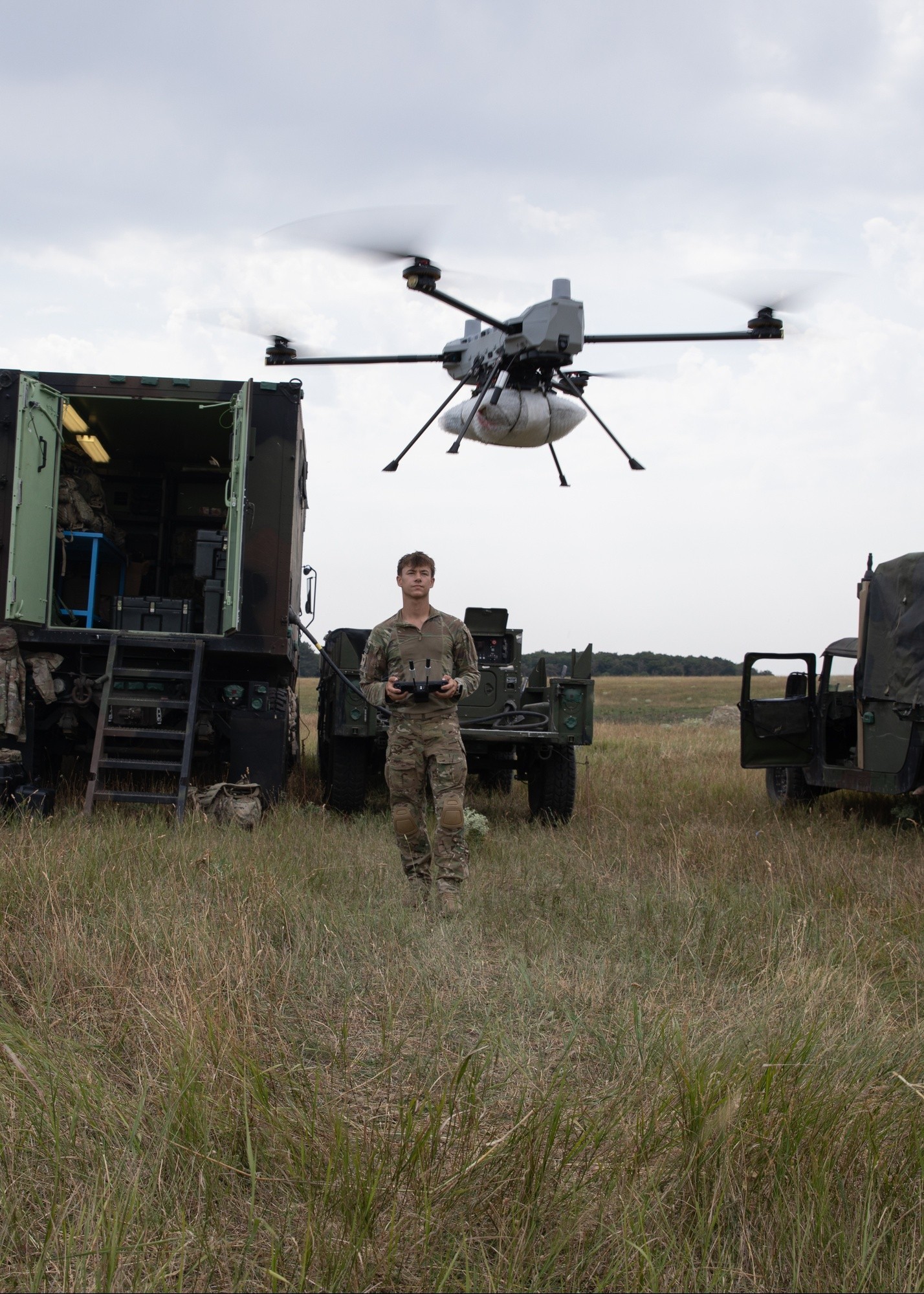
1 / 2 Show Caption + Hide Caption – A PDW C100 drone lifts off during a field demonstration at Norio Training Area, Georgia, Aug. 2, 2025, as part of Agile Spirit 25. The drone, equipped with a modular 3D-printed payload attachment, is capable of delivering medical aid packages or deploying munitions. Soldiers assigned to Hawkeye Platoon, Headquarters and Headquarters Troop, 1st Squadron, 91st Cavalry Regiment, 173rd Airborne Brigade, employed the system to showcase autonomous sustainment and strike capabilities in support of tactical operations. (U.S. Army National Guard photo by Sgt. 1st Class Brittany Conley) (Photo Credit: Sgt. 1st Class Brittany Conley) VIEW ORIGINAL
3D Printed Precision: U.S. Army Leverages FPV and Delivery Drones During Agile Spirit 25
2 / 2 Show Caption + Hide Caption – U.S. Army Staff Sgt. Jonathon Melvin, left, instructs U.S. Army Spc. Max Boatner on drone flight operations at Norio Training Area, Georgia, Aug. 2, 2025, during Agile Spirit 25. Both Soldiers are assigned to Hawkeye Platoon, Headquarters and Headquarters Troop, 1st Squadron, 91st Cavalry Regiment, 173rd Airborne Brigade. The team leveraged small unmanned aircraft systems to demonstrate aerial resupply and mission-specific payload deployment using custom 3D-printed attachments. (U.S. Army National Guard photo by Sgt. 1st Class Brittany Conley) (Photo Credit: Sgt. 1st Class Brittany Conley) VIEW ORIGINAL

With a range of up to 10 kilometers and a flight endurance of 74 minutes, the C100 enables small units to push supplies or conduct reconnaissance deep into the battlespace without maintaining line of sight — an advantage especially critical in mountainous or contested terrain.

On the other hand, FPV drones, while cheaper and faster to field, require a direct line of sight between the operator and the aircraft to remain effective. Despite this limitation, Hawkeye Platoon has embraced them as a powerful tool for short-range strikes and reconnaissance.
3D Printed Precision: U.S. Army Leverages FPV and Delivery Drones During Agile Spirit 25
1 / 2 Show Caption + Hide Caption – U.S. Army Spc. Max Boatner operates the PDW C100 drone during a field demonstration at Norio Training Area, Georgia, Aug. 2, 2025, as part of Agile Spirit 25. Boatner, assigned to Hawkeye Platoon, Headquarters and Headquarters Troop, 1st Squadron, 91st Cavalry Regiment, 173rd Airborne Brigade, manually controls the drone to execute an aerial delivery mission using a 3D-printed payload attachment. The demonstration highlights the unit’s integration of unmanned systems into tactical sustainment operations. (U.S. Army National Guard photo by Sgt. 1st Class Brittany Conley) (Photo Credit: Sgt. 1st Class Brittany Conley) VIEW ORIGINAL
3D Printed Precision: U.S. Army Leverages FPV and Delivery Drones During Agile Spirit 25
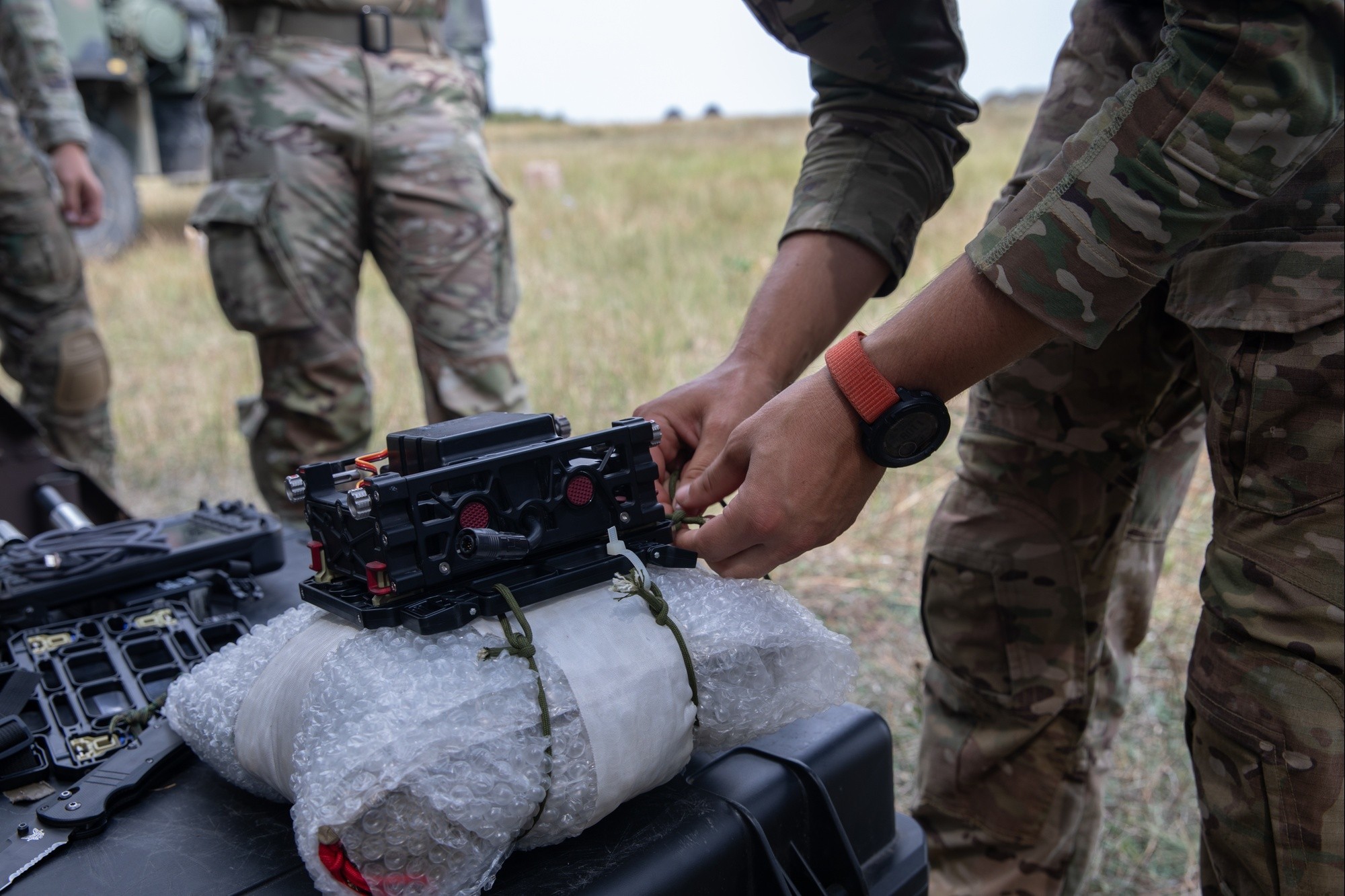
2 / 2 Show Caption + Hide Caption – U.S. Army Spc. Tyler Dooros secures a medical aid package to a cargo attachment for the PDW C100 drone at Norio Training Area, Georgia, Aug. 2, 2025, during Agile Spirit 25. The PWC100 is capable of autonomous flight beyond two kilometers and is designed to deliver critical supplies such as Class VIII items or speedballs to forward positions. Soldiers assigned to Hawkeye Platoon, Headquarters and Headquarters Troop, 1st Squadron, 91st Cavalry Regiment, 173rd Airborne Brigade, demonstrated its integration with field operations during the multinational exercise. (U.S. Army National Guard photo by Sgt. 1st Class Brittany Conley) (Photo Credit: Sgt. 1st Class Brittany Conley) VIEW ORIGINAL

"An infantry platoon should be stacked up with FPV drones," Ortiz said. "They're cheap, easy to build and can close the kill chain fast when you attach simulated munitions."

Daniels said the training model is designed for scalability across the brigade. The drone manufacturer conducts initial instruction through a train-the-trainer model. Once certified, noncommissioned officers, like those in Hawkeye Platoon, can train other Soldiers throughout the formation.

The Army's pivot to small uncrewed aircraft systems has opened the door for this kind of unit-level innovation. In a June 10, 2025, memorandum, Defense Secretary Pete Hegseth noted that "drones are the biggest battlefield innovation in a generation," and he expects the U.S. military to integrate drone technology into its training.

Hawkeye Platoon embodies that shift, transforming from legacy platform operators into agile, tech-savvy instructors and battlefield integrators.

What began as a gap in capability after the retirement of the Shadow platform has become an incubator for battlefield innovation, where lethality is printed, built and flown by the platoon itself.

3D Printed Precision: U.S. Army Leverages FPV and Delivery Drones During Agile Spirit 25
1 / 2 Show Caption + Hide Caption – U.S. Army Sgt. Tucker Smith solders internal wiring on a first-person view drone inside a mobile repair station at Norio Training Area, Georgia, Aug. 2, 2025, during Agile Spirit 25. Smith, assigned to Hawkeye Platoon, Headquarters and Headquarters Troop, 1st Squadron, 91st Cavalry Regiment, 173rd Airborne Brigade, performs field-level maintenance on FPV systems using commercial electronics, 3D-printed parts, and manual soldering techniques to sustain mission capability. (U.S. Army National Guard photo by Sgt. 1st Class Brittany Conley) (Photo Credit: Sgt. 1st Class Brittany Conley) VIEW ORIGINAL
3D Printed Precision: U.S. Army Leverages FPV and Delivery Drones During Agile Spirit 25
2 / 2 Show Caption + Hide Caption – U.S. Army Spc. Tyler Dooros conducts preflight checks on the PDW C100 drone at Norio Training Area, Georgia, Aug. 2, 2025, during Agile Spirit 25. Assigned to Hawkeye Platoon, Headquarters and Headquarters Troop, 1st Squadron, 91st Cavalry Regiment, 173rd Airborne Brigade, Dooros prepares the drone for a live demonstration of its aerial resupply and payload deployment capabilities using custom 3D-printed attachments. (U.S. Army National Guard photo by Sgt. 1st Class Brittany Conley) (Photo Credit: Sgt. 1st Class Brittany Conley) VIEW ORIGINAL

These real-world training exercises were conducted during Agile Spirit 25, a U.S. Army Europe and Africa-led, multinational exercise designed to enhance interoperability and readiness with allied and partner forces. Held annually in Georgia, the exercise provides a live operational environment for units like Hawkeye Platoon to test emerging technologies, validate mission sets and lead the way in shaping the future of Army lethality.