
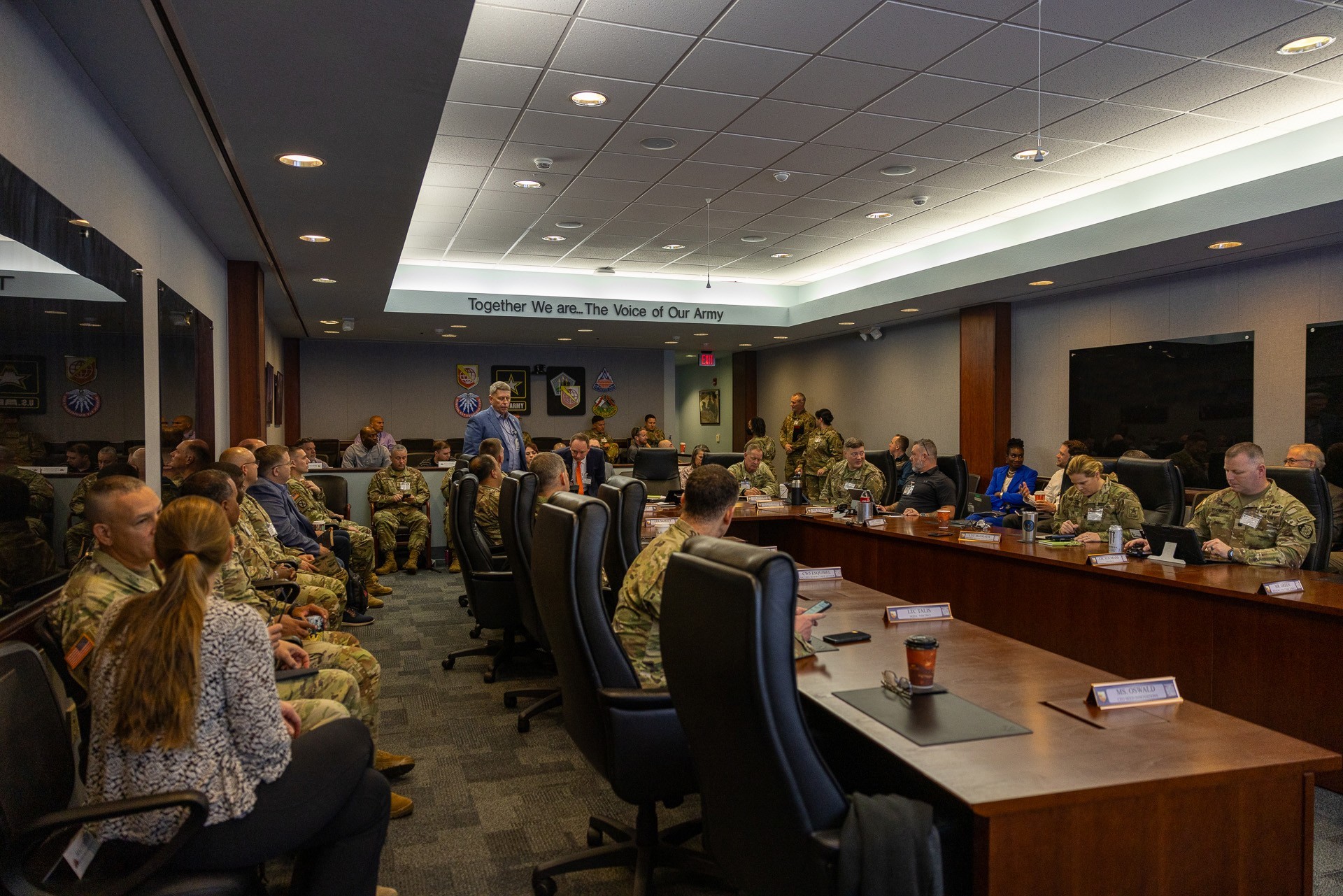
AUGUSTA, Ga. — “These sessions are more than just conferences—they’re catalysts for transformation,” said LTG Maria B. Barrett, Commanding General of U.S. Army Cyber Command. “By bringing together the Army’s brightest minds in cyberspace operations, we’re not just reacting to threats—we’re anticipating them, shaping the fight, and building a more resilient force for tomorrow.”
This vision defined two high-impact sessions of the Army Defensive Cyberspace Operations Conference (ADCyOC), hosted by U.S. Army Cyber Command (ARCYBER) in January 2025 at the Georgia Cyber Center and in July 2025 at the ARCYBER Headquarters. The events united planners, operators, and technical experts from across the Army enterprise to confront today’s digital challenges head-on.
ADCyOC 25-01 broke away from traditional briefings and embraced a fast-paced, informal working group format, sparking deep discussions around operational cyber risks and vulnerabilities, while ADCyOC 25-02 focused on leveraging the work of the Mission Assurance community to develop ARCYBER’s Defensive Cyberspace Operations (DCO) prioritization framework to create a proactive approach to DCO mission planning.
“Developing a proactive approach to DCO mission planning ensures that our efforts are supporting the operational force and the accomplishment of operational missions in large-scale combat operations,” according to LTC Rob Corless, ARCYBER Cyber Defense Plans Division Chief.
Participants collaborated to shape cyberspace defense priorities and contribute directly to ARCYBER’s strategic roadmap for fiscal year 2026 and beyond.
The result: HQDA-sanctioned, ARCYBER-validated cyber defense requirements derived from field-informed perspectives to create a data-driven, risk-informed priority list of DCO missions for the next fiscal year.
A senior leader panel took the dialogue even deeper, analyzing resourcing challenges, threat evolutions, and aligning mission owners with ARCYBER planners to reinforce unity and sharpen operational response across the Army’s cyber landscape.
With the end state achieved, stakeholders are left with a stronger shared understanding of how their cyber risk identification efforts inform ARCYBER’s DCO prioritization framework. These collaborative breakthroughs enable ARCYBER to allocate resources better and advance DCO—fortifying the Army’s readiness in an increasingly contested digital battlespace.
Social Sharing