1 / 3Show Caption +Hide Caption –
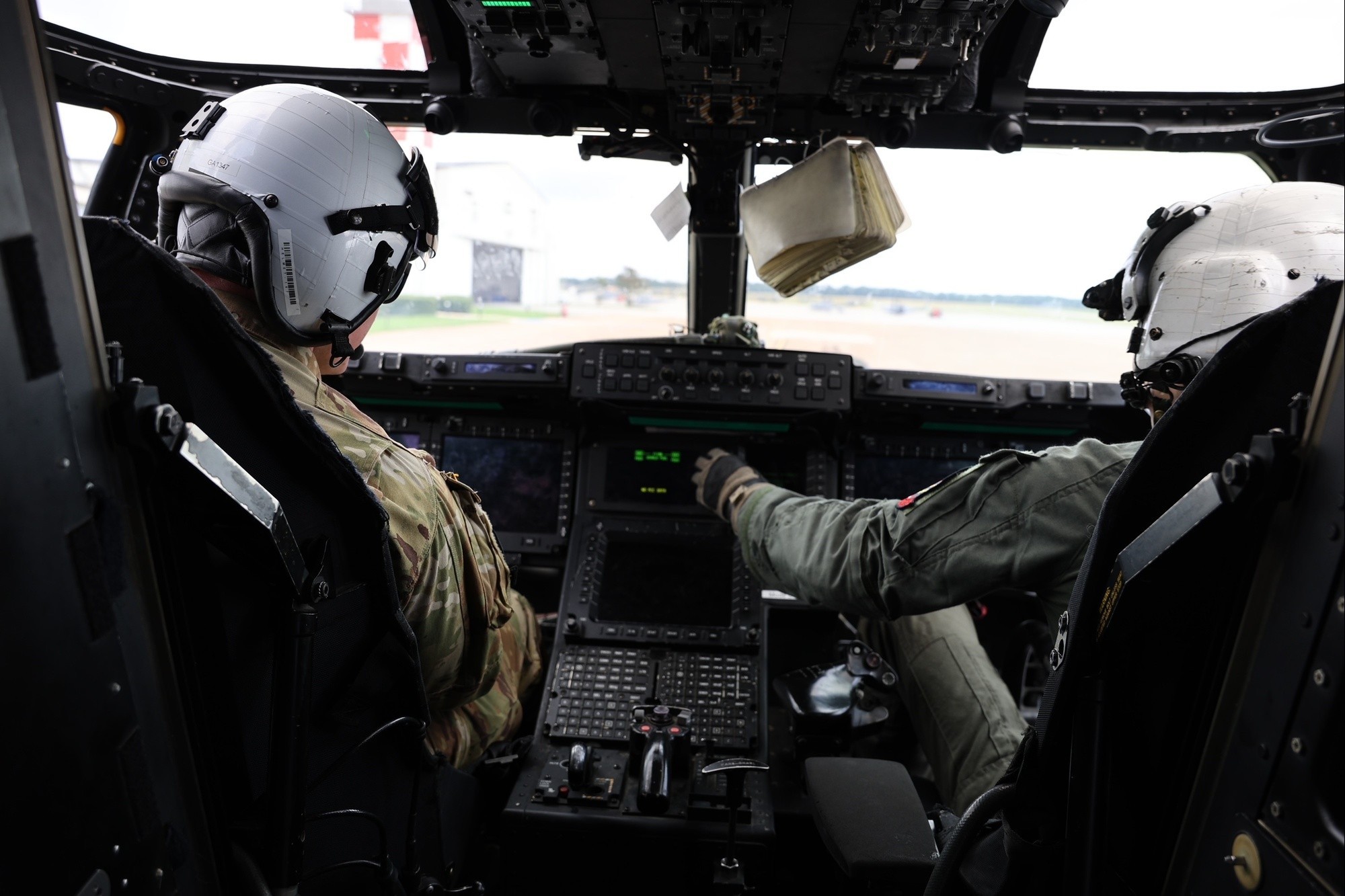
Army Aviators participate in a familiarization flight of the MV-22 Osprey with members of the Marine Corps Marine Medium Tiltrotor Training Squadron 204 (VMMT-204) at Marine Corps Air Station New River at Fort Rucker on July 24.
(Photo Credit: U.S. Army photo by Leslie Herlick)VIEW ORIGINAL2 / 3Show Caption +Hide Caption –
Army Sgt. 1st Class Tyler Posey, a maintenance training developer in the Directorate of Training and Doctrine at Fort Rucker, works with Marine Staff Sgt. David Deshaw in the MV-22 Osprey from Marine Medium Tiltrotor Training Squadron 204 (VMMT-204) from Marine Corps Air Station New River, as part of an initiative to build foundational knowledge base for the Army's MV-75 transition and inform future training and doctrine development.
(Photo Credit: U.S. Army photo by Leslie Herlick)VIEW ORIGINAL3 / 3Show Caption +Hide Caption –
Sgt. 1st Class Tyler Posey, a maintenance training developer in the Directorate of Training and Doctrine at Fort Rucker, receives a crew brief from Marines Staff Sgt. David Deshaw and Sgt. Joseph Basler, Marine Medium Tiltrotor Training Squadron 204 (VMMT-204), Marine Corps Air Station New River, before performing run ups during a familiarization flight of the MV-22 Osprey at Fort Rucker on July 24 to build a foundational knowledge base for the MV-75 transition and inform future training and doctrine development.
(Photo Credit: U.S. Army photo by Leslie Herlick)VIEW ORIGINAL
FORT RUCKER, Ala. — As the Army advances toward fielding the MV-75 Future Long Range Assault Aircraft, FLRAA, Army aviators are gaining hands-on experience with tiltrotor technology through familiarization flights in the MV-22 Osprey. The initiative is part of a broader effort to build a foundational knowledge base for the Army’s MV-75 transition and inform future training and doctrine development.
“Through the Army’s FLRAA program, we’ve officially passed milestone B and selected tiltrotor as the next step,” said Chief Warrant Officer 3 Joshua Baker, training developer in the Directorate of Training and Doctrine, DOTD, at Fort Rucker. “This familiarization is about more than flying. It’s about understanding the entire ecosystem that comes with tiltrotor operations.”
Chief Warrant Officer 3 Baker and Chief Warrant Officer 5 Brian McKnight, also a training developer in DOTD, flew the MV-22 alongside U.S. Marine Corps Capt. John Albertini, a Naval Air Training and Operations Procedures Standardization evaluator. Their flight provided a critical firsthand look at tiltrotor flight characteristics.
Prior to the flight, Baker, McKnight and other Army aviators recently completed ground school and 60 hours of simulation training with Marine Medium Tiltrotor Training Squadron 204, VMMT-204, at Marine Corps Air Station New River. The team also audited the unit’s maintenance course to assess new skill sets required for composite structures, fiber optics, and other advanced systems.
1 / 2Show Caption +Hide Caption –
Marine Corps Capt. John Albertini, a Naval Air Training and Operations Procedures Standardization (NATOPS) evaluator with Marine Medium Tiltrotor Training Squadron 204 (VMMT-204) at Marine Corps Air Station New River preflights the MV-22 Osprey with Army Chief Warrant Officer 5 Brian McKnight, training developer in the Directorate of Training and Doctrine (DOTD) at Fort Rucker, prior to a training familiarization flight to build a foundational knowledge base for the ARmy's MV-75 transition and inform future training and doctrine development.
(Photo Credit: U.S. Army photo by Leslie Herlick)VIEW ORIGINAL2 / 2Show Caption +Hide Caption –
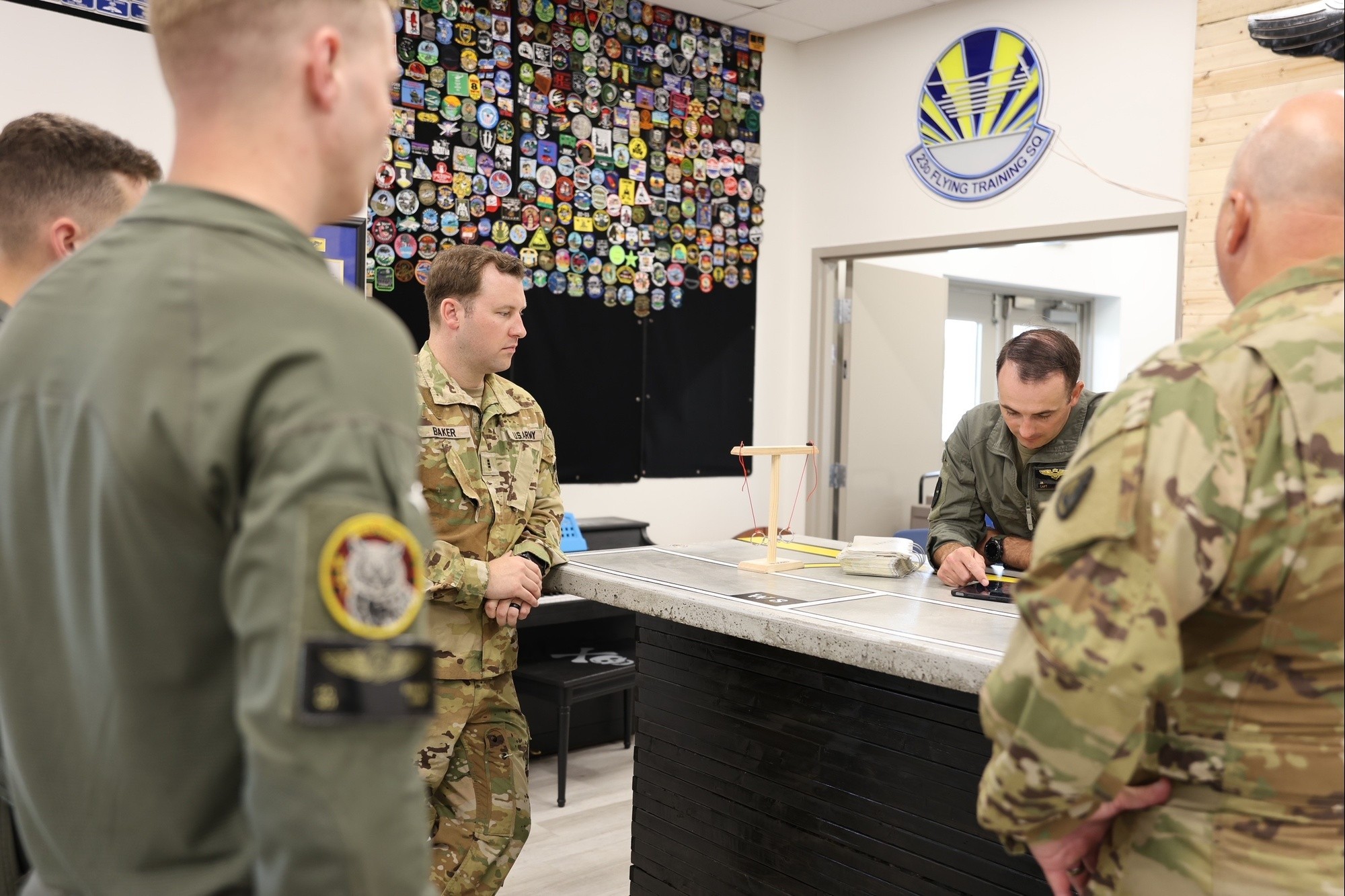
Army Chief Warrant Officer 3 Joshua Baker receives a crew brief from Marine Corps Capt. John Albertini, a Naval Air Training and Operations Procedures Standardization (NATOPS) evaluator from Marine Medium Tiltrotor Training Squadron 204 (VMMT-204) at Marine Corps Air Station New River prior to a familiarization training flight in the MV-22 Osprey on July 24 to build a foundational knowledge base for the MV-75 transition and inform future training and doctrine development.
(Photo Credit: U.S. Army photo by Leslie Herlick)VIEW ORIGINAL
Sgt. 1st Class Tyler Posey, a maintenance training developer in DOTD, connected with Marine Sgt. Joseph Basler and other VMMT-204 maintenance instructors to study the sustainment and technical demands of tiltrotor aircraft, including discussions on composite structures, which is newer to Army aircraft maintainers.
“This is a completely new skill set for Army Aviation,” Baker explained. “We’re learning from the Marines, who’ve been flying tiltrotors for years. There’s no reason to start from scratch when three other services have already defined this thing.”
The MV-22 flights at Fort Rucker were a “target of opportunity,” Baker said, made possible when VMMT-204 personnel traveled to Alabama for an unrelated event with the Air Force’s 23rd Flight Training Squadron stationed at Fort Rucker.
The timing coincides with the delivery of two MV-75 virtual prototypes — one at Fort Rucker and another at Redstone Arsenal. These advanced simulators, based on digital twins of the aircraft, are being used to refine crew interfaces, software and tactics.
“We’ve got test pilots flying the virtual prototype with local Fort Rucker pilots right now,” Baker said. “This helps inform tactics development and task analysis. DOTD is the proponent for doctrine, and we’ll be responsible for taking what Bell and others give us and shaping it into Army tasks and training.”
1 / 2Show Caption +Hide Caption –
Marine Corps Capt. John Albertini, Army Chief Warrant Officer 5 Brian McKnight, Army Chief Warrant Officer 3 Joshua Baker, Army Sgt. 1st Class Tyler Posey, Marine Staff Sgt. David Deshaw, and Marine Sgt. Joseph Basler before familiarization flights in the MV-22 Osprey at Fort Rucker on July 24 meant to build a foundational knowledge base for the Army’s MV-75 transition and inform future training and doctrine development.
(Photo Credit: U.S. Army photo by Leslie Herlick)VIEW ORIGINAL2 / 2Show Caption +Hide Caption –
Marine Corps Capt. John Albertini, a Naval Air Training and Operations Procedures Standardization (NATOPS) evaluator from Marine Medium Tiltrotor Training Squadron 204 (VMMT-204) at Marine Corps Air Station New River gives a crew briefing to Chief Warrant Officer 3 Baker and Chief Warrant Officer 5 Brian McKnight, training developers in the Directorate of Training and Doctrine (DOTD) at Fort Rucker before their training familiarization flights in the MV-22 Osprey at Fort Rucker on July 24 to build a foundational knowledge base for the Army’s MV-75 transition and inform future training and doctrine development.
(Photo Credit: U.S. Army photo by Leslie Herlick)VIEW ORIGINAL
The Army plans to bring VMMT-204 personnel back periodically to support virtual prototype updates and share operational insights. “We want them to show us their tactics and help us develop our own advanced-level procedures,” Baker said. “Again, there’s no reason to reinvent the wheel.”
The MV-75, is expected to fly in 2026 and begin fielding in 2030. As the Army prepares for this transformational shift, tiltrotor familiarization is laying the groundwork for a new era in vertical lift.
“We’re not just preparing to fly a new aircraft,” Baker said. “We’re preparing to change how the Army fights.”
Social Sharing