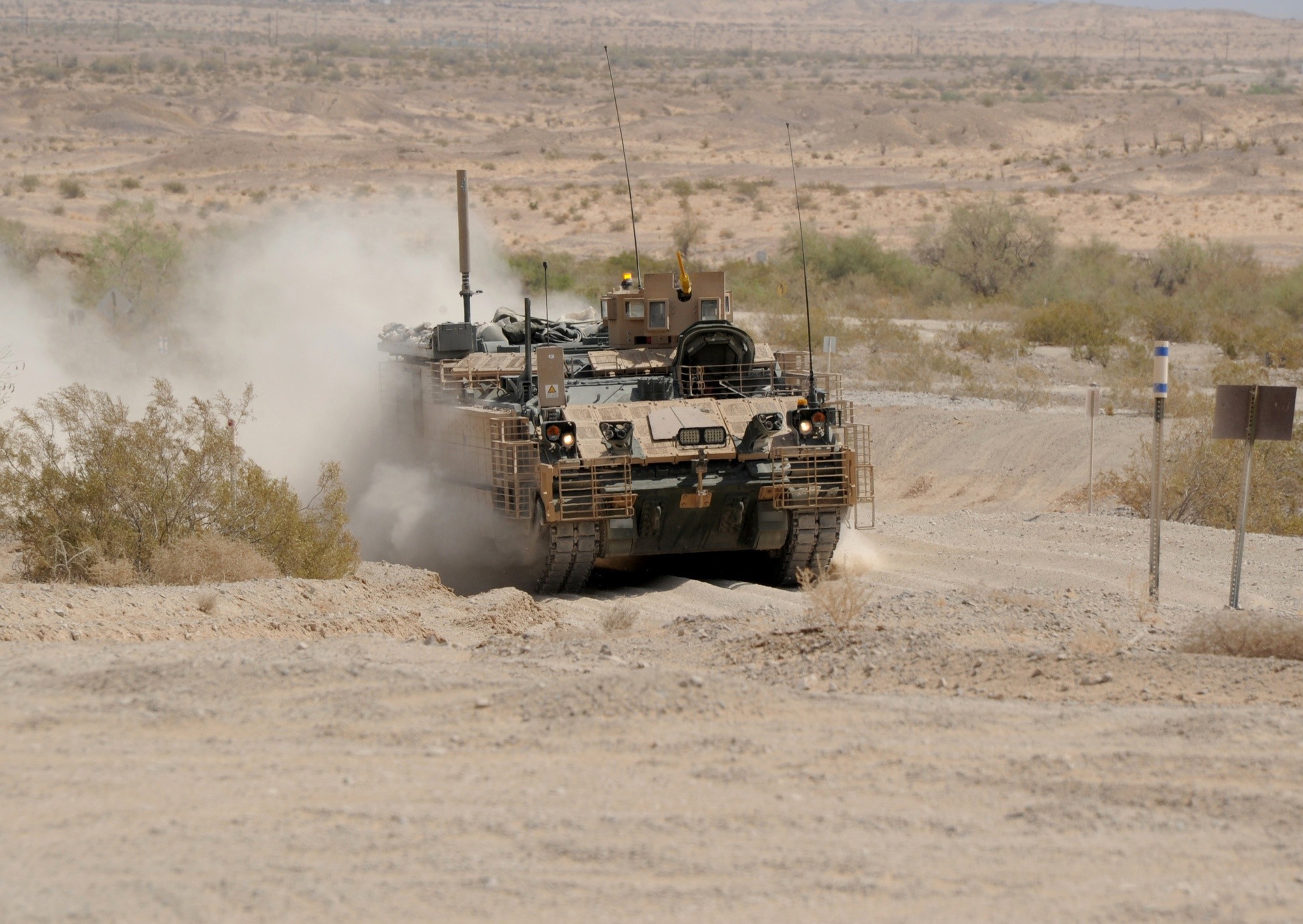

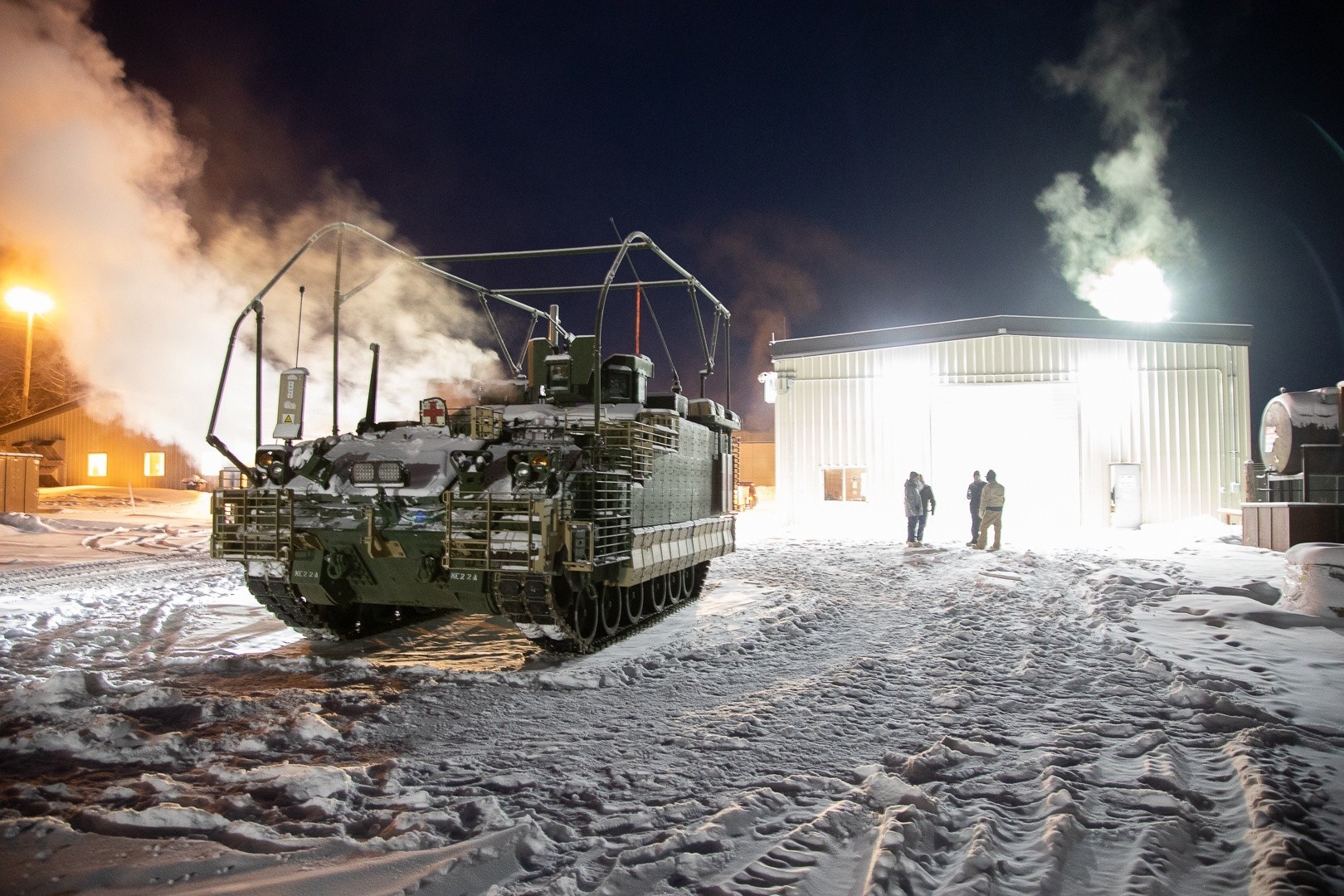

With a conference theme of ‘Modernizing the U.S. Armored Force for 2030 and Beyond,’ Nelson discussed how YPG’s more than 200 miles of rugged surveyed road courses closely simulate what a Soldier might experience in a combat theater in desert, arctic, and tropical environments. “You can’t choose where you’re going to fight next, but you can be prepared for it,” he said. “The three natural environments YPG provides are opportunities for materiel developers to reduce risk in their programs, to actually identify issues early on without having to make large expenditures after procurement.” VIEW ORIGINAL
U.S. Army Yuma Proving Ground (YPG) is at the forefront of the Army’s current transformation efforts.
One important aspect of Army transformation involves mobility, and approximately 200 miles of surveyed road courses at U.S. Army Yuma Test Center (YTC) are being utilized to put the next generation of vehicles through their paces.
YTC ‘s rugged conditions closely simulate what a Soldier might experience in a desert combat theater, where things like dust intrusion and intense ambient temperatures in summer can stress even the most robust combat vehicles. From paved asphalt to rugged, unimproved desert washboard, YTC’s mobility courses run the gamut of types of conditions a Soldier driving a vehicle is likely to encounter.
“The natural environment really puts these systems through stress that you don’t see in other places,” said Marco Nixen, Combat Systems Branch Chief. “Our Middle East course is a cross-country course with a lot of slope and variations with washboard conditions in places that puts a vehicle through a lot of different forces. Our hilly courses have up to about a 30% slope in places, so you are taxing transmissions and other parts of the vehicle heavily.”
Like the road courses the vehicles are tested on, a test vehicle plan can vary widely.
“It depends on what the customer wants: is it a full vehicle up system test, or just a specific component like a new cooling system or engine?” said Nixen. “We do everything from sub-systems to the whole system.”
Likewise, YPG’s two other constituent test centers, Arctic Regions Test Center (ARTC) and Tropic Regions Test Center (TRTC), frequently test military vehicles in extreme cold and jungle environments, respectively.
“You can’t choose where you’re going to fight next, but you can be prepared for it,” said Col. John Nelson, YPG commander. “The three natural environments we provide are opportunities for materiel developers to reduce risk in their programs, to actually identify issues early on without having to make large expenditures after procurement.”
In the case of reliability, availability, and maintainability (RAM) testing, vehicles run miles of simulated missions across road courses featuring various terrain conditions. As they traverse these road courses, test vehicle operators continually verify performance of all the platform’s sophisticated electronics, as well as the vehicle’s braking, acceleration, and steering performance on slopes and steep grades, even through a fording basin and on a dust course tilled for maximum sediment. Samples of the vehicles’ fluids are collected and analyzed at various points throughout the tests. During performance testing, the evaluators collect dozens of channels of data, including things like the displacement and temperature of each road arm on a tracked vehicle. The testers monitor if the system deteriorates through use and try to discern a trend that will help estimate the normal rate of deterioration. As it runs, the exact location and terrain conditions of any possible anomaly can be identified. In addition to the hundreds of miles of road courses, YPG has the range space to safely conduct live function fire tests of a vehicle’s weapons from both stationary and moving positions.
“YPG is supporting the Army’s continuous transformation, but also supports joint force transformation and testing for our allied partners,” said Nelson. “YPG also presents an opportunity for private industry to come out and learn some things about their technology’s performance, which also allows us to learn about new technology.”
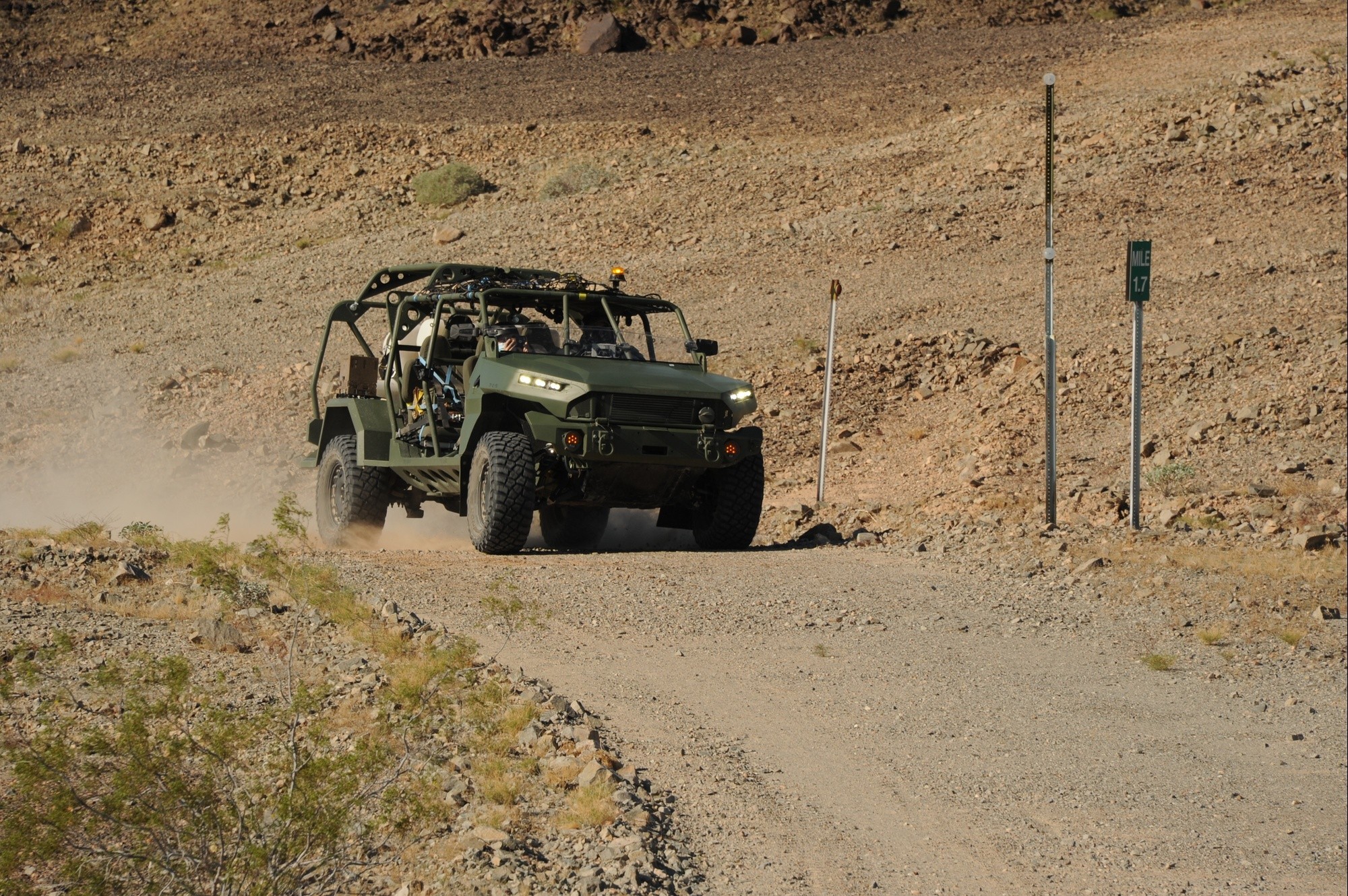
In recent years, this has meant hosting tests of everything from the Joint Light Tactical Vehicle (JLTV) and the Armored Multipurpose Vehicle (AMPV), successor to the venerable M113 armored personnel carrier that dates back to the early 1960s, to items like the Infantry Squad Vehicle, a fast and lean four-wheel drive vehicle that carries up to a nine Soldier infantry unit and their heavy gear. As for private industry testing, virtually every American automobile company has utilized test tracks available at YTC and ARTC.
“As the Army looks at what it learned from 20 years of irregular warfare and coupled it with the previous knowledge they had when the developed the ‘big five’ weapons systems to see how they can create a solution that will support a fight against a near-peer adversary or an irregular warfare adversary,” said Jacob Obradovich, Next Generation Combat Vehicle Cross Functional Team Integrator.
This extends to platforms such as the XM30 Mechanized Infantry Combat Vehicle, which YTC has already done testing on behalf of using surrogate vehicles to evaluate potential components of the future system.
“YPG has been testing armored vehicles since World War II,” said Nelson. “Every major combat platform and every combat support platform has come through here. I expect the XM 30 and the M1E3 Abrams will come through here to at minimum prove out their reliability and maintainability.”
“As we start to see more and more unmanned vehicles in the private sector, the cost is dropping drastically and the maturity is increasing,” added Obradovich. “The YPG customer service and safety mentality and our flexibility are going to be an asset to the Army and DOD because they know they can come to YPG and get the support they need to make their mission successful.”
Social Sharing