VIEW ORIGINAL
VIEW ORIGINAL
VIEW ORIGINAL
ABERDEEN PROVING GROUND, Md. — From May 20-23, the C5ISR Center workforce participated in the Civilian Active Attack Response Protocol training at the Myer Auditorium, marking the first time the training was held on the C5ISR campus. Designed to empower and better prepare employees for emergency situations, the training emphasized critical response strategies and reinforced the organization’s commitment to workforce safety and readiness.
On May 20, instructors delivered information sessions to the general workforce, managers, and senior leaders. Achilles Strategic Readiness led the instruction. ASR instructors also serve as adjunct trainers for the Advanced Law Enforcement Rapid Response Training Center, which partners with Texas State University and holds FBI recognition as the national standard in active assailant response training.
During the general workforce information session, ASR instructors reviewed several active assailant incidents. The key takeaway was the explanation of three primary tactics for staying safe during an attack: run, hide, and fight.
Patrick Meffert, the CEO of ASR, said the Columbine High School Massacre in 1999 changed the way law enforcement handled mass shootings. The shooting highlighted a lack of preparation needed to respond to a fast-moving mass shooting, he said.
VIEW ORIGINAL
Preparing for emergencies
Meffert, a retired Army command sergeant major who served with the 3rd Special Forces Group (Airborne), stressed the importance of being prepared for emergencies. He urged attendees to have a plan for active assailant attacks and to learn basic medical techniques. The key takeaway is that preparation and first aid skills can empower individuals to help themselves and others until first responders arrive.
Meffert advised attendees to stay situationally aware. This includes knowing the locations of exits and identifying where to go to avoid an active assailant.
“You always have to have that exit plan; you want to be thinking two steps ahead,” he said.
U.S. Army Communications-Electronics Command Antiterrorism Officer Carly Garrett told supervisors to make sure employees have the C5ISR Emergency Action Plan. This plan outlines how to respond to multiple situations. Garrett urged attendees to read it carefully. This preparation helps prevent miscommunication during an emergency.
VIEW ORIGINAL
Practical scenario-based drills
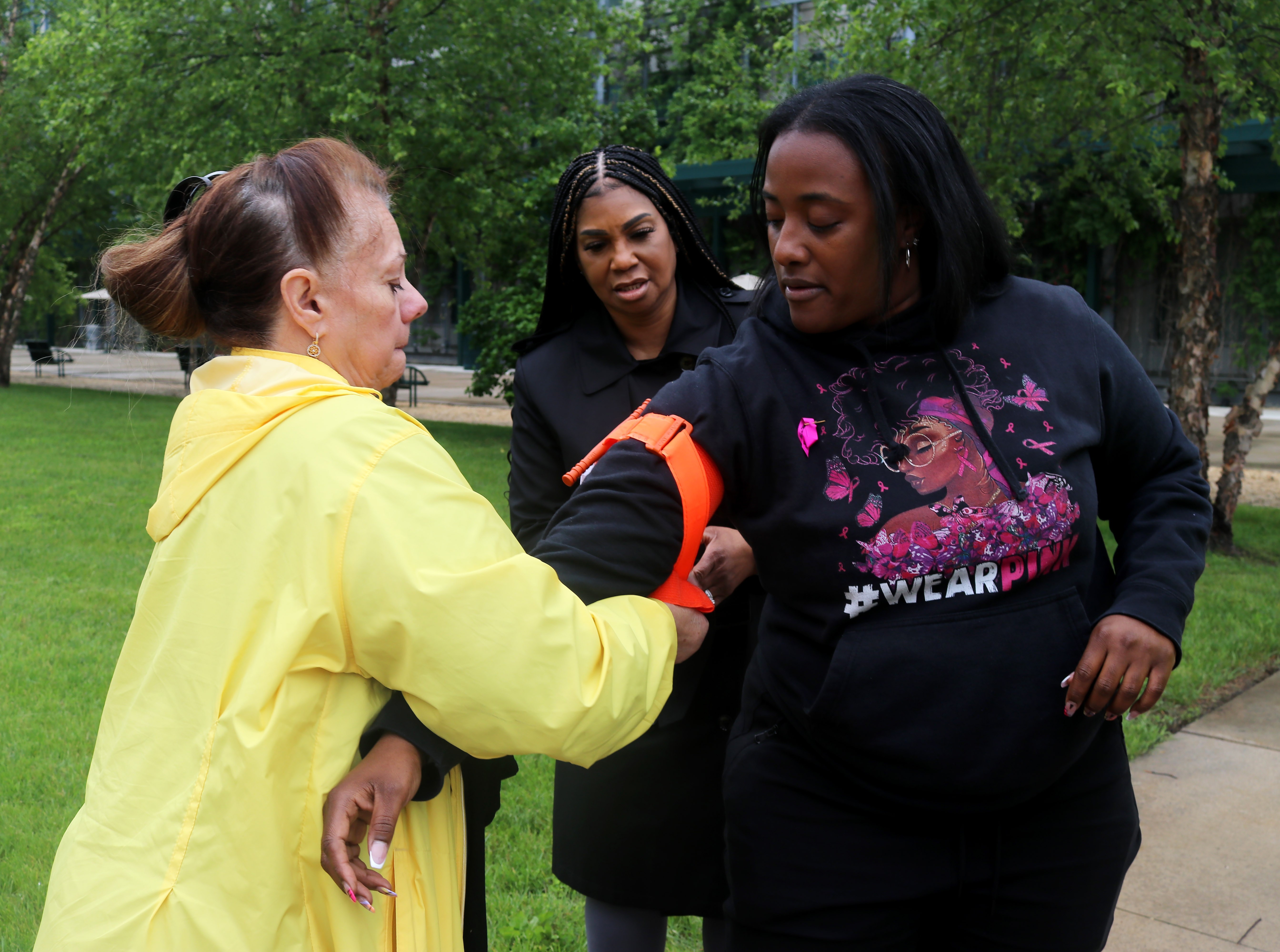
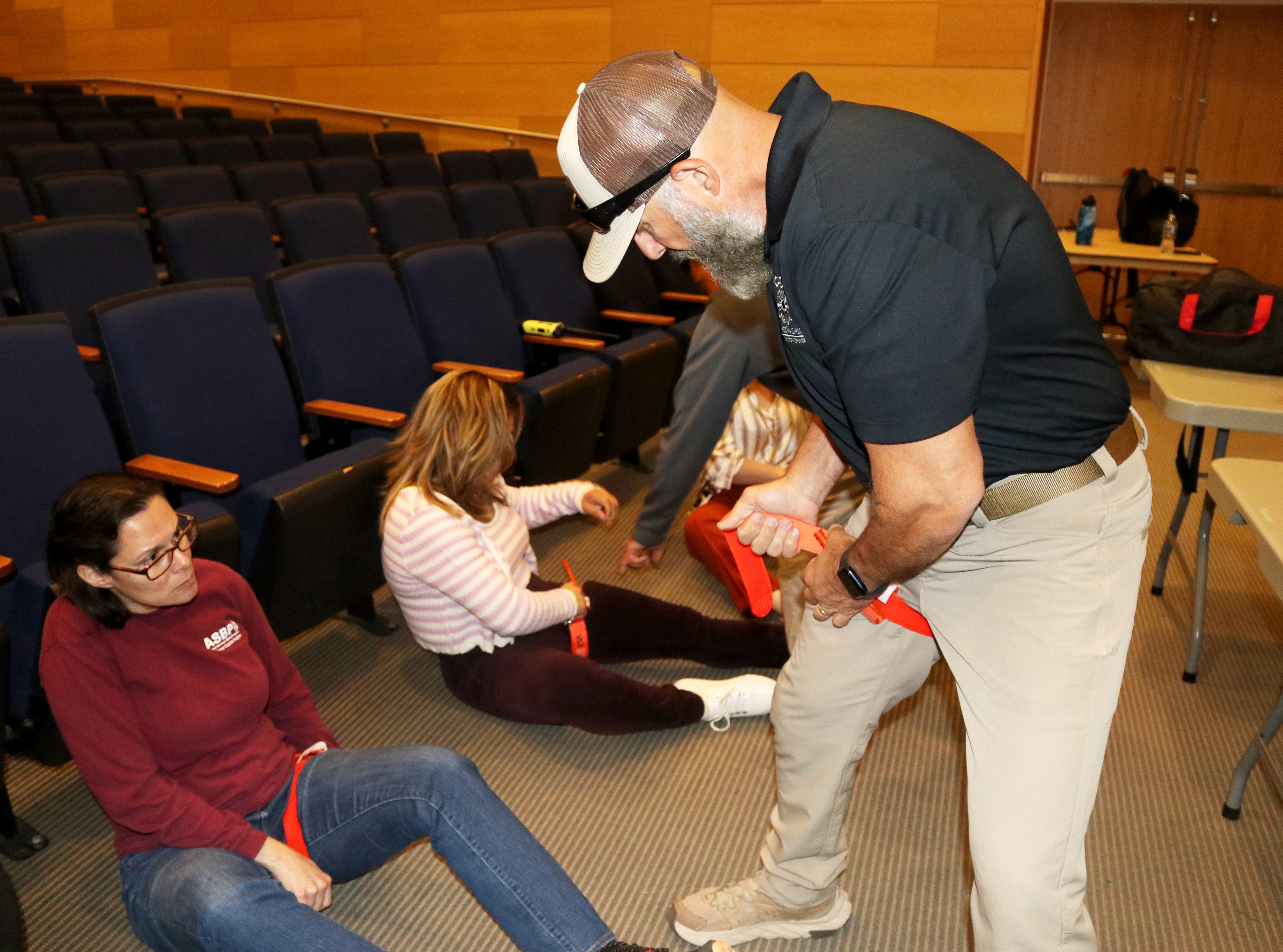
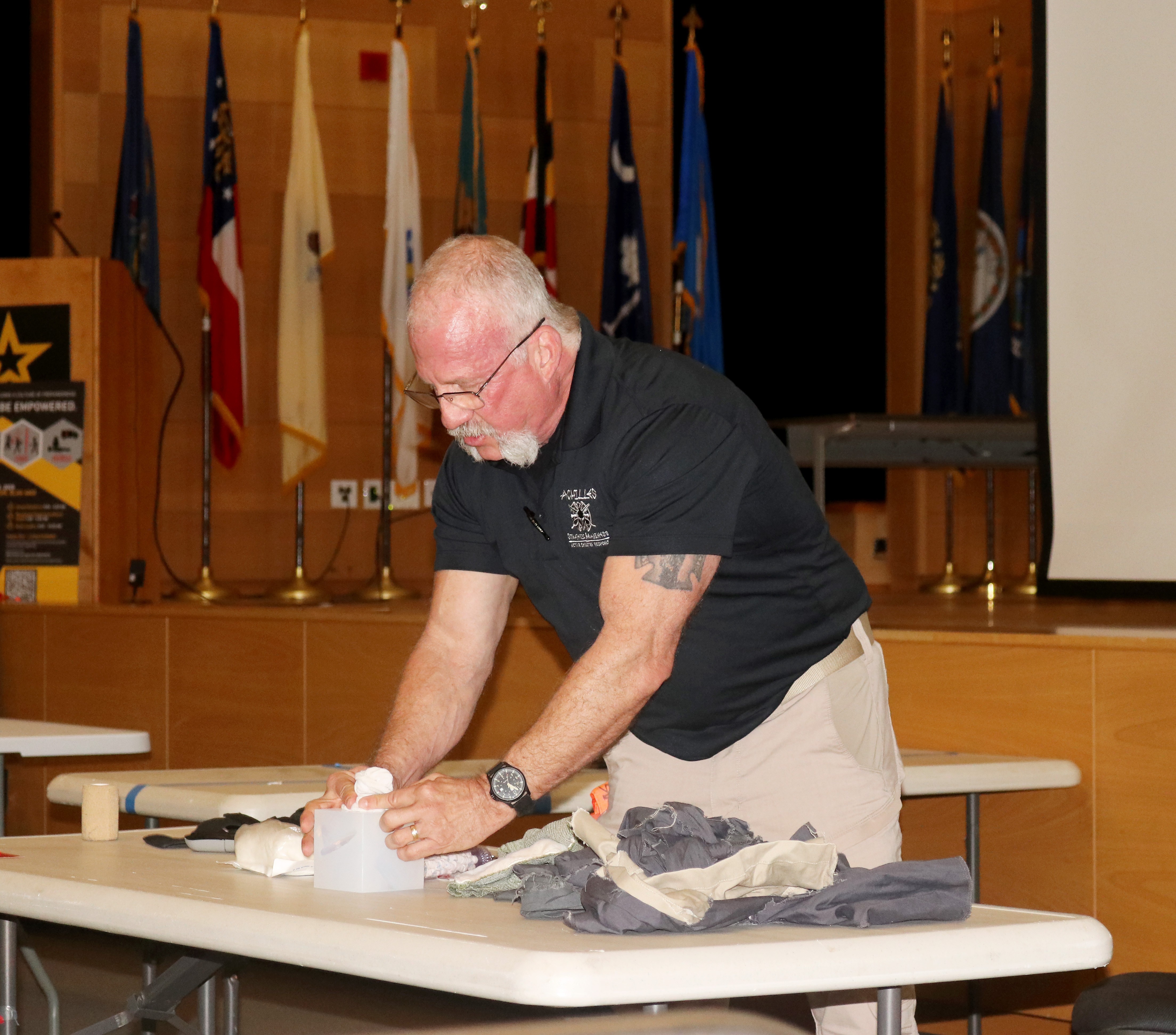
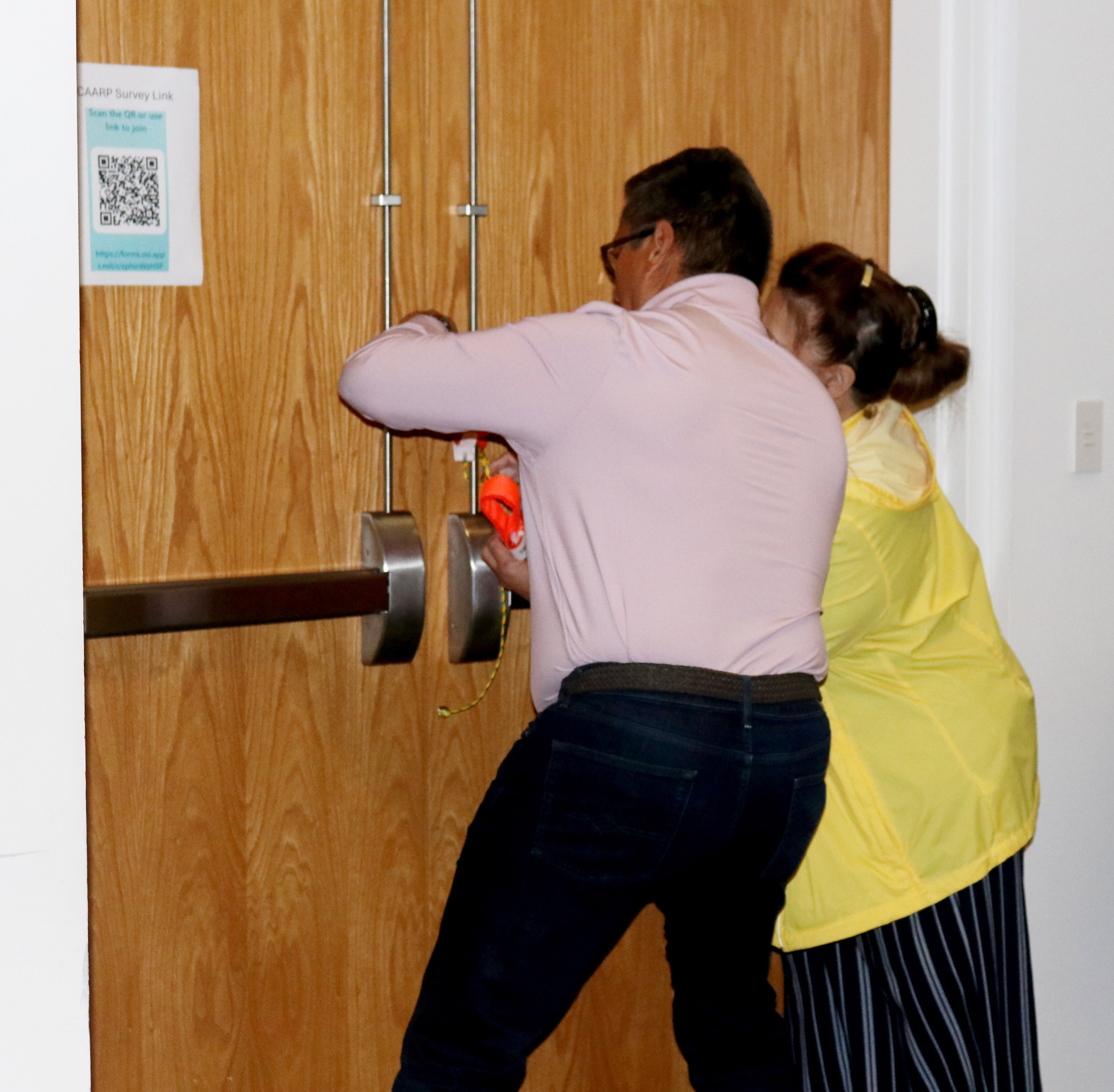
During the week, trainers led the workforce in several practical, scenario-based drills. These two-hour sessions provided a safe environment for participants to practice and build confidence. In the medical portion, participants applied a tourniquet.
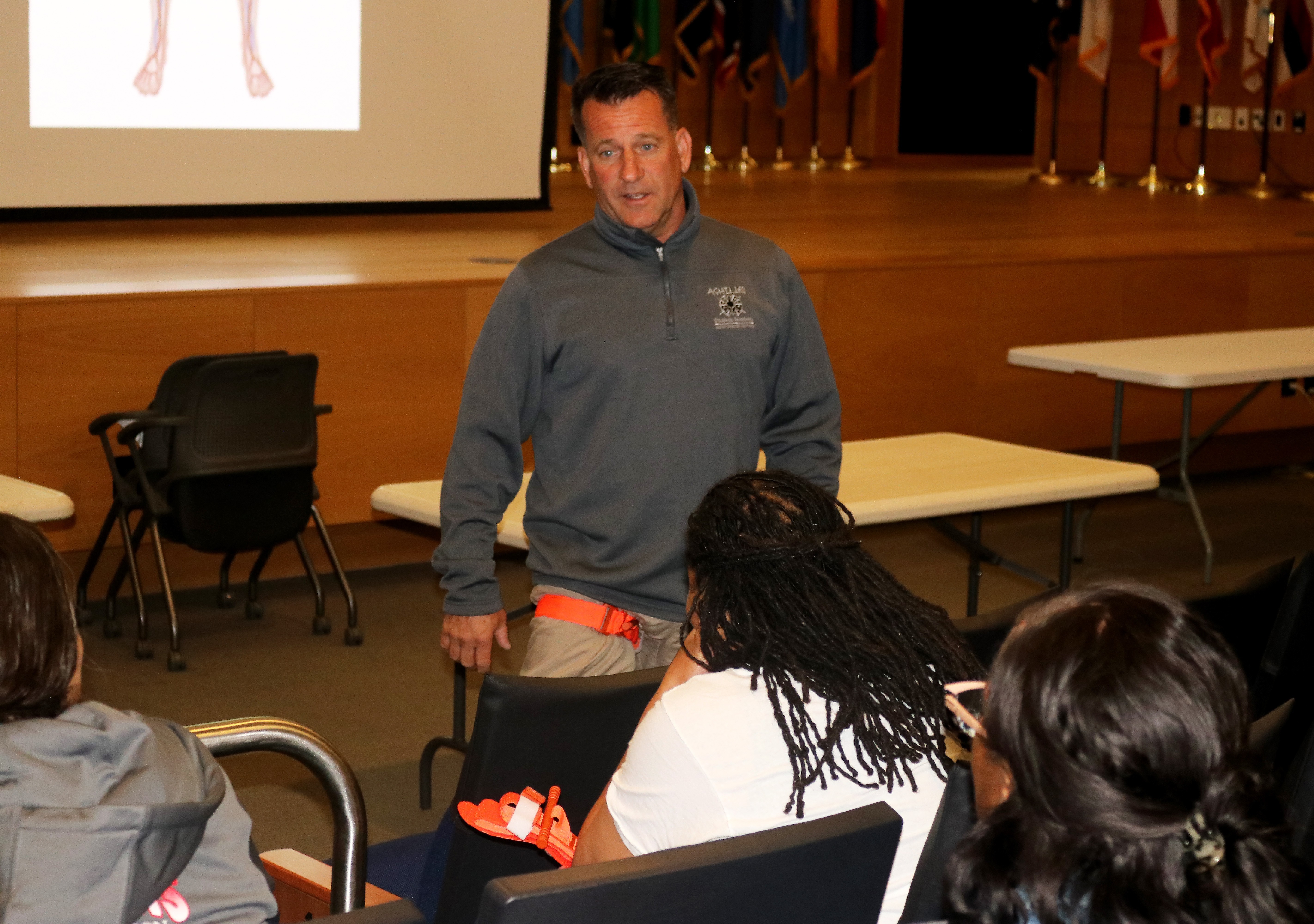
According to the U.S. Department of Homeland Security, a person who is bleeding can die from blood loss within five minutes. Fast action by bystanders can save lives by stopping the bleeding. ASR instructor John Cantarella encouraged attendees to learn more by taking an American Red Cross First Aid class or a Stop the Bleed class from the American College of Surgeons.
“After the Sandy Hook shooting in 2012, the Stop the Bleed program was spun up to really start empowering civilians because if someone is bleeding from an artery, especially if it is femoral, time is critical,” Cantarella said.
The instructors encouraged attendees to buy tourniquets and practice often to prepare for emergencies. They said the goal is to apply them in 20 seconds or less. They also taught wound packing and the use of chest seals for open chest wounds.
In another drill, participants practiced run, hide, and fight tactics. Instructors used training weapons with blank shotgun shells to enhance realism. Garrett noted that using training weapons increased awareness for most participants.
During the week, personnel from the APG Directorate of Emergency Services and the Harford County Sheriff’s Office Special Response Team supported the training and shared their insights and experiences.
“This collective level of expertise, combined with medical training and very realistic scenario drills, really set a new standard,” said CECOM G3/5 Operations Division Chief Lara Orechovesky.
Building resilience
Orechovesky explained that drills with training weapons forced attendees to learn how they would react under high stress during an actual event.
“While many civilians have prior military experience, there are just as many that don’t, and until you’re in a crisis situation, you really can’t know how you’re going to react,” she said, “Executing as many realistic drills as possible helps us all build that muscle memory and response.”
Program Executive Office Intelligence, Electronic Warfare & Sensors Operations Division Chief Noel Osborne said a positive attitude is crucial for leaders and employees to navigate tumultuous times, such as during an active assailant incident.
“Maintaining a positive outlook can help in making rational decisions and ensuring the safety of everyone involved,” Osborne said. “Psychological resilience supports the idea that a positive mental attitude can be a significant factor in coping with traumatic events.”
Employee empowerment
G3/5 Director of Operations Col. Reginald Harris said the CAARP training helped to prepare the workforce for a potential threat.
“I think the CAARP training is important because, while we diligently work to secure our installation, the unfortunate reality is that threats can emerge anywhere, making the CAARP training a vital investment in preparedness – not just for our workplace, but for our lives in the community,” he said. “This training empowers each of us with the skills and mindset to recognize threats and protect ourselves and others, fostering resilience and a commitment to safety, and ultimately, a collective responsibility for one another’s well-being.”
Harris added that the CAARP training hammered home the idea that preparation isn’t about predicting what will happen, but about building a mental framework for responding to anything.
“Shifting thinking from ‘if’ to ‘when’ – which is a surprisingly empowering perspective,” he said. “It’s not about succumbing to fear but about recognizing that proactive awareness and a clear plan, even a simple one, can be the difference between being a victim and being a survivor. It’s a skillset we should all treat with the same seriousness as any other professional development.”
Looking ahead
Garrett emphasized that CAARP represents an investment in the workforce, and the team will coordinate more efforts in the future. In August, they will conduct an active assailant drill as part of Antiterrorism Awareness Month. This campus-wide drill will involve DES, agency, and campus partners. Trainers will use training weapons and blank shotgun shells.
“We really need everyone’s participation,” Garrett said.
In August, there will also be high explosives sweeps and random antiterrorism measures, or RAMs.
Garrett said more first-aid kits will be installed within the units, and more communication devices and radios will be procured.
Additionally, in September, in conjunction with National Preparedness Month, free first aid, CPR, and Stop the Bleed training will be offered on the C5ISR campus.
For more information, contact Garrett at carly.p.garrett.civ@army.mil or 520-671-1180, or the CECOM G3/5 protection team at usarmy.apg.cecom.list.g3-5-protection-cell-distro@army.mil with any questions.
To view more photos, visit https://www.flickr.com/photos/usagapg/albums/72177720326692193/
Social Sharing