FORT RUCKER, Ala. -- Fort Rucker’s garrison command sergeant major admits he would have had an easier time during the early stages of his Army career if he’d had the benefit of knowing then what he knows now.
That’s why Command Sgt. Maj. Christopher T. Doss, Fort Rucker garrison command sergeant major, decided to go out and pass on some of his hard-earned knowledge to future leaders of the nation.
“I believe that one of the most important jobs we have as senior leaders is to mentor the next generation,” he said. “We can change the trajectory of someone’s life just by the things that we say to them. If we can help these future leaders identify and avoid some of the mistakes and pitfalls we experienced in our growth as leaders, it can only benefit them and the Army.”
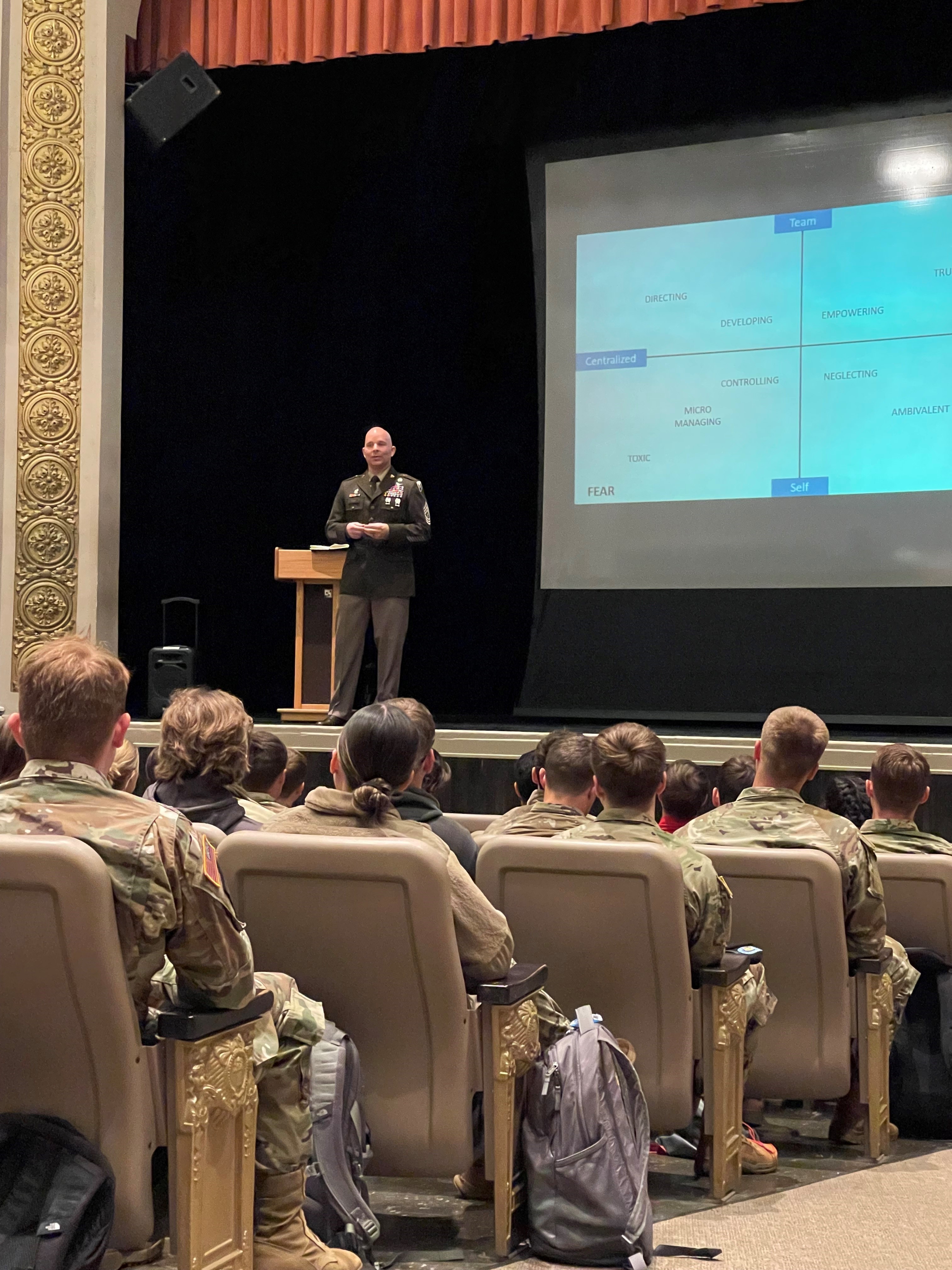
Doss started his outreach mission by visiting Troy University last fall, where he did physical training with Reserve Officer Training Corps students before speaking to them. Next, he visited and spoke at the University of Alabama in November where his daughter, Brooklynn Ray, a cadet at the school, was in the audience.
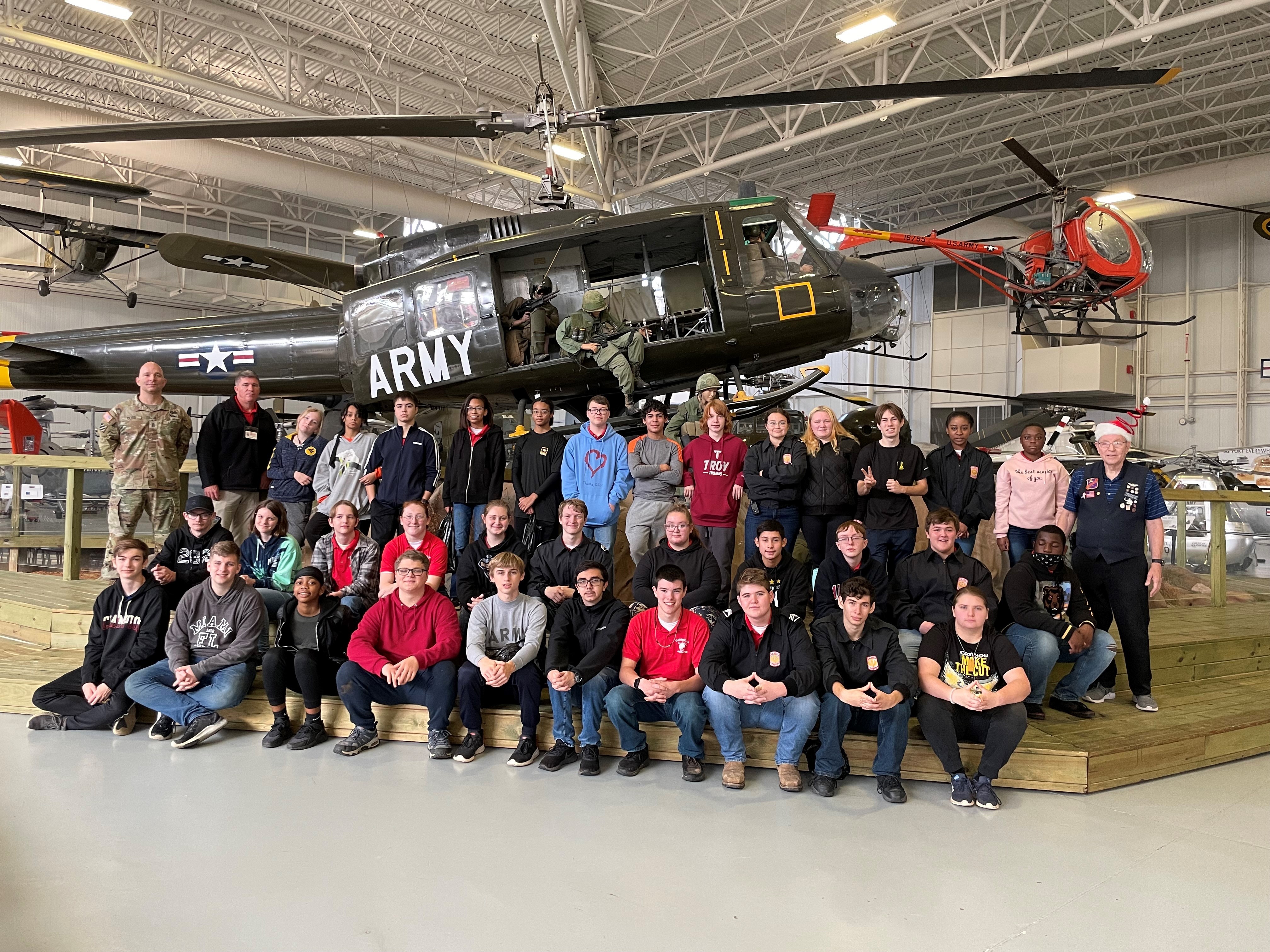
Additionally, he also spoke to Junior ROTC cadets in Ozark, and addressed youth leadership groups from Coffee and Geneva counties who toured Fort Rucker recently as part of the post’s community relations efforts. He’s since reached out to other colleges and high schools in the area, as well.
“I have a child who came up through JROTC and is now an ROTC cadet, so I thought that would be a great avenue for me to reach out and try to talk to these future leaders,” he said. “The interactions with these young leaders are valuable. I just hope to provide a little context based on my experience.”
One thing he tries to impart on these future leaders is to be themselves.
“Over my career, I’ve noticed some young leaders playing a role instead of being themselves,” Doss said. “If they’re not a Type A personality, they try to be a Type A personality because they think that is what is expected.
“I want them to understand that it’s OK to be who they are – they can still be an effective leader and accomplish everything that the Army wants them to do,” he added. “In the end, it is better to be who you are because it is more authentic, and people respond to you better when they feel you’re genuine.”
He also tells them that as they develop in their careers as Soldiers, the things they must worry about change.
“Soldiers are only responsible for the actions that they take, and they’re evaluated based on their accomplishments – not their team’s accomplishments,” Doss said. “Young officers and young NCOs must make that transition from what ‘I’ do into what ‘we’ accomplish. Sometimes that’s a difficult transition for them to make and I try to help them understand how to get there.”
Having once been a young Soldier himself – he joined the service in 2001 – he understands that young people can be afraid of being judged, at times.
“That can get them into a situation where they pretend they know something that they don’t know, or make a decision too quickly without thinking,” Doss said.
“I believe there are three things as a leader that you need to be able to communicate,” he added. “You need to explain to them the why of the thing – essentially the commander’s intent, so they understand their role in the mission. You want to make sure that they understand the how and that they are trained to accomplish those tasks. And, of course, you must tell them what to do,” Doss said.
“As your team progresses, you adjust your leadership style from more developing to empowering. In doing this, you are creating leaders,” he added.
“The goal is for young leaders to take an order and understand how that order fits into the larger plan, and when conditions change, they can, in the absence of orders, make a decision that maybe wasn’t covered in the original plan. That ends up saving lives and that is what we want these young officers to be able to do in the future,” Doss said.
The feedback he’s received from the groups he’s spoken to has been very positive, and he’s careful to adjust his style and message to fit each audience, he added.
The CSM said he plans to continue his outreach to future leaders with area colleges, Girl and Boy Scouts, high schools and groups visiting Fort Rucker. He also encourages other leaders to do the same.
“I think that in our communities, we have to live up to the trust that our nation places in us,” Doss said. “Reaching out to the community and making a difference every day with our interactions can only have positive benefits for the Army’s recruiting efforts and our ability to attract talent. We need to let them know what benefits military service has for them and what it can do for them in the future.”
But what advice would Command Sgt. Maj. Christopher T. Doss give Private Doss as he began his climb up the leadership ladder?
“Patience,” he said. “Patience and to lead within your personality. Those were two of the biggest mistakes I made as a young person. I was impatient for results, and I tried to be someone that I wasn’t.
“People who don’t lead within their personality are unable to connect with their Soldiers,” Doss added. “They don’t build a sense of commitment – they may build a sense of compliance by rank or position, but that’s not an effective way to lead. It’s a short-term solution. What you want to do is build commitment – they are doing the job for something bigger than themselves, and it has an impact that extends past their sphere of influence. That would be the advice I would give myself.”
Social Sharing