
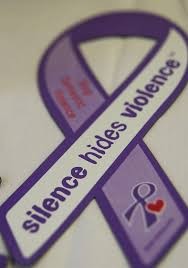
FORT KNOX, Kentucky --October is National Domestic Violence Awareness Month, and there are changes coming for how the military deals with domestic violence cases.
"The Military Justice Act of 2016 will become effective January 1," said Maj. Edward Faiello, chief of Military Justice for U.S. Army Cadet Command. "It's taken awhile for DoD to write the implementing language in the executive order, … and it's a fairly significant revision and expansion to the Uniform Code of Military Justice, which is what we use to prosecute Soldiers."
The numerous adjustments are still being reviewed and learned, and Faiello said these changes make early-on discussions difficult. But, it's clear that domestic violence violations will be dealt with differently.
"They've re-categorized current crimes and created new crimes … and they've changed the process with which we court-martial Soldiers," Faiello said. "We have specific domestic [violence] crimes now [that classify] under assault or stalking and [how] they define intimate partners.
"There are a series of crimes where increased punishment is permitted based on the status of victim … [whether a] spouse, intimate partner or immediate [which may distinguish sexual assault from marital rape cases]."
Faiello said that a conviction of domestic assault is punishable by UCMJ, and by default, will have serious consequences for Soldiers in the civilian world.
"[The Lautenberg Amendment] is a law stating that anyone convicted of a domestic violence offense cannot own weapons," Faiello said. "By definition, a Soldier has to be able to possess a weapon, and Soldiers convicted of domestic violence [must be] administratively separated from the military [because they cannot own a weapon legally.]"
Officially known as the Domestic Violence Offender Gun Ban, the 1996 amendment prohibits anyone convicted of even misdemeanor domestic crimes from shipping, transporting, possessing, owning or even using a gun. Faiello said that crime registration between the military and civilian law enforcement is also getting better.
"Different processes are being implemented to have a better and more thorough accountability as it relates to documenting convictions at courts-martial with respect to how we process paperwork post trial," Faiello said. "A lot of it is [better] partnering between military, the FBI and other law enforcement agencies -- both military and civilian."
The new act will restore victims' rights and give them a voice in their situation, Faiello said.
"Victims will have significantly enhanced rights under the MJA," Faiello said. "These include, but are not limited to the right to be protected from the accused, the right to confer with government counsel and the victim will have rights and access … to meaningfully participate in all facets of their case."
Marla Harris, a Fort Knox Family Advocacy Program victim advocate said domestic violence can be a method by which someone tries to assert dominance.
"Domestic violence is one [or both] people lording power and control over another person," Harris said. "Whether it is physical violence or emotional violence, it's causing fear or belittling another person to [maintain] control over them. Most people can't live like that and want to leave. In the end, [the abuser] loses any control.
"Abusers can violate through intimidation, coercion and threats, or they [can control the victim] by isolating them from others or economically keeping them from buying anything without [the abuser's permission]."
Domestic violence is different than those temporary times when spouses aren't getting along, and Harris said there is help for families in crisis.
"There are times that a military family life consultant can help ease families' transition [toward normalcy] if they're not able to do it on their own. Sometimes it's just an adjustment back into the groove of family life," Harris said. "If things don't get better, that person has options to visit someone in Behavioral Health."
But Harris said that too often in domestic violence cases, the abuser cycles between normalcy and chaos when things appear to stabilize, but then descend back into abuse.
"It may sound like jealousy or even love. They want you all to themselves, but it is controlling. They often attempt to keep you from others and break down relationships with others by using guilt that if you loved them, you would put them first and would reject others," Harris said. "It [might] feel like love until control is questioned. After they [abuse] you, they are sorry and loving until you step out of line again -- then It's a [repeat of the] cycle of violence."
Harris said domestic violence is seldom something that resolves itself, and there comes a time when you must confront it.
"To get help, the victim must report. [Military personnel and dependents ages 18 and older] can report to a victim advocate or, if you wish, [to make] a restricted report, make a medical report -- tell a military health care provider or clinical treatment advisor or see a Family Advocacy Program Manager or Domestic Abuse Victim Advocate. An unrestricted report will mean an official investigation with incidents reported to law enforcement and the military spouse's command.
"Any finding of child abuse will automatically mean an unrestricted report with command and law enforcement involvement."
Harris said the lasting legacy of domestic violence is usually generational domestic violence, but she said the chain can be broken.
"The longer children deal with domestic violence, the more it affects them," Harris said. "Long-term domestic violence usually needs counseling. Research tells us that people who grew up in violent homes tend to repeat the cycle.
"The damage may be already done, but a proactive spouse -- even an offender -- willing to fight, can break the chain of violence."
Social Sharing