It's no secret that sometimes Soldiers are injured while fighting our nation's enemies. Whether minor wounds or serious, life threatening injuries, 10th Mountain (Light Infantry) Soldiers are trained to deal with that possibility, sometimes while the fight is still going on around them.
The MSTC's mission is to provide hyper-realistic and operationally relevant medical skills training for healthcare professionals assigned to Fort Drum. The primary focus of the MSTC is maintaining a high level of readiness for Combat Medics (MOS 68W) of 10th Mountain. And when there are units deploying overseas, the MSTC opens its doors to them, and provides the same high level of training it would give to medics. Staff Sgt. Justin Hulon, an instructor at the MSTC, explained why this type of training is vital for all Soldiers, no matter the rank.
"We place the highest value on this training," Hulon, a native of Aurora, Ill., said. "because we're training Soldiers to save lives downrange. Sometimes medics won't be there right away, and that means Soldiers are the first-responders in most cases, and they need to be able to respond with more than just the basic Combat Lifesaver training they all receive in Basic Training."
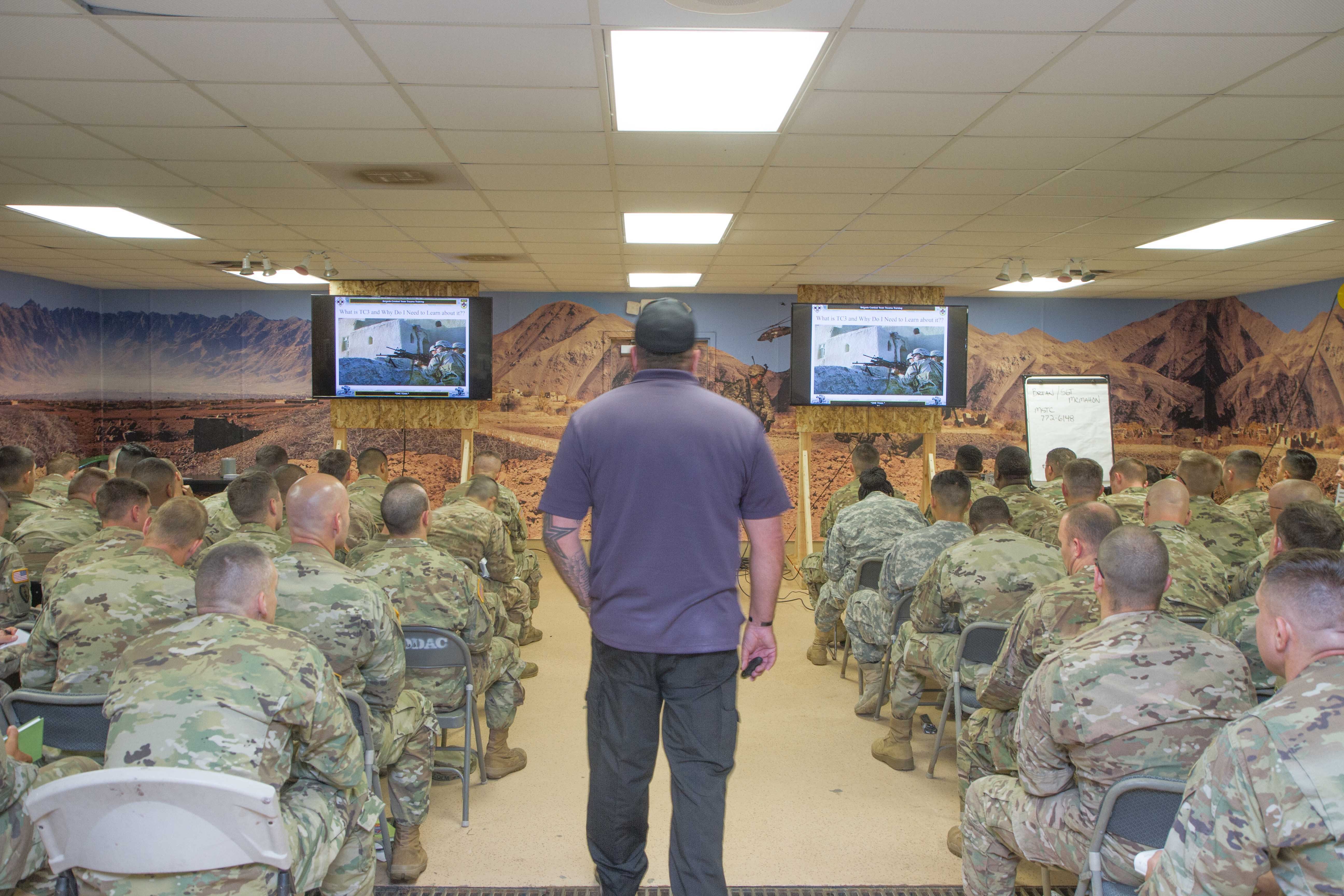
3rd Squadron, 71st Cavalry Regiment, Ghost Soldiers start their three-day training with the first two days indoors, learning in a classroom environment. There is air-conditioning, bathrooms and a more relaxed feel as they watch videos and learn the basics of tactical field care and care-under-fire. They are allowed drinks and snacks as they listen and respond to the MSTC instructors, giving feedback about on lessons learned in the classroom. The Soldiers receive hands-on training with the medical implements used on the modern battlefield, and have the opportunity to ask questions, to take the time to get comfortable with what they're learning.
On day three, however, things get very real, very fast. Soldiers are now wearing their full battle rattle, combat ready armor with helmets and all the accoutrement a U.S. Army Soldiers is expected to have with them in a tactical environment. U.S. Army approved safety glasses, earplugs, gloves, and an Individual First-Aid Kit (IFAK). Then they were expected to carry other life-saving gear such as the Skedco Basic Sked Stretcher or the USGI Military Casualty Evacuation Stretcher Litter.
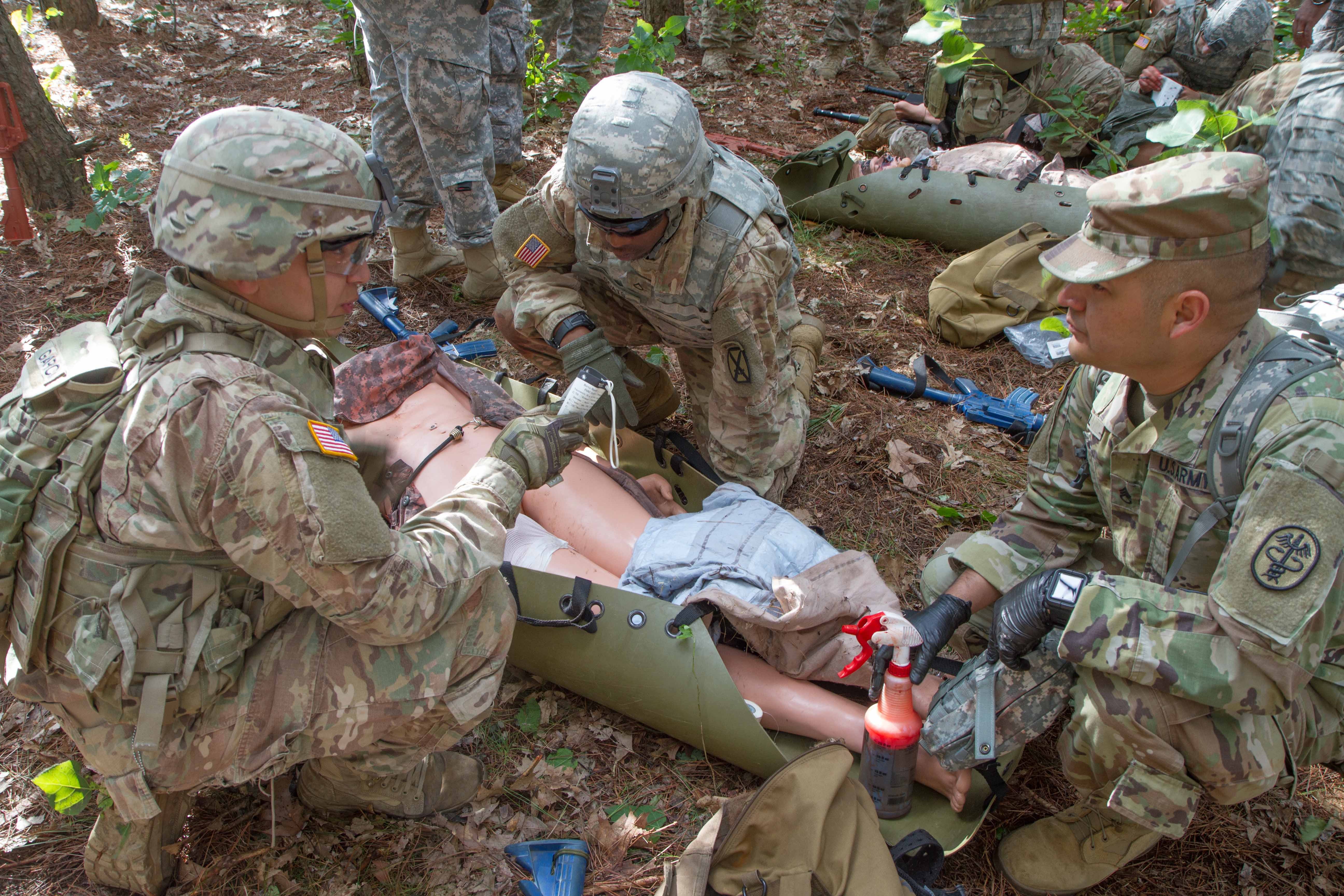
Out on the "battlefield," a half-acre piece of land covered in pine trees and dirt, Soldiers lined up on one of nine lanes, staring 50 meters downrange to their casualties, mannequins wearing bloody, and sometimes torn body armor.
On the command of "GO!" from Hulon, a 15-minute clock was started and two wireless speakers began hammering out a barrage of machine gun fire, screaming, and other sounds of violent battle. The newly trained first responder trained Soldiers sprinted while covering each other in two-man teams.
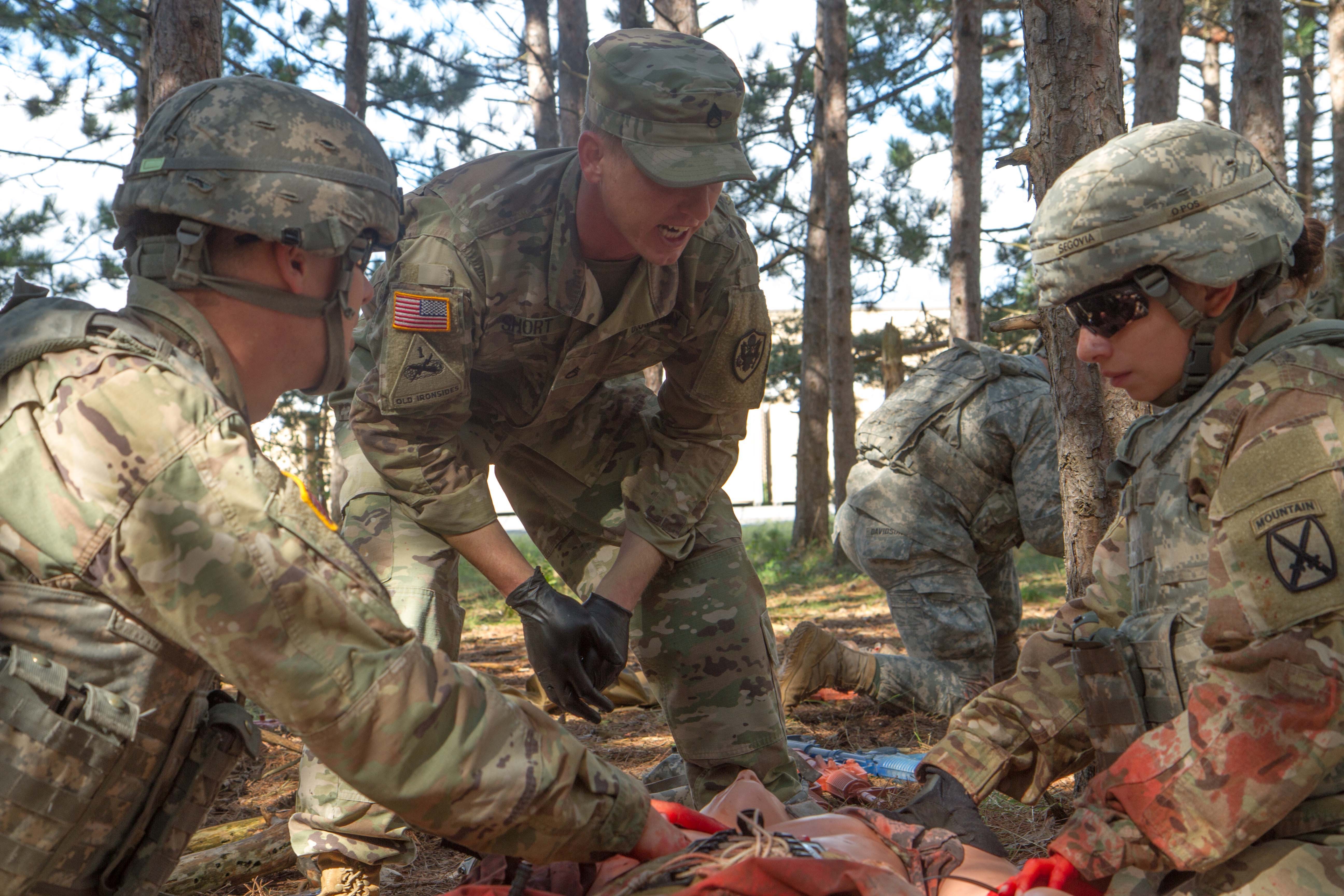
Once the Soldiers reach their casualties, they must assess the patient's injuries. This can range from gunshot wounds to missing limbs. As the Soldiers get a handle on the situation, the instructors start yelling questions about what to do next. This keeps the Soldiers on their toes and thinking about the mission, and not second-guessing themselves. Wrong moves, such as not getting pressure on an open artery, means the Soldiers have to deal with blood loss in the form of an instructor soaking the area with stage, or fake blood to remind them that their casualty may bleed out if they don't respond quickly enough.
"This is as realistic as it gets without live-tissue training," Hulon said. "If they lose a patient here, they'll remember that. It sticks with you. And you'll remember that if you ever have to do something like this for real."
As the Soldiers make the return trip to the beginning of the lane, they are tired, sweaty and looking like they ran a marathon. Some, if not most, are wearing a liberal amount of stage blood on their arms and lower legs. Some Soldiers like 1st Lt. Daniel Qniaz, laid themselves over their casualties to stop "bleeders" or to give them cover from enemy fire.
"3-71 puts medical training as a top priority," Qniaz, an Elmhurst, Ill., native said. "It's that important. If I, or one of my Soldiers gets wounded, I want to know we have the capability within our element to take care of them. We need to be able to handle it in-house until a medic arrives or we can get them to a proper medical station. This is the best medical training we've had, to date, and well worth a few sore muscles and some bruised egos."
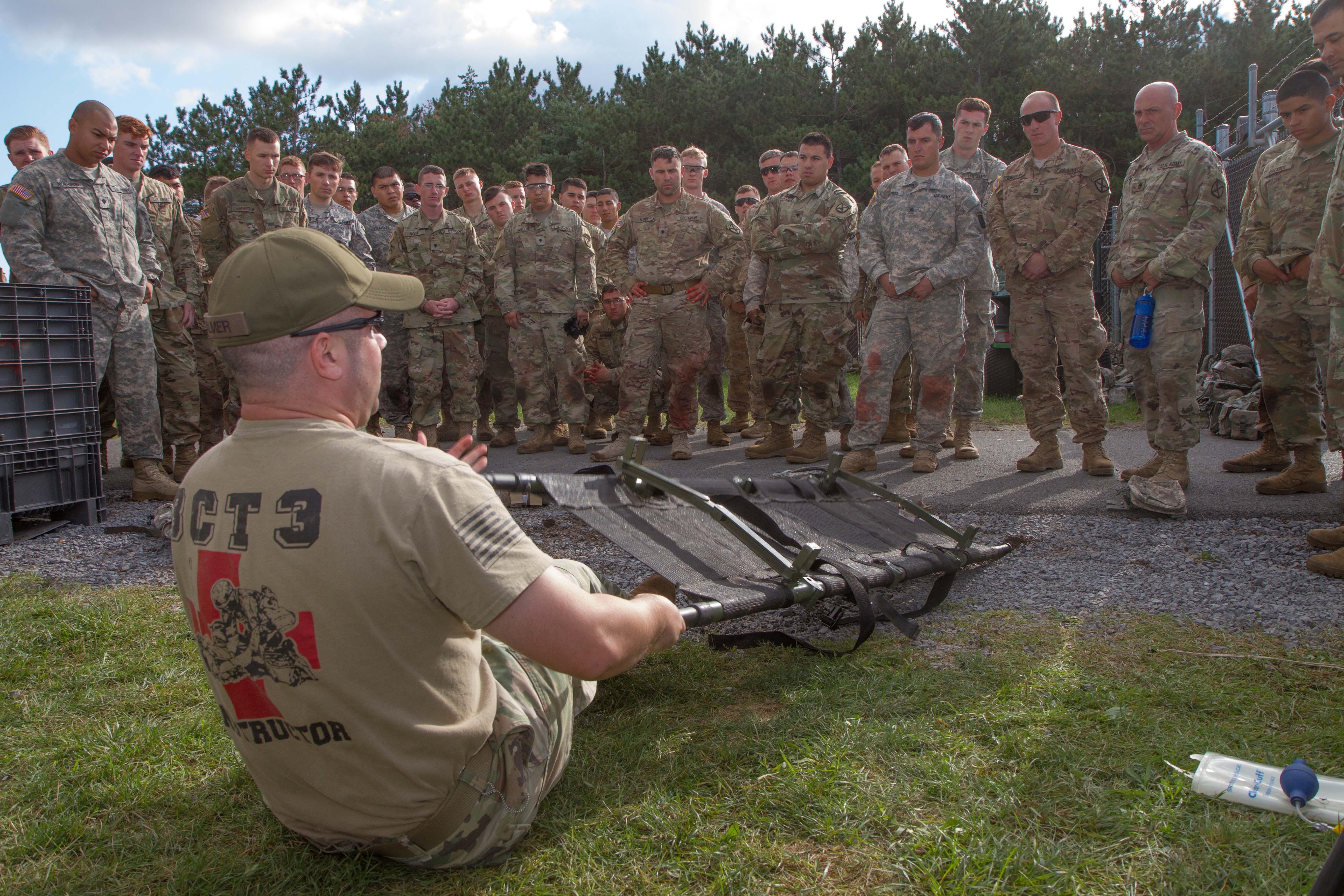
At the end of day three, Soldiers gather around MSTC instructors, and get a more hands-on instruction on how not only to utilize their medical equipment, but how to pack it properly and secure their gear for the ride home.
"I feel confident that these Soldiers can deploy downrange with the knowledge they have now," Hulon said." "If that deployment puts them in harm's way and a Soldier gets injured, these troops have now have the know-how to be first-responders and get that Soldier back alive."
Social Sharing