
On June 8, the sun rose and set on Fort Riley, Kansas. On Cantigny, France. On Aachen, Germany. On Saigon, Vietnam. On Baghdad, Iraq. All places where the U.S. Army's first division made a lasting impact in its 100 years of continuous service.
Celebrating its centennial this year, the 1st Infantry Division was initially constituted as the First Expeditionary Division in May 1917 before being officially organized in New York, New York, on June 8, 1917, under the command of Brig. Gen. William L. Siebert. Though the Army had used temporary divisions since the Civil War, the "Big Red One" was the first divisional unit created to fight in World War I.
By the end of 1917, nearly the entire division had shipped out and assembled in St. Nazaire, France. The following spring, the division fought and won the Battle of Cantigny, the first American victory in World War I.
As one eyewitness account makes clear, the German forces did not make the division's job easy:
"We got shelled quite a little by (the Germans), one of my men got wounded. The first drive we all made came after this morning. The 28th Inf made a drive at Cantigny. I was a first aid man. I dressed wounded and rescued wounded and dead. Lost both of my canteens of water by a French tank going over the hole I was in so had to go without water for 2 hrs. All I got was a little from the dough boys. (The Germans) sure shelled us and counterattacked. Fritz counterattacked a lot. Sent over lots of gas. Sure was an awful day. I spend a lot of my time digging in." Entries of May 28-29, 1918, from the diary of Pfc. Vernon L. Scobie, Ambulance Company 2. Courtesy of the Colonel Robert R. McCormick Research Center
It was the first of many victories the 1st Infantry Division would see in its 100 years of continual service to the nation.
--
"The 1st Infantry Division has a proud and honorable history which reflects the heart of the American Soldier," said Maj. Gen. Joseph Martin, 78th commander of the 1st Infantry Division. "Having fought in five wars, the 1st Infantry Division is one of the most decorated divisions in the United States Army. It boasts 35 Medal of Honor recipients and more than 35 campaign participation credits."
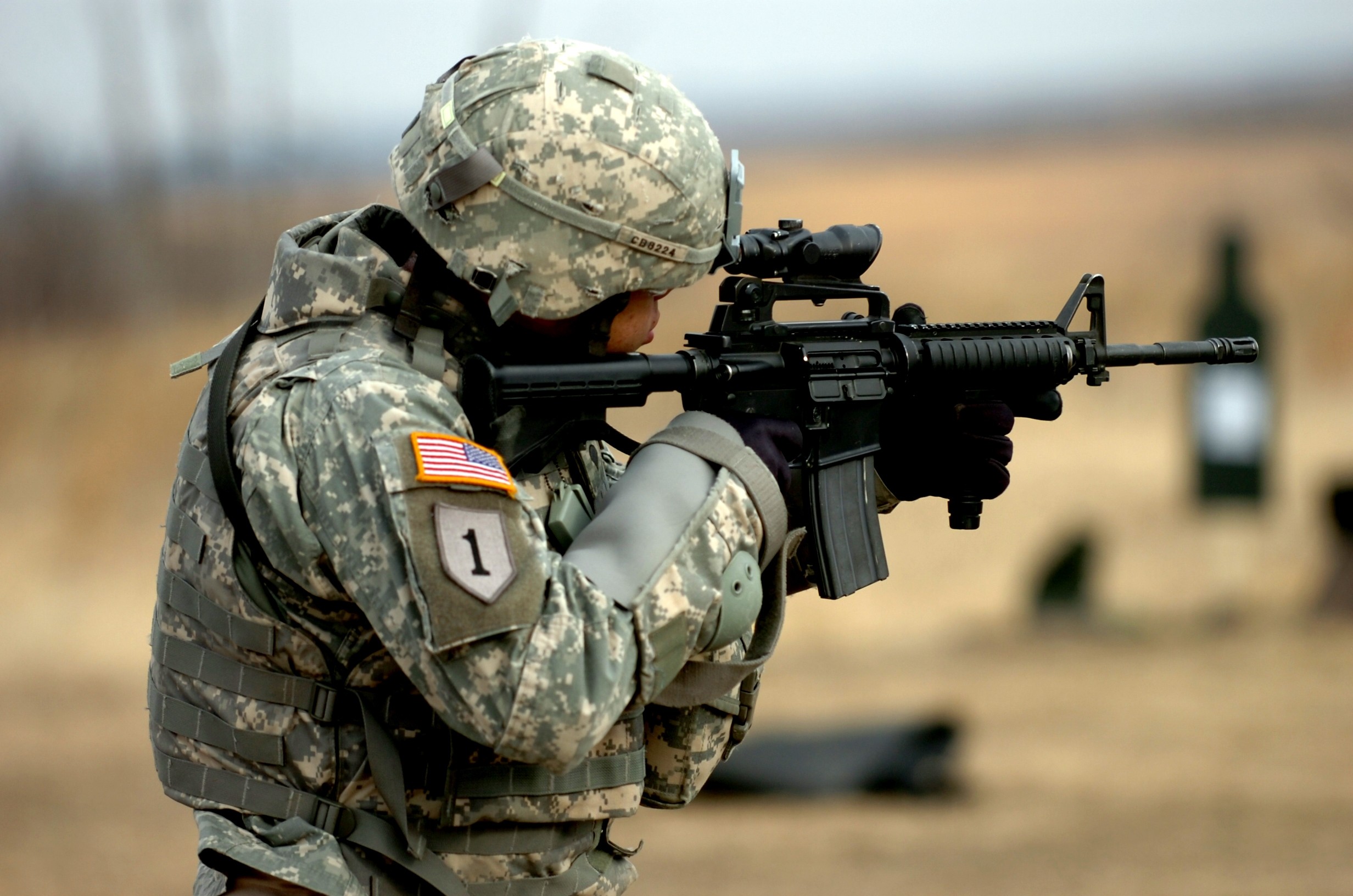
Martin took command of the Big Red One in October 2016 ahead of the division's latest deployment, where the division headquarters assumed the role of Combined Joint Forces Land Component Command -- Operation Inherent Resolve. During this deployment, the division is providing command and control of coalition troops training, advising and assisting Iraqi Security Forces as they fight to take back the city of Mosul from ISIS control.
"The Big Red One was the Nation's first division," said Brig. Gen. Patrick D. Frank, 1st Infantry Division acting senior commander at Fort Riley. "We honor the legacy of the brave, responsible and on point Soldiers who have gone before us by maintaining the highest professional standards and training, building combat-ready forces to rapidly deploy and respond to threats abroad on behalf of the nation."
--
The 1st Infantry Division fought in Europe until the end of World War I in 1918 and led the American Army of Occupation across the Rhine and into Germany. The Big Red One was the last American combat unit to return home in 1919 and was one of only four divisions retained on active duty between 1919 and 1940. As a second world war began in 1939, the 1st Infantry Division was the first Army division to undergo amphibious training.
Once the attack on Pearl Harbor launched America into World War II, the 1st Infantry Division was the first division sent to Europe, landing in Great Britain in July 1942. In 1943, the division recorded the first American defeat of a German unit -- the 10th Panzer Division -- with the Battle of El Guettar in Tunisia.
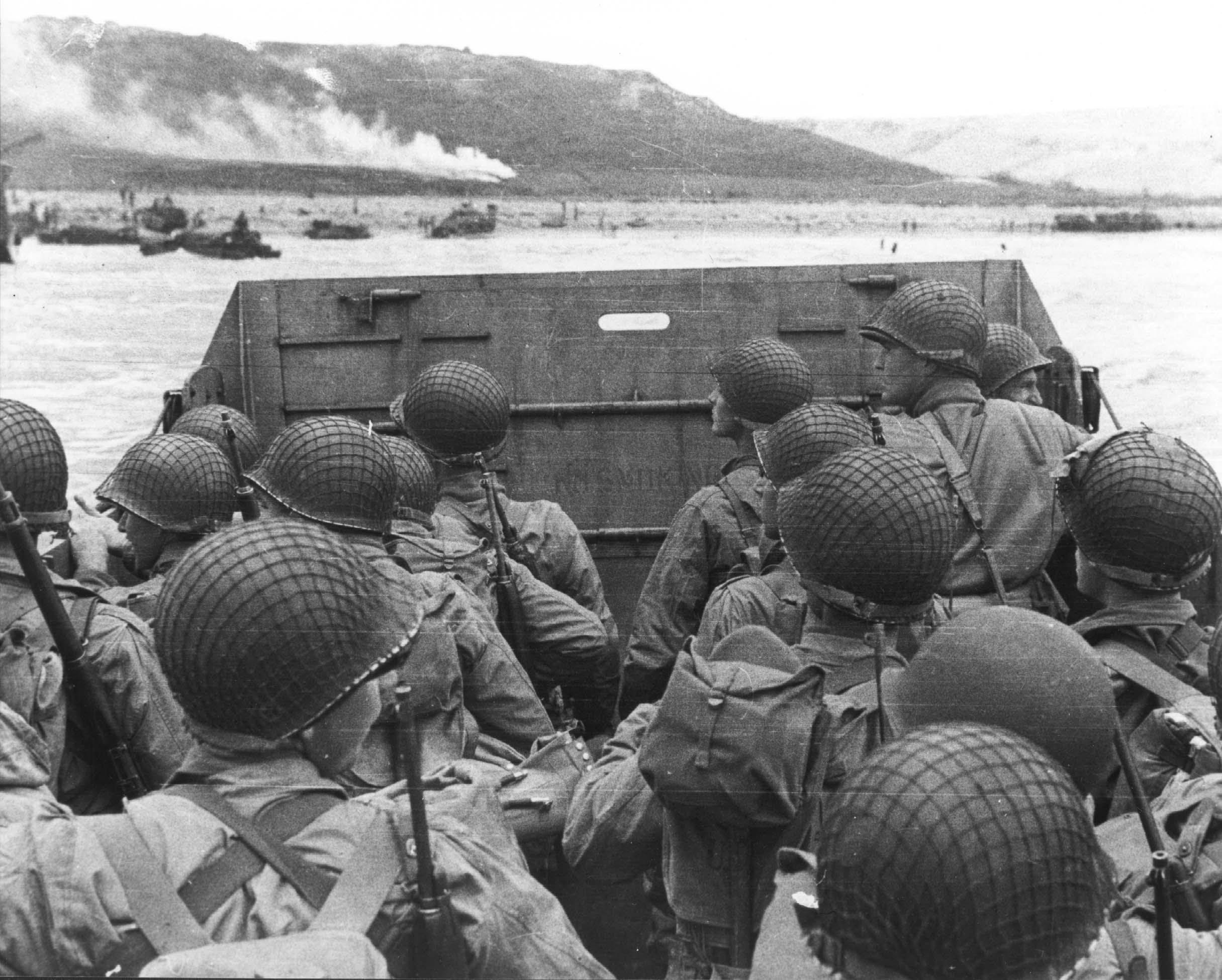
After fighting successfully to liberate Sicily, the 1st Infantry Division was selected by Kansas native Gen. Dwight D. Eisenhower for Operation Overlord, what would later be known as the Battle of Normandy. The Big Red One led Task Force O in assaulting Omaha Beach on June 6, 1944.
After surviving the initial beach landing, Soldiers still faced the task of pushing on:
"There are two kinds of people who are staying on this beach: those who are dead and those who are going to die. Now let's get the hell out of here." Col. George A. Taylor, regimental commander of the 16th Infantry Regiment, motivating Soldiers to move inland during the assault on Omaha Beach
Facing an entrenched and well-defended German force, the division nevertheless drove inland and joined the Allied advance in forcing the Germans to retreat. By September of that year, the division reached the German frontier.
After breaching the Siegfried Line, the 1st Infantry Division led the attack to seize Aachen, the first German city captured by the Allies. The Big Red One fought hard through Germany for the remainder of the war in Europe, eventually reaching Czechoslovakia and liberating the Nazi labor camp in Falkenau.
--
Following World War II and the U.S. Army's demobilization, the Big Red One was the only American combat force in occupied Germany until 1950, helping to rebuild the country and holding the line in anticipation of possible hostilities from the Soviet Union. The division returned to the U.S. in 1955 as part of Operation Gyroscope and made Fort Riley -- its current headquarters -- home.
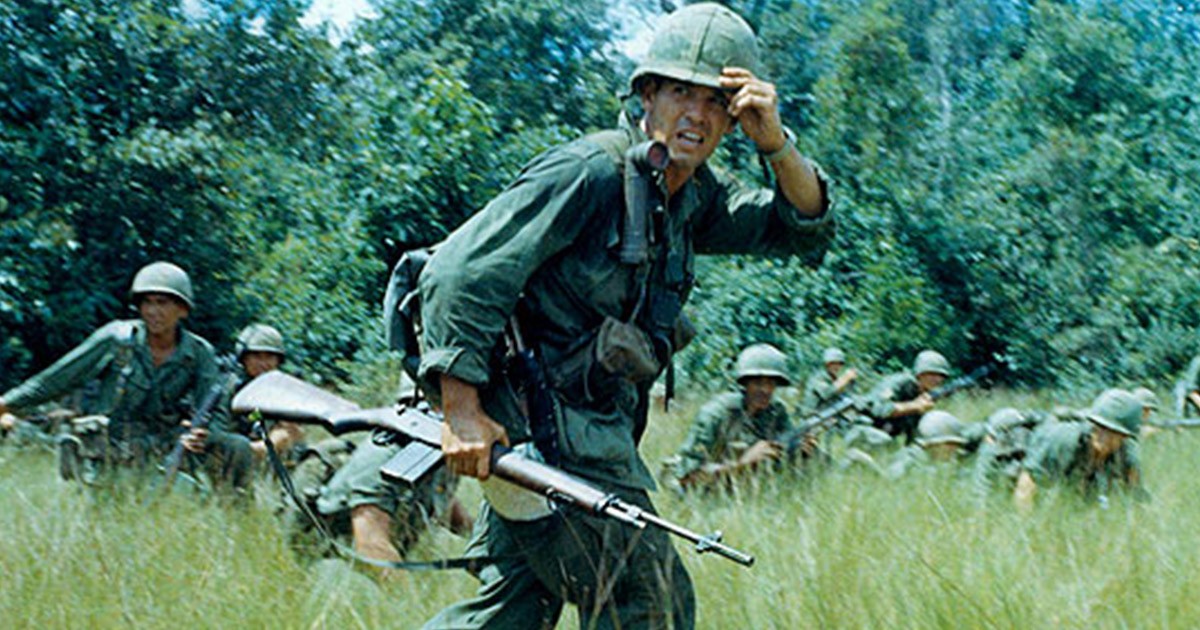
A decade later, the 1st Infantry Division was one of the first two divisions called to serve in the Vietnam War. Soldiers of the division would spend five years fighting both the Viet Cong and the North Vietnamese Army, facing the enemy along Highway 13 and the Iron Triangle.
Throughout the deployment, Big Red One Soldiers maintained a high degree of professionalism:
"There is nothing amateurish about this outfit, about the Big Red One, about our division. Nothing will be tolerated that is amateurish. We will be professional in every sense of the word and in all aspects of our business." Maj. Gen. Orwin Talbott, "Commanders Notes #1," issued Sept. 21, 1968
The division returned to Fort Riley in 1970, and while its Soldiers had taken the fight to the enemy, it also saw significant casualties, including Maj. Gen. Keith L. Ware, 1st Infantry Division commanding general. Ware and his aides were killed in action on Sept. 13, 1968, when their helicopter was shot down by heavy anti-aircraft fire near Loc Ninh.
The 1st Infantry Division stayed at Fort Riley as a mechanized division until 1991. During those years, the Big Red One and the rest of the U.S. Army transformed into an all-volunteer fighting force.
--
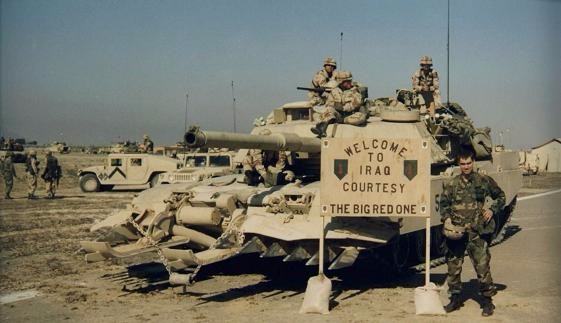
The all-volunteer Big Red One again answered the nation's call during Operation Desert Storm. On Feb. 24, 1991, under the command of Maj. Gen. Thomas Rhame, the division spearheaded the "breaching of the berm," cutting deep into Iraqi defenses and allowing Coalition forces to pour into the country, which had recently invaded, occupied and annexed Kuwait.
As with all battles, the Big Red One came prepared for the fight:
"When Saddam Hussein and his forces invaded Kuwait, it kicked us off in full gear to really start learning more about who Saddam was and what the Iraqi army was, including the Republican Guard Forces. … We spent an exorbitant amount of time learning who he was, how he fought, what equipment he had. In the Army, you are always training for the next (conflict) or for any conflict that you may be part of." Chief Warrant Officer 3 Phyllis Fitzgerald, intelligence analyst officer for the 1st Infantry Division during Operation Desert Storm
Following the berm breach, the division and other Coalition forces conducted 100 hours of ground combat, after which a ceasefire was called. During the 100 hours, the division captured hundreds of enemy tanks and thousands of enemy prisoners.
By the end of the year, the entire division returned to Fort Riley. They wouldn't stay long, however, as the division headquarters and two brigades moved to Wurzburg, Germany, which would be its home until 2006.
--
The terror attacks of Sept. 11, 2001, were a turning point not only for the nation, but also for the Army. The 1st Infantry Division entered the War on Terror in 2003, first forming Armed Forces-Turkey to prepare a route into Iraq through Turkey. Though Turkey denied access to U.S. forces, the planning diverted Iraqi attention as the 4th Infantry Division entered their country through Kuwait.
Later in 2003, Task Force 1-63 Armor was airlifted into northern Iraq, the largest airlift of heavy U.S. Army forces ever. The task force secured oilfields and assisted the local Kurdish forces before returning to Germany in 2004. Also in 2003, the 1st Brigade Combat Team, 1st Infantry Division, deployed to Iraq and conducted combat operations in the Sunni Triangle, supported Iraqi National Guard forces and assisted with civil aid programs.
The division headquarters, three brigades and several support units deployed to Iraq in 2004 as Task Force Danger, conducting combat operations and helping to rebuild local infrastructure, which paved the way for the first free elections in the country's history in January 2005.
The Big Red One continued to deploy units to support Operation Iraqi Freedom as they moved back to Fort Riley in 2006.
Soldiers conducted counterinsurgency as they faced a much different adversary than in past conflicts:
"My concern was the mission and my men, that was it. … Am I accomplishing the mission? Am I taking care of my men? That's all I really had to worry about." 1st Lt. Nathan Rimpf, infantry platoon leader, Company D, 2nd Battalion, 16th Infantry Regiment, 4th Infantry Brigade Combat Team, 1st Infantry Division. Rimpf, a double amputee, was leading his Soldiers in Eastern Afghanistan when they encountered an improvised explosive device in July 2012.
In 2014, the 1st Infantry Division was the first to return to Iraq to aid local security forces in the fight against ISIS in Operation Inherent Resolve, which continues today.
Social Sharing