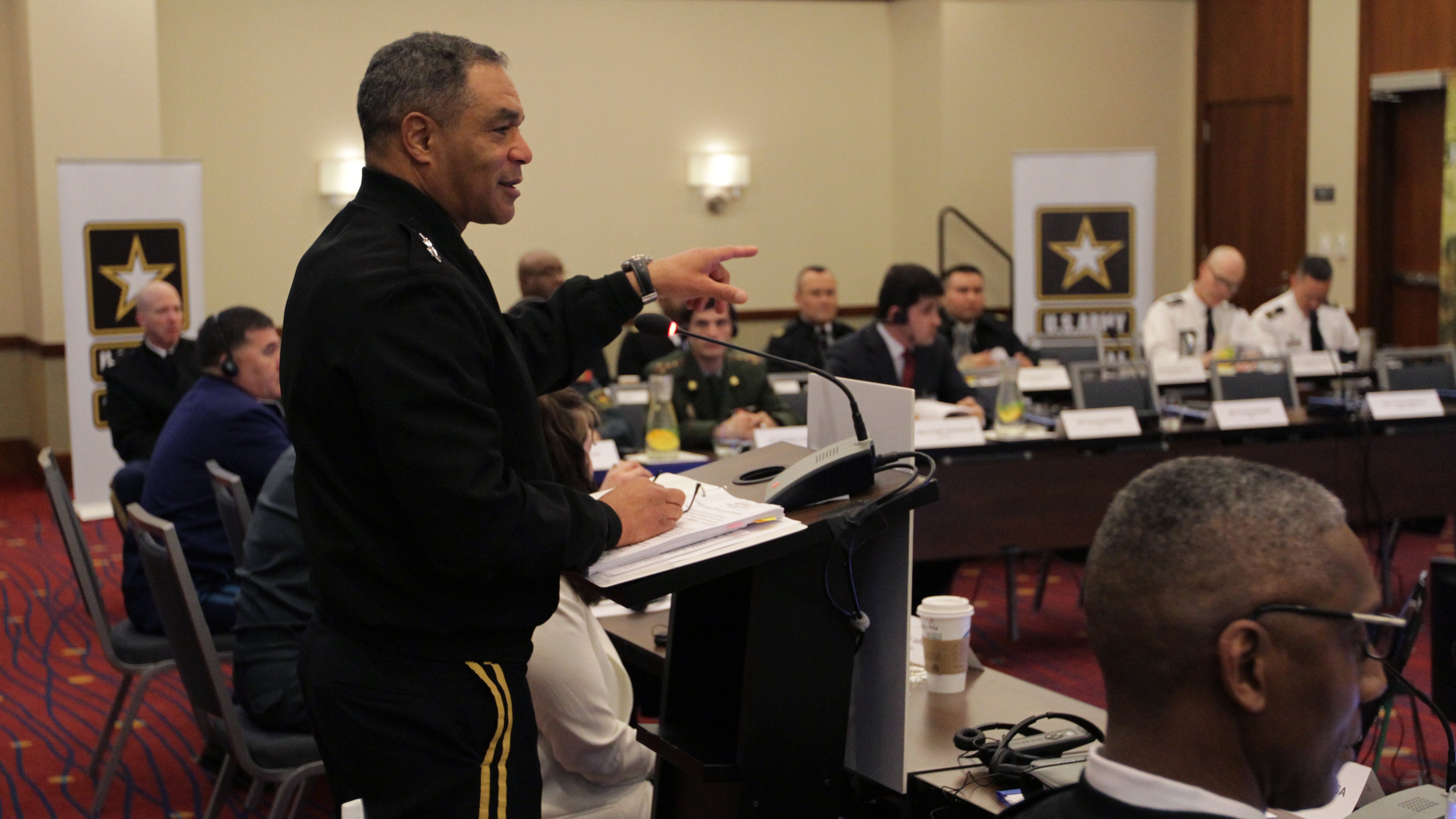

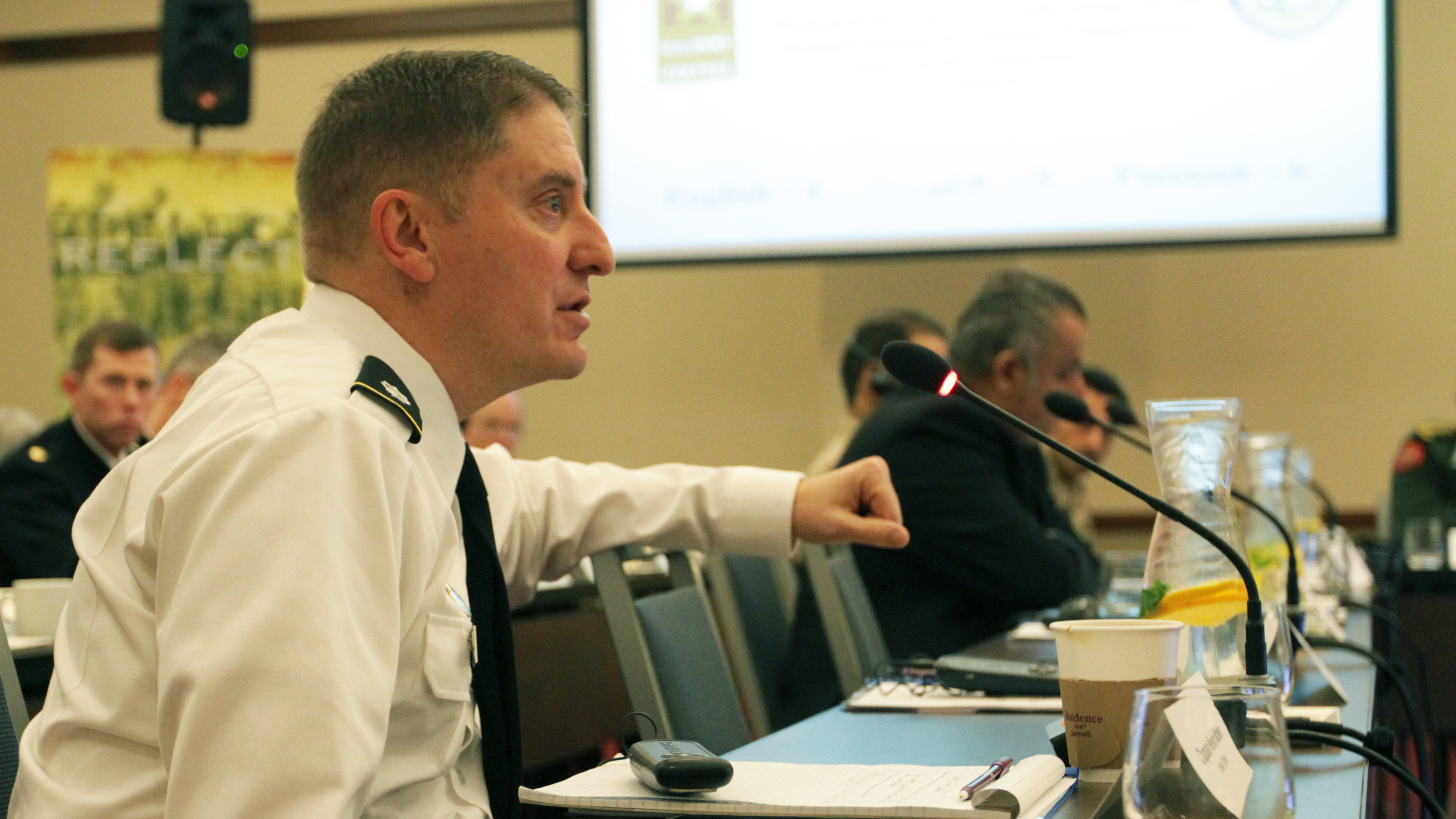
CRYSTAL CITY, VA. -- There is always something new to learn. That could well be the mantra of a symposium hosted by U.S. Army Central's chaplain's office from March 7-10.
The members of USARCENT's chaplain's office know a thing or two about religion, but one subject that is difficult to solve for most laymen, as well as USARCENT's chaplains, is religious extremism.
With this in mind, the chaplain's office with support from the Near East South Asia Center for Strategic Studies and the USARCENT theater security cooperation section invited members of several partner nations to join them at the Countering Religious Extremism Symposium.
The symposium was designed to give USARCENT's chaplain's office and the partner nation members the opportunity to speak about each other's work and experiences in preventing religious extremism, as well as the impact that extremism has on the world. Additionally, the symposium welcomed academic and governmental experts on the subject.
During the symposium participants discussed the challenges faced not only in combatting religious extremism globally, but in doing so within their own countries.
"We will have an opportunity to learn from each other as we share reflections on the topics of the day, ideas for moving forward, and best practices to counter religious extremism," said Col. Addison Burgess, USARCENT, command chaplain.
Since there is not one singular reason for religious extremism, the topics dis-cussed were wide ranging, and covered issues such as developing effective counter-narra-tives to the importance of diversity in religion as it relates to society.
In today's world no discussion about religious extremism could avoid the topics of the Islamic State of Iraq and Syria and the Syrian civil car. At the symposium, members spoke on the impact that the region faces now and in the future.
"Men and women who take religion from being a bringer of peace and twist it into a tool of terror must be defeated," said Burgess. "As leaders in our respective nations, we must confront this evil wherever it stands."
It may perhaps be an understatement to say that countering religious extremism is a difficult and long-term challenge. But, it is a challenge that, because of this symposium, the members are better prepared to accept
Social Sharing