In the quest to grow a Soldier into a leader, it takes a two-pronged approach -- the Soldiers themselves and those who guide them.
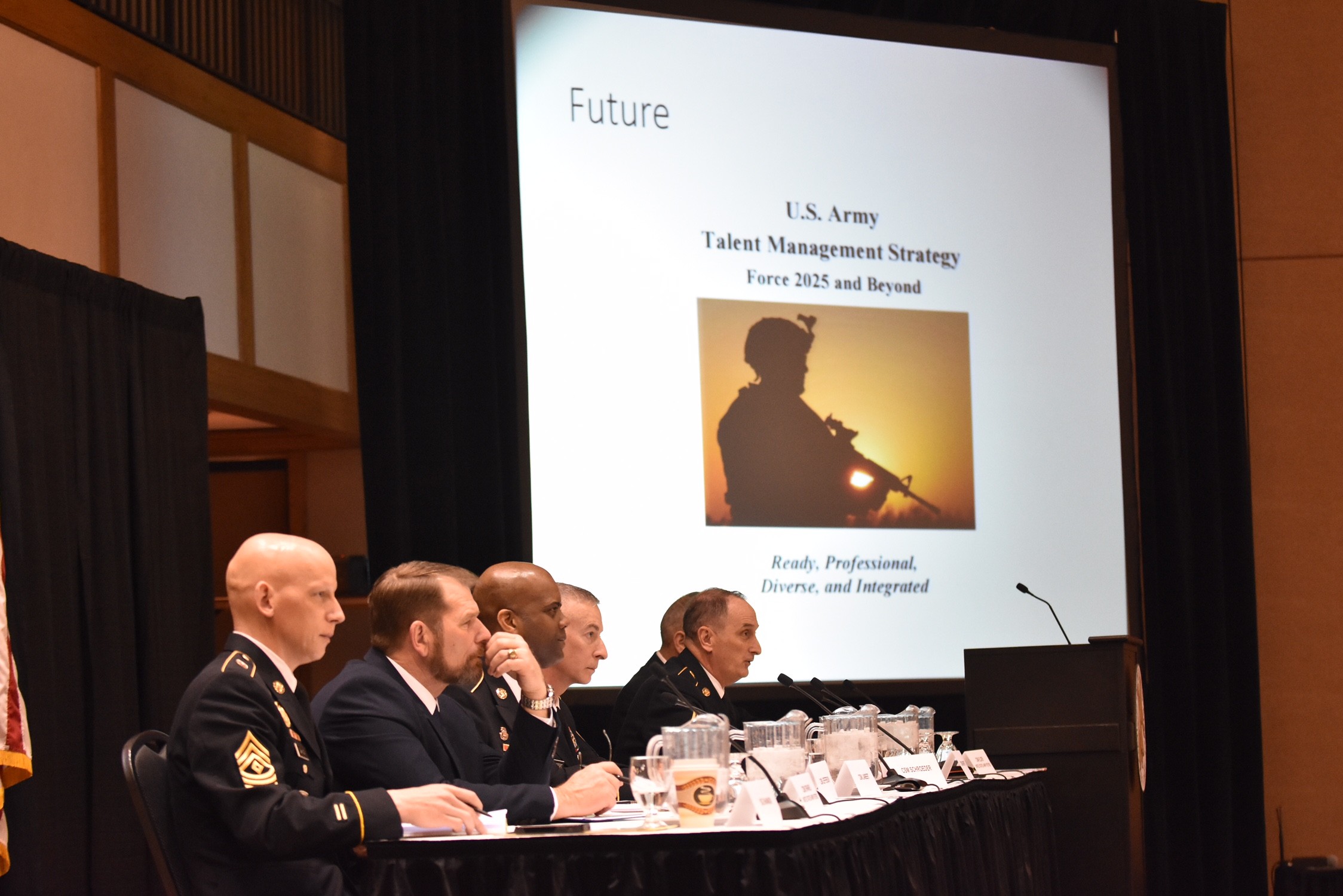
Non-commissioned officers gathered at the 2017 Association of the U.S. Army Global Force Symposium in Huntsville March 14 for the NCO Panel, "Talent Management: Growing Tomorrow's Enlisted Leaders."
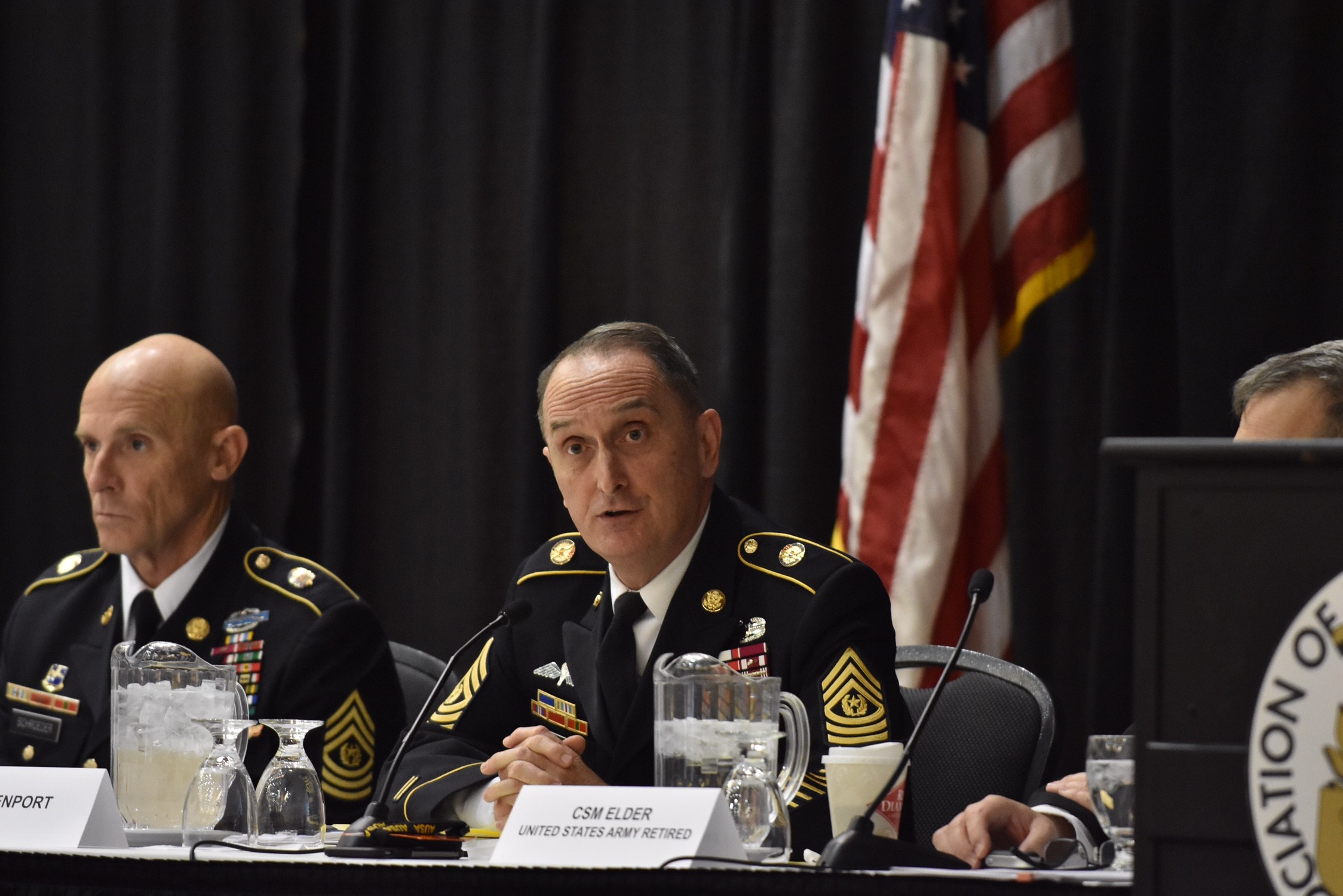
Moderated by retired Command Sgt. Maj. Dan Elder and chaired by Training and Doctrine Command Command Sgt. Maj. Dave Davenport, panelists included Command Sgt. Maj. Scott Schroeder, command sergeant major for the Army Forces Command; Army Reserve Command Sgt. Maj. James Lambert, command sergeant major for the Military Intelligence Readiness Command; retired Command Sgt. Maj. John Sparks, special assistant to the Sergeant Major of the Army; Command Sgt. Maj. Wardell Jefferson, command sergeant major for the Army Human Resources Command; and 1st Sgt. Daniel Shannon with the Army Materiel Command Band.
The two-hour panel started the conversation between panelists and attendees about the challenges and opportunities facing talent management in the NCO corps today, and where it is headed in the future to meet the readiness needs of the Army.
Elder defined talent management as "everything done to recruit, retain, develop, reward and make people a part of a strategic workforce."
"Today's demands require the Army to acquire, develop, employ and retain people whose collective capabilities move the Army beyond competent and firmly into the realm of talented," Davenport said. "Talent is the intersect of three dimensions -- skills, knowledge and behaviors -- that create an optimal level of individual performance and provides individuals that are employed within their talent set. All people possess talents which can be identified and cultivated, and they can dramatically and continuously extend their talent advantage if properly developed and employed on the right teams."
Just as the world and threats have changed, so too are the requirements needed of today's Soldiers, but one thing remains constant -- talent management must begin at the most basic level, Schroeder said.
"We have to know our Soldiers, and we need to know what's required in units and the positions we're filling," Schroeder said. "The biggest challenge comes from not being able to measure knowledge, skills and behaviors through a formula or a machine. The only way to measure those is through personal knowledge of our troopers. Talent management starts at the squad, platoon and company troop and battery level. Units own it. Units need to own talent management."
Sparks echoed that sentiment.
"Talent management really begins with you," Sparks said. "You manage your Soldiers. You recommend them for action and assignments and promotions -- that's where talent management begins. It's through that kind of management that we get the right kind of people in the right kinds of positions."
Leaders must work to build competence, and thereby confidence in their Soldiers, Schroeder said, understanding that "you can't teach experience; it's got to be earned."
"It's important for us to look at what we want our troopers to do at each level and measure that, and develop them through the course of their career to achieve development so we have leaders in the future that have the knowledge, skills and behavior that we're seeking," Schroeder said.
Closing the panel, Davenport encouraged leaders to look at their Soldiers and recommend those who are ready and qualified to advance in their Army career.
"Help us get those great Soldiers recognized for their knowledge, skills, behavior and talent and send them to the promotion board," Davenport said.
Social Sharing