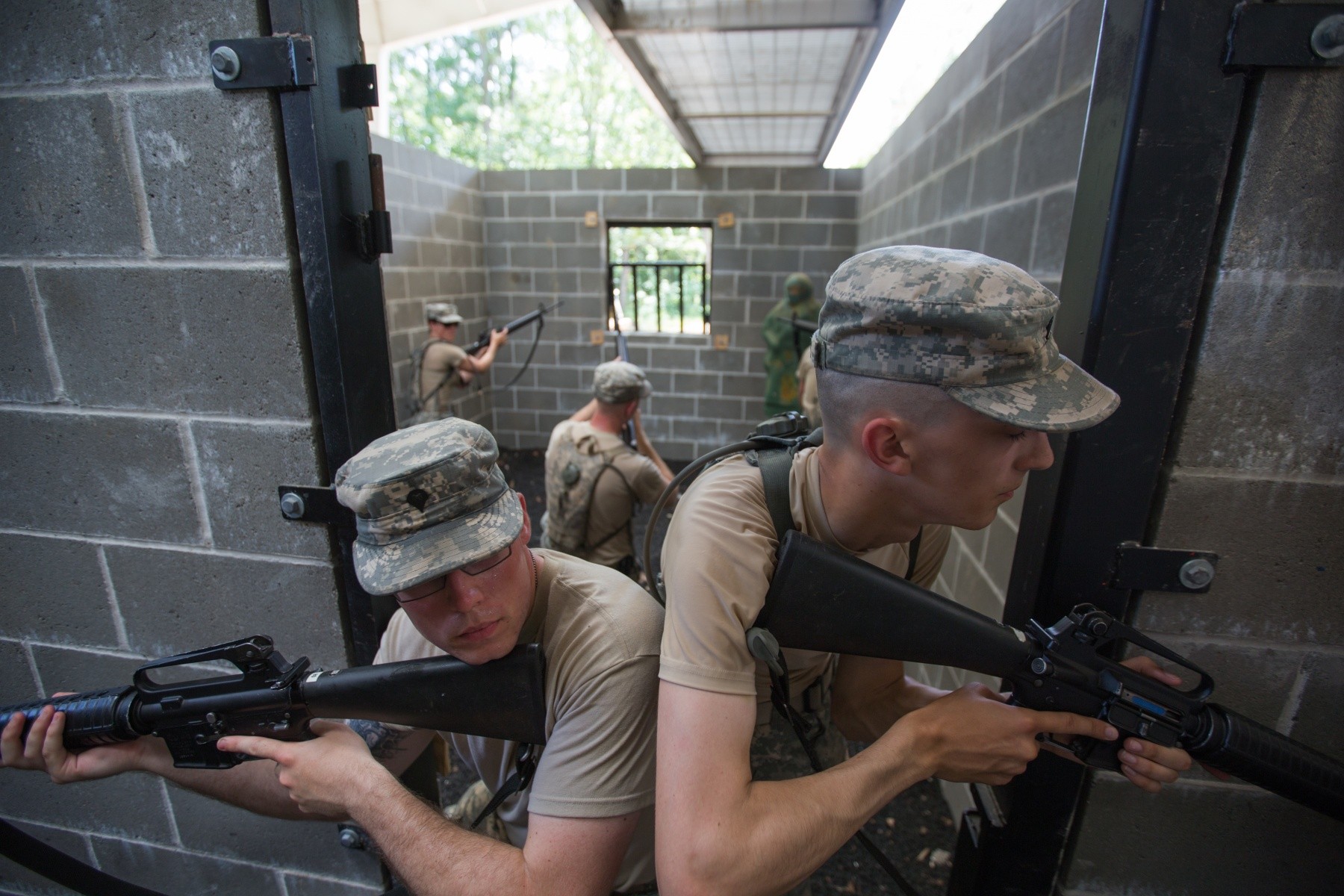
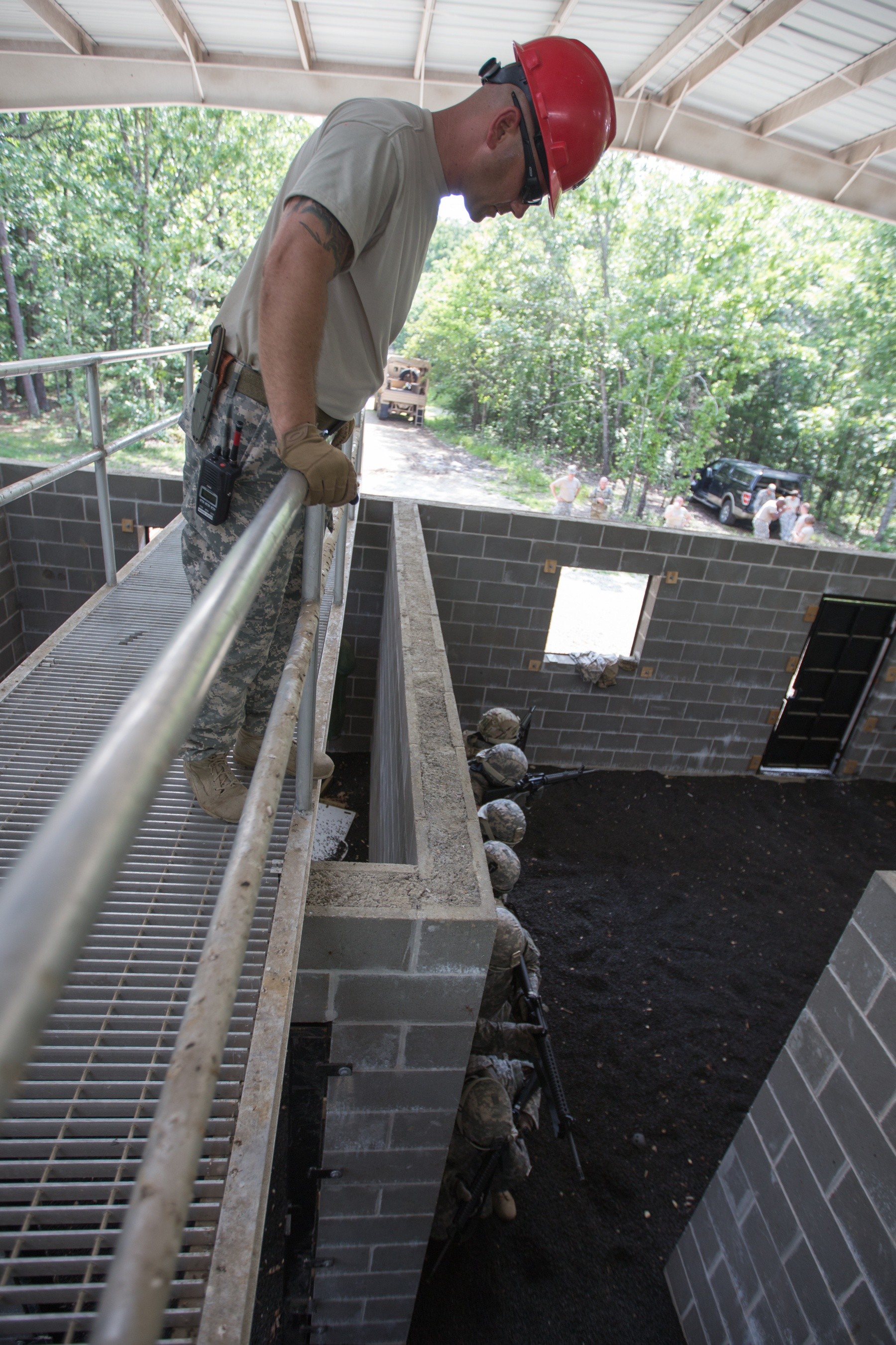
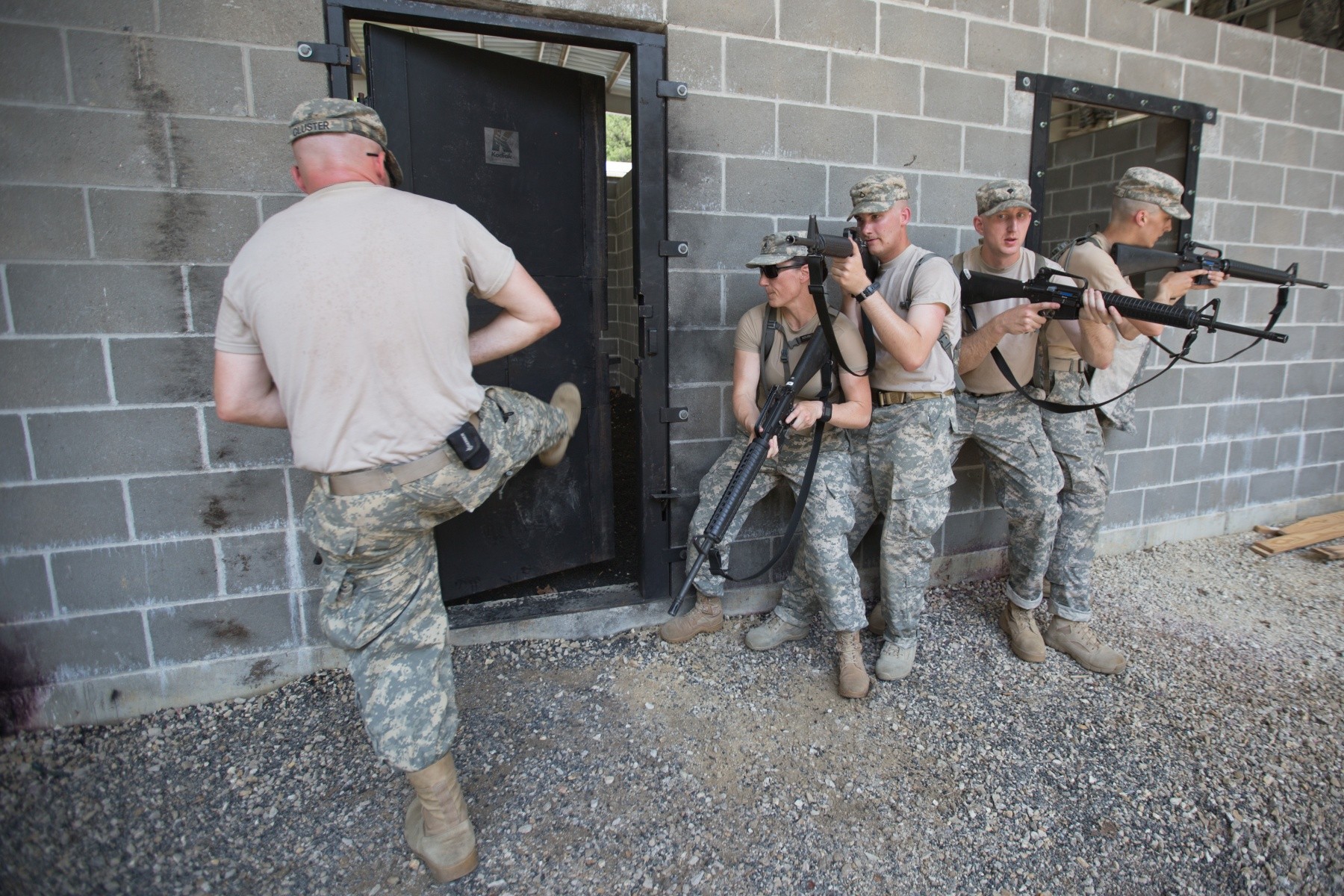
FORT LEONARD WOOD, Mo. -- The Missouri National Guard continued the integration of females into combat arms occupational specialties at the 140th Regional Training Institute at Fort Leonard Wood recently.
The second class of combat engineers including female Soldiers graduated from the RTI on June 17. Although women are already serving in Missouri engineer units in administrative positions, bringing them into combat roles is the next step in integrating the force, said Command Sgt. Maj. Steve Stuenkel, the command sergeant major of the 35th Engineer Brigade, headquartered at Fort Leonard Wood.
"In the past, in the combat units they've been in there in support roles in the supply or admin side, not actually in the field," Stuenkel explained. "Now, they're integrated into field problems and they're expected to do the same tasks as any male soldier would do."
The brigade began the integration by putting female leadership in place, Steunkel said. After that, senior noncommissioned officers were put in place to prepare the units for the arrival of younger soldiers from basic training.
The female leadership in the brigade includes 1st Sgt. Heather Javersak, the first sergeant of Headquarters and Headquarters Company. Javersak graduated as part of the first combat engineer class of females at the RTI in March.
"The training was great," Javersak said. "The instructors at the RTI are bringing practical experiences and sharing their knowledge of deployments. This training has helped me understand what my soldiers need."
The integration will continue to bring in female leadership in the coming months. Lower ranking women will join the units with a strong support system and leadership in place to mentor them as they grow in the combat engineering field, said Stuenkel.
"We're bringing in senior NCOs that can mentor these young females coming in as privates," said Stuenkel. "We can put strong females in [the units] who would mentor them as they go through the process of getting into a combat arms unit."
The integration of female Soldiers has not changed the training standards for combat engineers or the selection of leaders, Javersak said.
"It's important that people understand that it's not about the gender," Javersak said. "It's about the right soldier for the right position, whether we're male or female."
Social Sharing