FORT POLK, La. -- Helicopters are a common sight around Fort Polk and its surrounding communities. But what goes up must come down, and that doesn't always happen as expected.
What if a helicopter goes down in a remote area and the first responders to the scene are civilian firefighters? Will they know to watch for still-spinning rotors, especially at night? Do they know how to get the pilot and crew out of their seats? Can they find the emergency fuel shut off switch?
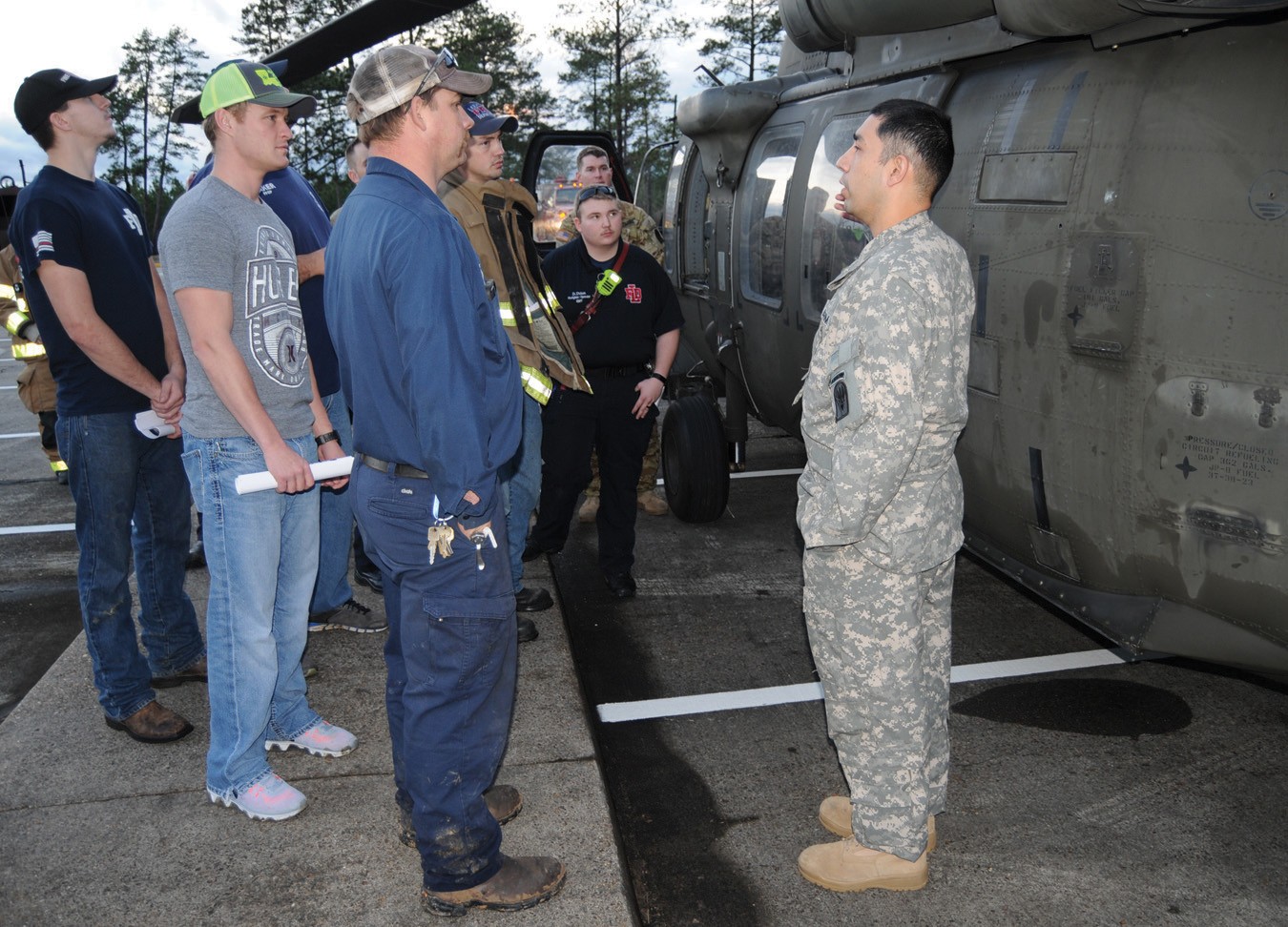
These questions and more were answered during a multi-department training held Jan. 19 at the Northwestern State University parking lot. Leesville and New Llano fire department personnel were briefed on the crash rescue procedure for Fort Polk's most commonly used aircraft: UH-60 Blackhawk, OH-58 Kiowa, UH-72 Lakota, C-130 Hercules, CH-47 Chinook and unmanned aviation vehicles.
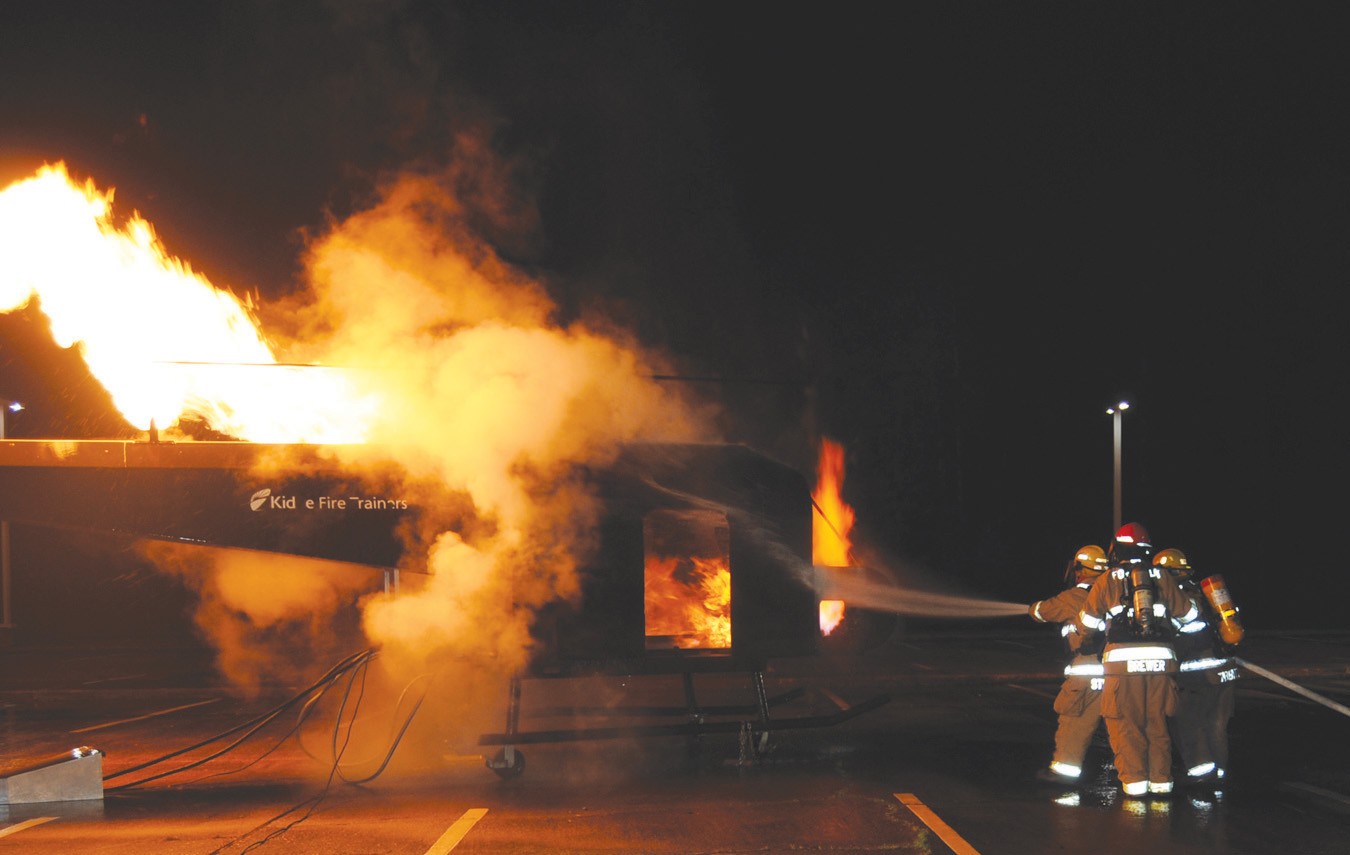
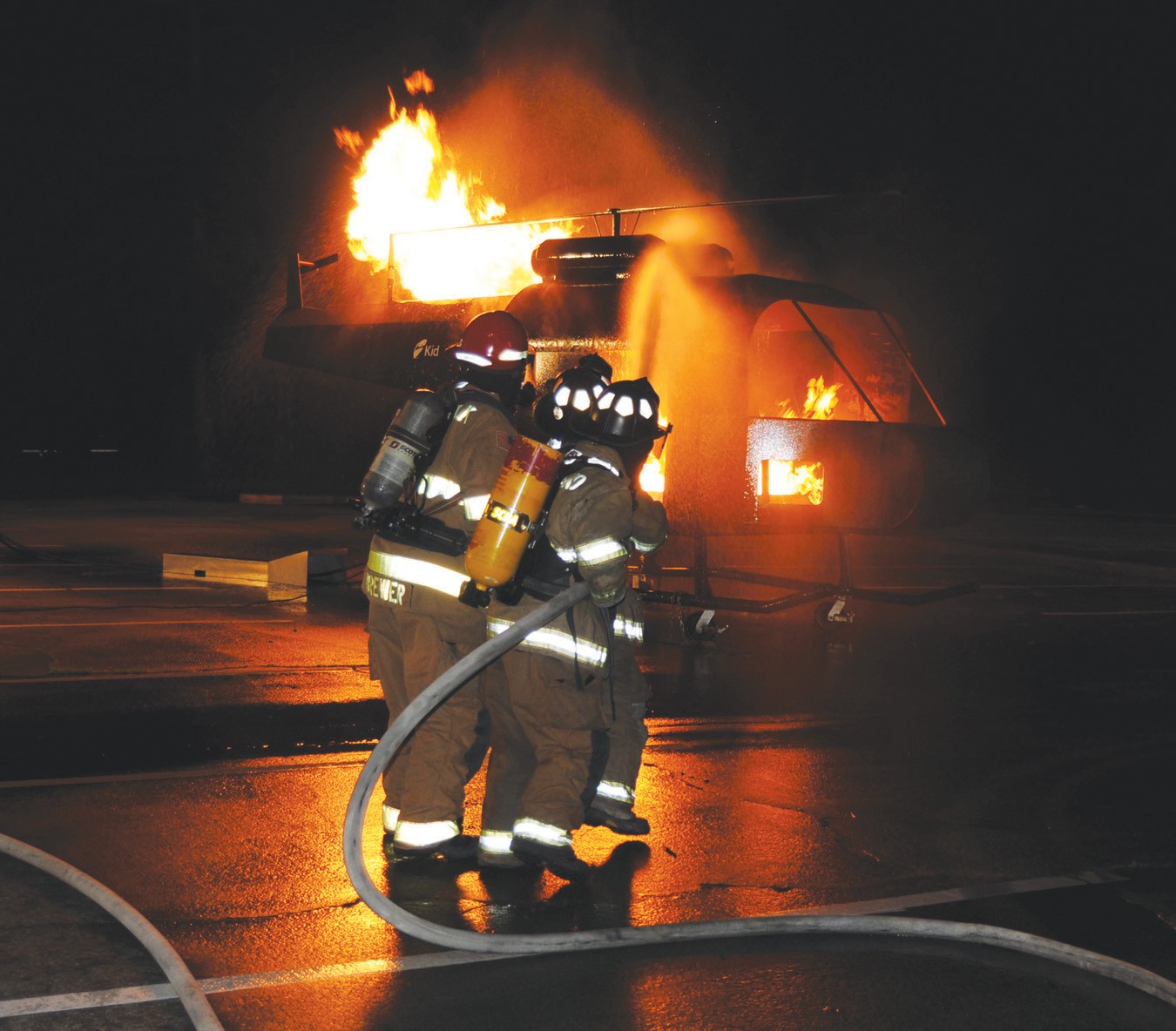
Fort Polk firefighters served as subject matter experts and facilitated the training by using their helicopter prop, a propane-fueled training aid in the shape of a helicopter that can be set ablaze and extinguished quickly.
The training was conducted to ensure civilian firefighters understand the dangers of dealing with helicopter crashes. For example, the front of the aircraft should be treated like the barrel of a weapon -- always assume it's loaded and don't get in front of it. Being struck by the rotors is the greatest concern for firefighters.
"There are two rotors on the UH-60 and everyone sees the one on top," said Roland Cimini, fire training officer with Fort Polk's fire department. "But it's the rear rotor that can be very dangerous, especially if it is dark."
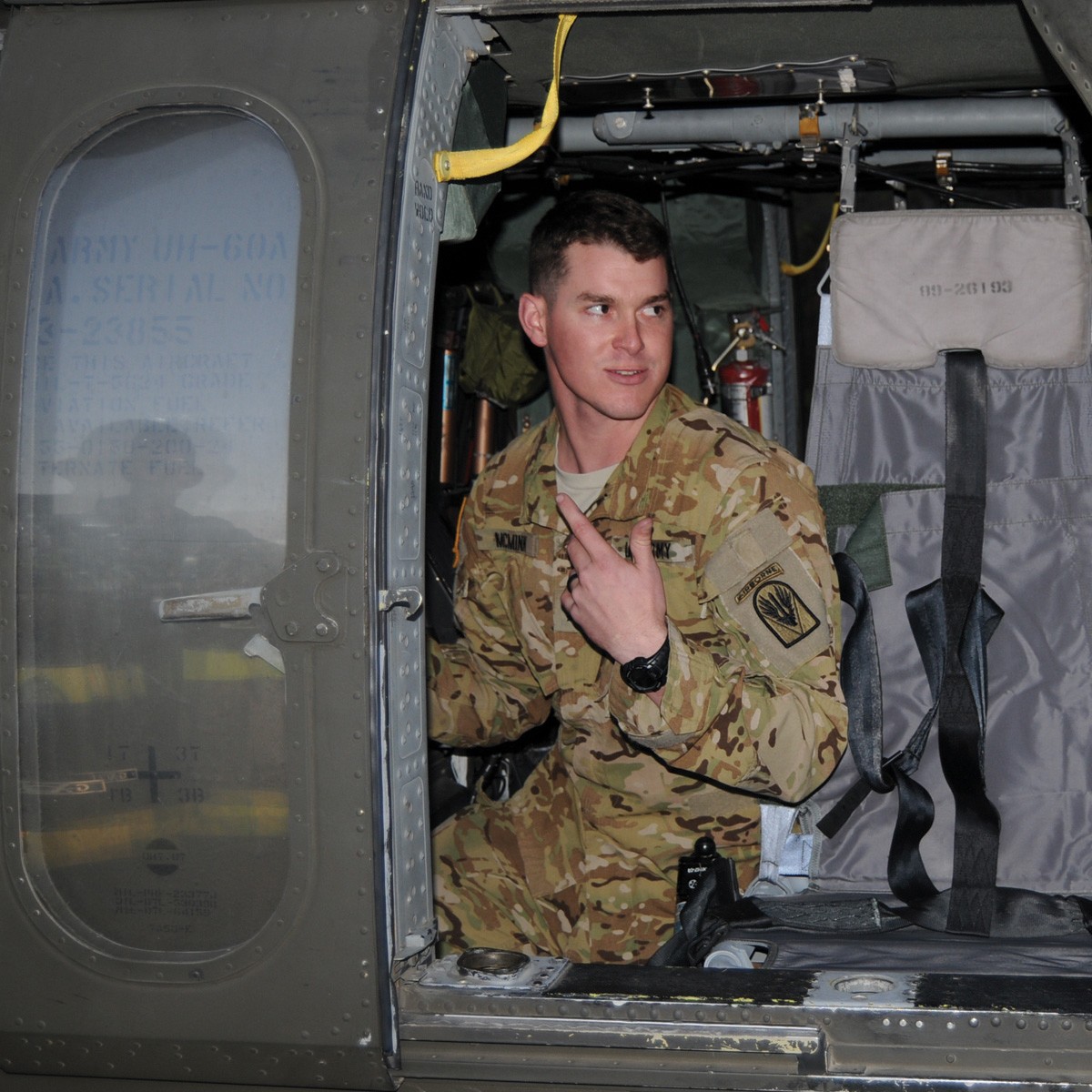
Cimini went over a handout that shows where the fuel tanks are stored on each configuration of aircraft. He then turned the group over to a UH-60 flight crew, who flew in for the exercise. The crew demonstrated vital components for rescue on their aircraft, such as placement of first aid kits and fire extinguishers, how to remove pilots from seats, the location of the on-board fire suppression system, how to remove doors from hinges and more.
Once the group finished looking at the aircraft, it was time to light the prop and practice fire suppression. The firefighters manned their hoses and took turns approaching the fire -- always with an indirect stream of water (not pointed at the fire but near it, so as not to spread any fuel) and always from the side of the aircraft (remember that loaded weapon analogy).
Cooperative training is mutually beneficial for federal and local fire departments, said David Kass, assistant chief of training, Fire Emergency Services, Directorate of Emergency Services, Fort Polk. "This is a great opportunity for us to work jointly with Leesville and New Llano," said Kass. "It's a demonstration of the great relationship that we continue to cultivate with them, and offers a win-win for us and the community."
The trend for community and federal cooperation is a growing one in the Army, and has been dubbed the Public-Private Partnership initiative, or PPP. Under the initiative, a public support provider, such as the U.S. Army, can couple with one or more private sector entities (or another public provider, like a local fire department) to share training equipment, facilities and other resources. The result is better-trained personnel on all sides, cost savings, better utilization of resources and a spirit of teamwork.
"It's good that they can give us classes like this under the PPP," said Kyle Bush, Leesville Fire Department fire chief. "We can't (usually) leave the city limits for training, but NSU is part of city limits now, so (Fort Polk FES) could come off base here to coordinate the training."
It all comes down to the first responders' ability to save lives, according to Bush. "If one of these birds were to come down, something as simple as knowing where the fuel shutoff switch is could be vitally important. Now we know how to shut it down if we are the first ones on the scene."
Lt. Richard Bartlett, New Llano Fire Department, agreed with Bush.
"I'm glad we are doing this with Fort Polk and I think we need to do more parish, state and federal combined training," he said. "Thanks to the training we had today, I feel we could offer valuable assistance if a chopper goes down."
Other benefactors of such cooperative training are the occupants of the downed aircraft, who may not be able to self-rescue.
"It gives me peace of mind to know these guys are ready to help, just like my presence gives peace of mind to Soldiers when they need to be (medically evacuated)," said UH-60 pilot CW2 Dan Verdin. "First responders are critical and the more they know about our capabilities the better able they are to respond in a time of need."
Training like this is a smart way to cover many bases, according to Cimini.
"Relationships are everything," said Cimini. "Nobody can afford to staff and equip for every (conceivable) emergency, but we can pool our resources to fill the voids and train together to build teamwork."
Social Sharing