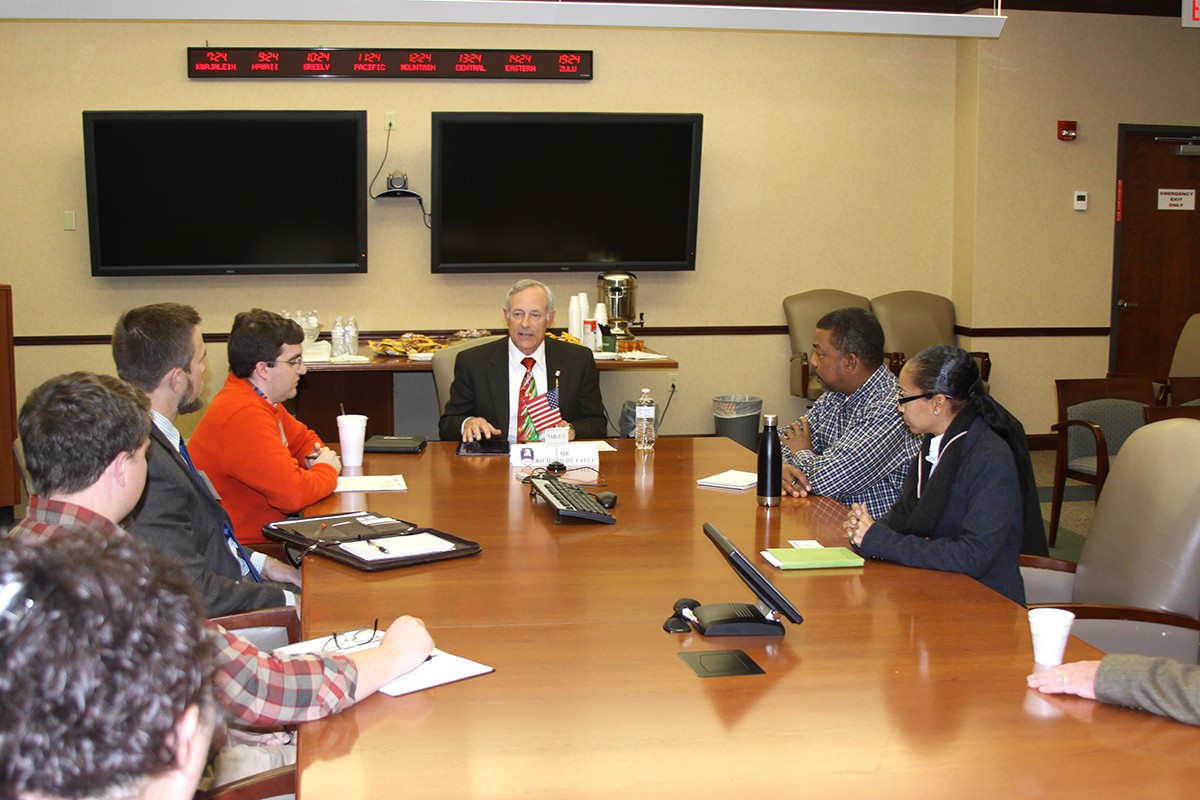
REDSTONE ARSENAL, Alabama -- Members of the U.S. Army Space and Missile Defense Command/Army Forces Strategic Command learned during a Civilian Workforce Development Office mentoring event on Dec. 14 that it is important to take responsibility for one's own career development.
James Johnson, deputy to the commander, USASMDC/ARSTRAT, said during the event that the mentoring relationship is about helping to maximize and broaden oneself.
"Your mentor is going to help you look at yourself…that's really what it is at the end of the day -- putting a big mirror on yourself; helping you see yourself; helping you see what your strengths are; helping you see what your weaknesses and shortcomings are and helping you to develop strategies to strengthen those," Johnson said. "Mentors are like a psychiatrist, they're not going to give you all the answers, but they're going to ask you leading questions."
Johnson told those attending that mentoring should not be a coaching session, where the mentors do all the talking.
"We listen. At least that's what a good mentor does. We ask questions; we give advice; and we offer you different perspectives. That's a big part of what we do," Johnson said. "Mentors are here to offer you support and encouragement."
Johnson said that mentoring is one of his top priorities and something he really enjoys, and stressed that senior leadership from across the command had expressed a commitment to mentoring.
"Just about all the Senior Executive Service members are more than willing to set up a mentoring relationship," Johnson said. "Please take advantage of that."
The mentoring panel also included Richard DeFatta, acting director, SMDC Future Warfare Center; Steven Harris, special assistant to the deputy commander, SMDC; and Nancy Small, associate director, Army Material Command Small Business Office. Their goal was to share their life experiences and perspectives on how to have a successful career.
Johnson offered advice to the mentees.
"You should listen, you should do a lot of listening. You should write down a lot of information and reflect on what you've heard," Johnson said. "We're going to help you challenge some assumptions."
After opening remarks, the mentees were broken into four small groups and interacted with each of the volunteer mentors for 30 minutes. After two hours of interaction, the group came back together for final thoughts from the panel.
Johnson concluded by reading some of the thoughts he had collected concerning the benefits of mentoring -- "it helps you identify areas for development to improve your self-confidence. It helps you confront situations and issues."
Dr. Julie Lindahl, SMDC Sexual Harassment and Assault Response Program coordinator, offered her perspective after the mentoring event concluded.
"I think the event was exceptional. It was well prepared, well received, great leader, they had much to offer," she said. "But they weren't here just to talk to us. They were here to receive from us, to ask us what we were looking for, what we were interested in, provided opportunities to ask questions and have conversations.
"A very well rounded and great opportunity to develop yourself," Lindahl said. "My takeaway: my career and my future are in my hands."
Panel member Harris reminded mentees to consider their possible role as a mentor also.
"I would challenge you to remember, as you are on your path there's someone behind you. You can mentor too," Harris said. "If you give, more is given to you. Get in the practice of giving; that's the best gift you can give."
In 2015, USASMDC/ARSTRAT began a mentoring effort in Huntsville and in Colorado Springs.
"This a follow-on based upon employee interest," said Yancy Mitchell, the lead for this event. "The event involves senior leaders from across the command. It gives them a chance to share their insights, philosophies, their strategies and to answer questions on what approach they took to get to where they are today, to pass on some words of wisdom."
Social Sharing