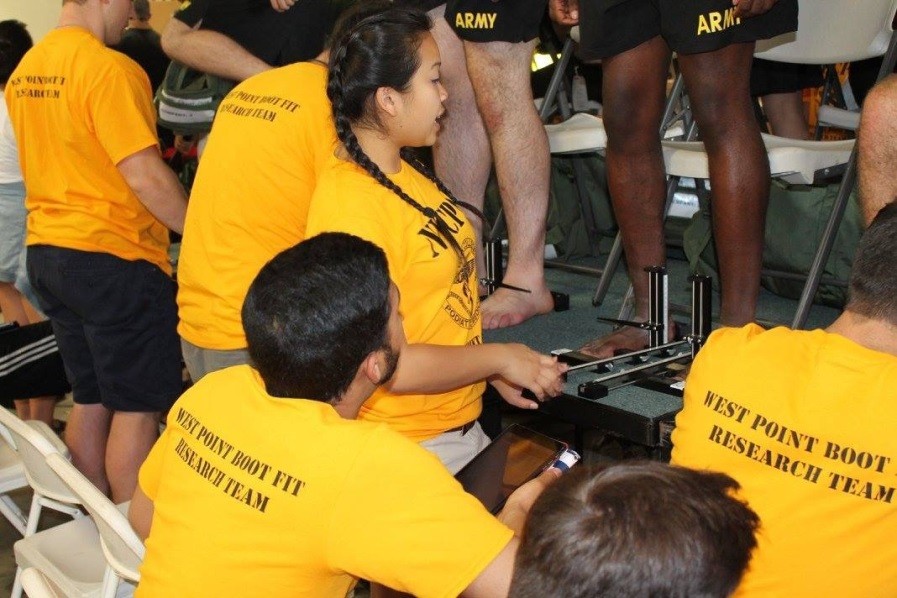
A research team made up of Col. Michael Neary (Keller Army Community Hospital), Lt. Col. (promotable) Don Goss and Becky Zifchock, (West Point's Center for Innovation and Engineering (CIE), Department of Civil and Mechanical Engineering (CME)), along with collaborators from the New York College of Podiatric Medicine (New York), the Hospital for Special Surgery (New York), Temple University (Philadelphia), Novel Electronics (Munich, Germany), and over 45 student volunteers conducted a research study of the foot structure of the incoming class of Cadets while simultaneously supporting the boot fit on R-Day +3 in July. More than 1,200 incoming Cadets volunteered to take part in the study which is designed to profile the incidence of arch height and stiffness in West Point Cadets and their correlation to overuse injury.
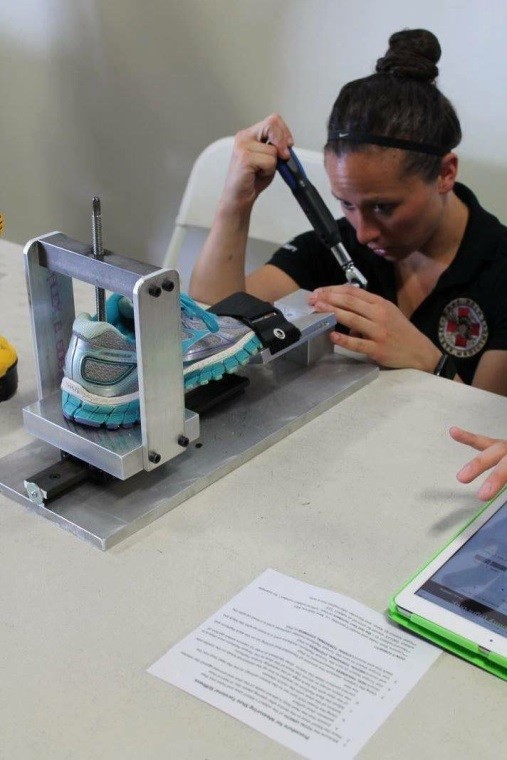
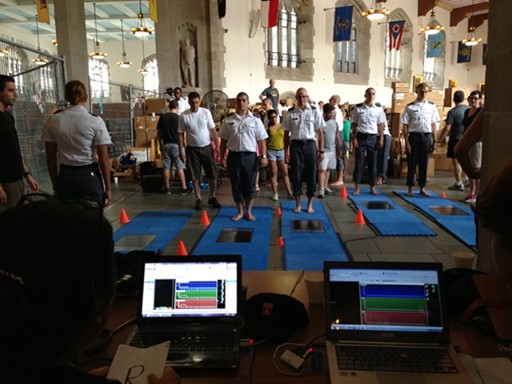
This year the boot fit of more than 1,200 Cadets was executed in only one day. The devices used not only allowed an efficient and more effective method for fitting the Cadets' footwear but also provided information on their arch height and stiffness which was recorded on an iPad application developed by a member of the research team. The research team used this information on the Cadet volunteers' static foot structure, along with measures of dynamic foot function walking over pressure mats in order to classify certain foot types (i.e. the flat, flexible foot that pronates or the high stiff arch that supinates) and determine if there is a link to injury.
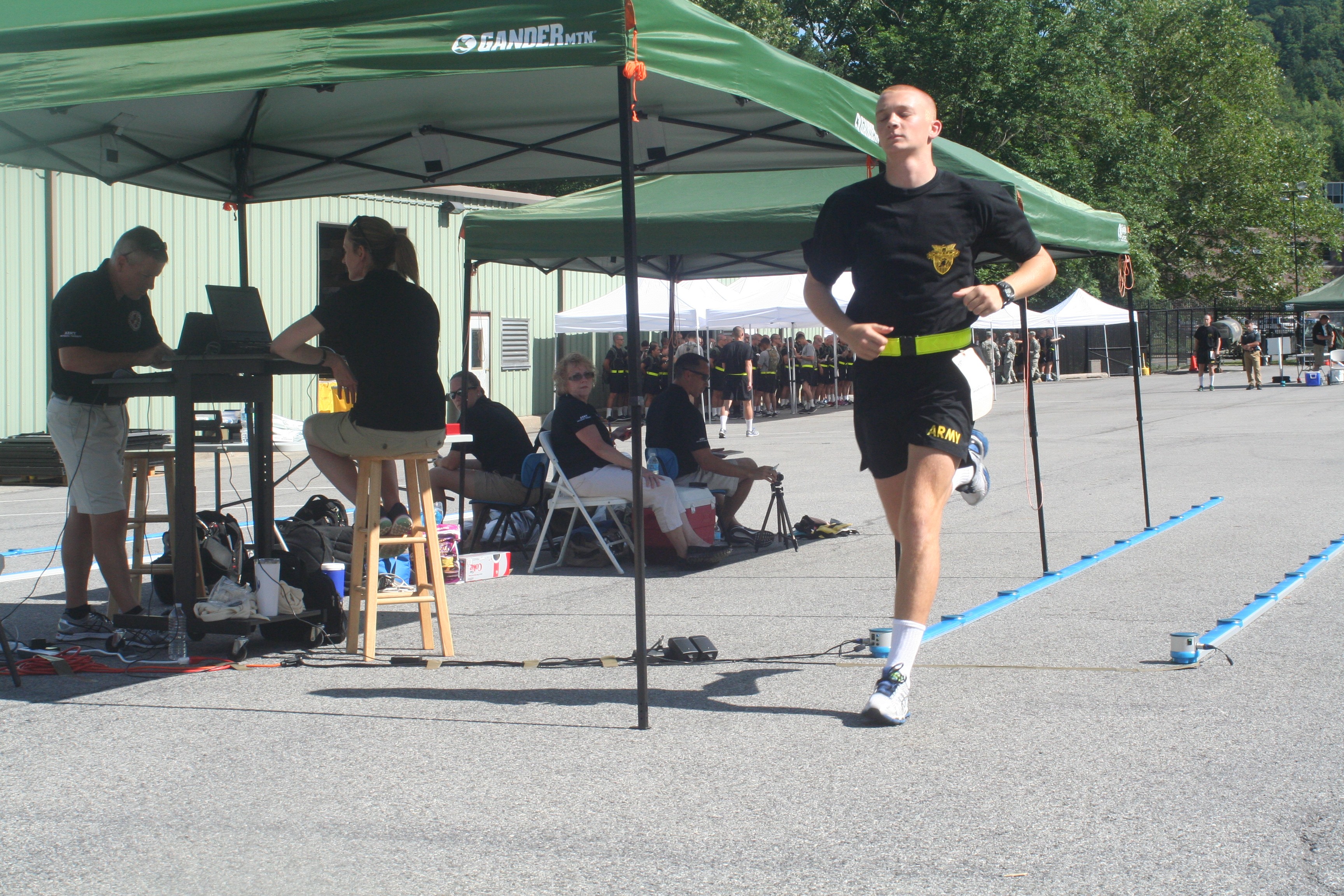
In addition, the team also recorded the type of running shoe each new Cadet presented to at Cadet Basic Training (CBT) as well as objectively recorded the resistance to torque with instrumentation designed in part with the research team, by physical therapist Capt. Gary Helton, Cadet Michaela Sulley and West Point's Department of Civil and Mechanical Engineering. The physical therapy team also used LED sensors and video to track running style. The incidence of overuse injury will also be tracked during CBT to determine if there is any correlation between injury and foot structure and function, shoe type or running style.
This data will then be added to the now three years of baseline data collected on over 3,300 Cadets while stationed at the United States Military Academy with hopes of sharing any information with regards to injury prevention with the Initial Entry Posts, Natick Soldier Research, Development and Engineering Center, and sister services.
Social Sharing