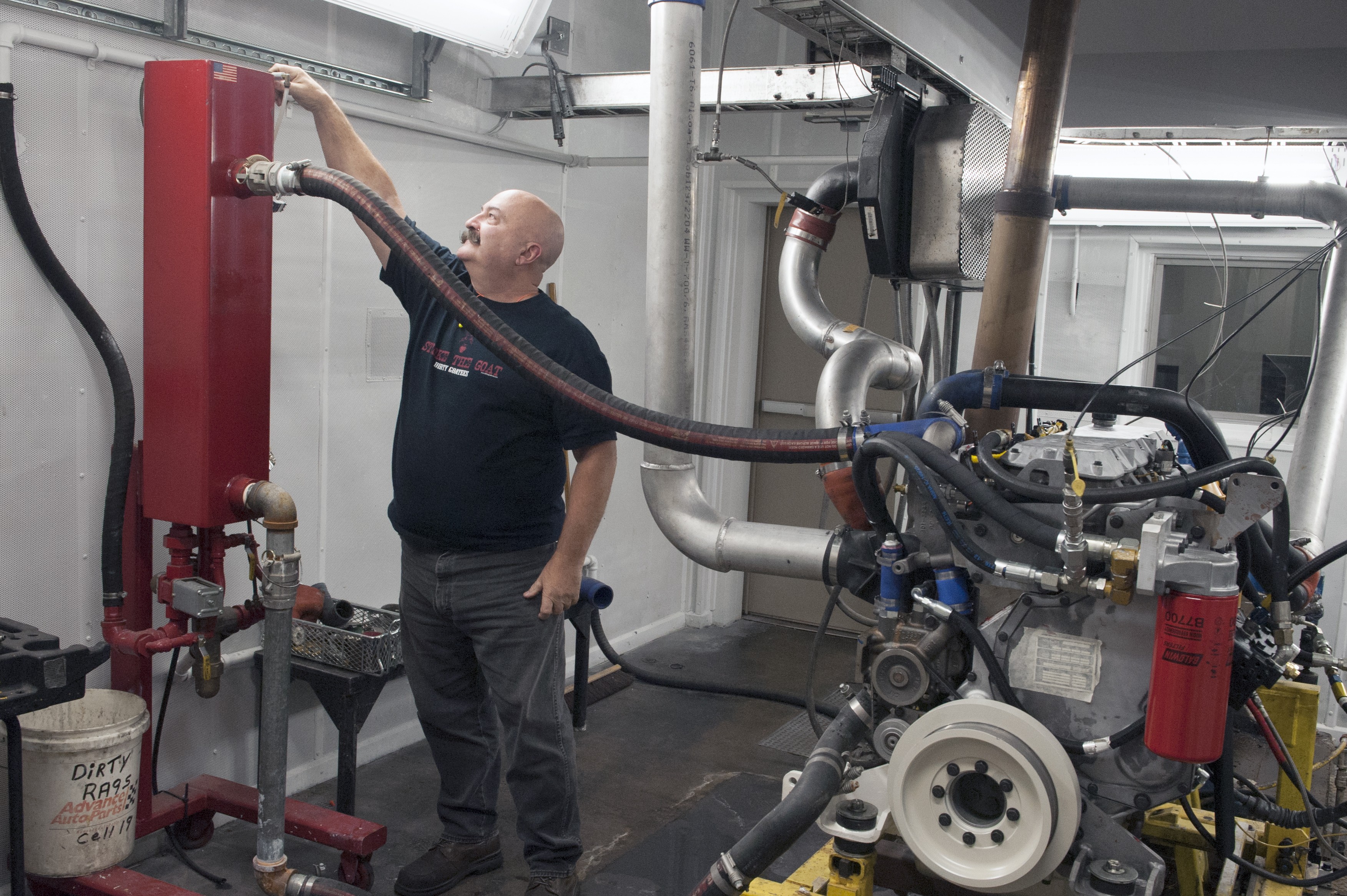
ANNISTON ARMY DEPOT, Ala. -- The depot's Engine Dynamometer Testing Facility recently received a makeover, making it more energy efficient.
"This repair project correct deficiencies identified in the depot's Quality Work Environment Installation Status Report," said Tim Smith-Lindsey, the project engineer. "It also enhanced the areas of life, safety and health as well as compliance with the Americans with Disabilities Act."
Part of the depot's Sustainment, Restoration and Modernization Program, the building received improvements totalling approximately $3 million.
During the project, the facility's 19 test cells were renovated to include enhanced lighting, dynamometer hood repairs, exhaust repairs, temperature control dampers as well as processed water control.
Stephen Carter, a heavy mobile equipment mechanic in the testing facility said the enhanced lighting is an asset for the employees.
"We had old style lights and practically had to have a flashlight to go into the test cells," he said.
The dampers which have been installed provide protection from extreme temperatures - ensuring the test cells don't freeze in the winter, which can shut down production.
New variable refrigerate heating, ventilation and air conditioning systems were installed, eliminating the need for steam heat in the facility and incorporating gas heat into the high bay production areas of the building.
The offices, breakroom and restroom for the facility were also updated and the restroom became compliant with the Americans with Disabilities Act.
"Although we were able to complete most of the project scope, such as the test cell and structural repairs to the building through the Sustainment, Restoration and Modernization Program, we were also able to incorporate energy efficiency projects identified through an investment-grade audit performed by Alabama Power Company," said Smith-Lindsey.
The energy efficiency projects included repairs and improvements to the cooling tower for the facility, such as:
• Replacement of a 12-inch water supply main throughout the entire supply loop.
• Electrical system repairs and new equipment installation for the cooling tower.
• Other equipment associated with the cooling tower was also replaced. This enables soft starts for process feed pumps and included high efficiency fan motors, variable frequency drive controllers and water metering capabilities.
"We had no idea how much water we were using at the cooling tower before," said Smith-Lindsey. "Now, we know and we can successfully investigate and troubleshoot problems with the cooling tower."
Social Sharing