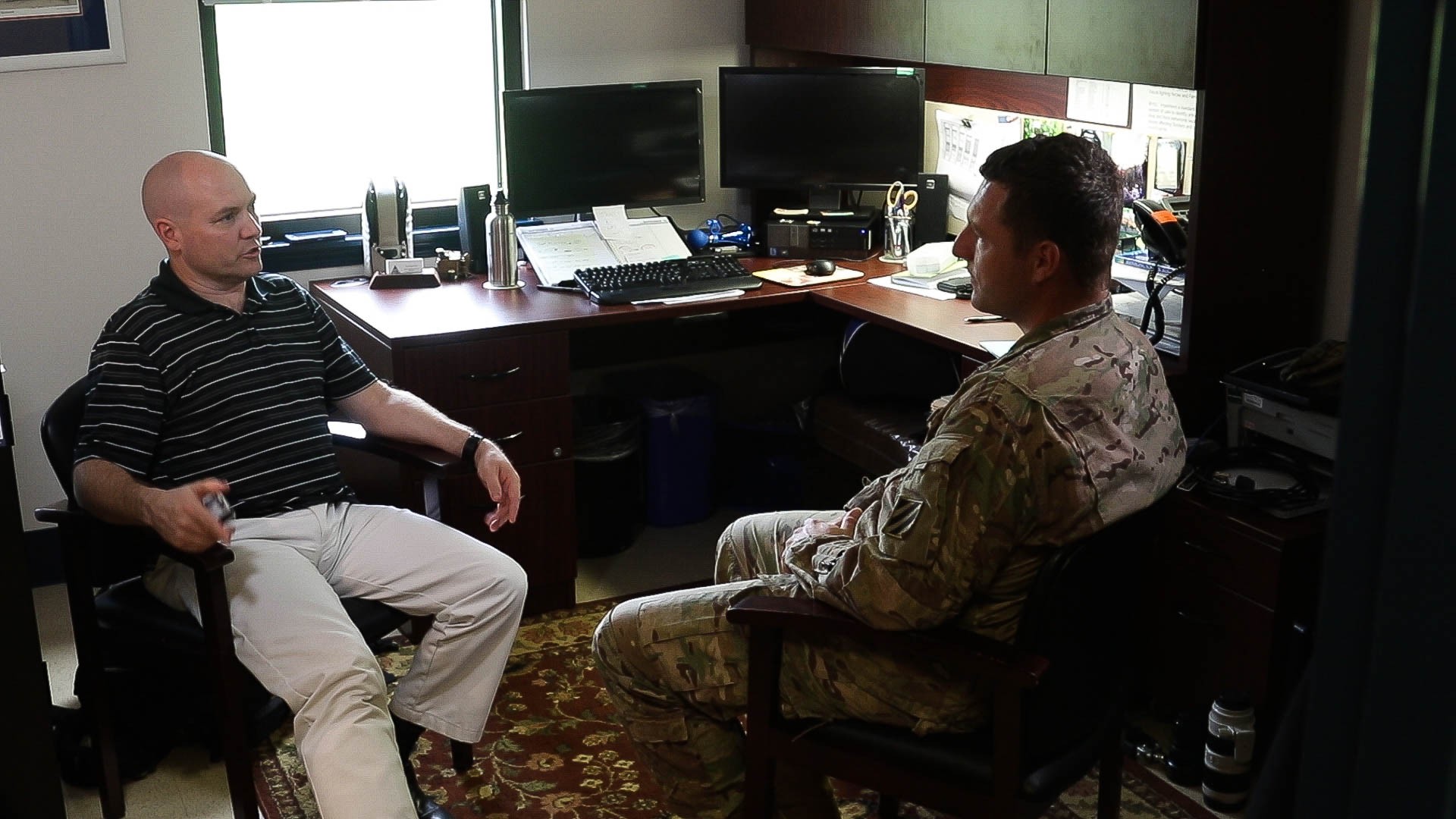
Fort Stewart USA MEDDAC's Behavioral Health program provides mental healthcare services to the Soldiers that make up the Fort Stewart footprint. In order to provide an atmosphere where Soldiers can reaffirm their resiliency, the behavioral health program utilizes embedded clinics which span the entire installation.
"I feel like the stigma of mental health care has gone down significantly since we've been able to do this," said Bradley Singer Embedded Behavioral Health Team Lead for the 1st Brigade Combat Team. "And we've been getting higher and higher ranked Soldiers coming in and saying hey … I've been dealing with this for 20 years, I think I need some help."
More Soldiers are seeking to improve their individual mental readiness by reaching out to embedded behavioral health experts who can help them build an individual mental healthcare plan for their current situation.
"My strategy is literally every hour I see somebody I start over," Singer said. "You have to be able to get to the point where they're at. You have to be able to kind of step into their world, see the world through their eyes. Even though I've never been in the military, I've never deployed, so it's very difficult, but my strategy is I don't have to know what you've been through to help with what you're going through."
Staff Sergeant Michael Wesner with the 10th Brigade Engineer Battalion, 1st Brigade Combat Team started his behavioral health journey while stationed at Fort Campbell. Wesner was given a permanent change of station to Fort Stewart where he began seeing Singer. Singer started his sessions with Wesner by establishing a trusting relationship with him.
"If a person doesn't trust you ... you're done," Singer said. "You have about ten minutes to earn that person's trust, at least to where they will come back for a second session. If you fail to do that, as a provider, that session is a wash."
After establishing a working relationship between Wesner and himself, and building that bond of trust, Singer was able to provide the support his patient needs.
"I'm here because of the actions that I was portraying," Wesner said. "My current wife she told me, she basically gave me an ultimatum. She said you're going to go to behavioral health, you're going to talk to somebody you're off the chain right now and you cannot function so you need to go see somebody."
So, Wesner looked for help.
Singer looks at every case differently, for Wesner he utilized the tools that were at his disposal.
"Basically you use anything that's at your fingertips," Singer said. "I've seen Soldiers who come back from multiple deployments back in the early 2000's all the way up until 2012-2013, and they have no emotional attachment to their spouses, to their children, so you have to be able to dig into that a little bit as well and help them to reattach those bonds, and make those attachments all over again."
For Wesner, his individual mental healthcare plan included working on his unresolved anger issues and alcoholism.
"It's getting better," Wesner said. "I've been in and out of some of the behavioral health stuff I believe going on three or four years," Wesner said.
Even though Wesner has been seeking treatment; he still has a long journey ahead of him. From day-to -day he experiences his own inner battles that can happen periodically throughout the month.
"It's not so much the better, it's what kind of day are you having and how long it lasts," Wesner said. "Because I believe that you're going to have spells for quite a while, but it's only once, twice, three times a month where it just looks like you just crawled out of the gutter."
Stress relieving activities, such as wood working, have helped Wesner build his resiliency so he feels able to get up when he's been knocked down.
"The more resilient that Soldier is, the more resilient that spouse is, the more resilient their marriage is as a whole, is going to really help not only integrate them together again, but to help avoid and prevent problems from arising to begin with," Singer said.
For Soldiers such as Wesner, getting the support they need is only a short walk away at their embedded behavioral health clinic. But for others who don't know where to turn it is the responsibility of the community to reach out and provide a supportive and helping hand.
Social Sharing