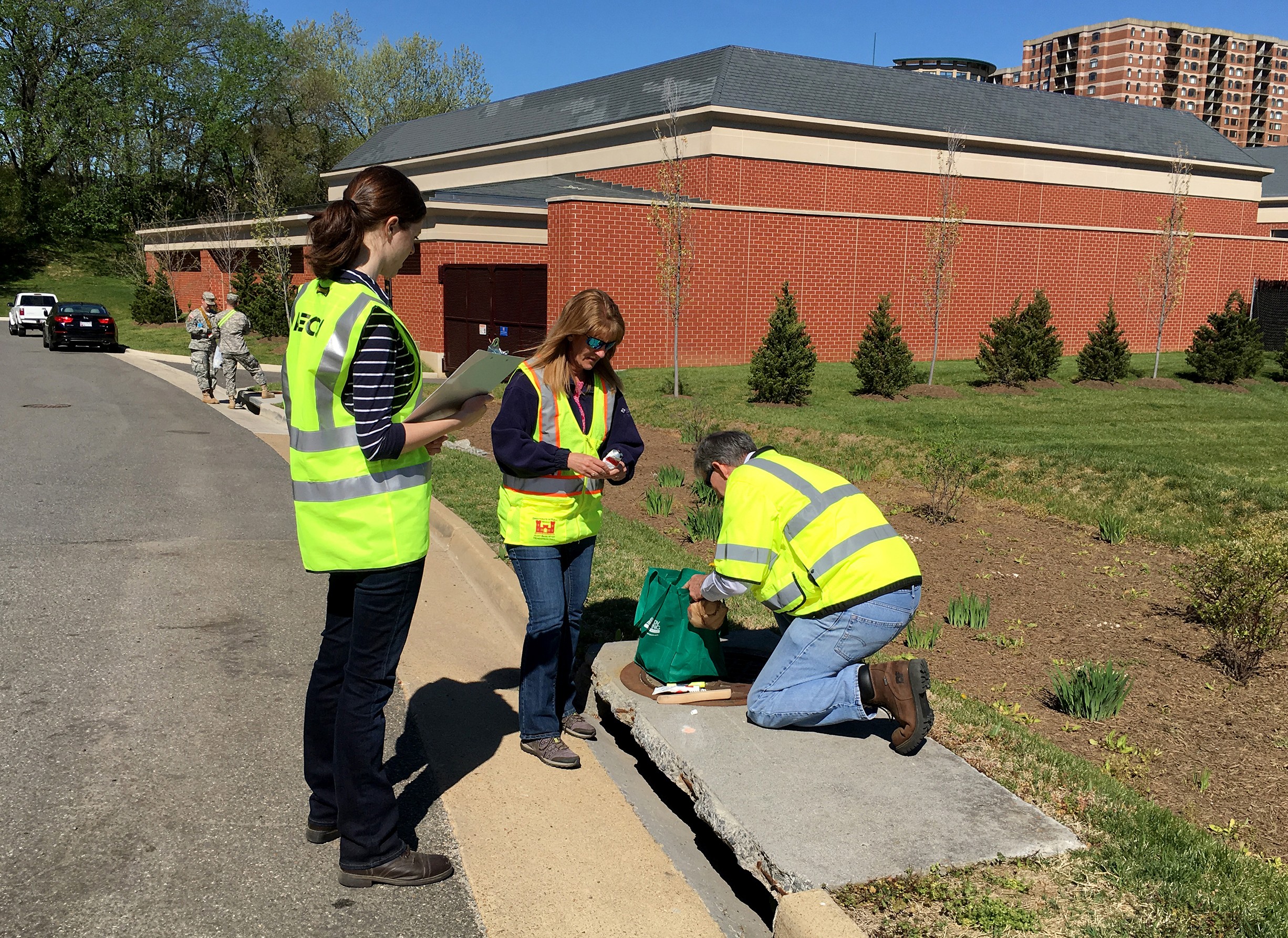
Hall (left with clipboard), observes as Environmental Management Division
staff label curbside storm drains with inlet markers that read, "No
Dumping, Drains to Stream" April 22 ... VIEW ORIGINAL
Water is important to all of life. That's no secret. But according to The Clean Water Act Rule for local governments, helping to protect it is essential to flourishing communities. One way to do so is to protect and guard the environment from pollutants, according to Joint Base Myer-Henderson Hall Environmental Management Division officials.
Jenny Tolbert, storm water program manager at JBM-HH, along with Richard LaFreniere, the chief of the Environmental Management Division on JBM-HH, and local service members want to encourage and remind the joint base community to be good stewards of water.
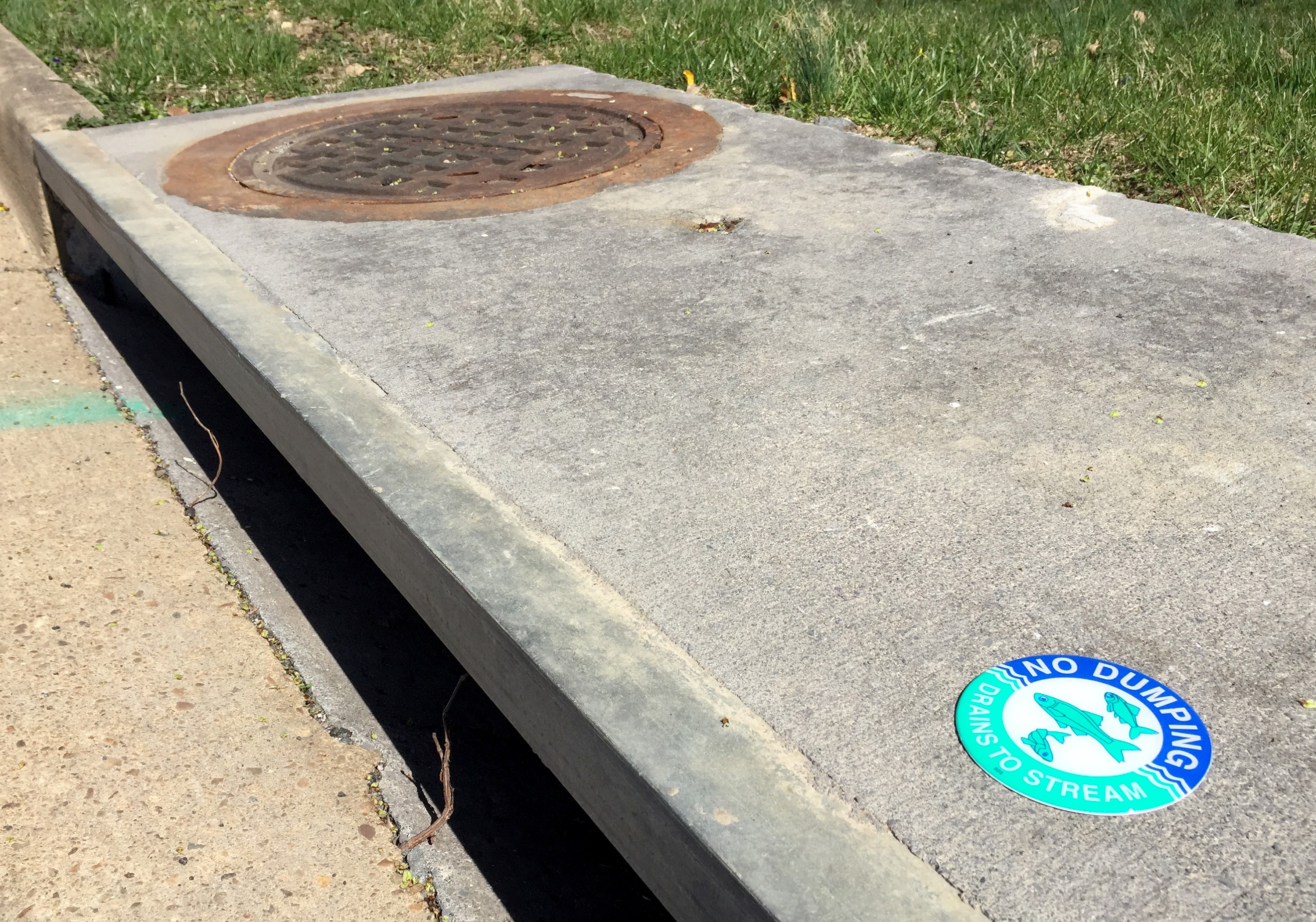
Two days before Earth day, April 20, they did just that labeling curbside storm drains with inlet markers that read, "No Dumping, Drains to Stream."
Tolbert offered some advice to help mitigate the impact of harmful toxins reaching storm drains: block the drains while washing vehicles or use inserts to capture wash water; use only biodegradable liquids; keep yard waste and trash off the streets and out of gutters; use grass enhancers (like fertilizers) sparingly; properly dispose of hazardous waste; and recycle motor oil.
"Really, all these pollutants can go out and reach these bigger bodies of water that impact local communities," said Tolbert. "So it's not just contained within Fort Myer. The pollutants in Fort Myer can reach the people in the Chesapeake Bay, where all the people are fishing and anything alike...it affects all of us."
"It's basically a public outreach event to help spread awareness and teach people that they can't dump things in the drains because it can go straight to the stream," explained Tolbert.
Tolbert said she hopes that the service members who volunteered would spread the word about their experience and what they learned; it would help to inform the community about what happens when bad things get into the water stream.
"We are hoping that they can then go and tell their friends," she said.
Educating community members on how to protect water quality is not unique to the joint base. In fact, many states, including Virginia, have used this form of environmental marketing to edify small and large communities about how community members can help to prevent toxic chemicals from entering through storm drains.
According to research and experience, Tolbert said people, in general, toss harmful items to the ground and use storm drains as ways to get rid of toxins. Also, there is a common misconception about the waters final destination once it enters the storm drain.
"They think it will be treated in a treatment plant or something before heading out," Tolbert elaborated. "We actually had a few of the Soldiers who volunteered mention that they always thought the storm drains lead to some kind of a treatment facility."
Due to this common misconception, it is common for objects like cigarette butts, litter, various kinds of chemicals used to wash cars and fluids from conducting car maintenance get tossed and washed down the storm drains.
"Unfortunately, these [water] systems can carry pollutants such as pesticides, bacteria, and chemicals through city streets and straight to our waters," according to an article titled Storm water Runoff published by the Environmental Protection Agency. "Storm water pollution can include chemicals, fast food wrappers, cigarette butts, Styrofoam cups, sewage overflow, cooking oil, bacteria from pet waste, used motor oil, fertilizers, paint and construction debris."
Tolbert also added they will extend their efforts to educate the community by handing out door hangers that will help to explain the purpose of the inlet markers.
Pentagram Staff Writer Delonte Harrod can be reached at dharrod@dcmilitary.com.
Social Sharing