
Senior leaders throughout Army Medicine came together April 6-7 to discuss concerns, best practices, and ways to continue ensuring mission readiness, during the first Army Medical Command (MEDCOM)- Command Surgeons Summit.
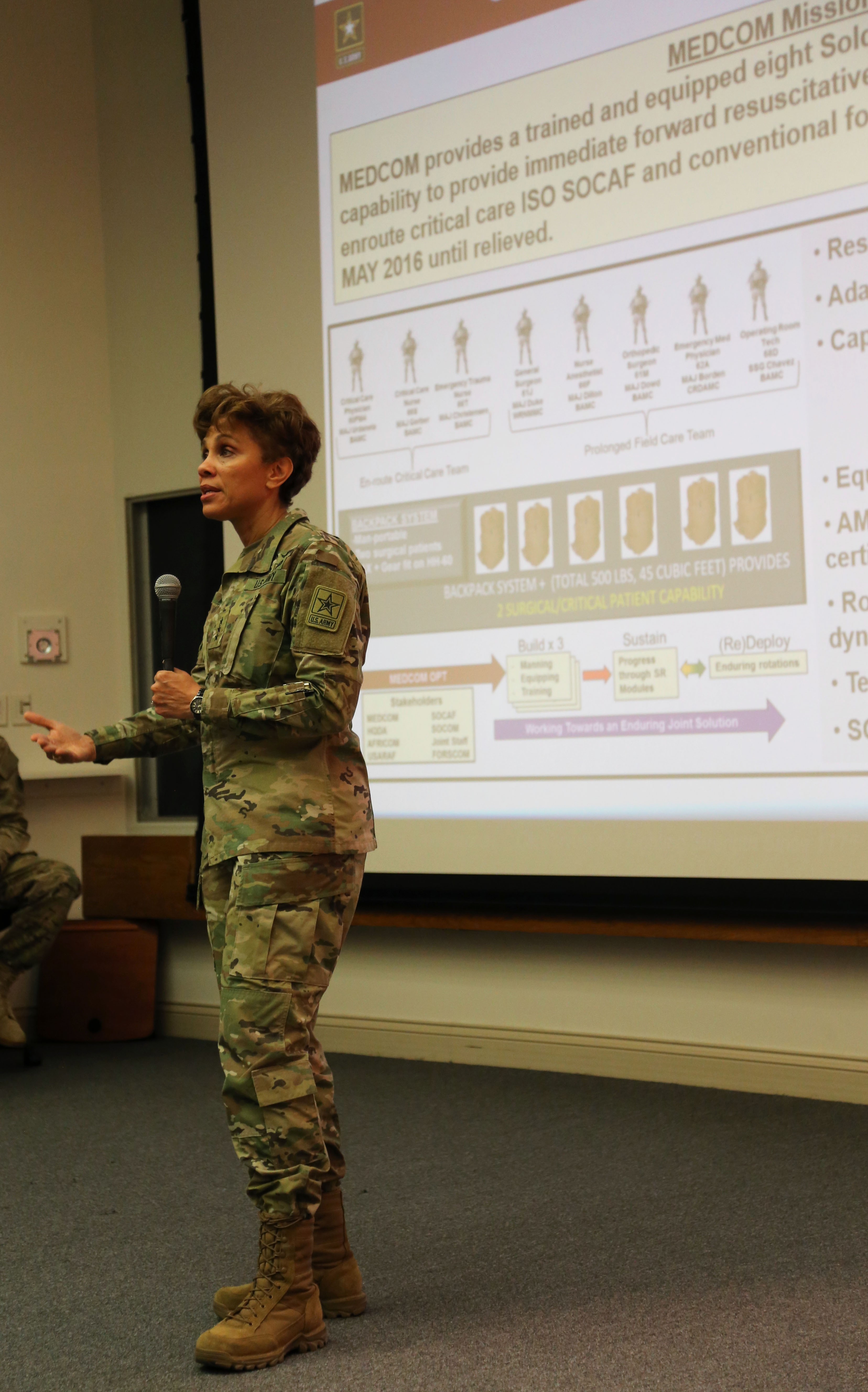
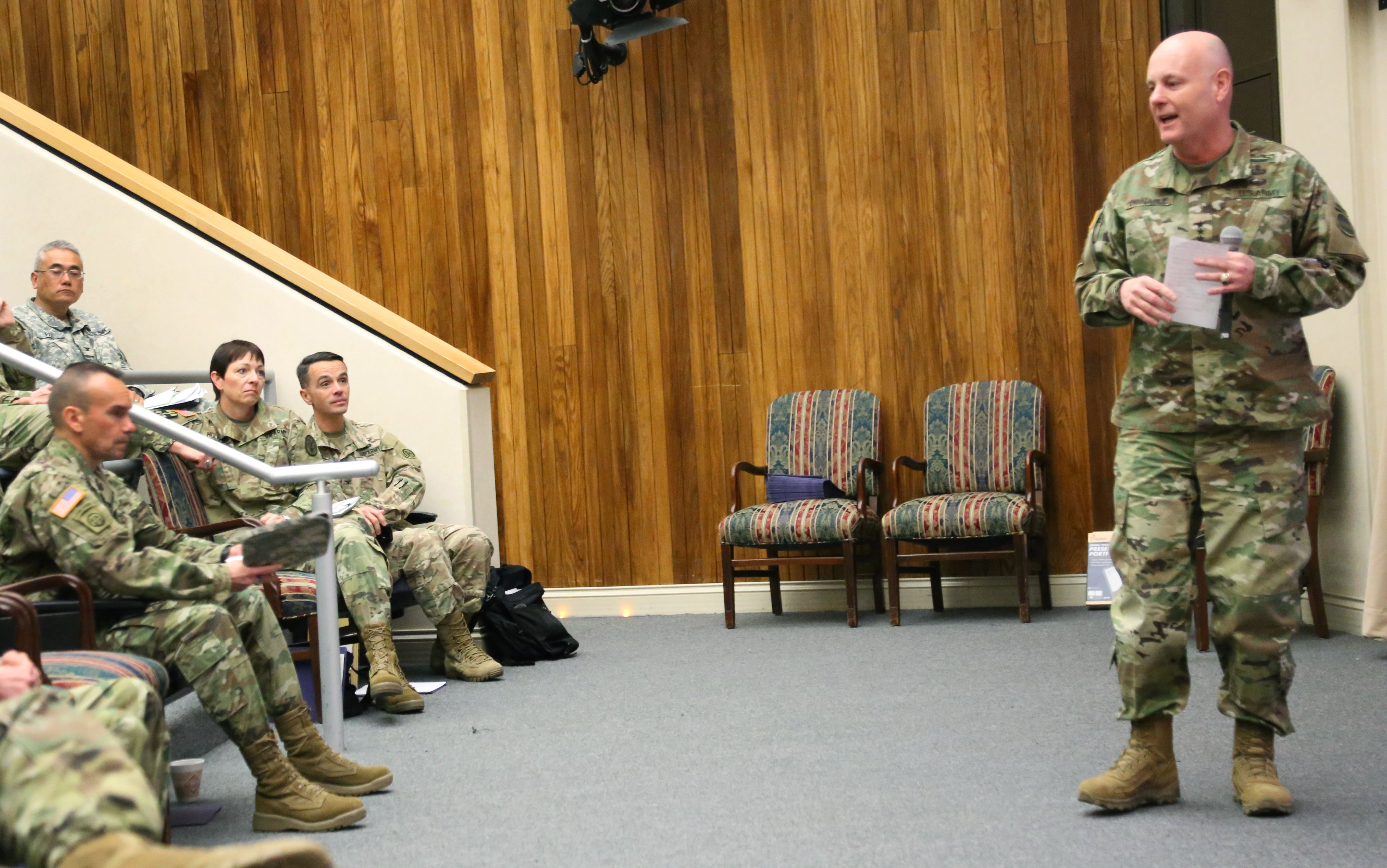
The Uniformed Services University of the Health Sciences (USU) played host to the summit, which began with remarks by Army Surgeon General Lt. Gen. Nadja West and Deputy Commanding General, Army Forces Command (FORSCOM), Lt. Gen. Patrick Donahue. The summit provided a forum for command surgeons to ask questions and have an open dialogue with senior leadership about challenges and lessons learned.
West, who became the Army's 44th Surgeon General in December 2015, emphasized the importance of readiness in Army medicine. She explained, at the end of war, the focus might turn to other important missions, such as safety or assisting our civilian counterparts, and while it's essential to remain aligned with line leadership, and meet those missions, readiness should always be at the forefront.
"We need everyone to be ready … We need to remain ready, and we need every single specialty, to remain ready," she said. "We need to make sure we're agile, adaptable and relevant to those we support."
By remaining ready, Soldiers can take care of those in harm's way. "Everything we do supports the team," she said.
West went on to explain Army Medicine's main priorities can be divided into three main categories: the current fight, the future fight, and our always fight, "What we do every day."
The current fight is focused on health care delivery, and being ready to meet the mission, she said. The future fight is remaining relevant to our line leadership, and having the abilities and structure to move along with those who depend on us. "We need to be able to do whatever our nation asks us to do," she said.
Donahue also emphasized the importance of readiness. He went on to encourage the command surgeons to link series to events, to create sustainable effects. For example, when he took the reins as commanding general for Army Africa, he knew times were changing for the continent, and he had to use a different approach to make an impact. His team developed an engagement strategy, supporting the areas in greatest need of support. Most importantly, he said, is to figuring out what to do, and where.
He added, "The people in this room can make a difference for our Army and for our partners."
During the summit, command surgeons had an opportunity to brief one another on their top issues, priorities, and how they are working to support an overall mission of readiness.
Col. (Dr.) Mark McGrail, who helped organize the summit, said the event is an opportunity to get the key players together, and ensure everyone is on the same page.
"We need to come together and synchronize (our) efforts and how we support each other," he added.
With a newly appointed Army Chief of Staff and Surgeon General, the summit is taking place at an ideal time, McGrail continued. To keep the ball rolling, a regularly scheduled video teleconference will be held to generate topics for discussions, among command surgeons. Additionally, Army Medicine is inviting all of its command surgeons to a bi-annual Command Team Leader Development training.
"We all may come from different commands, but regardless … we have common interests and shared goals," McGrail said.
Social Sharing