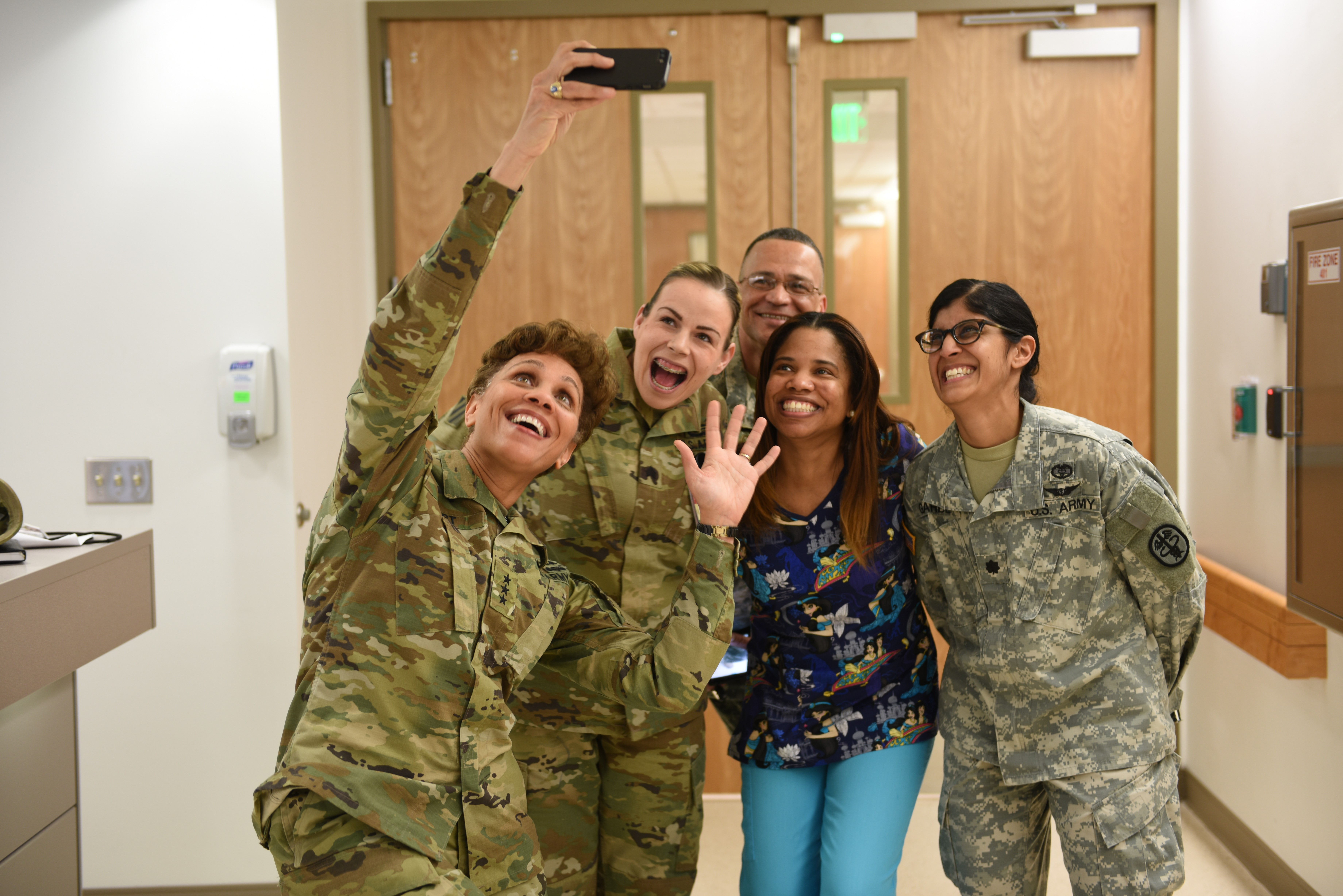
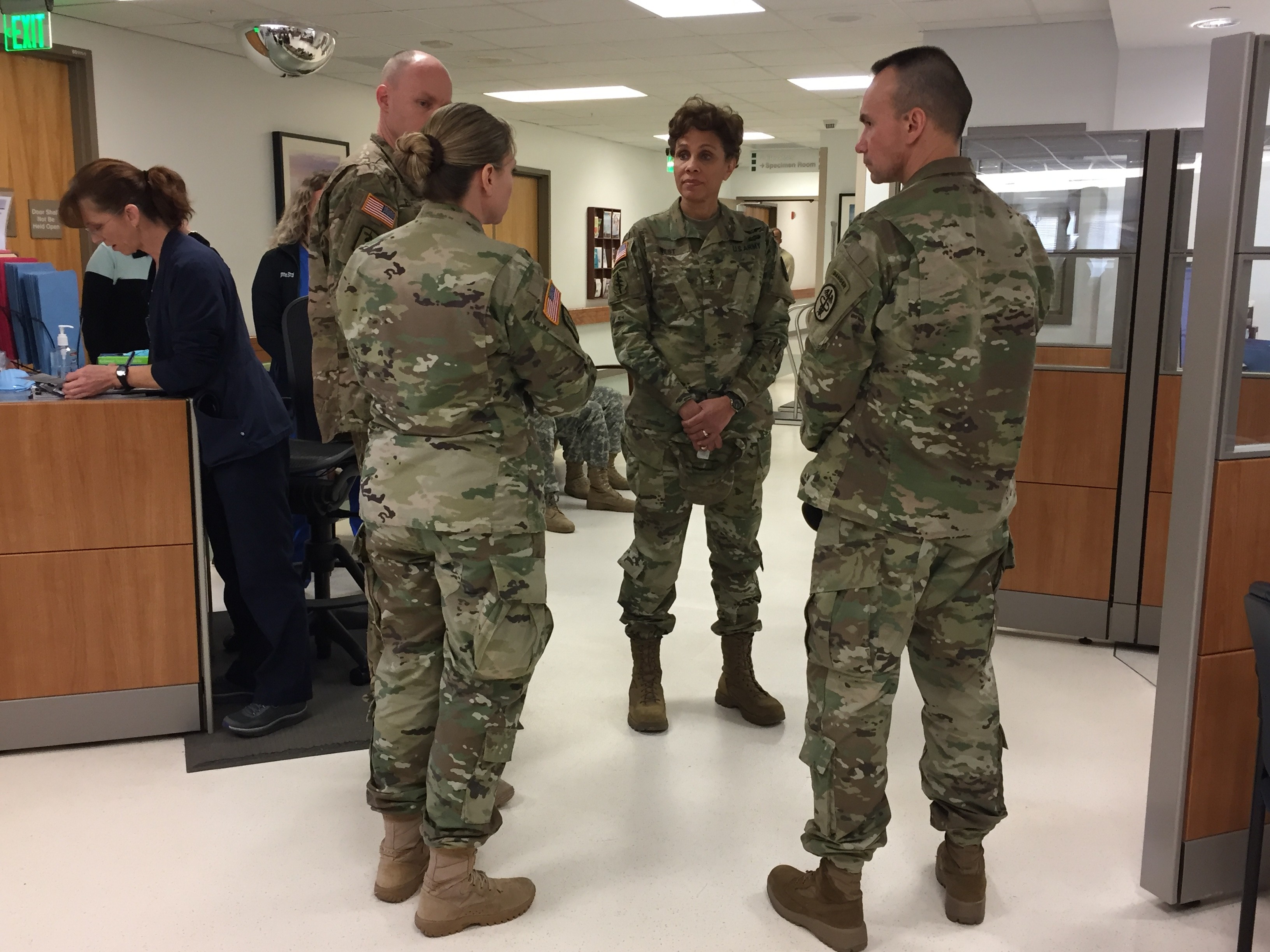
FORT BRAGG, N.C. (Feb. 19, 2016) -- Lt. Gen. Nadja West, the Army Surgeon General and U.S. Army Medical Command commanding general, visited Womack Army Medical Center and Fort Bragg, Feb. 17 and 18.
West, who commanded WAMC from July 2008 to April 2010, said that Fort Bragg was an obvious first stop for her in her new capacity and that her time at Womack helped equip her to be the Army Surgeon General.
"The uniqueness of the Fort Bragg community and being able to work with the XVIII Airborne Corps, our special operations and all the unique units that are here, I think having that interface and that interaction really prepared me well for the position I'm in now," said West.
During her visit to Womack, West toured the newly renovated Mother Baby Unit, which now offers
private rooms for new parents, and the recently renovated Emergency Department that immediately triages patients upon arrival. She said the changes are significant since her time here and definitely for the better.
"Quite a bit has changed," she said. "I walked through the Emergency Department and I almost didn't recognize it. The renovation is fantastic."
The Surgeon General's time at Fort Bragg took her to more than just the hospital. She and Command Sgt. Maj. Gerald C. Ecker, command sergeant major for U.S. Army Medical Command, visited with leaders across the installation to get feedback on Army Medicine. They even did morning physical fitness with Soldiers going through the Intensive Outpatient Program, a four-week program for patients coping with traumatic brain injury and psychological health conditions, at Fort Bragg's Intrepid Spirit Center.
West said that her priority is to support the Army Chief of Staff's priority, which is readiness. She said that from a medical standpoint this means ensuring Soldiers are healthy. West stated that Soldiers face the same health challenges as the civilian population, with nutrition, sleep and exercise being key components of a healthy lifestyle.
"Knowing how to eat properly, understanding about getting enough sleep and the importance of activity are important when it comes to prevention and treatment," said West. "These are lifelong skills that you need to know in order to take care of yourself."
She said that while there are concerns about the future of Army Medicine in the midst of budget cuts and fewer deployments, there is always a need to tend to the health and wellness of our Soldiers and their Families.
"I know we've gone through hard times and ups and downs. Cuts and swells of the population of the military, and decreases after every war," West said. "Throughout we've always managed to maintain a healthcare system to take care of our own, and I assure you that this is another time in that continuum and that we'll continue to be there to support our Soldiers, our Family members and our retirees who are entrusted to our care."
Social Sharing