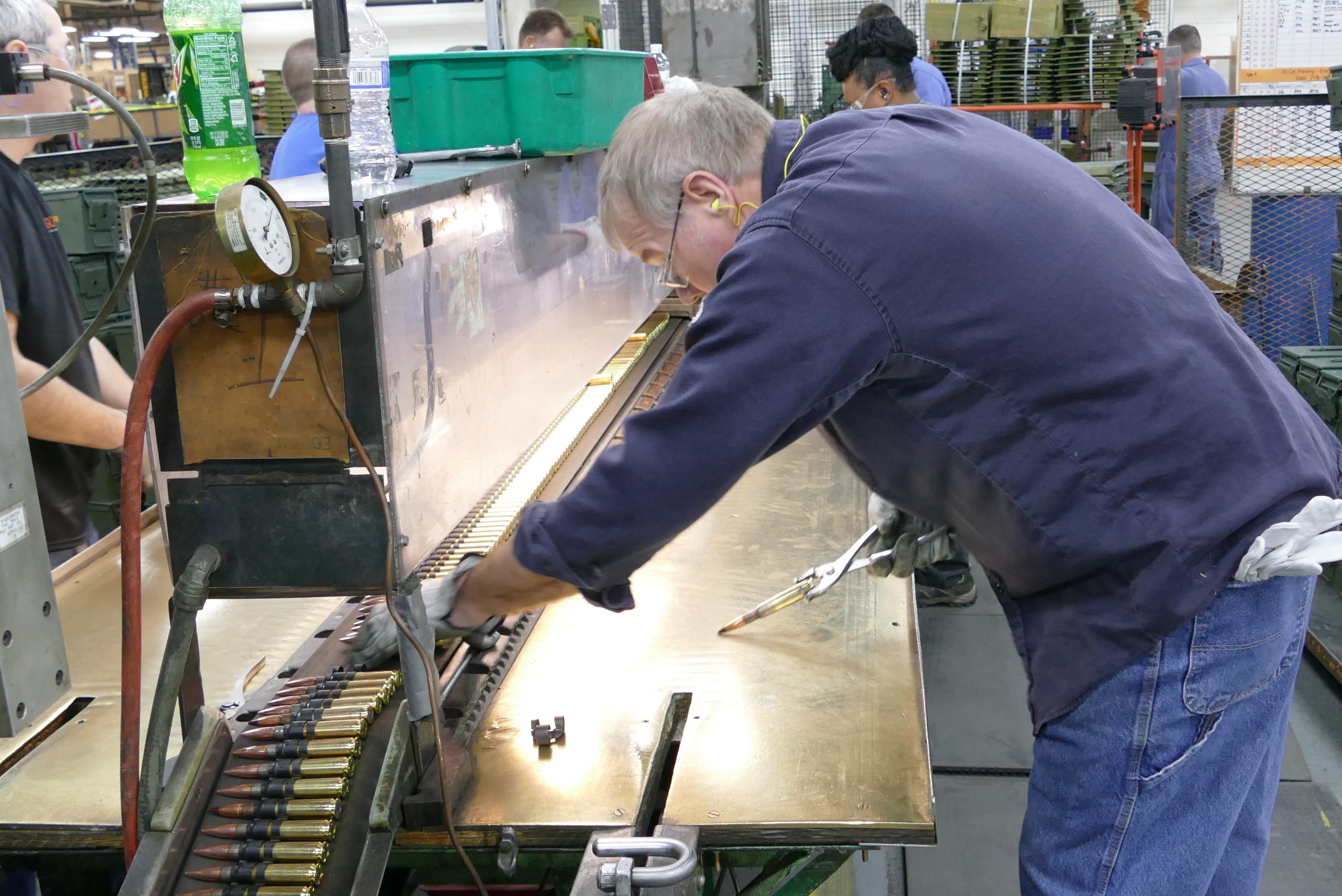
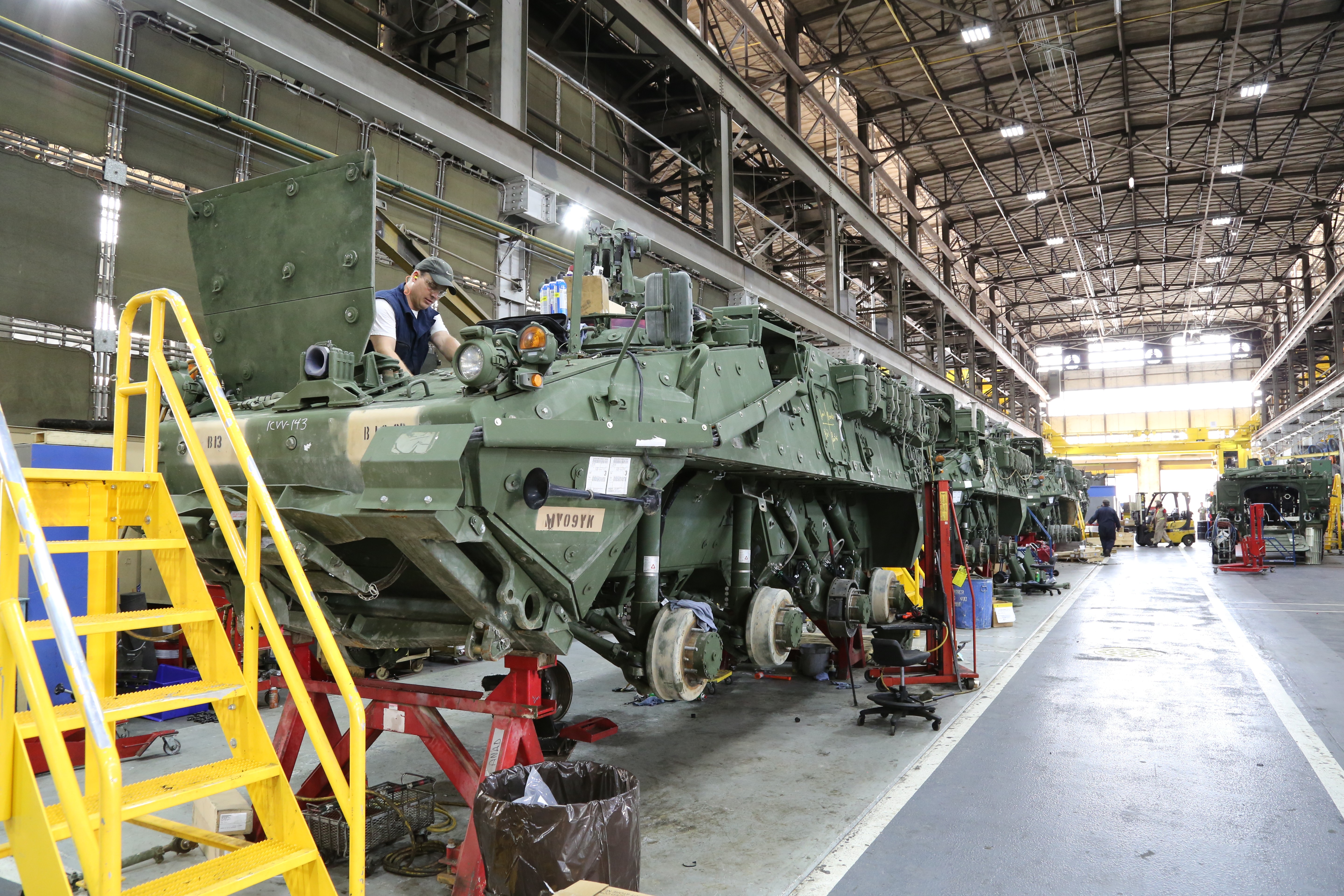
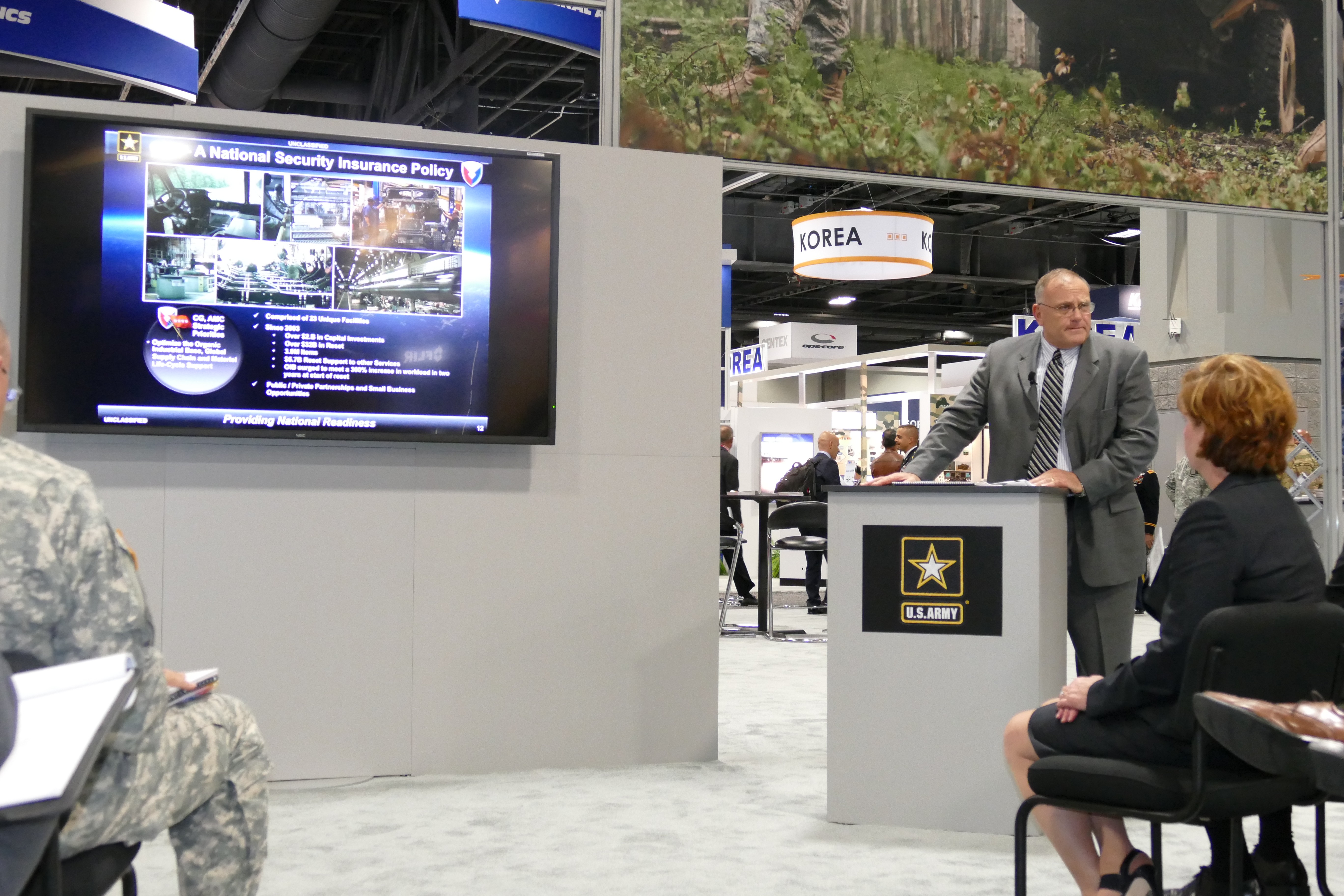
WASHINGTON -- The Army's Organic Industrial Base took center stage at a Warrior's Corner presentation during the Association of the United States Army Annual Meeting and Exposition, Oct. 12.
Jim Dwyer, Army Materiel Command principal deputy to the deputy chief of staff for Operations and Logistics, G-3/4, told an audience of industry representatives and Army leaders that the OIB, which consists of 23 geographically-dispersed depots, arsenals and ammunition plants, serves as an insurance policy for the nation.
"The OIB is a national security insurance policy; what the OIB brings to us is the ability to surge very, very quickly," Dwyer said. "At the beginning of the war, we were able to surge to about 300 percent of our workload in only two years. Civilian industry just couldn't react that quickly due to the contracting process."
Managed by the Army Materiel Command, the OIB reset nearly 4 million pieces of equipment since 2003, including $5.7 billion of work for the U.S. Air Force, Marines and Navy. The OIB earns an average of about $4.7 billion in revenue across the enterprise, with a historic high of about $7.2 billion during the height of the reset in 2011 and 2012, Dwyer said.
AMC invested heavily in upgraded equipment and facilities across the OIB in the past decade.
"Since 2003, we have invested around $2 billion in capital improvements in our enterprise, with about $500 million in major construction and the other $1.5 billion in tooling and technology that rivals what you're going to find in the civilian sector," said Dwyer. "We are very capable of working on not only the existing equipment that we have in our inventory, but on the future systems that the Army intends to bring into the fleet."
It's those investments that Dwyer recommends industry take advantage.
"Public-Private Partnerships allow a lot of opportunities for [industry] to team with our Organic Industrial Base and to take advantage of the $2 billion of investments that we've made, so that you're using our equipment, our buildings, our technology, and you're saving your shareholders and your companies the cash," he said. "We can cut the lead time for your products."
The $520 million of revenue coming in from partnering activities in fiscal year 2015 doesn't scratch the surface of the OIB's capacity, Dwyer said. The potential for growth in partnerships is exponential.
"Our ability to contract extends across the continuum where we can rent out space or empty buildings, we can be wrench-turners or do engineering, or produce parts for your companies that you sell on the market," Dwyer told industry representatives.
He left the audience with two main messages.
"We are an insurance policy for the country; we kept a lot of Soldiers alive by the work we did at the OIB during the wars," he said. "And we are open for business."
Related Links:
AMC's Public-Private Partnership program aims to preserve Organic Industrial Base
Social Sharing