REDSTONE ARSENAL, Alabama -- U.S. Army Space and Missile Defense Command/Army Forces Strategic Command Soldiers are preparing to train space forces for America and its allies via the USASMDC/ARSTRAT Nanosatellite Program, or SNaP.
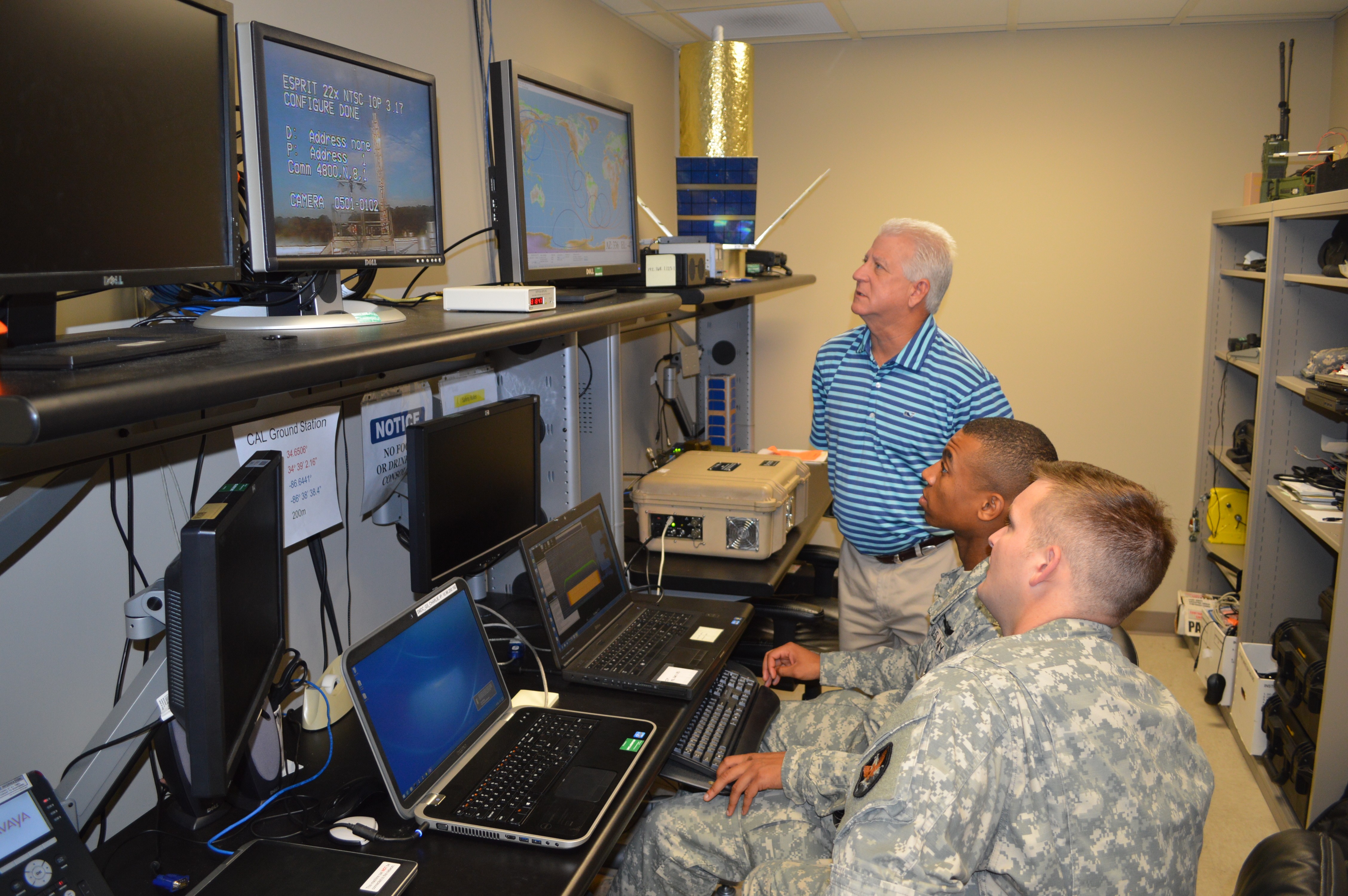
Soldiers from the 53rd Signal Battalion arrived at the SMDC Concepts Analysis Laboratory Oct. 6 to familiarize themselves with the new SNaP constellation of three nanosatellites launched Oct. 8. They will be learning how to train others before heading to South America in late November to work with U.S. Southern Command and host nations in operating the SNaP ground stations and monitoring the nanosats.
"During operations, we will be working with the SNaP satellites and using the new terminal SMDC has designed for it," said Sgt. Austin Prosser, Company B, 53rd Signal Battalion. "We hopefully will be showing that this satellite constellation and equipment is practical for the environments that the Army is trying to use it for. This is a program SMDC has been working on for a couple of years, and we are here for initial orbit testing, to make sure things are good to go before they actually field the equipment.
"We are here for early-orbit operations," he continued. "We have to have somebody monitoring the satellites 24/7 making sure nothing goes wrong. If something does go wrong, we can document and understand the telemetry of what happened and fix it. We will also be running tests and stress the satellites to make sure they operate properly.
"We will be traveling to South America to test SNaP in the actual environment of what USSOUTHCOM wants," Prosser added. "We are going to work with SOUTHCOM and host countries military members to teach them about satellite operations and show them the capabilities that low-earth orbit satellites can provide."
SNaP is a 5-kg mass cube satellite, or CubeSat. It provides data and over-the-horizon communications capabilities. SNaP will be a small satellite communications, or SATCOM, constellation. It will allow communications across great distances, using existing UHF tactical radios. The primary uses are beyond-line-of-sight communications and data exfiltration.
With 60 percent to 70 percent of today's Army systems depending upon space to perform their mission, SMDC is developing cost-effective and responsive satellite technologies to mitigate the impact from loss or disruption of space capabilities. It is not a replacement for national systems but added resiliency.
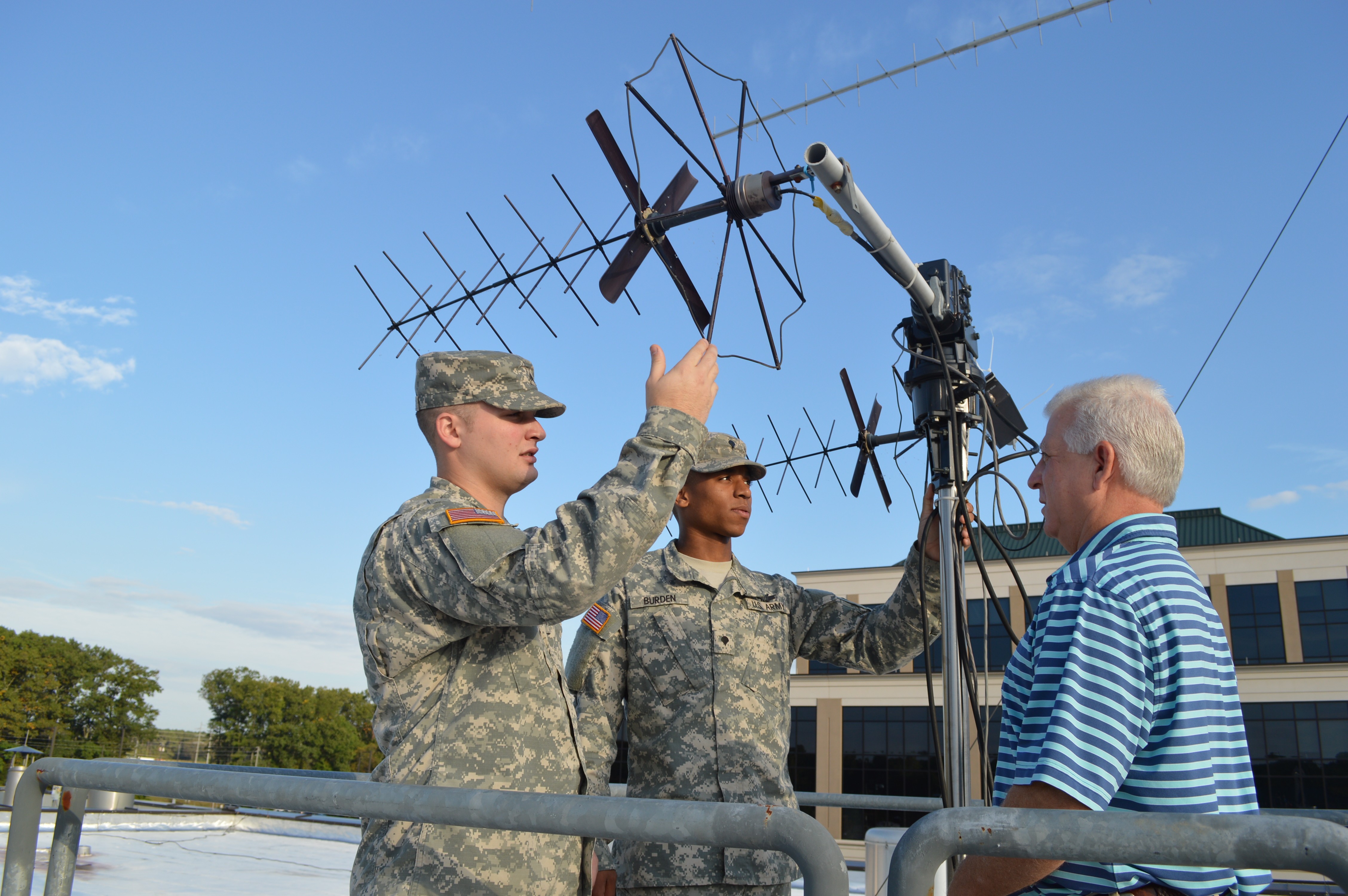
"The Soldiers will be working to check out the system, making sure that everything that we engineered is working correctly," said Tamara Cottam, SMDC Technical Center SNaP operator. "We will be showing them how the technology can be used in the field. The Soldiers will be taken to unattended ground sensors and trained how to get data from the nanosats and transport the information to another ground station. We will show them how the nanosatellites can be used to handle radio communications.
"As the technology gets better with each generation of satellites, we are getting closer to deploying it," she continued. "This is the first time that we are going to have Soldiers here to work with us at that ground station before heading to SOUTHCOM, and I think that is a testament to the technology and that we are on the cusp of fielding it. This is going to enhance communication in disadvantaged environments and provide them with data and communication they may not have been able to get before."
To deliver a more resilient space capability, the Army is exploring technologies deployed on nanosatellites in low earth orbit to deliver needed capabilities to tactical Warfighters and give them the freedom to communicate, maneuver and have immediate access to actionable situational awareness.
"This is very exciting for SMDC," said Jon Dodson, SMDC Tech Center SNaP chief engineer. "I think this is a great opportunity to really help our Warfighters. The importance for the Soldiers is get them to understand what we are doing here and how we are trying to help them in the field so they can pass on the information. We want to get them experienced for operating the ground stations, which we hope in the future we will build a lot of them and Warfighters will be operators for the system.
"The Soldiers will learn how we develop and work the ground station," he continued. "They will be learning how to manage the constellation of satellites and how to manage the missions of the satellites.
"We hope this allows communications to the small squad-sized Soldier formations who don't currently have beyond-line-of-sight communications," Dodson added. "We also hope the unattended ground sensors we have employed will no longer have to have Soldiers retrieve data from them."
The Department of Defense is using the SNaP Joint Capability Technology Demonstration, or JCTD, to develop and demonstrate low-cost space support capabilities through the evolution of advanced nanosatellite technologies and concepts. The JCTD program is managed by the office of the Under Secretary of Defense for Acquisition, Technology, and Logistics and the SNaP program is managed and executed by SMDC's Tech Center's Space and Strategic Systems Directorate.
USSOUTHCOM is partnering with SMDC, the U.S. Naval Postgraduate School and other DoD organizations to evaluate emerging nanosatellite technologies through the SNaP JCTD.
"This is very exciting," said Spc. Jonathan Burden, Company A, 53rd Signal Battalion. "It is not an opportunity that most Soldiers in my unit really get a chance to do. The fact that I am getting a chance to do so, mostly from luck, is pretty amazing. I would say SNaP is pretty incredible. It is not what I am used to working with so it is an entirely new experience to me. I am definitely excited to be working with it.
"We are scheduled to go to Honduras, Colombia and Brazil once we leave Huntsville," he continued. "While we are there, we are going to be assisting both partner-nation forces as well as SOUTHCOM personnel and teach them how to operate the systems.
"This is a great opportunity to support our nation and the big picture with the nation and other countries," Burden added. "We are supporting the Army, and in turn helping the Navy, helping the Air Force, helping the Marine Corps and helping the other nations."
Social Sharing