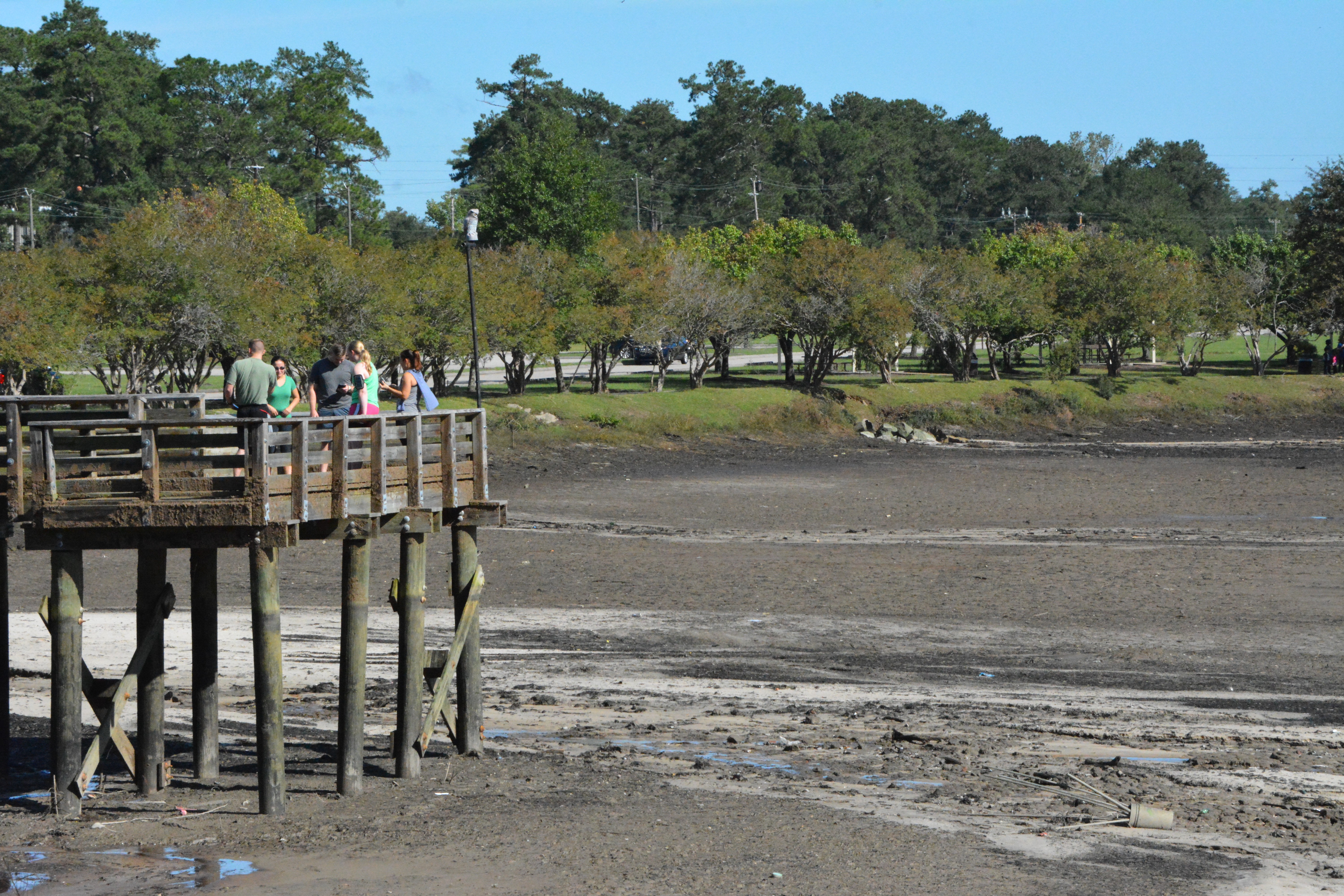
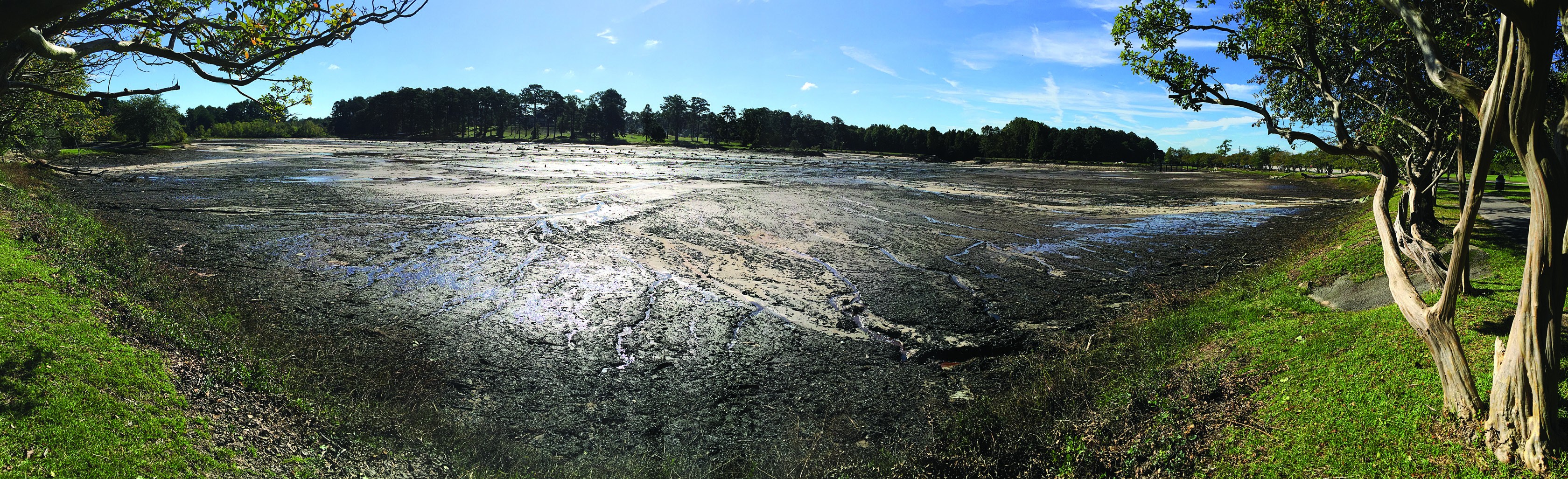
Semmes Lake breached its earthen dam, leaving fish to flop and die. Power lines along Dixie Road drooped and fell. And no Soldiers graduating from Basic Combat Training ran screaming onto Hilton Field for Family Day.
Fort Jackson remained closed to all but essential personnel from the weekend until today in the wake of torrential rains from Hurricane Joaquin, although Family who had arrived for graduation were allowed to visit post and meet with their Soldiers, despite the lack of a ceremony.
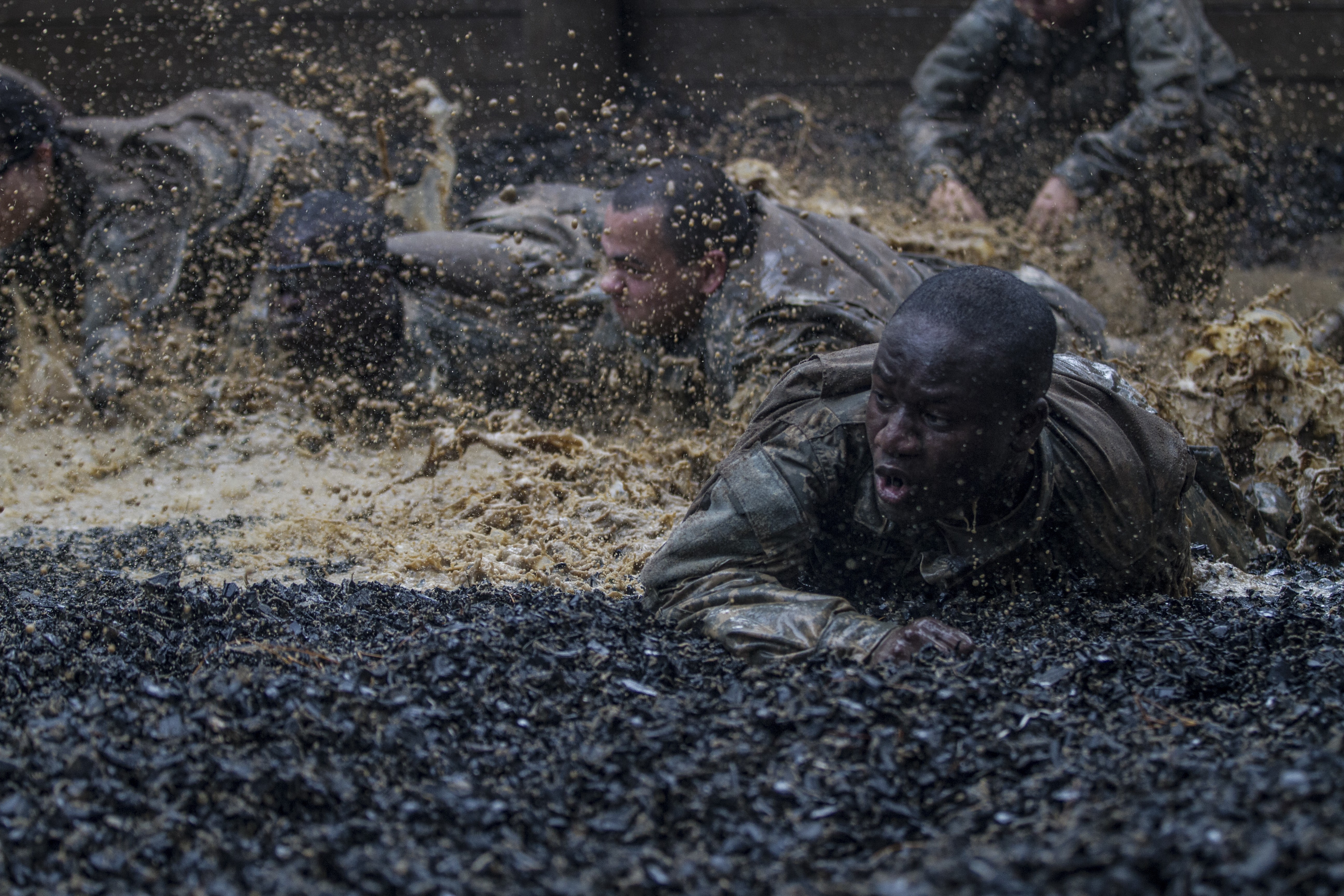
Basic training operations gradually resumed as fields and ranges dried.
"The weather forced us to cease daily operations, close schools, coordinate with state government and support local (and federal emergency) response," said R.J. Frazier, Fort Jackson's emergency manager.
Post commander Maj. Gen. Roger Cloutier decided to close post, "first and foremost, to protect the community's safety," Frazier said.
"Damage assessments are currently unknown," Frazier said, and it will be difficult to say when they might be available.
Post officials reported no injuries related to the storm.
On Wednesday, Fort Jackson continued to experience low water pressure, originating with the City of Columbia water system that serves the installation.
In a flier distributed to post housing, garrison commander Col. James Ellerson urged residents to be patient until water service was restored. Until then, he said, "remember that the water you are receiving from your faucet must be boiled before it is safe to drink or cook with."
The installation was awaiting a number of ROPUs -- reverse osmosis purification units -- from Fort Bragg. Once those arrive, they will be able to clean about 180,000 gallons of water daily.
Sightseeing, not working
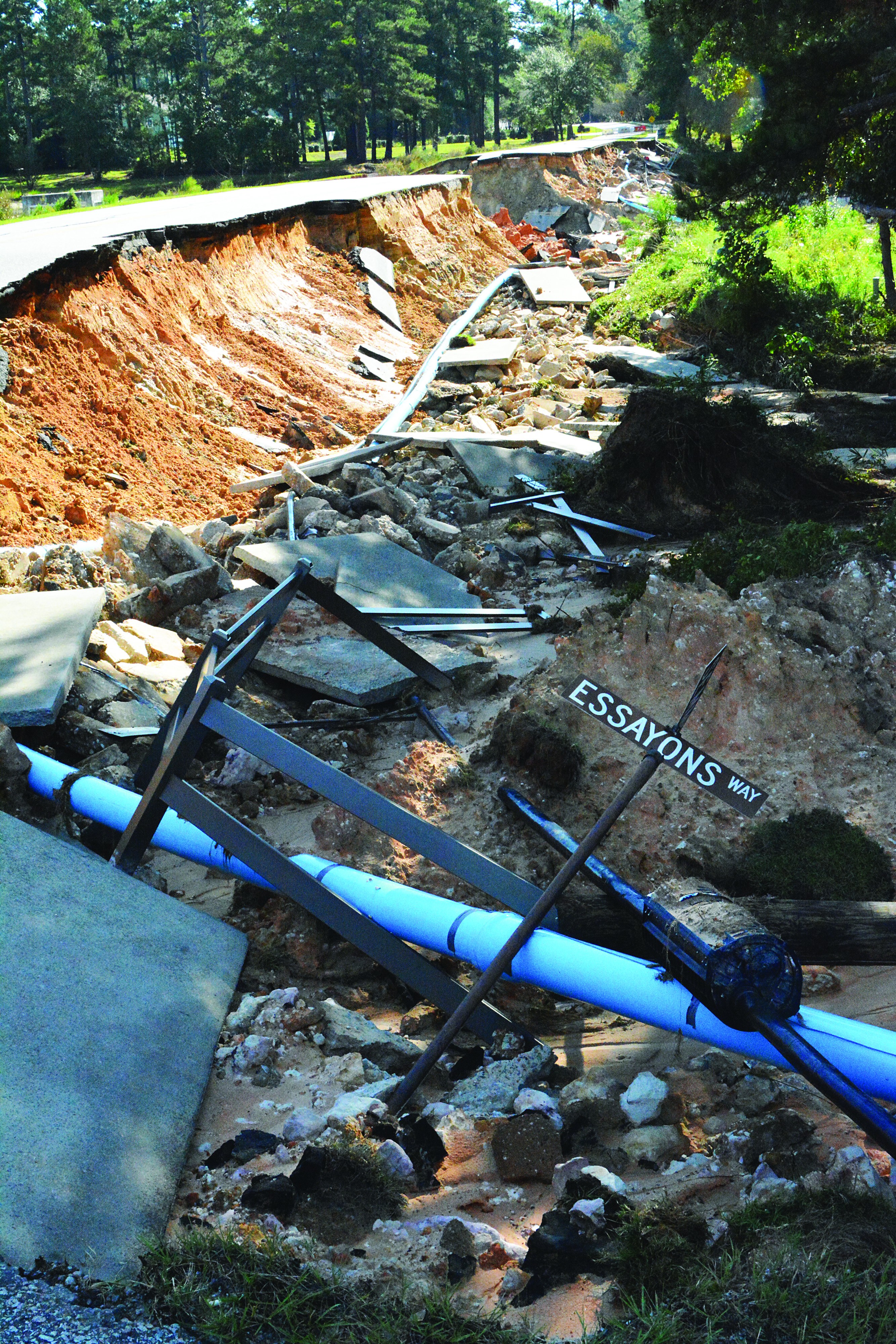
Semmes Lake proved a big draw for walkers and joggers in the wake of the storm because of the collapse of its earthen dam below Pershing, the road on which commanders' homes sit. The lake itself was empty of all but dead fish and a few surviving turtles. Hawks circled overhead, perhaps drawn by the smell of decay.
At the corner of Semmes and Essayons Way, huge chunks of sidewalk and smaller pieces of asphalt lay in a newly deepened gully, along with the corner street sign. Orange stanchions prevented entry at each end of the collapse.
Capt. Reginald Meadows, a student at the Soldier Support Institute, usually rides his bicycle along Semmes toward Macgruder Avenue in the mornings. On Tuesday, he approached the collapsed road on foot instead.
"I could take it," he joked. "I could jump it" on his bike.
He had wandered down to "just eat by the lake and enjoy the day, but I guess there's no lake."
"I'm trying to figure out how they're going to get the water back into the lake," he said. "Getting it out was easy."
Sgt. 1st Class Jason Waller of Headquarters and Headquarters Company, 171st Infantry Brigade, found what had happened to Semmes Lake "crazy."
"I was stationed here in 2010 and used to come out here to fish with my kids," he said. "They'd just restocked it around 2008 or 2009.
"Just to think, all of those resources now are somewhere else.
"This was a nice place to sit, hang out with their loved ones during basic training. Now it's just a big pile of dirt."
Reassuring the trainees
"Information is the No. 1 thing people want in times of stress," said Command Sgt. Maj. Lamont Christian, commandant of the U.S. Army Drill Sergeant Academy. Christian spent Tuesday morning briefing Soldiers on the status of the training cycle, which he said would continue on schedule with a few small tweaks.
"As bad as the situation is, the timing worked out perfectly because (they're all) in classrooms," he said of Soldiers at the academy. Roughly a quarter of the 370 Soldiers enrolled at the academy still had training to complete on the ranges.
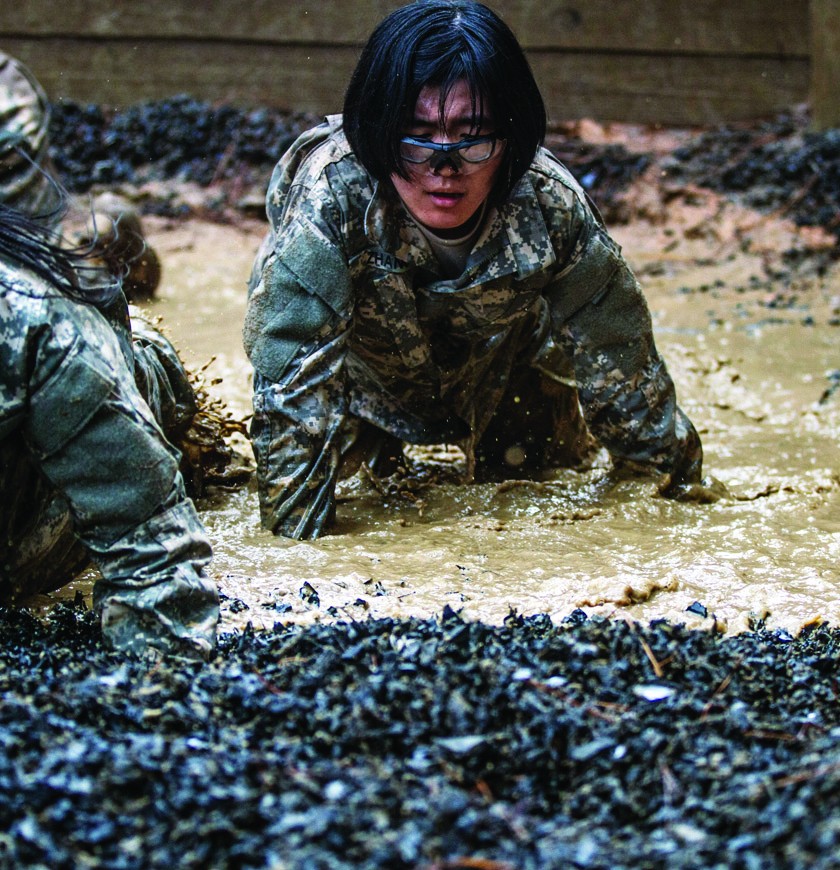
Any training that involves intense physical activity will be restructured because of on-going infrastructure problems caused by the rainfall.
"We don't have the ability to conduct what I consider to be the right level of personal hygiene," he said. "Because (Soldiers) can't shower appropriately, we're not doing the (full) training they normally would at this time of the year.
"(But) it will not impact them being able to graduate on time."
'Nor any drop to drink'
On Chesnut in front of the dog park, Capt. Robert Best repeatedly dipped a jug into a large puddle, gathering water to add to his toilet tanks in post housing.
"The night before they shut the water off, we filled a bunch of buckets," he said. (The water actually had not been shut off, but pressure issues abounded.) A friend brought bottled water -- 72 bottles, said Best's 10-year-old son, Noah -- and the family collected rainwater.
"I think we'll be good," said Best, a student at the Soldier Support Institute. "We've got a couple more days' (worth)."
Noah hadn't been to school -- where he, no doubt, would have heard many jokes made at the expense of his name -- but he wasn't exempt from bathing. He used a bucket of water and a washcloth.
"It's good training," Best said. "That's what Soldiers do in the woods."
Back on the range again
Staff Sgt. Ron Laugand of Delta Company, 1st Battalion, 61st Infantry Regiment, ran his Soldiers through training in shooting behind high and low walls at Range 20. Crouching on one knee on the damp soil, the Soldiers raised their weapons, muttering, "Bang, bang, bang, bang."
Early in the week, the ranges had been too wet for training, Laugand said, so he took his company into the classroom to review information on keeping their finances straight.
Even though the trainees didn't get any rain days, he admitted that "it was sort of a break for them."
As Soldier after Soldier aimed his M-16, the damp air over Range 20 filled with the staccato pops of actual gunfire from nearby units.
Social Sharing