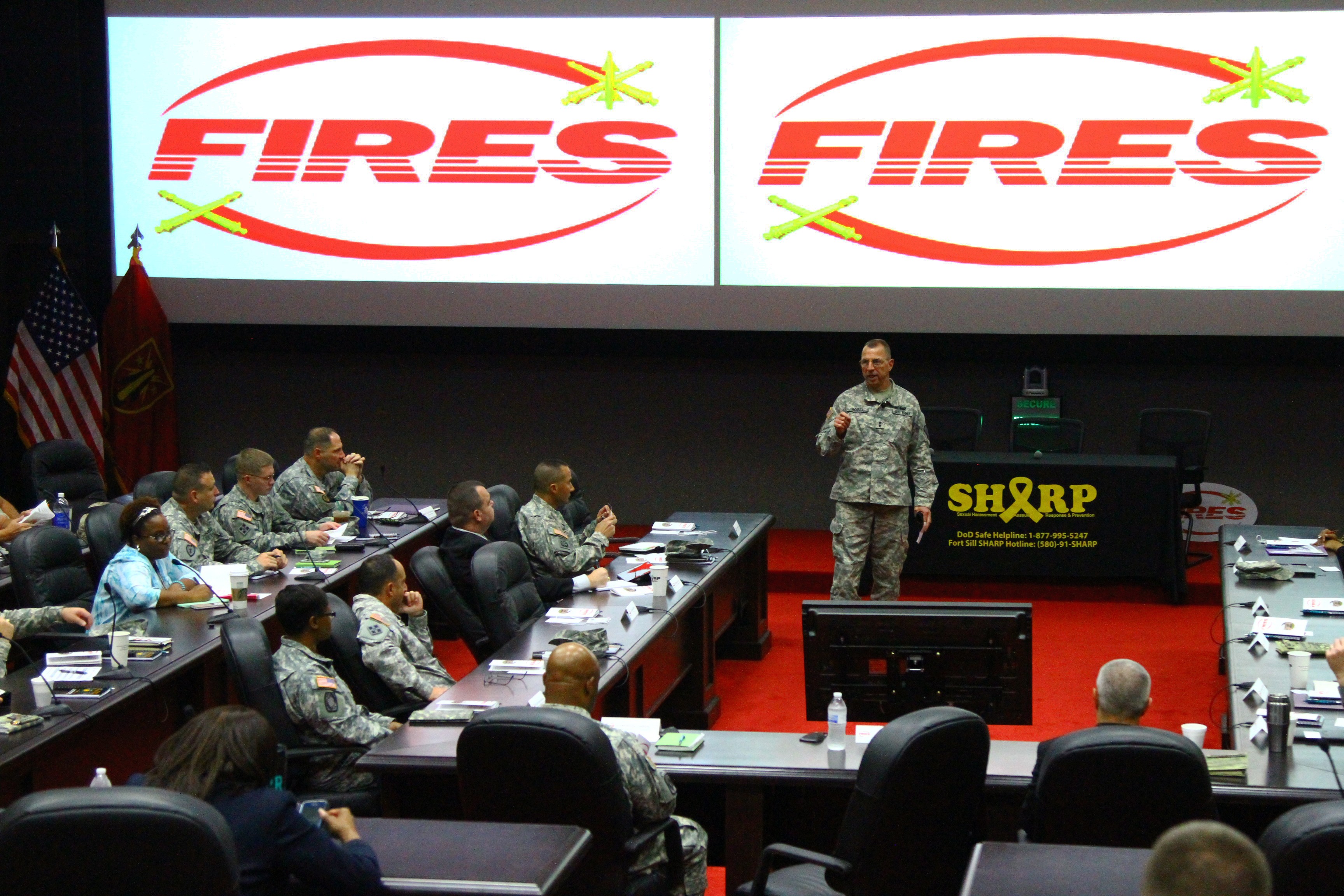
FORT SILL, Okla. Oct. 8, 2015 -- Dozens of officer and enlisted leaders and representatives from social services, academia, legal and law enforcement agencies met for the Fort Sill Sexual Harrassment/Assault Response and Prevention (SHARP) summit Sept. 29-30 at Snow Hall here.
The summit's purpose was to address what the Army is doing about sexual assault; to share best practices to combat the problem; and to open communication lines with outside organizations, said Maj. Gen. John Rossi, Fires Center of Excellence and Fort Sill commanding general, in his welcome.
Some of the topics discussed included, "Our Culture: Military and Society," "Basic Training: What we see from new recruits and how that reflects on our society," criminal pathology of rapists; and differences between how the military and civilian legal systems work in sexual assault.
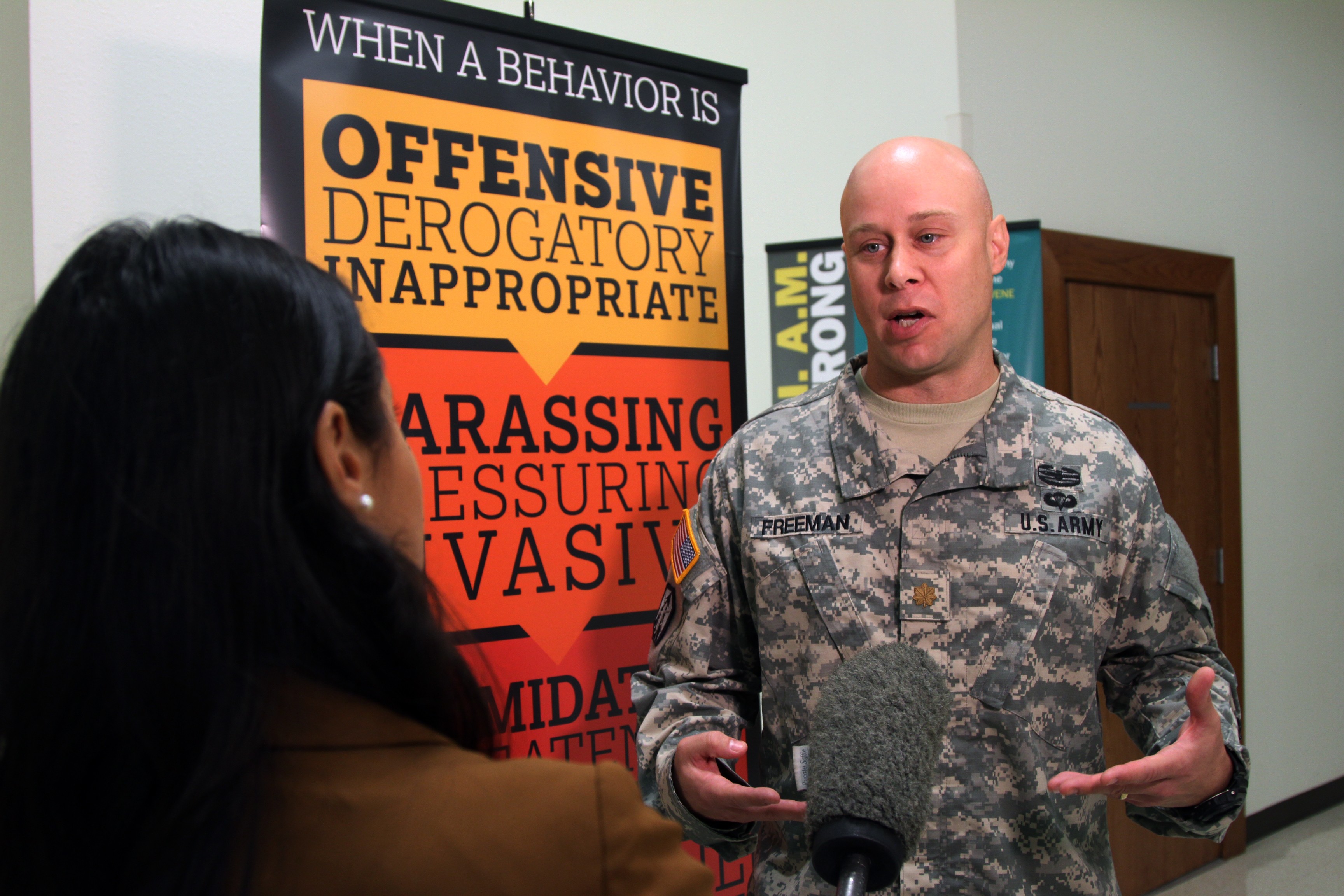
Attendees also heard about a civilian law enforcement case study of the capture of a serial rapist, and from sexual assault victims during a survivor panel, said Maj. David Freeman, Fort Sill SHARP director.
Freeman said SHARP consists of three major areas: training Soldiers and civilians, interacting with the community, and most importantly it's about providing advocacy to victims.
The post received 106 reports in fiscal 2014; and averages about 100 per year, the director said. A report can range from inappropriate touching to rape.
"A lot of times Soldiers come into basic training and they will report to us an incident that happened before they joined the Army, or a Soldier will report something that happened at their last unit, Freeman said.
"If a victim comes to us with a report, we see to it that they receive medical or legal [assistance], if they need it, or turn it over to the proper investigating authority," Freeman said.
SHARP training begins immediately when a person joins the Army whether in Basic Combat Training or the Basic Officer Leader Course. After that, SHARP training is an annual requirement for Soldiers and DA civilians.
SHARP is a professional ethic that must be ingrained in Soldiers just like other Army Values, Freeman said.
"That's why we have a lot of juniors leaders in [the summit] because they're the ones who talk to Soldiers everyday and they're going to help us solve the problem," he said.
SHARP is about building a climate of trust, which in turn builds a stronger Army, Freeman said.
"When we build a network of professionals who build trust in their organization, then we're a more ready force," the major said.
Dr. Tanya Lowery, Oklahoma State University Title IX officer, presented on what sexual violence prevention training services OSU offers to its students, faculty and staff through in-person, online and outreach training.
Lowery said universities and the military attract a large number of young people, and that sexual violence prevention is paramount to both these as well as to all communities.
She said the summit was a collaborative experience with the various groups learning the best practices from each other. "Hopefully, what we do the military can also utilize, and vice-versa."
Lowery said education is key in the prevention and recurrence of sexual harassment and assault.
"We all need to be continuously educated about this very important topic, and when we are we can make out communities that much better and safer."
Freeman said he received positive feedback about the summit.
"The audience thought the survivor panel tied to the law enforcement case study was the most powerful portion of the summit," he said. And one suggestion was that more younger-Soldiers attend the summit, too.
During the opening of the summit, Rossi recognized Anderal Ward, 2015 Fort Sill Victim Advocate of the Year; and Sandra Combs, Installation Exceptional Sexual Assault Response Coordinator. They each received the Army Achievement Medal for Civilian Service.
Social Sharing