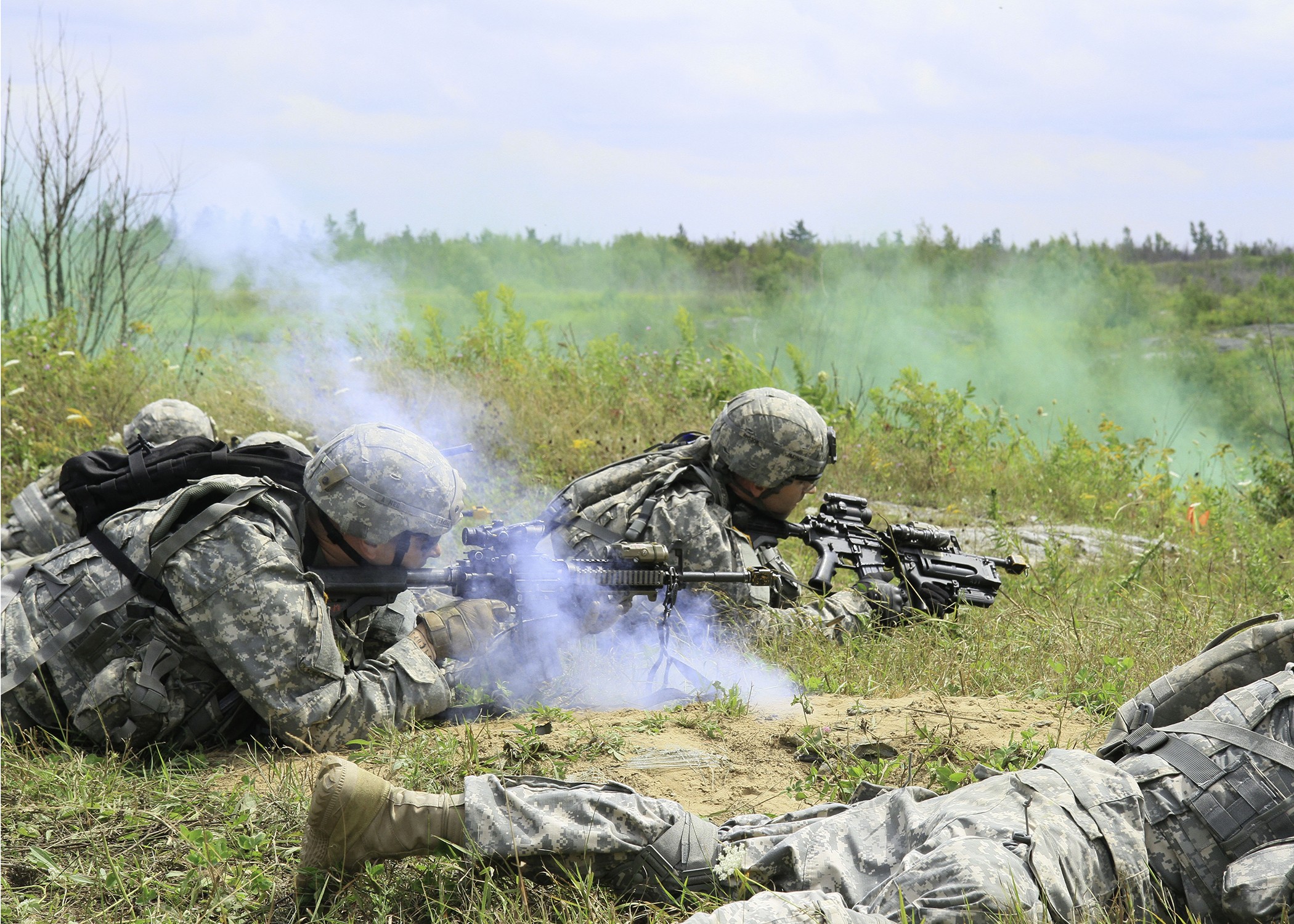
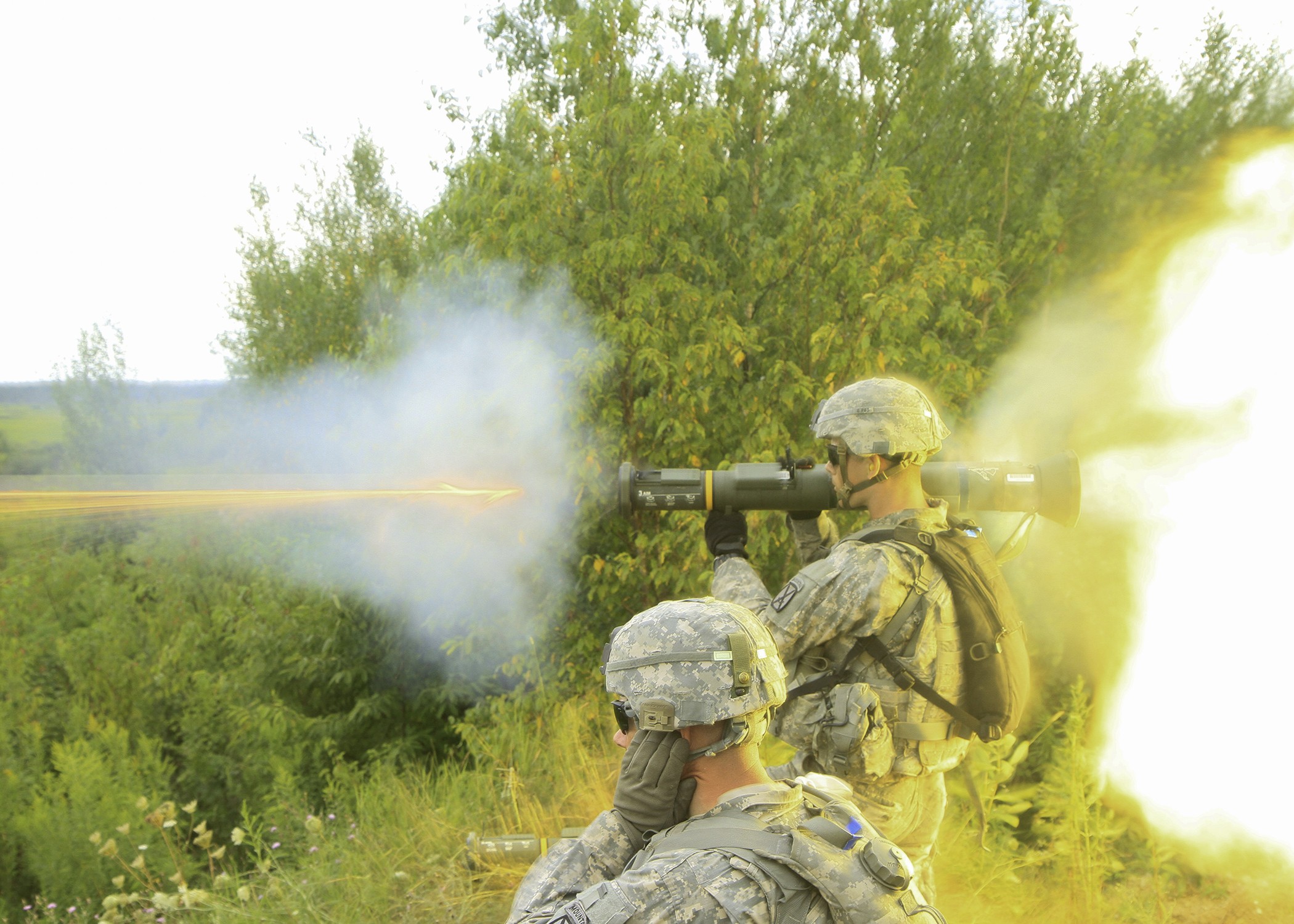
Soldiers assigned to C Company, 2nd Battalion, 87th Infantry Regiment, provide a secondary support by fires position during a platoon-level live fire exercise. The Catamounts conducted a 17-day field training program aimed to educate leaders on squa... VIEW ORIGINAL
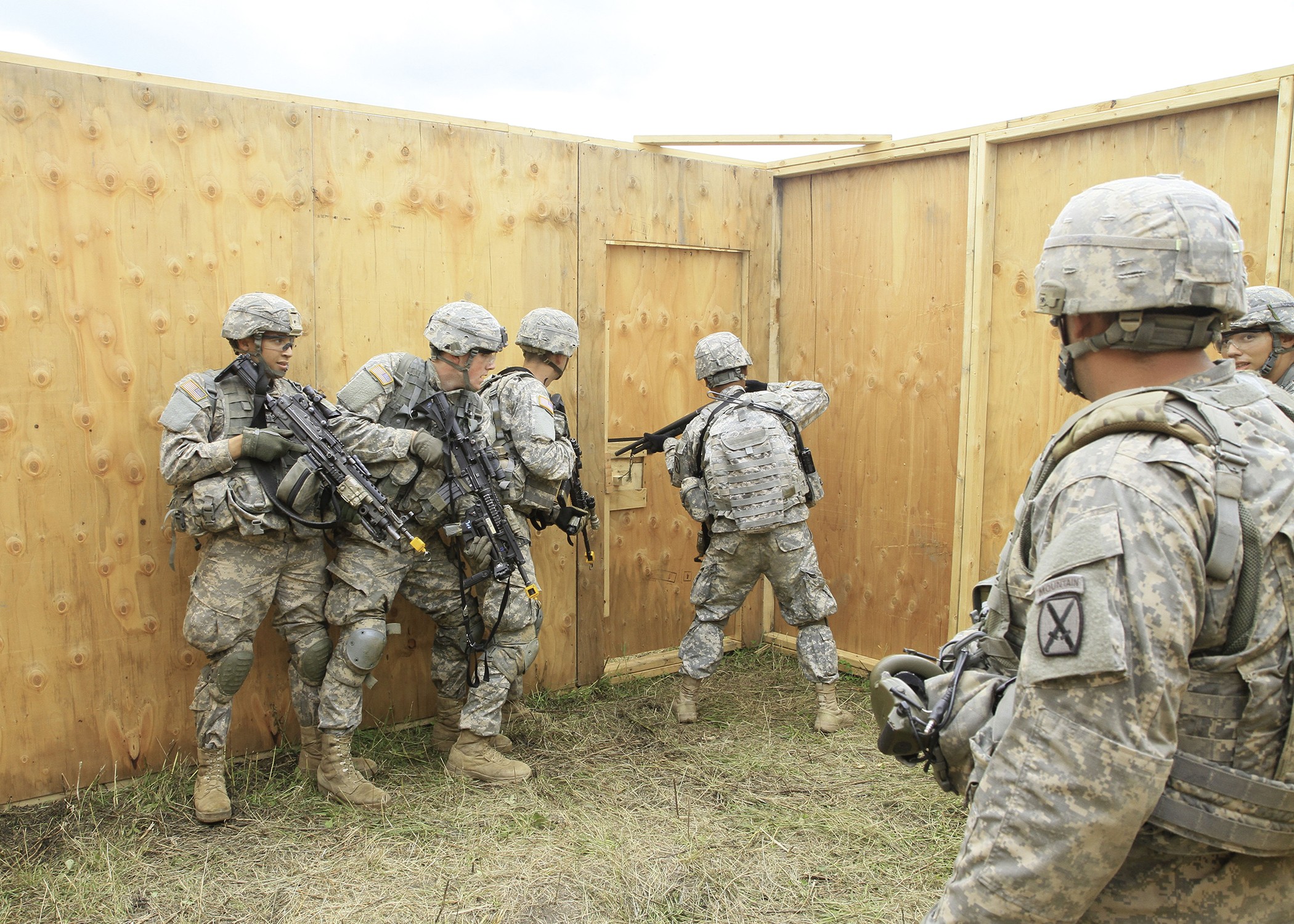
FORT DRUM, N.Y. (Sept. 3, 2015) -- Infantrymen assigned to 2nd Battalion, 87th Infantry Regiment, 2nd Brigade Combat Team, 10th Mountain Division (LI), conducted company-level day and night village raids Aug. 26 at Fort Drum.
The operation was the capstone event of a 17-day field training program aimed to educate leaders on squad and platoon level movement drills that culminated in a company-level air assault. It began on the training range where they focused on the collective tasks that would build into their final objective.
"What you're seeing here at Range 44 is the first (of three) modular training (events) where platoons conduct live fires over a six-day period," Lt. Col. Jonathan Chung, 2-87th Infantry Regiment commander, said.
Nine platoons trained on both day and night missions to enhance the skills necessary to accomplish the final collective objective.
"The key aspect of this modular training event is the ability to synchronize both direct and indirect weapons as well as enablers … which is an opportunity you don't really get during these types of events," Chung said.
Capt. Alex Sinclair, B Company commander, said that he had never seen a platoon live fire conducted like this before.
"Most of the time it's 'let's go, let's move' and we're done," Sinclair said. "But for this event, we had two support by fire positions that constantly provided suppressive fires on enemy positions while the assaulting element breeched a concertina wire obstacle and coordinated close air support from an (AH-64) Apache helicopter en route to clear multiple buildings in a village."
Sinclair also noted the safety and precision demonstrated by his Soldiers during the preliminary stages of training that exemplified the weapons confidence, marksmanship and synchronization needed to accomplish the objective.
Soon, he and his men found themselves within 24 hours of their final mission and they began to develop an operational strategy to deliver their forces by ground and air for an assault from two avenues of approach.
"Force on force is based off of leader placement, span and control and, finally, communication," Sinclair said. "Each of my leaders got to see how this all fed into it (the final mission)."
Sinclair observed how the complexities of facing a mobile enemy force are far greater than that of stationary targets, and the need for his men to adapt to the changing environment.
"You have to be a thinking Soldier," stated Sinclair. "You have to adapt to all the changes that happen on the battlefield."
Sgt. Steven Williams, B Company's heavy weapons squad leader, described a change he and his support by fires team made when their position was compromised.
"On that particular objective we were engaged while setting into our support by fire," Williams said. "Now I had to re-maneuver guys with the heaviest equipment so my decisive operations (assaulting element) could still make their push into the village."
Sinclair watched Williams' actions from a nearby building.
"As they moved up they noticed there was not much cover and concealment," Sinclair said. "Right when they (realized) that and began to move, they received contact from the enemy."
Sinclair's men eventually breeched the city's outer perimeter and cleared dozens of enemy personnel from four multi-level buildings, ending a 17-day lesson in life-or-death tactical skills.
"Overall the training we had was tough," Williams said. "It was a lot tougher than the training I'm used to, but I believe it's a step in the right direction. It's by far the best training I've had since I've been in the Army."
"What we have here is the opportunity to increase and build lethal platoons," Chung said. "That can be defined as our ability to kill the enemy with direct and indirect fires, mark and bypass obstacles, integrate enablers and communicate effectively."
Social Sharing