1 / 32 (Photo Credit: U.S. Army)View original2 / 32
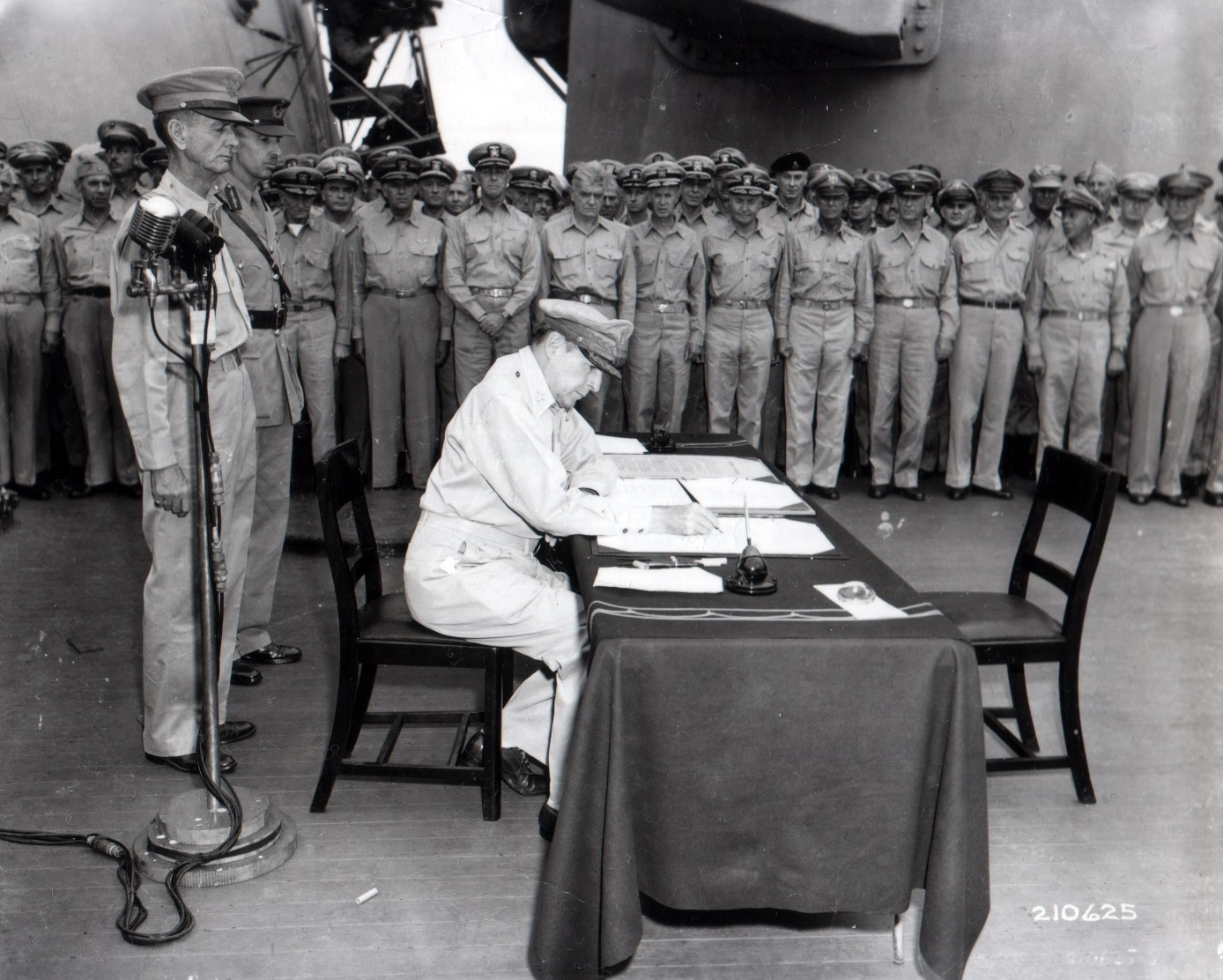
Gen. Douglas MacArthur signs the Instrument of Peace as supreme commander of the Allied powers during the Japanese surrender ceremony aboard the U.S.S. Missouri, Sept. 2, 1945. Shown behind MacArthur are Lt. Gen. Jonathan Wainwright, left, and Lt. Ge...
(Photo Credit: U.S. Army)View original3 / 32
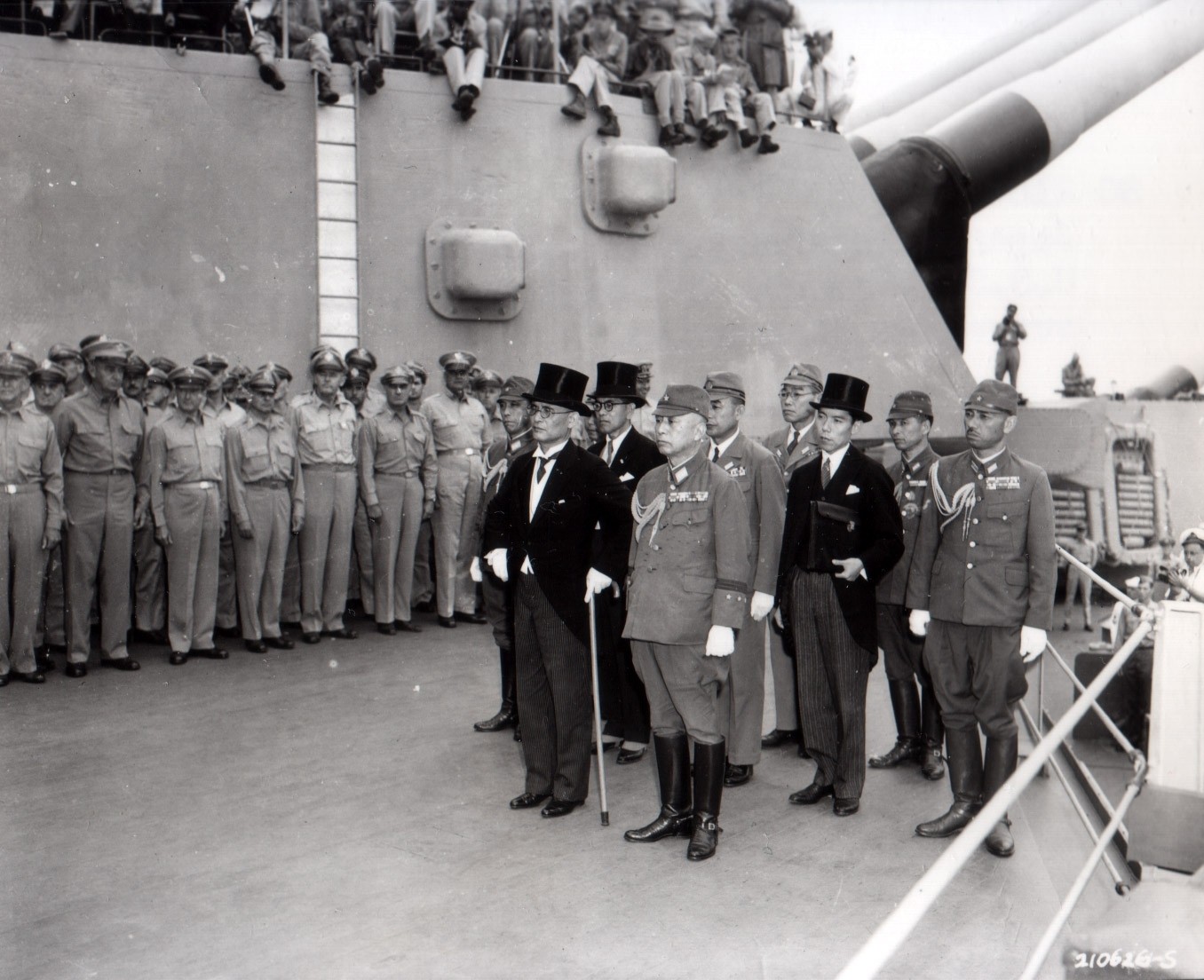
Namoro Shigomitso signs on behalf of the emperor of Japan and the Japanese imperial government during the surrender ceremony on the U.S.S. Missouri, Sept. 2, 1945. Lt. Gen. Richard Sutherland, U.S. Army chief of staff - Southwest Pacific Area, is sho...
(Photo Credit: U.S. Army)View original4 / 32 (Photo Credit: U.S. Army)View original5 / 32
Gen. Douglas MacArthur, center, accompanied by Lt. Gen. Richard Sutherland, left, U.S. Army chief of staff, and Lt. Gen. Robert L. Eichelberger, commanding general of the U.S. Eighth Army, stands amidst a crowd shortly after landing at Atsugi Airfiel...
(Photo Credit: U.S. Army)View original6 / 32 (Photo Credit: U.S. Army)View original7 / 32 (Photo Credit: U.S. Army)View original8 / 32 (Photo Credit: U.S. Army)View original9 / 32 (Photo Credit: U.S. Army)View original10 / 32
Standing next to an abandoned Japanese ambulance, from left, Second Lieutenants Norma Gabs, Klayta Chaplin, Jennabelle Harding and Doris Turner, all Army nurses, serve in the first American hospital established in the Tokyo area after the war, Sept. ...
(Photo Credit: U.S. Army)View original11 / 32 (Photo Credit: U.S. Army)View original12 / 32
The same flag that flew over the White House at the time of the Japanese attack on Pearl Harbor is raised over the U.S. Embassy in Tokyo by Soldiers, of the 9th Cavalry Division, during a ceremony marking the official U.S. occupation of Tokyo, Sept. ...
(Photo Credit: U.S. Army)View original13 / 32 (Photo Credit: U.S. Army)View original14 / 32 (Photo Credit: U.S. Army)View original15 / 32 (Photo Credit: U.S. Army)View original16 / 32 (Photo Credit: U.S. Army)View original17 / 32 (Photo Credit: U.S. Army)View original18 / 32 (Photo Credit: U.S. Army)View original19 / 32 (Photo Credit: U.S. Army)View original20 / 32 (Photo Credit: U.S. Army)View original21 / 32 (Photo Credit: U.S. Army)View original22 / 32 (Photo Credit: U.S. Army)View original23 / 32 (Photo Credit: U.S. Army)View original24 / 32 (Photo Credit: U.S. Army)View original25 / 32 (Photo Credit: U.S. Army)View original26 / 32 (Photo Credit: U.S. Army)View original27 / 32 (Photo Credit: U.S. Army)View original28 / 32 (Photo Credit: U.S. Army)View original29 / 32 (Photo Credit: U.S. Army)View original30 / 32 (Photo Credit: U.S. Army)View original31 / 32 (Photo Credit: U.S. Army)View original32 / 32
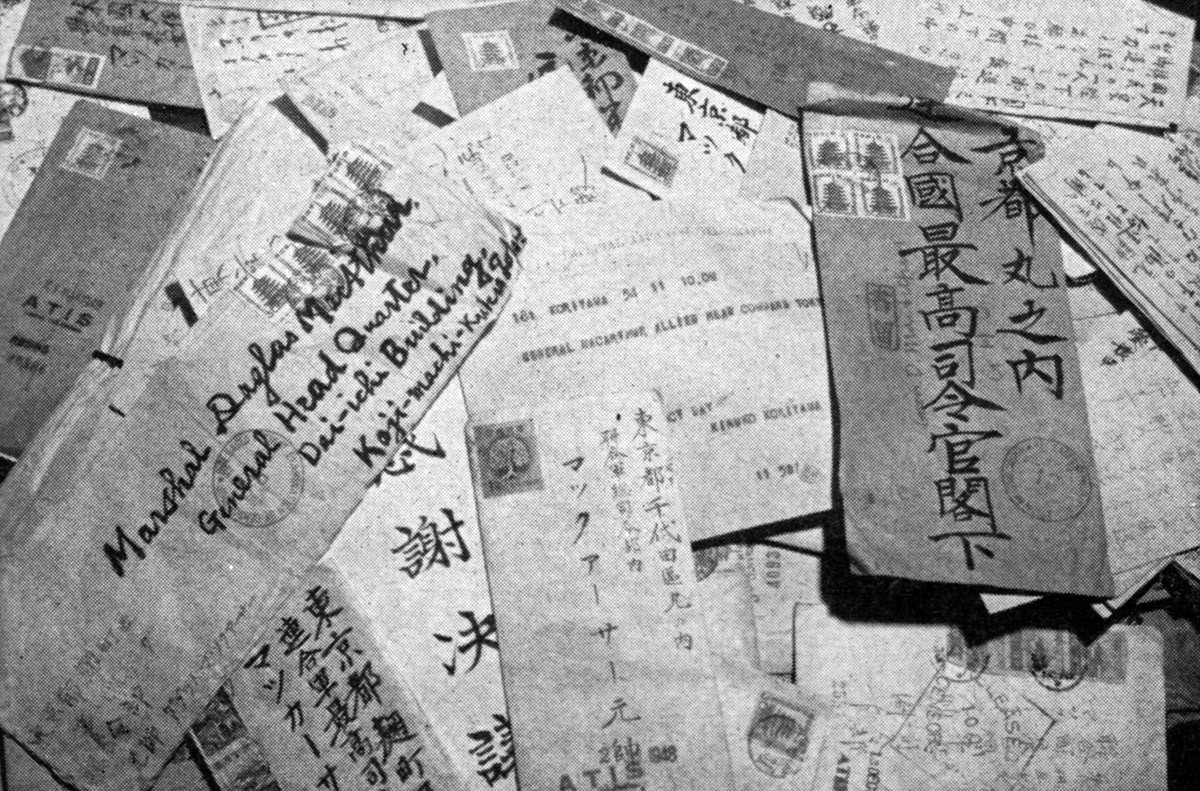
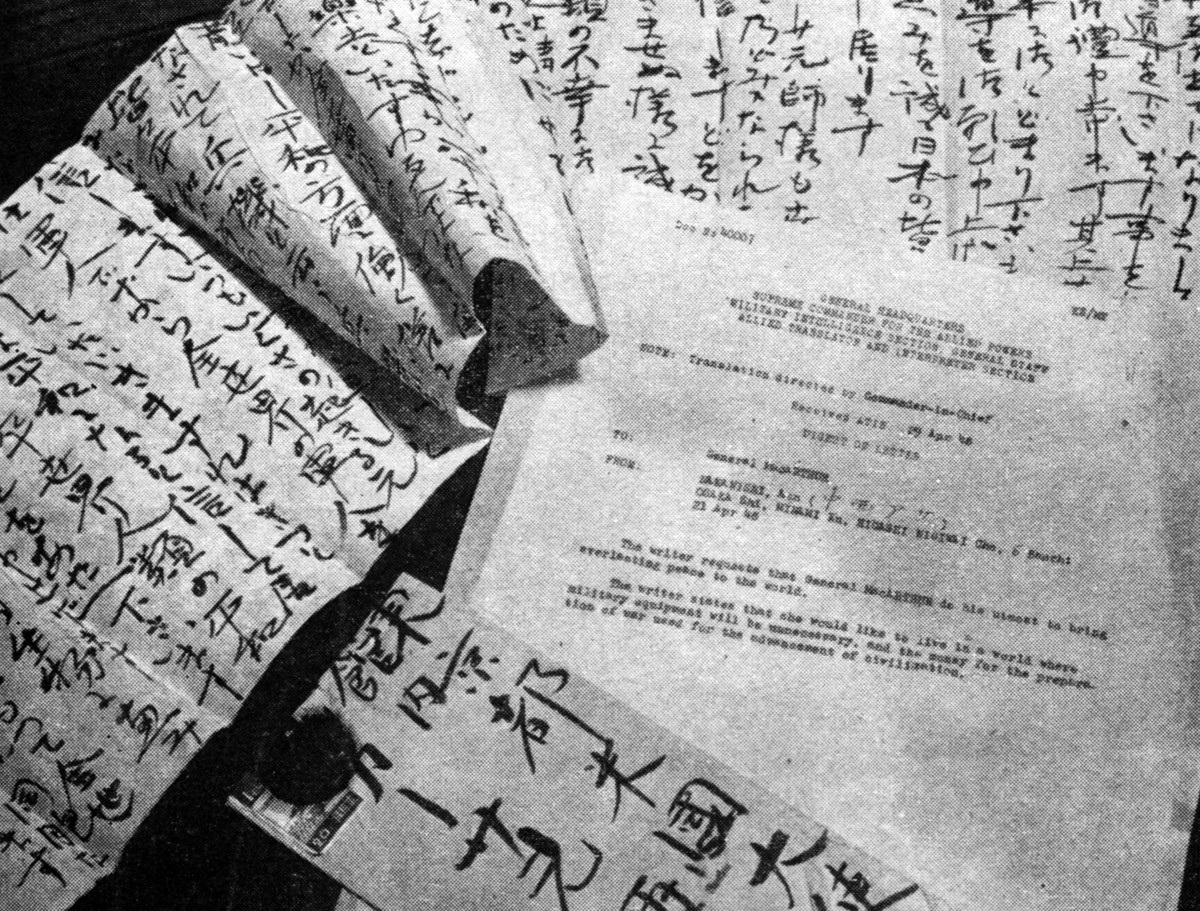
A Japanese letter is shown in 1948, which summarizes: "The Writer requests that General [Douglas] MacArthur do his utmost to bring everlasting peace to the world... The writer states that she would like to live in a world where military equipment wil...
(Photo Credit: U.S. Army)View original
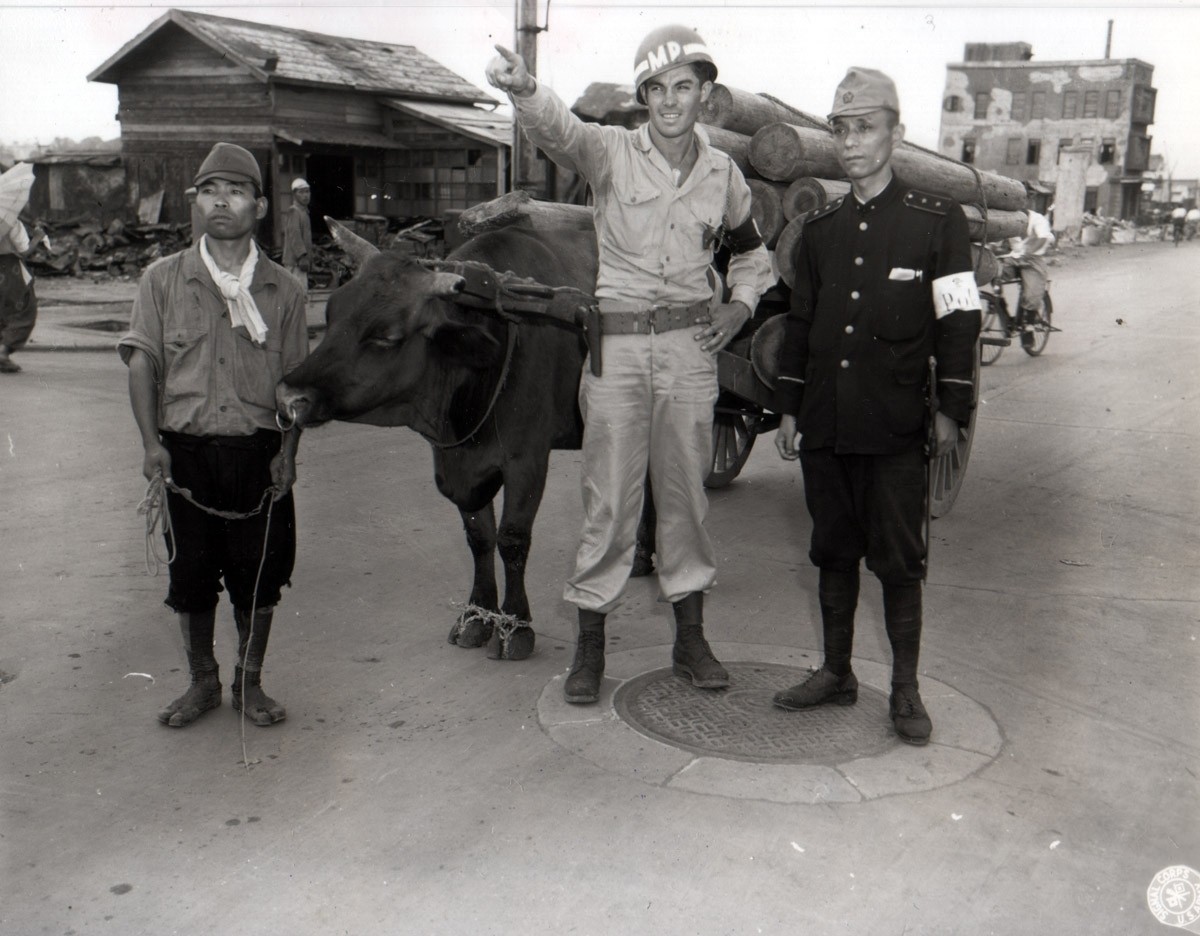
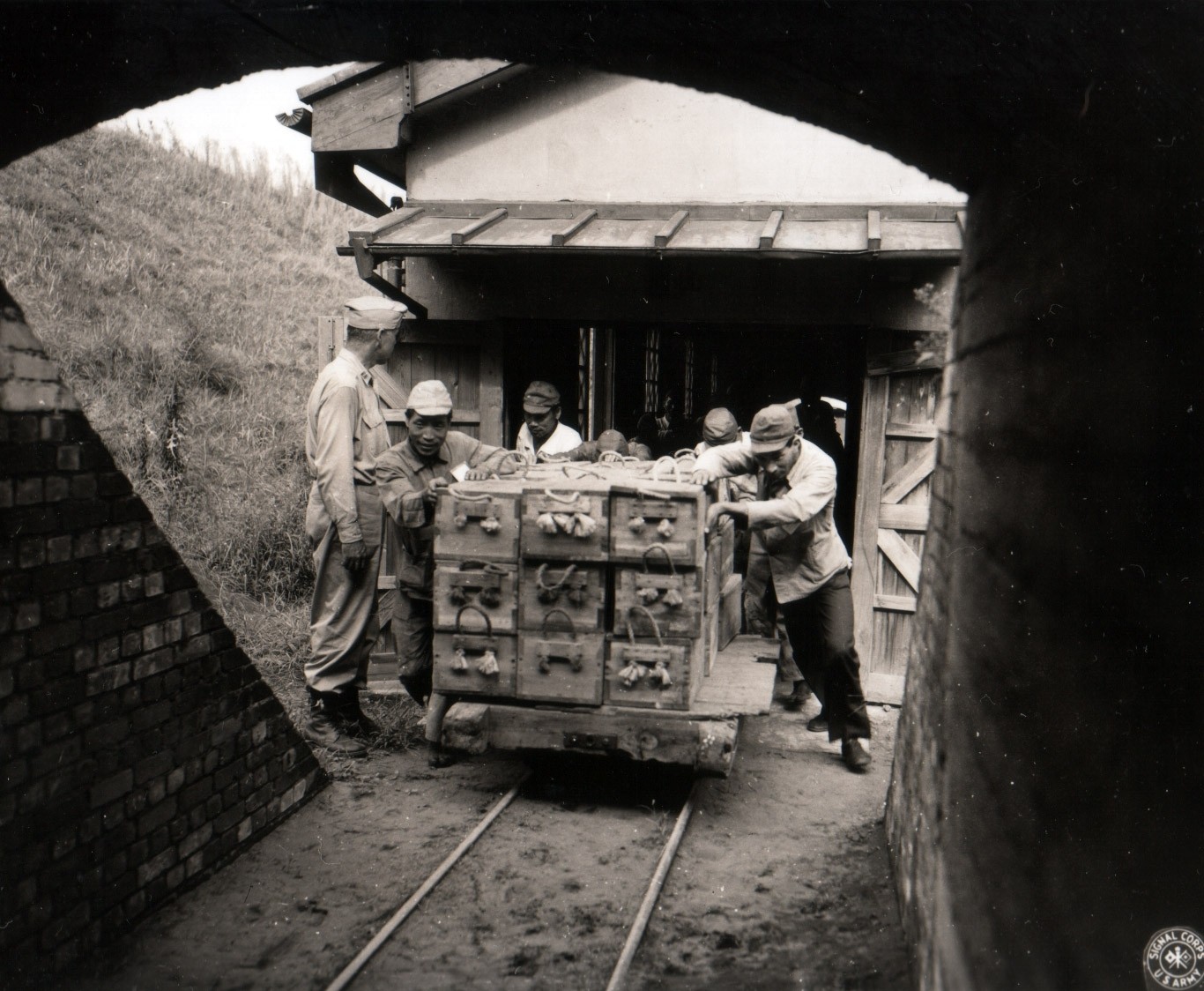
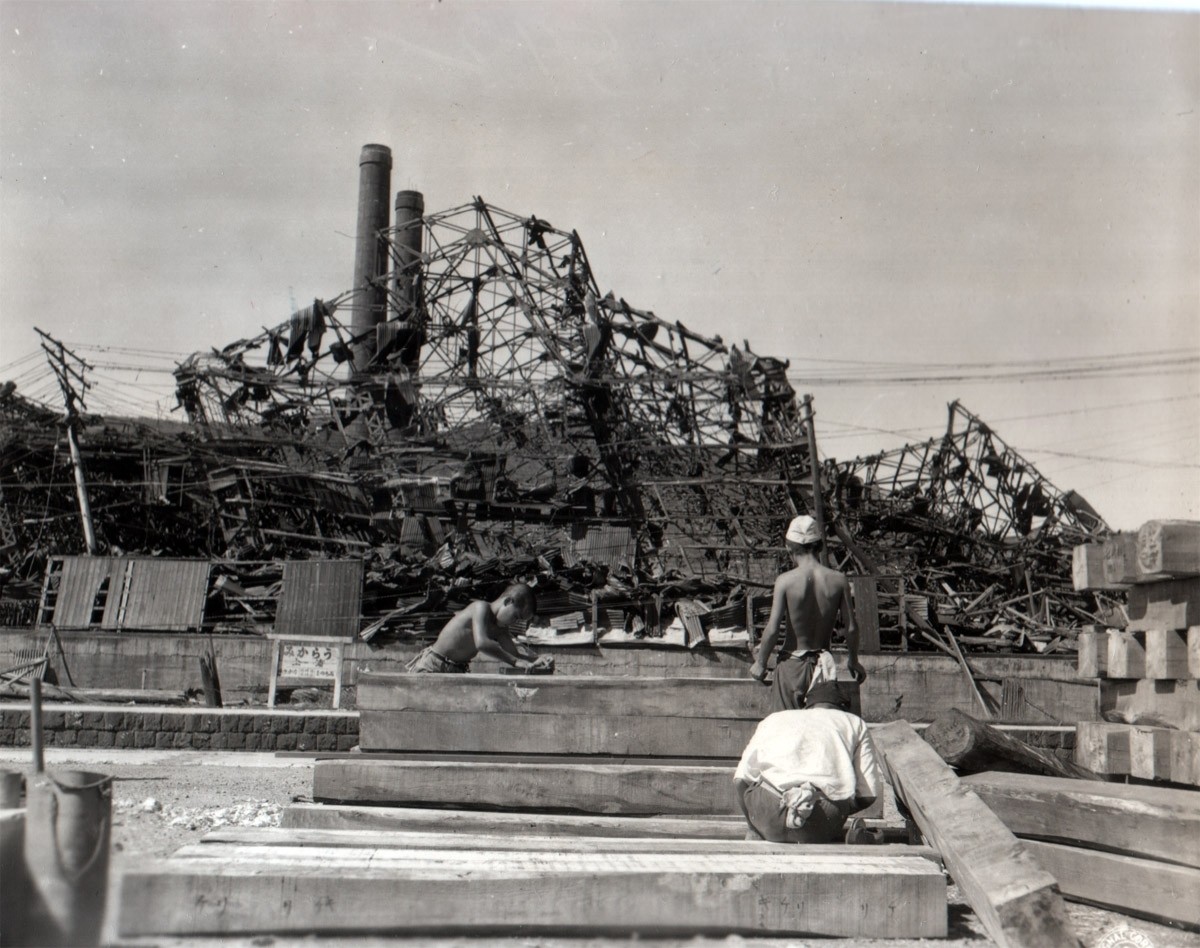
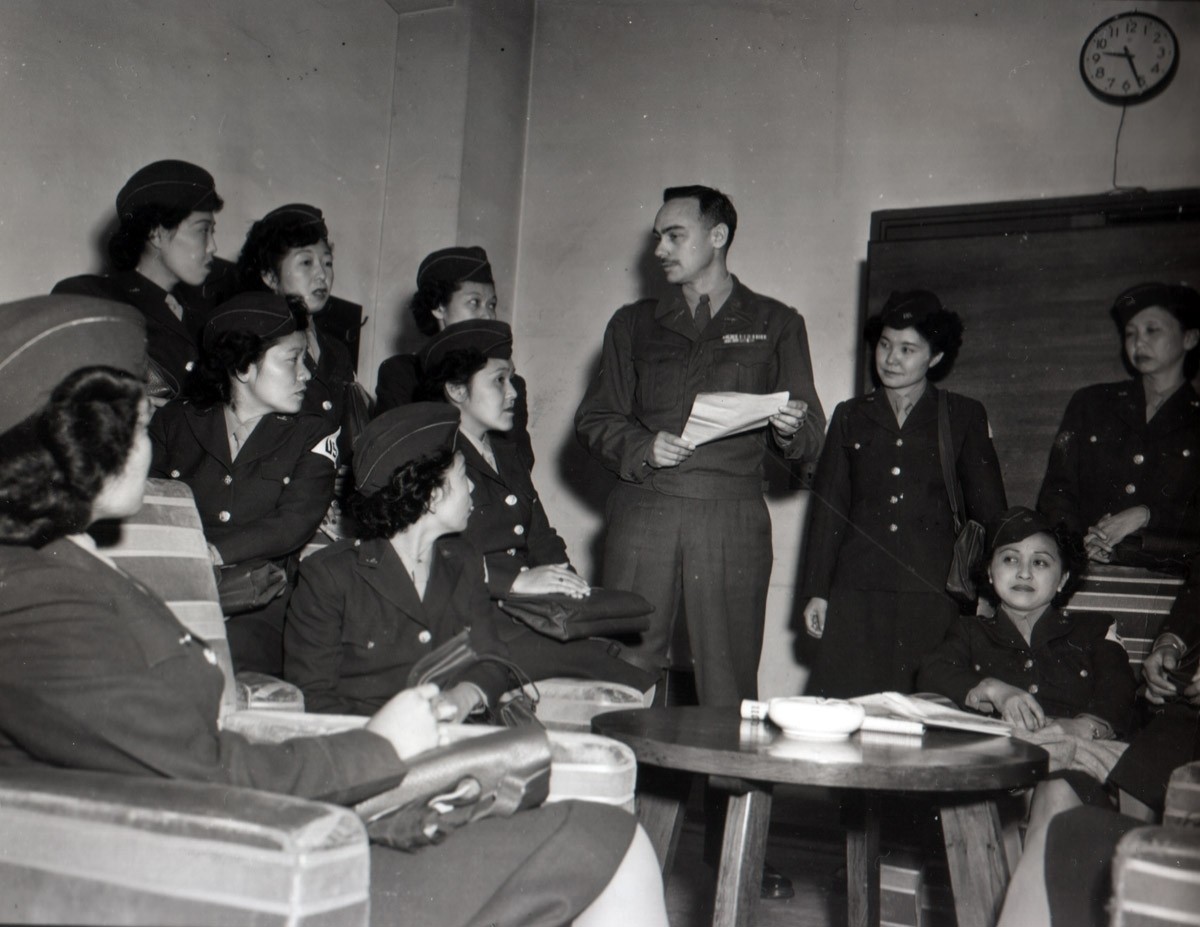
Aboard the U.S.S. Missouri anchored in Tokyo Bay, representatives of the Japanese government and the Allied powers gathered to sign an instrument of surrender which in effect, formally ended World War II, Sept. 2, 1945. At that moment, Japan surrendered its sovereignty and became an occupied nation. The American Soldier's call to duty in Japan presented a variety of challenges. Yet out of the rubble of war, rose a nation far removed from a past of oppressive militarization, and empowered with a new vision of democratic ideals.











Social Sharing