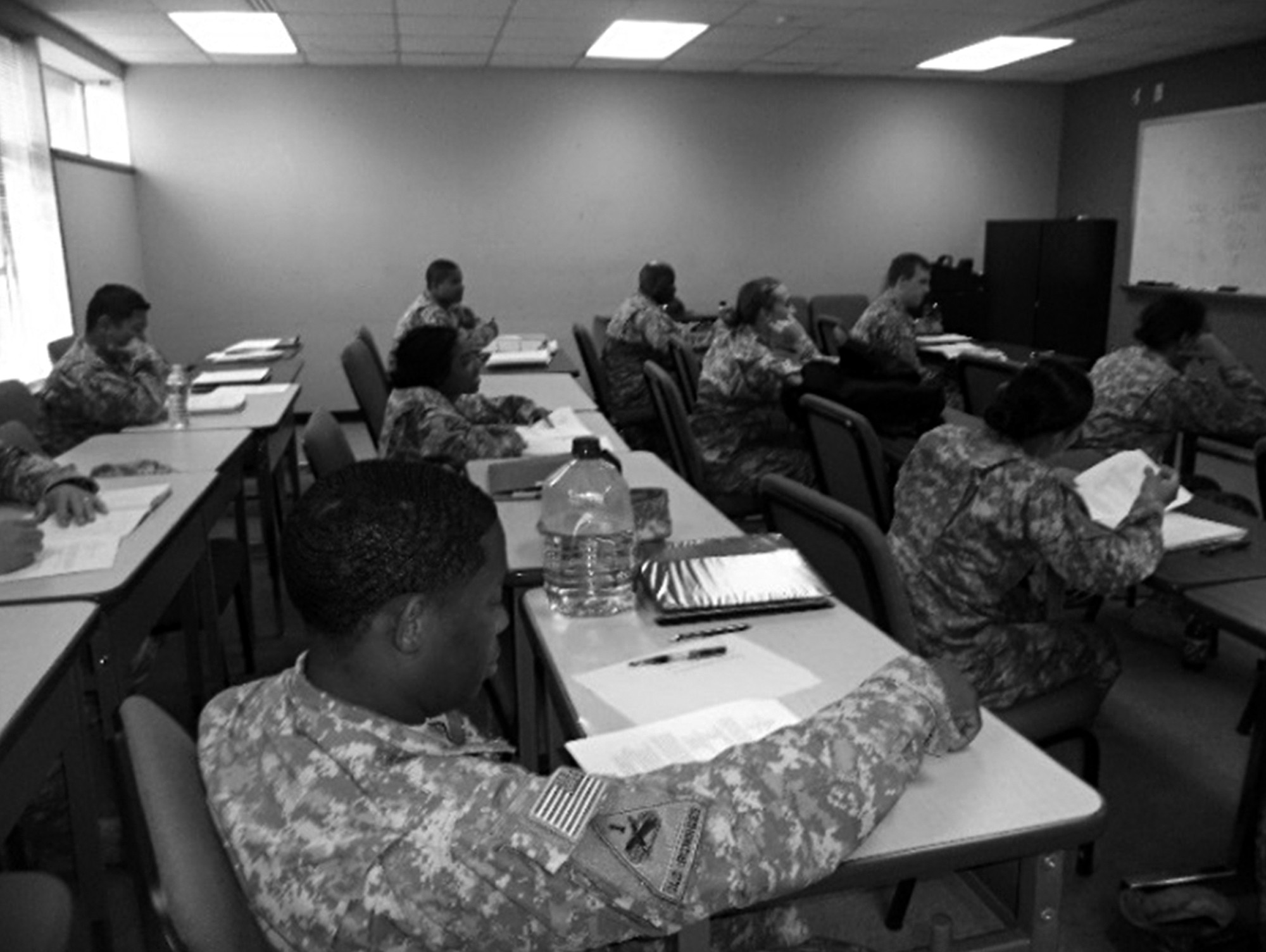
Kids aren't the only ones heading back to school. A couple thousand Fort Jackson Soldiers will start or resume college classes this fall.
But while schoolchildren have it easy -- they go to the schools closest to home -- Soldiers have a much broader selection, and they pay for their classes with federal dollars.
So, to potential colleges, a Soldier isn't just a Soldier. He's a steady income.
And that can lead to trouble.
"A lot of colleges, they want access to Soldiers because you're going to get a lot of money out of them," said Robert Youmans, director of human resources. Youmans is looking for a new education services officer to work with colleges that wish to come on post -- the latest ESO retired in May.
"The colleges know the procedures," Youmans said, but sometimes commanders trying to help their Soldiers "bring folks out and they are not vetted." Soldiers see the college representatives and assume everything has gone through the proper vetting procedures when it hasn't.
In April 2012, President Barack Obama signed an executive order aimed at protecting Soldiers from so-called diploma mills -- colleges that hand out worthless degrees -- and other schools that take more and more money for more and more classes that never result in degrees.
"I've heard the stories," Obama said in a speech at Fort Stewart, Georgia. "They harass you into making a quick decision with all those calls and emails. And if they can't get you online, they show up on post."
Obama promised to "bring an end to the aggressive -- and sometimes dishonest -- recruiting" by increasing oversight, strengthening the rules about who can come onto post to talk to Service members, and making it easier to file complaints.
Just last week, the Department of Defense confirmed that it was investigating recruitment practices by the University of Phoenix, the country's largest recipient of GI Bill money. It also canceled its contract allowing the university to offer classes to Soldiers posted to Europe.
Only four colleges and universities offer classes on Fort Jackson -- Claflin University, Midlands Technical College, Webster University and the University of South Carolina, which has offered classes on post for 40 years.
Colleges who want to recruit Soldiers must sign a Voluntary Education Partnership agreement that pledges they will provide "meaningful information" on the cost and quality of the school, "abusive and deceptive recruiting practices" and provide "high-quality academic and student support services."
The number of colleges that serve a post depends on Soldiers' demands. Since Fort Jackson is a TRADOC post -- most Soldiers on post aren't permanent party -- the demand for college classes is lower. Figures show that Fort Jackson had 1,800 Soldiers taking courses in the second quarter of 2015.
Other colleges offer online courses that Soldiers can take anywhere. Finding the right program at the right college for the right cost can be difficult and time consuming. That's where the post's education counselors come in.
"If you log on (to a college website) and the first thing you see is a person in a headset saying, 'Hi there. I'm Karen, and I'm ready to talk to you,'" you probably are looking at the wrong school, said Carmen Alexander, a counselor at the post's Army Education Center.
When you're researching, you want to see whether a college has the proper accreditation, a program that meets your requirements and tuition costs that won't suck your Army education funds dry, Alexander said.
That's where she and her colleagues come in. They've been doing this kind of research for a while and can answer Soldier-specific questions that even GoArmyEd.com may not be able to answer.
"We can't promote any one school -- or not promote any one school -- but we can definitely help them research" which college to choose, she said.
Soldiers who try to research on their own often don't know what to look for -- accreditation, cost and a point of contact of whom to ask questions and find themselves stuck in an endless morass of information.
Even if a Soldier has had counseling and later become stuck, "they're always welcome back."
"We won't make the decision for you," Alexander said, "but we'll help you make the best decision."
-- Commanders, Soldiers and others with questions about college or the Voluntary Education Partnership requirement that allows college recruitment on post may call the Army Education Center at 751-5341.
Social Sharing