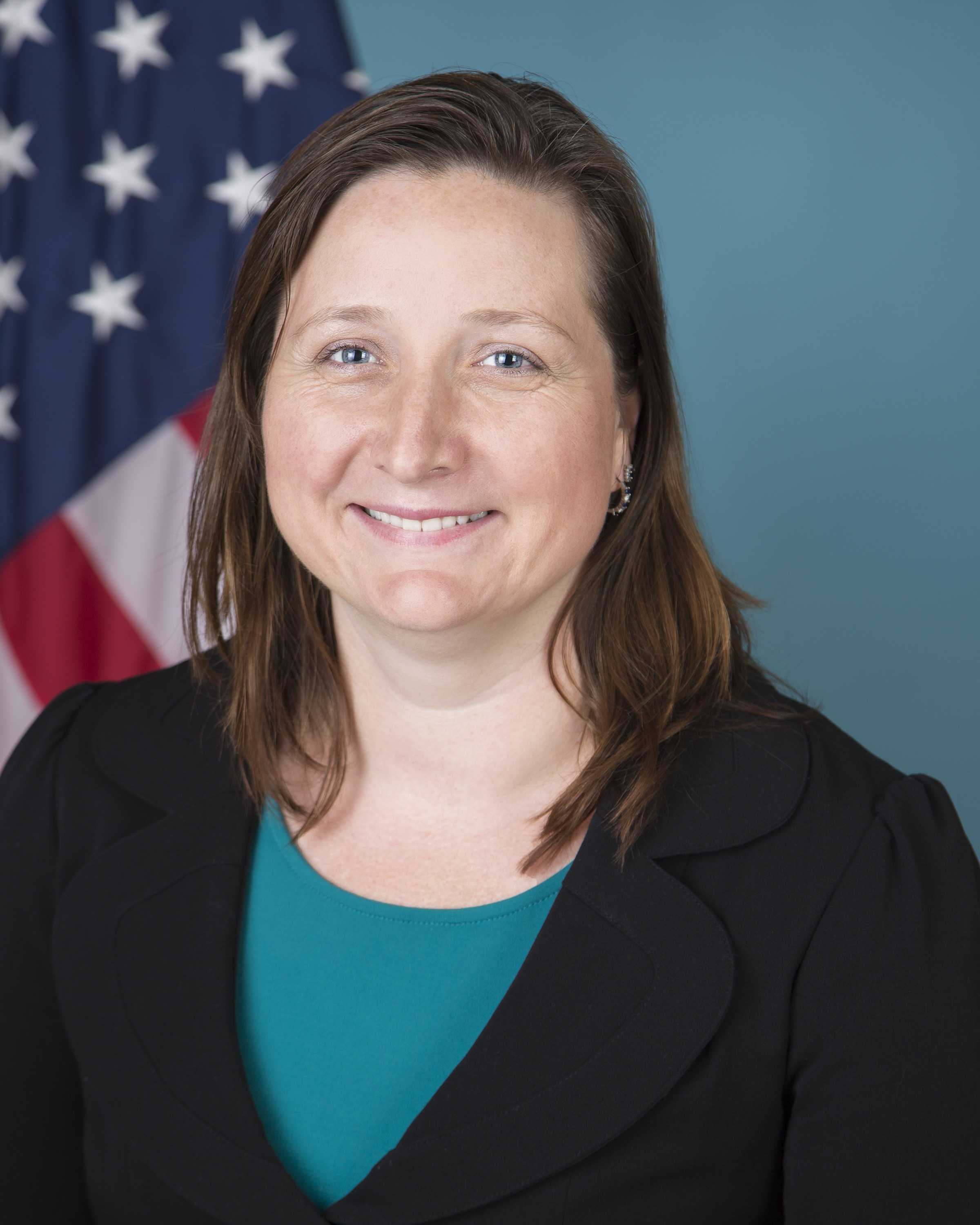
PICATINNY ARSENAL, N.J. (August 5, 2015) -- Malgorzata (Margaret) Kouretas, 37, was recently named the 2015 Young Military Health Physicist of the Year at a ceremony in Indianapolis.
Since 2006, she has been working for the Radiation Protection Office at the U.S. Army Armament Research, Development and Engineering Center, or ARDEC.
Kouretas, who previously worked at the U.S. Department of Homeland Security, is a health physicist at Picatinny.
The award is part of the military health physics section of the Health Physics Society. It recognizes a young military health physicist who excels in their field.
The recipient must not have reached his or her 39th birthday prior to January 1 of the calendar year that the award is being presented. Kouretas was nominated for the award by Gregory Komp, the U.S. Army Radiation Safety Officer.
"It's a big deal to be recognized by the Health Physics Society," she said.
Kouretas is one of the younger members in her field. Many of her peers are in their 50s, 60s, or 70 years of age because jobs in the radiation field boomed during the period when construction of nuclear power plants surged across the globe.
"This field goes in line with the nuclear power plants," she said. "There was a boom in the building of the plants, and then they stopped, so the college programs dropped off and the field itself went away for a while. Now that they are starting to build nuclear power plants again, they need younger people to get into health physics."
Upon her arrival at ARDEC almost 10 years ago, Kouretas immediately became involved with developing and updating radiological protocols and internal operating procedures, which are still in use today.
For many years, radiation has been beneficial to human beings for medical diagnosis and therapy, scientific research and generating electrical power. However, when not used in a safe manner, radiation can harm people. Therefore, care must be taken to minimize unnecessary radiation exposure.
The health physicist's job is to manage the beneficial use of radiation while protecting workers and the public from potential hazards.
"As the Alternate Radiation Safety Officer, I oversee radiation safety for ARDEC and the tenant organizations on Picatinny, as well as provide radiation safety consult to other U.S. Army units," Kouretas said.
Her work helps to ensure radiologically safe testing and fielded materiel, protecting both Soldiers and civilian testing personnel, as well as to protect the environment.
Kouretas said that one of the hardest aspects of her job is convincing people of the value of safety, along with the rewards from investing time and money in it.
She routinely inspects facilities within ARDEC, but her job does not restrict her only to Picatinny.
In addition, she is often called off the installation to other U.S. Army Ammunition Plants and frequently works with the state's Department of Environmental Protection. As part of the Department of the Army Radiation Safety Council, Kouretas can be called upon whenever the Army needs a health physicist with her credentials on site.
"If the DEP called me after they found radioactive materials we would go out, control the contamination, pick it up, and ensure it is packaged and transferred correctly.
"If it's not safe, I didn't do my job well," Kouretas said.
Kouretas is already being nominated for next year's Health Physics Society's Elda Anderson Award, which is the society-wide award for Young Health Physicist of the Year. She states that it would be an honor to receive that recognition, since it is an award given by the entire society, and not only the military section.
Although she holds an undergraduate degree in environmental science from Rutgers University and attended graduate school for environmental health sciences at New York University, the training does not stop there. She had to graduate from the Army Safety Management program at Fort Rucker as well as complete a variety of radiation physics and emergency response courses.
Kouretas recommends the Health Physics Society website (https://www.hps.org) for anyone is interested in learning more about radiation safety.
---
The Armament Research, Development and Engineering Center is part of the U.S. Army Research, Development and Engineering Command, which has the mission to develop technology and engineering solutions for America's Soldiers.
RDECOM is a major subordinate command of the U.S. Army Materiel Command. AMC is the Army's premier provider of materiel readiness -- technology, acquisition support, materiel development, logistics power projection, and sustainment -- to the total force, across the spectrum of joint military operations. If a Soldier shoots it, drives it, flies it, wears it, eats it or communicates with it, AMC provides it.
Related Links:
U.S. Army Armament Research, Development and Engineering Center (ARDEC) homepage
Social Sharing